A skylight can transform a room by bringing in natural light and creating a more open atmosphere. However, choosing the wrong size or placing it in the wrong location can lead to excessive glare, uneven lighting, or reduced energy efficiency. Many homeowners struggle to determine what dimensions and placement work best for their space. Understanding the factors that influence these decisions helps avoid costly mistakes. This article explains how to choose the right skylight size and location for both comfort and performance.
Room Size and Lighting Requirements
Matching Skylight Size to the Space
The size of the room plays a major role in determining how large a skylight should be. A small skylight may not provide enough natural light for a larger area, while an oversized unit can create excessive brightness. Finding the right balance helps maintain visual comfort throughout the day.
Many homeowners consult skylight installation specialists when evaluating room dimensions and lighting goals. Their assessments focus on how natural light will interact with the space rather than simply choosing the largest available option.
Existing Natural Light Sources
Rooms with multiple windows may require a smaller skylight than spaces with limited daylight access. Evaluating existing light sources helps create a more balanced lighting environment and prevents overexposure. This approach allows natural light to complement the room instead of overwhelming it.
Roof Orientation and Sun Exposure
Direction Matters
The direction your roof faces can significantly influence the amount of sunlight entering the home. South-facing skylights generally receive more direct sunlight, while north-facing options usually provide softer and more consistent illumination. Understanding these differences helps homeowners select a placement that aligns with their preferences.
Seasonal Changes
Sun angles vary throughout the year, which can affect how much light enters a room. A location that performs well during one season may behave differently during another. Considering seasonal light patterns supports more informed placement decisions and helps prevent unexpected lighting issues.
Ceiling Design and Room Function
The purpose of the room should influence skylight placement. A kitchen, home office, and living room each have different lighting needs. Positioning a skylight directly above a workspace may increase brightness, while placing it over a seating area may create a more comfortable atmosphere.
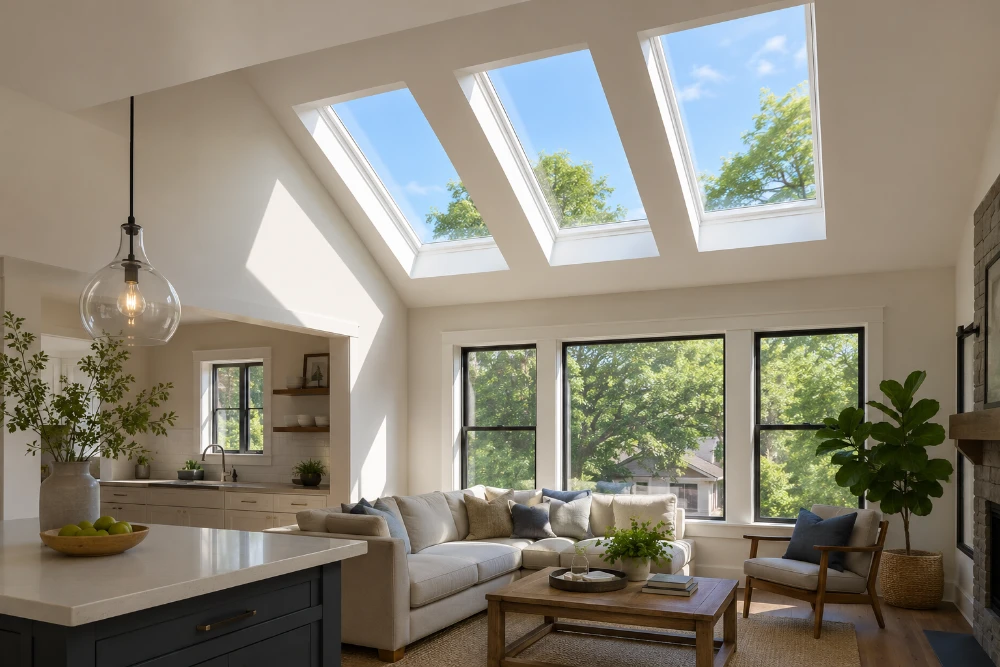
Ceiling height and shape also affect how light spreads through a room. Vaulted ceilings typically distribute natural light differently than flat ceilings. These structural details play an important role when planning placement and determining the most effective location.
Factors That Affect Light Distribution
Several design elements influence how effectively a skylight illuminates a space. Homeowners who understand these factors can make more practical decisions before installation begins.
Important considerations include:
- Roof pitch and angle
- Ceiling depth below the roof
- Interior wall and ceiling colors
- Room dimensions and layout
- Nearby trees or exterior obstructions
These elements work together to determine how natural light travels throughout the home and how evenly it is distributed.
Energy Efficiency and Long-Term Comfort
Natural light is the primary reason homeowners choose a skylight, but energy performance should also be part of the decision. Factors such as glazing type, insulation properties, and heat transfer can influence indoor comfort throughout the year. A properly sized skylight helps balance daylight access without creating unnecessary heat gain or heat loss.
Many skylight installation specialists evaluate these factors during planning to help homeowners select options that align with both lighting goals and energy-efficiency considerations. This extra attention can contribute to a more comfortable indoor environment throughout the year.
Professional Planning and Installation Guidance
Selecting a skylight involves more than choosing a product from a catalog. Structural requirements, roof conditions, and light distribution all influence project outcomes. Professionals involved in skylight installation can assess these factors, recommend suitable placement options, and help homeowners make informed decisions that support long-term performance.
The right skylight size and placement can improve natural light, comfort, and the overall feel of a room. Factors such as room dimensions, roof orientation, ceiling design, energy efficiency, and light distribution all contribute to successful results. Taking time to evaluate these considerations helps create a balanced and functional lighting solution. Homeowners who understand how these elements work together are usually better prepared to choose a skylight that complements their space, supports long-term comfort, and delivers lasting value for the home.
FAQs
The ideal size depends on the room’s dimensions, existing windows, and lighting needs. A properly sized skylight provides balanced natural light without causing glare.
Yes, roof orientation influences the amount and intensity of sunlight entering the room. Different directions provide varying levels of brightness throughout the day.
Yes, an oversized skylight or poor placement can create excessive brightness and glare. Proper sizing and positioning help maintain visual comfort.
Rooms with several windows often require smaller skylights because natural light is already available. This helps create a balanced lighting environment.
Different rooms have different lighting requirements. Placement should support how the space is used while maintaining comfort and functionality.
Yes, ceiling height and shape affect how natural light spreads throughout a room. Vaulted and flat ceilings distribute light differently.
Trees and other outdoor obstructions can reduce the amount of sunlight entering through the skylight. Their location should be considered during planning.
A properly selected skylight can reduce the need for artificial lighting during the day. Energy-efficient glazing and insulation features can also help manage indoor temperatures.
Roof pitch, ceiling depth, room layout, surface colors, and exterior obstructions all affect how light travels within a space. These elements work together to determine overall brightness.
Yes, professional guidance can help evaluate structural requirements, placement options, and energy-performance considerations. This can improve long-term comfort and overall results.