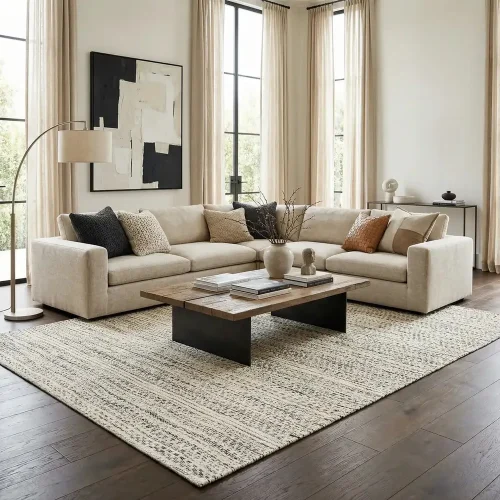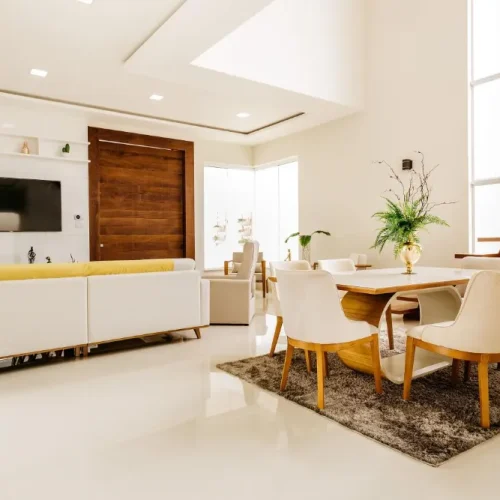

You’ve painted the walls, found the right sofa, styled the bookshelf, and swapped out the builder-grade light fixture. Everything should feel finished, but when you stand in the doorway something still looks a little off. More often than you’d guess, the culprit is hanging right in front of you: the curtains.
Curtains are usually the last thing we pick when decorating a room. By then the budget is stretched, the excitement has worn off, and it’s tempting to grab whatever panels are on the shelf at the big-box store and call it done. But window treatments do a lot of quiet work in a space. They frame the view, control the light, soften hard surfaces, and connect the colors and textures you’ve chosen everywhere else.
Even the most beautiful linen won’t save a window if the panels are too short, the rod sits too low, or the fabric barely stretches across the glass. The good news is that you don’t need to start over. A few tweaks while availing curtain installation services– think curtain length, rod height, and better hardware- can completely change the feel of a room.
Whether you’re a confident DIYer with a drill in hand or you’d rather leave the hanging to someone else, here are the eight most common curtain styling mistakes we see, plus simple fixes for each one.
At a Glance: The 8 Mistakes and Their Quick Fixes
| Mistake | What It Does to the Room | Quick Fix |
|---|---|---|
| Rod hung too close to the window | Makes windows and ceilings look shorter | Raise the rod closer to the ceiling or crown molding |
| Curtains too short | Looks unfinished and “floating” | Choose floor-length panels measured from the rod |
| Curtains too narrow | Skimpy, flat, half-dressed windows | Aim for 1.5 to 2.5 times the window width in fabric |
| Ignoring how fabric handles light | Too dark, too bright, or poor privacy | Match fabric weight and lining to the room’s job |
| Wrong color or pattern | Visual clutter or a disconnected look | Pull a color from your rug, art, or upholstery |
| Afterthought hardware | Sagging rods, snagging panels, mismatched finishes | Pick rods and brackets rated for your fabric weight |
| Not planning around furniture | Curtains that bunch, block, or get in the way | Map traffic, vents, and furniture before buying |
| Rushed measuring and installation | Crooked rods, wall damage, uneven hems | Measure twice, use proper anchors, or hire help |
Here are eight curtain mistakes to watch out for:
1. Hanging the Curtain Rod Too Close to the Window
This one’s a classic. Most of us instinctively mount the rod a couple of inches above the window frame, not realizing it shrinks the window and leaves a wide band of empty wall above it. Raising the rod (if your wall allows for it) draws the eye upward and makes the whole space feel taller and more pulled together. It’s one of the easiest decorator tricks there is, and it costs nothing more than a few extra inches of curtain length.
This works especially well in living rooms and bedrooms with standard 8-foot ceilings, and it’s a great way to tie together a wall with several windows of slightly different heights. Hang one long rod or several rods at the same height and the wall suddenly reads as one intentional design.
Here’s a general starting point for rod placement:
| Ceiling Situation | Suggested Rod Placement |
|---|---|
| Standard 8-foot ceiling | About halfway between the top of the window frame and the ceiling, or 2 to 4 inches below the ceiling |
| 9- to 10-foot ceiling | Roughly 4 to 8 inches above the frame, or close to the ceiling for drama |
| Crown molding | Just beneath the molding, leaving room for brackets and finials |
| Very little space above the window | Consider a ceiling-mounted track or an inside-mount option |
Just make sure to check the distance between the window, the ceiling, and any crown molding first. You want curtains that open and close without getting stuck or blocking anything important, like a smoke detector or an air vent.
There’s no perfect rod height for every room; it depends on your windows, ceiling, and curtain style. Use painter’s tape to mark a few options on the wall and live with them for a day before you drill.
2. Picking Curtains That Are Too Short
Curtain length changes everything. Panels that float awkwardly a few inches above the floor (sometimes called “high-water” curtains) look unfinished, especially when the rest of the room feels tailored. Short curtains also visually chop the wall in half, which works against all the effort you put into hanging the rod higher.
Most people go for floor-length curtains, which make the space feel connected from rod to floor. You’ve got a few options for the hem:
- Just above the floor (about ½ inch): Neat, practical, and easy to vacuum around. Great for high-traffic rooms and homes with pets.
- Barely touching the floor (the “kiss”): Softer and a little more relaxed. Works beautifully in living areas and bedrooms.
- Pooling on the floor (2 to 6 inches extra): Dramatic and romantic, great for formal dining rooms, but it collects dust and needs more upkeep.
| Hem Style | Best For | Maintenance |
|---|---|---|
| Float (½ inch above floor) | Family rooms, kids’ rooms, homes with pets | Low |
| Kiss (just touching) | Living rooms, primary bedrooms | Low to medium |
| Break (1 to 2 inches extra) | Relaxed, casual spaces with linen or cotton | Medium |
| Puddle (3 to 6 inches extra) | Formal dining rooms, low-traffic rooms | High |
In kitchens and bathrooms, shorter curtains are fine; sometimes they’re the only practical choice near sinks and counters. Café curtains and sill-length panels can look charming in a farmhouse kitchen. But whatever the length, it should look intentional. Always measure curtains from where the rod will sit, not just the top of the window.
Shine tip: Standard store-bought panels usually come in 84, 96, and 108 inches. If you’re stuck between sizes, go longer and hem them yourself with iron-on hem tape. It’s one of the simplest DIY fixes out there, no sewing machine required.
3. Using Curtains That Are Too Narrow
Curtains need enough width to look full and create gentle, generous folds. If the panels barely cover the window when they’re closed, everything looks skimpy and rushed, even if the fabric itself is gorgeous. Flat panels stretched tight across a window also tend to look cheaper than they really are.
Think about the rod’s width and how much fullness you want. A good rule of thumb is that your total fabric width (all panels added together) should be about 1.5 to 2.5 times the width of the rod.
| Fullness | Total Fabric Width vs. Rod Width | Look |
|---|---|---|
| Minimal | 1.5x | Clean and modern, works with heavier fabrics |
| Standard | 2x | Soft, balanced folds for most rooms |
| Luxurious | 2.5x to 3x | Rich and full, ideal for sheers and lightweight linen |
Rod placement matters here too. If you can, extend the rod 8 to 12 inches beyond each side of the window frame. It makes the window look bigger and lets you pull the curtains completely clear of the glass when they’re open, so you don’t lose any precious natural light.
Before buying, check the total width of all the panels, not just one. Many packages list the width of a single panel, so a “two-pack” might be just what you need, or you might need two of them. A little planning saves you from windows that look half-dressed.
4. Ignoring How Fabric Handles Light
Fabric looks one way under bright store lighting and a whole other way in your home. Sheers let daylight pour in, making a room feel airy and soft. Heavier fabrics add privacy and block more light, which is great for bedrooms or sunny living rooms that get blasted by afternoon glare.
Think about the room’s orientation, the size of the window, and how you actually use the space every day:
| Room | Recommended Fabric | Why It Works |
|---|---|---|
| Living room | Linen, cotton blends, or lined panels | Balances light, softness, and privacy |
| Bedroom | Blackout or room-darkening lined curtains | Better sleep and morning light control |
| Dining room | Light linen, velvet for formal spaces | Adds softness without closing in the room |
| Kitchen | Washable cotton or polyester café curtains | Easy to clean, stays clear of counters |
| Bathroom | Moisture-resistant polyester or sheers | Handles humidity while keeping privacy |
| Nursery or kids’ room | Blackout panels with a decorative layer | Supports naps and early bedtimes |
Big windows with strong afternoon sun? Go for lined curtains to cut glare and protect your furniture and floors from fading. In the bedroom, room-darkening panels make sleep easier. In a dining room, simple light curtains keep things soft without closing in the space. And if you can’t decide, layering a sheer behind a heavier panel on a double rod gives you the best of both worlds.
Don’t forget that colors shift with the light. A cream curtain warms up in the sun. Grays can look cool and flat in low light. Whites can read blue in a north-facing room. Always bring home fabric swatches and look at them in the morning, afternoon, and evening before you commit.
5. Picking the Wrong Color or Pattern
Curtains shouldn’t fight with the rest of the room. If you’ve already got patterned pillows, a busy rug, and bold artwork, complicated curtain patterns just add visual noise. In a calm or neutral room, though, a patterned or deeply colored curtain can be the perfect focal point.
Start by finding a color that already lives in your space, maybe from a rug, an accent chair, or a favorite piece of art. Curtains in that shade tie everything together. Neutrals like white, ivory, oatmeal, beige, and soft gray go with just about anything and make future décor changes a lot easier.
A few simple guidelines can help:
- Want the window to disappear? Choose curtains close to your wall color.
- Want the window to stand out? Go one or two shades darker than the walls, or pick a contrasting color.
- Mixing patterns? Vary the scale. A large-scale curtain pattern pairs well with small-scale pillows.
- Small room? Lighter, solid fabrics keep it feeling open.
- Large, open room? Richer colors and textures add warmth and coziness.
If you want contrast, think about how the curtains will look both open and closed. A bold color can bring excitement when it’s pulled back, but drawn across a whole wall at night, it may overwhelm the room.
Your curtains should feel like they belong, not like an afterthought.
6. Forgetting About Curtain Rods and Hardware
People usually spend ages choosing fabric, then grab hardware as an afterthought. But rods, brackets, rings, and finials actually matter a lot, both for looks and for function.
A stylish rod can echo your light fixtures, cabinet pulls, or door hardware and give the room a cohesive look. Matte black feels modern and crisp, brass adds warmth, and wood suits farmhouse and traditional spaces. If you’d rather the curtains do all the talking, a simple ceiling track lets the hardware disappear. And if you love a project, you can even make your own rods from pipe, dowels, or conduit for a custom look on a budget.
The rods and brackets need to hold the curtain’s weight. Here’s what to keep in mind:
- Heavy fabrics like velvet or blackout-lined panels need sturdier rods (look for 1 inch diameter or more).
- Rods longer than about 5 feet usually need a center support bracket to prevent sagging.
- Ceiling-mounted tracks need solid fixing points, ideally into joists.
- Double rods are ideal if you want to layer sheers and drapes.
- Rings, grommets, rod pockets, and pinch pleats all hang and glide differently, so choose the heading style that suits how often you open and close them.
Think about how the curtains move, too. If they snag or are a struggle to open, you’ll be annoyed every single day. A solid setup feels balanced and lets the curtains glide smoothly.
7. Not Thinking About Furniture and Traffic
Curtains should work with the room, not just the window. Maybe there’s a sofa pushed against the wall under the window, or there’s a bed, a radiator, a heating vent, or a built-in bench in the way.
Long panels in the kitchen might get tangled with counters and appliances. Bedroom curtains could knock into nightstands or cover radiators and vents, which also hurts your heating efficiency. People skip over these little details, especially when they measure and shop online and forget what else is around the window.
Before you buy, look at how people move through the room. Will the curtains bump into furniture or get trapped behind it? Can you still reach the window locks and handles? Will the dog or cat treat that puddled hem like a new bed? Awkward furniture placement might mean you need shorter curtains, Roman shades, or a different treatment entirely.
And don’t forget about safety: keep fabric away from space heaters, baseboard heaters, fireplaces, and other hot elements. If you have little ones, choose cordless options or secure cords out of reach. In tight rooms, keep it simple, since layered, heavy curtains can be overkill. The best curtains look great and fit your daily life.
8. Rushing Measurements and Installation
Don’t let good fabric go to waste with a bad install. Get all your measurements before you drill a single hole. Figure out your rod width, curtain length, bracket placement, and heading style, and write it all down.
Pay attention to the kind of wall you’re working with. Drywall, plaster, brick, and concrete all need different hardware, so don’t assume the basic anchors that came in the box will do the job.
| Wall Type | Recommended Hardware | Tools Needed |
|---|---|---|
| Drywall (with stud) | Wood screws directly into the stud | Stud finder, drill |
| Drywall (no stud) | Toggle bolts or heavy-duty self-drilling anchors | Drill, screwdriver |
| Plaster | Plastic or toggle anchors; drill slowly to avoid cracking | Painter’s tape, masonry or carbide bit |
| Brick or concrete | Masonry anchors or concrete screws | Hammer drill, masonry bit |
| Window casing (wood trim) | Short wood screws, for lightweight curtains only | Drill, level |
Before you break out the drill, check for wires or pipes behind the wall. Use the proper hardware for your surface, use a level (and double-check it), and follow the manufacturer’s instructions.
If you’re not sure about your measurements or your wall type, hire a Curtain Installation Service. Beforehand, check that they handle your specific windows and hardware, whether that’s bay windows, extra-wide sliding doors, or ceiling-mounted tracks. It saves a ton of headaches and avoids crooked rods or poorly hung panels.
DIY or Hire a Pro? How to Decide
Here at Shine Your Light, we love a good DIY project, and hanging a simple curtain rod is a great beginner skill. But some windows are trickier than others. Use this quick guide to figure out which way to go:
| Go DIY If… | Call a Pro If… |
|---|---|
| You have standard windows and drywall | You have plaster, brick, or concrete walls |
| You’re using lightweight panels | You’re hanging heavy drapes or blackout layers |
| The rod is under about 8 feet wide | You need extra-wide or ceiling-mounted tracks |
| You own a drill, level, and stud finder | You have bay, corner, or arched windows |
| You can reach the mounting height safely | You have tall ceilings or two-story windows |
| You’re doing one or two windows | You’re outfitting a whole house at once |
Your Curtain Styling Checklist
Before you buy or hang a single panel, run through this list:
- Decide on rod height and mark it with painter’s tape.
- Extend the rod 8 to 12 inches past each side of the window frame.
- Measure length from the rod (or ring bottom) to the floor.
- Choose a hem style: float, kiss, break, or puddle.
- Make sure total panel width is at least 1.5 to 2 times the rod width.
- Pick fabric weight and lining based on light and privacy needs.
- Test fabric swatches at different times of day.
- Choose a color that connects to something already in the room.
- Select rods and brackets rated for your fabric’s weight.
- Check for furniture, vents, radiators, and walkways.
- Identify your wall type and buy the right anchors.
- Steam or press the panels after hanging so they fall smoothly.
Final Thoughts
Curtains aren’t a tiny detail; they change the whole room’s character. Their size, placement, and material all matter, and getting them right is often the finishing touch that makes a space feel truly complete.
Think about the light, privacy, your furniture, and your routine before you buy. Measure twice, pick a fabric that fits your daily life, and don’t ignore the hardware.
You don’t need custom drapes for a polished look; you need to pay attention to proportion, fit, and how the curtains actually work for you. Raise that rod, let the panels reach the floor, give them enough width to fold softly, and you’ll be amazed at how much brighter and more finished your room feels.
When you nail the details, curtains go from being an afterthought to connecting your space and making the whole room feel complete. Now go let your windows shine!