This post contains affiliate links. As an Amazon Associate, I earn from qualifying purchases, at no extra cost to you. See our disclosure policy.
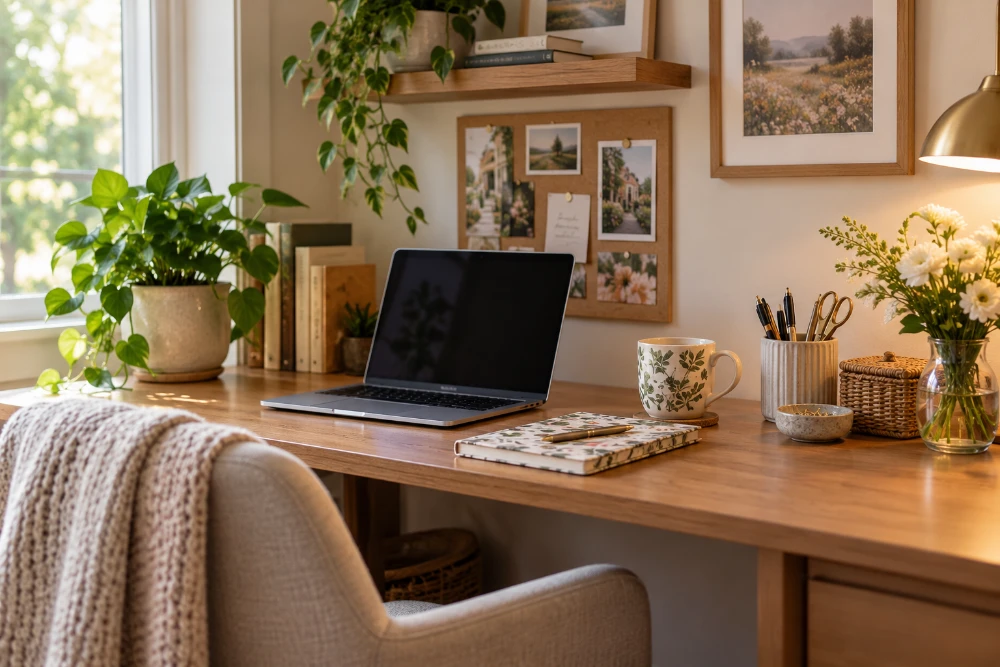
A home workspace does not need to be large, expensive, or perfectly styled to feel inviting. In fact, the smallest details often have more influence on the mood of the space than the desk or chair itself. A favorite lamp, framed photograph, handmade pencil cup, small plant, or carefully displayed keepsake can turn an ordinary work surface into a corner of the home that actually feels like yours.
That matters because many home workspaces are not dedicated offices. They may be a desk tucked into a bedroom, a small table beside the living room window, a corner of the kitchen, or even a temporary setup that needs to disappear at the end of the day.
Whatever the arrangement, personality does not have to mean clutter.
The goal is to create a workspace that supports what you need to do while still feeling connected to the rest of your home. A few thoughtful changes—many of which can be made with things you already own—can make a surprisingly big difference.
Here are some practical ways to create a home workspace that feels useful, comfortable, organized, and personal.
Start With a Calm, Functional Foundation
Before adding decorative pieces, start with what is already on the desk.
Clear away old papers, empty cups, dried-out pens, packaging, unused notebooks, tangled charging cables, and anything else that has gradually collected there. You do not need to create a perfectly minimalist workspace. You simply want enough open space for the things you intentionally choose to stand out.
Once the desk is clear, look at the area as though you were decorating any other part of your home.
Ask yourself:
- Does the space feel too dark?
- Are supplies scattered everywhere?
- Is the desk visually disconnected from the room?
- Are there objects taking up space that you rarely use?
- Could something be moved into a drawer, basket, or nearby cabinet?
- Is there enough clear surface for your everyday tasks?
A calm foundation gives meaningful details room to breathe.
For example, a small framed print can look intentional when it is not surrounded by unopened mail. A handmade ceramic cup becomes part of the décor when it is holding the pens you actually use rather than twenty dried markers.
If your workspace sits inside a shared room, keeping the largest pieces relatively simple can help. A natural wood desk, neutral chair, woven basket, plain shelving, or understated bulletin board can blend with the rest of the home while leaving plenty of opportunities for smaller personal touches.
Make the Workspace Feel Like Part of the Room
One common mistake with home offices is treating the workspace like an entirely separate environment.
That may work in a dedicated office with a door. In a bedroom or living room, however, a workspace usually looks better when it borrows elements from the surrounding décor.
Look around the room.
If you already use oak furniture, woven textures, black picture frames, or soft green accents, repeat one or two of those elements around the desk. If the room feels relaxed and traditional, an ultra-industrial desk setup may feel out of place. Likewise, a sleek modern interior may benefit from a simple workspace with clean shapes rather than lots of ornate accessories.
You do not need everything to match.
Repeating just a few visual elements creates enough connection to make the desk feel like a deliberate part of the room rather than office furniture that happened to land there.
Use a Small Color Story
Color is one of the easiest ways to make a workspace feel pulled together.
Instead of introducing many unrelated shades, choose two or three colors that already appear elsewhere in your home.
You might combine:
- Soft blue, warm wood, and cream
- Black, white, and natural green
- Terracotta, beige, and brass
- Sage green, oak, and warm white
- Navy, leather brown, and soft gray
The combination does not need to be formal. Think of it as a loose guide when choosing accessories.
Small objects are particularly useful for bringing color into the space. A notebook, pencil cup, small piece of art, plant pot, fabric-covered board, storage box, or lamp can introduce color without requiring you to repaint the room.
If you enjoy DIY projects, this is also an easy place to experiment.
You could paint an old wooden box, cover inexpensive storage containers with leftover wallpaper, wrap plain cans in fabric or decorative paper, or repaint an existing picture frame. Small projects let you introduce color without committing to a major room makeover.
The important part is restraint.
A few repeated colors tend to look collected. Too many unrelated accessories can make a small desk feel visually crowded.
Display Small Collections That Actually Mean Something
Many homes contain tiny keepsakes that are too meaningful to discard but too small to display prominently.
Instead of leaving them forgotten in a drawer, consider incorporating a few into your workspace.
Possibilities include:
- Postcards from trips
- Ticket stubs
- Small photographs
- Handwritten notes
- Pressed flowers
- Fabric scraps
- Ribbons
- Patches
- Buttons
- Small illustrations
- Vintage keys
- Pins
- Children’s drawings
- Small souvenirs
A cork board is an obvious solution, but it can easily become chaotic. Giving it a simple frame or covering the surface with linen or another neutral fabric can make the display feel more intentional.
Then edit what you show.
You might group objects by destination, color, memory, hobby, or season rather than pinning everything randomly.
Small pieces such as custom enamel pins can also be displayed on a fabric-covered pin board alongside travel mementos, patches, postcards, and other small keepsakes. Keeping some open space between pieces helps the collection feel curated rather than crowded.
A shadow box is another good option, particularly for objects that have some depth. Small trays, narrow picture ledges, shallow shelves, and glass containers can also create homes for collections without consuming much desk space.
The best part is that these displays do not need to remain permanent.
Rotate them.
Bring out vacation memories during summer, family photographs around the holidays, botanical prints in spring, or artwork that fits whatever project is currently inspiring you.
Try a Simple DIY Memory Board
If you want to add personality without buying new décor, a small memory board is one of the easiest DIY additions to make.
You can start with an old picture frame.
Remove the glass and backing, then replace the center with cork, cardboard wrapped in fabric, or a piece of thin plywood. Depending on the material, you can use pins, clips, small hooks, or magnets to hold objects.
Try displaying only five to ten items initially.
That limitation is useful. It encourages you to choose pieces that genuinely mean something rather than filling the board just because there is room.
Your display might include:
- One favorite photograph
- A handwritten note
- A postcard
- A small piece of art
- A fabric swatch
- A pressed leaf
- A memorable ticket
- A few small keepsakes
When you get tired of the arrangement, change it.
That makes the board a flexible piece of décor rather than something you decorate once and never notice again.
Bring in Texture to Soften the Space
Home workspaces contain plenty of hard surfaces.
There is usually a screen, keyboard, phone, desk, cords, paper, shelving, and several straight lines. Without softer elements, the area can feel more like a workstation than part of a comfortable home.
Texture helps.
A woven basket can hold notebooks or chargers. A ceramic cup can store pens. A linen bulletin board can replace plain cork. A small rug under the desk can visually define the work area while making it feel warmer.
Natural materials work particularly well because they add interest without demanding too much attention.
Consider adding:
- A wooden picture frame
- Woven or rattan storage
- A stone paperweight
- Ceramic accessories
- Linen storage boxes
- A small plant
- A vase with clipped branches
- A cotton or wool chair cushion
Fabric is another easy way to soften a workspace.
A cushion can make an office chair feel less utilitarian. A fabric lampshade can soften light. Curtains can connect the desk area to the surrounding room.
If your workspace seems unfinished but you cannot identify why, it may not need more color or decorations at all.
It may simply need texture.
Make Storage Part of the Decor
Storage becomes especially important when your desk is located in a bedroom, kitchen, or living room.
You may not want staplers, chargers, spare cables, paperwork, and office supplies visible all day.
Fortunately, practical storage does not have to look purely utilitarian.
A small tray can gather the objects you reach for repeatedly, such as glasses, sticky notes, lip balm, earbuds, and a notepad. Lidded boxes can hide cables, receipts, extra stationery, and miscellaneous supplies.
Small drawers are particularly helpful because they prevent the desktop from becoming the default storage location for everything.
Here is a simple way to match storage to common workspace problems:
| Workspace Problem | Simple Storage Solution | Decorative Benefit |
|---|---|---|
| Loose pens and tools | Ceramic cup or small crock | Adds color and texture |
| Chargers and cables | Lidded box | Reduces visual clutter |
| Loose papers | Magazine file or vertical sorter | Keeps papers upright and organized |
| Small everyday items | Decorative tray | Creates one defined drop zone |
| Extra notebooks | Woven basket | Adds warmth |
| Items used occasionally | Drawer or closed box | Keeps the desk visually calm |
| Notes and reminders | Small wall board | Uses vertical space |
You can also repurpose things you already own.
A small serving tray can become a stationery tray. A vintage mug can hold paintbrushes. A decorative box can hide chargers. A shallow basket can store notebooks.
This is one of the easiest ways to decorate without adding objects solely for decoration.
Use Vertical Space When the Desk Is Small
A tiny desk can become crowded very quickly.
When surface space is limited, look upward.
A narrow wall shelf can hold a small plant, clock, framed photo, or notebook. A pegboard can store practical supplies while also functioning as a decorative feature. A rail with hooks can hold scissors, small baskets, headphones, or creative tools.
Picture ledges are another useful option because they are shallow.
You can display art, photographs, postcards, or rotating seasonal decorations without needing a large shelf.
Try to avoid filling every available inch of wall space, though. Vertical storage is most effective when it creates more breathing room around the desk rather than simply moving clutter from one surface to another.
Add Light That Feels Warm and Practical
Lighting can completely change how a workspace feels.
Overhead lighting alone often makes a desk area look flat, especially in the evening. A dedicated lamp creates a more comfortable pool of light and visually defines the workspace.
Choose a lamp that fits the room as well as your working needs.
A brass lamp can bring warmth to a traditional or transitional room. Ceramic lamps feel softer and more decorative. Slim metal lamps suit contemporary spaces. Adjustable task lamps work well for reading, writing, sewing, crafting, and other detailed work.
Pay attention to where the light falls.
The goal is to illuminate your working area without producing distracting glare on your screen.
Natural light is valuable too.
If your desk sits beside a window, take advantage of daylight while paying attention to direct sun and glare. Sheer curtains can soften harsh light without making the room feel closed in.
If you use the workspace in the evening, consider adding a secondary source of gentle light nearby. A wall sconce, shelf lamp, or small ambient lamp can keep the whole room from feeling like a brightly illuminated office after dark.
Add Something Living
One small plant can change the appearance of a desk without making it feel decorated for the sake of decoration.
If the space receives reasonable natural light, try a compact plant that will not overwhelm the work surface. A clipping in a small glass bottle or a few branches in a vase can work just as well.
Fresh flowers are another option, but you do not need an elaborate arrangement.
A few stems clipped from the yard can bring color and movement to the desk.
If natural plants are impractical, dried flowers or branches can create a similar visual softness without ongoing care.
The goal is simply to introduce something organic among all the straight lines, screens, and office equipment.
Keep Inspiration Visible—but Edited
Inspiration boards can be useful, particularly if you work on creative projects.
They can also become visual noise.
Instead of covering an entire wall with images, choose a small selection that reflects what you want to think about, remember, or create.
This could include:
- A family photograph
- A favorite quote
- A paint swatch
- A piece of fabric
- A postcard
- A sketch
- A photograph of a favorite place
- An upcoming project idea
- A seasonal image
- A small piece of artwork
Leave some empty space around everything.
Negative space makes individual objects easier to appreciate and prevents the board from becoming visually overwhelming while you are trying to concentrate.
Clips and magnets are helpful if you enjoy changing displays regularly.
Give Everyday Objects More Personality
Not every personal detail has to be decorative.
Sometimes the most successful workspace additions are things you already need, simply chosen or customized with a little more care.
For example, instead of adding another decorative object, you might upgrade or DIY:
- A mouse pad using fabric you love
- A painted pencil cup
- A covered notebook
- A handmade coaster
- Decorative cable labels
- A fabric bulletin board
- A small catchall tray
- Refinished desk organizers
- A thrifted frame
- A simple chair cushion
This approach is particularly useful in very small spaces.
You still get color, texture, and personality, but almost every item has a practical function.
Create a Small “Reset Zone”
A workspace tends to accumulate clutter because there is nowhere obvious for temporary items to go.
Creating a small reset zone can help.
This might be one tray, basket, or drawer where you place items that need attention later—papers that need filing, receipts, chargers, or notes.
The important part is limiting the reset zone to one contained area.
When the tray fills, deal with it.
This prevents temporary clutter from slowly spreading across the whole desk.
A five-minute desk reset at the end of the day can also make the workspace much more pleasant to return to the following morning.
Put away supplies, throw out scraps, return mugs to the kitchen, gather loose papers, and place your chair back where it belongs.
Small habits often have more impact than complicated organizing systems.
Change Small Details With the Seasons
You do not need to redecorate your office four times a year.
A few small changes are enough.
In spring, you might display clipped branches, botanical artwork, or lighter colors. Summer could bring travel postcards or brighter accessories. Autumn may call for warmer textures and natural materials, while winter could include a small evergreen clipping, warmer lighting, or a favorite holiday keepsake.
Keeping the changes subtle prevents the desk from becoming overly themed.
It also gives you an opportunity to notice and appreciate pieces that might otherwise disappear into the background.
Know When to Stop Adding Things
Personalizing a workspace does not mean filling every available surface.
In fact, stopping at the right point is one of the most important parts of decorating a small space.
After adding something, sit at the desk and look around.
Can you still work comfortably?
Can you put down a notebook without moving three decorative objects first?
Does your eye have somewhere to rest?
If the answer is no, remove something.
Try thinking in terms of layers:
- Essential: computer, writing tools, task lighting.
- Organizational: trays, drawers, baskets, files.
- Personal: photographs, art, keepsakes.
- Decorative: plants, textiles, seasonal touches.
The first two layers keep the workspace functioning. The last two should enhance it rather than interfere with it.
A 15-Minute Home Workspace Refresh
If you do not want to tackle a full workspace makeover, start with a quick reset.
Minutes 1–5: Clear
Remove trash, dishes, unnecessary papers, and anything that belongs somewhere else.
Minutes 6–8: Organize
Gather similar items together and put frequently used supplies within easy reach.
Minutes 9–11: Edit
Remove decorative objects that no longer feel meaningful or that make the space crowded.
Minutes 12–13: Personalize
Add one photograph, keepsake, plant, piece of art, or another item you genuinely enjoy.
Minutes 14–15: Finish
Straighten the chair, clean the screen, hide loose cables, and switch on your desk lamp.
You may be surprised by how different the space feels.
Let Your Workspace Evolve With You
A personal home workspace does not need to resemble a magazine photograph.
It should support your daily routine while feeling connected to your home and the people, places, interests, and memories that matter to you.
Start with a clear working surface. Borrow colors and materials from the rest of the room. Use attractive storage to control clutter. Add texture where the space feels cold, improve the lighting, and give a few meaningful objects room to stand out.
Most importantly, do not feel pressure to finish the entire space at once.
A home changes gradually, and a workspace can too.
Move things around. Rotate photographs. Change the artwork. Reuse something from another room. Make a small organizer. Add a clipping from the garden. Remove anything that becomes distracting.
Those tiny adjustments are what make a space feel personal.
A few carefully chosen details can turn even the simplest desk into a comfortable, creative corner that feels naturally at home in the rest of your house.