This post contains affiliate links. As an Amazon Associate, I earn from qualifying purchases, at no extra cost to you. See our disclosure policy.
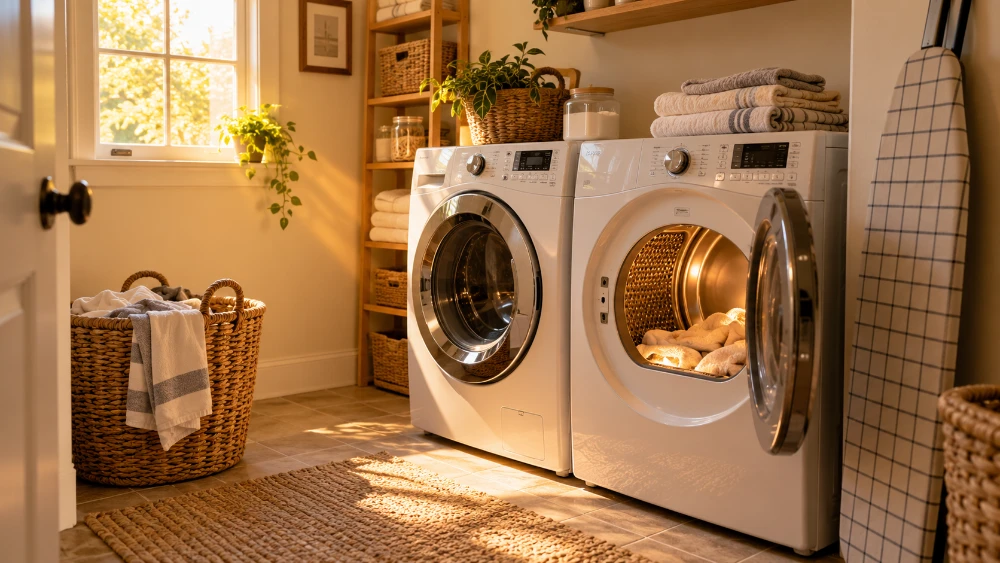
If your laundry room suddenly feels several degrees warmer than the hallway, kitchen, or bedrooms, you probably aren’t imagining it. Late summer can expose comfort problems in small utility spaces that barely get noticed during cooler parts of the year.
Laundry rooms have an unusual combination of conditions: heat-producing appliances, limited floor space, moisture, exterior walls, ductwork, and sometimes very little ventilation. Add several back-to-back loads of laundry on a hot August afternoon, and a previously comfortable room can start feeling surprisingly stuffy.
Fortunately, a warm laundry room does not automatically mean something is broken. Sometimes the solution is as simple as improving airflow or changing when you run the dryer. Other situations deserve a closer look, particularly when excessive heat appears alongside longer drying times, unusual odors, or weak dryer exhaust.
Understanding where the heat comes from makes it much easier to create a laundry space that feels comfortable, functions efficiently, and works better as part of your home.
Your Dryer Produces More Heat Than You May Realize
The dryer is usually the first place to look.
Both electric and gas dryers intentionally produce substantial heat to remove moisture from clothing. Much of the hot, humid air should travel through the exhaust duct and leave the house, but the appliance itself also radiates heat while operating.
In a large room, that extra warmth may barely be noticeable. In a compact laundry closet or small utility room, it can change the room temperature quickly.
The effect becomes more obvious when you run multiple loads consecutively.
Three loads of towels, bedding, school clothes, and sportswear can keep the dryer operating for hours. During cooler months, the surrounding house may absorb that extra heat without much trouble. During late summer, when walls, attic spaces, garages, and outdoor air are already warm, the laundry room has a much harder time cooling between cycles.
The washer can contribute a smaller amount of warmth as well, especially when hot-water cycles are used frequently.
A Simple Test
Pay attention to when the room becomes uncomfortable.
If the laundry room feels reasonably comfortable before you begin washing but becomes noticeably warmer after the dryer has been running, the appliances are probably contributing significantly.
If the room stays extremely warm even when the washer and dryer have not operated for several hours, however, insulation, HVAC airflow, solar heat, or another part of the room may also be involved.
Limited Ventilation Can Trap Warm Air
A small laundry room does not necessarily receive the same airflow as the main living areas of a house.
Some laundry rooms have:
- No window
- Only one HVAC supply vent
- No nearby return-air vent
- A tightly closed solid door
- Appliances positioned close together
- Cabinets surrounding the machines
- Limited open floor space
None of these features is automatically a problem. Combined, however, they can make it difficult for accumulated heat to escape.
Think about the difference between a dryer running in a spacious open basement and one operating inside a narrow laundry closet. The dryer produces heat in either case, but the smaller enclosed space has much less air available to absorb and redistribute it.
That is one reason laundry-room layout matters just as much as appliance performance.
Check Whether Air Can Actually Move
Look around the room when the appliances are off.
Is the HVAC supply register covered by a hamper or storage basket? Has a shelf been installed directly in front of an air vent? Is the door almost always shut while the dryer operates?
Small changes may improve comfort considerably.
Avoid blocking HVAC registers with furniture, laundry baskets, drying racks, or piles of clothing. If your laundry space uses a louvered or vented door as part of its intended airflow, keep those openings clear as well.
When changing doors, cabinetry, or appliance placement, remember that utility rooms have functional requirements in addition to decorating potential. Always follow appliance and building requirements for clearances and ventilation.
Check the Dryer Exhaust Path
A properly functioning dryer exhaust system carries hot, moisture-heavy air out of the house.
When airflow through that system becomes restricted, drying performance may suffer and more heat can accumulate around the dryer.
Possible restrictions include:
- Lint buildup
- A crushed or sharply bent transition duct
- A blocked exterior vent hood
- Excessively long or complicated duct runs
- Loose or damaged duct connections
The easiest maintenance habit is also one of the most important: clean the dryer’s lint screen according to the manufacturer’s instructions, typically around each drying cycle.
You can also occasionally observe the exterior dryer vent while the machine is operating. Its flap or damper should generally open when air is being exhausted. If clothing suddenly requires much longer to dry or airflow appears unusually weak, further inspection may be appropriate.
The visible section behind the dryer deserves attention too. Moving an appliance, storing objects behind it, or pushing the dryer too close to the wall can sometimes compress the transition duct.
Service scope can vary when homeowners research the best dryer vent cleaning companies in Emmaus, so it is useful to understand whether the entire exhaust path needs attention rather than assuming the problem is limited to the short section directly behind the appliance.
Never disconnect the dryer vent and allow the appliance to exhaust into the laundry room as a way to solve an airflow problem. Dryer exhaust is intended to be routed appropriately to the outdoors.
Insulation Can Make a Laundry Room Feel Much Hotter
Where the laundry room sits within the house makes a difference.
A laundry room located completely inside the conditioned portion of a home may stay relatively stable. One next to a garage, attic space, or sun-exposed exterior wall can experience much larger temperature swings.
Consider a laundry room with one wall shared with a hot garage and another facing the afternoon sun. Before the dryer even starts, those surrounding surfaces may already be transferring heat toward the room.
Older homes can be especially variable because insulation levels may differ substantially between additions, garages, utility rooms, and the original structure.
Potential heat-gain areas include:
- Exterior walls
- Ceilings underneath hot attic spaces
- Walls shared with garages
- Poorly sealed exterior doors
- Gaps around plumbing or utility penetrations
- Uninsulated or poorly insulated ducts
You do not need to tear open walls simply because the room feels warm. Start with observation.
Touch different wall and ceiling surfaces when the room is hot. If one surface consistently feels noticeably warmer than the others, its location may offer a clue about where heat is entering.
The HVAC System May Not Be Reaching the Room Effectively
Sometimes the laundry room itself is not generating all the extra heat. The house simply may not be distributing conditioned air evenly.
A small utility room at the end of a duct run can feel warmer than spaces closer to the HVAC equipment. A closed or obstructed supply register can make the difference even more noticeable.
Before assuming a major HVAC problem, check the simple things:
- Make sure the supply register is fully open.
- Remove storage items that restrict airflow.
- Check whether the room becomes cooler when the dryer is not operating.
- Compare airflow at the laundry-room register with nearby rooms.
- Replace or clean HVAC filters according to your system’s maintenance requirements.
Avoid closing registers throughout the house in an attempt to force extra air into one room unless your HVAC system is specifically designed for that type of adjustment. Residential systems depend on balanced airflow, and drastic changes can create other problems.
If the laundry room remains unusually hot while surrounding rooms stay comfortable, an HVAC professional can evaluate whether the room is receiving appropriate airflow.
Room Layout Can Intensify Appliance Heat
Laundry rooms are often designed around maximizing storage, which makes sense. Between detergent, baskets, cleaning products, towels, ironing equipment, and household supplies, every inch can feel valuable.
But filling every available gap can unintentionally restrict airflow.
A dryer wedged tightly between cabinets, walls, hampers, and shelving has less open space around it for heat to dissipate.
That does not mean you need to sacrifice organization. It simply means storage should work with the appliances rather than against them.
Give Appliances Room to Function
When planning a laundry-room refresh:
- Follow the appliance manufacturer’s clearance recommendations.
- Avoid storing items directly against dryer vents or openings.
- Keep the area behind the machines reasonably accessible.
- Don’t allow baskets to pile up in front of HVAC registers.
- Use vertical storage when floor space is limited.
- Keep frequently used supplies accessible without crowding appliance connections.
This is where practical design matters.
A beautiful laundry room should also make everyday chores easier. Thoughtful shelving, hooks, cabinet placement, and clear walking space can improve both appearance and function.
Late-Summer Laundry Habits Add Up
There is another explanation that has nothing to do with the house itself: you may simply be doing more laundry.
Late summer often brings a change in household routines. School clothing comes back into rotation. Sports uniforms need regular washing. Vacation bedding and towels get cleaned. Guest linens may need refreshing. Seasonal clothing begins moving in and out of storage.
Suddenly, the washer and dryer are running far more often.
Back-to-back dryer cycles allow very little time for the room to return to its normal temperature.
If this sounds familiar, try changing the laundry schedule before making changes to the room.
Instead of running four dryer loads consecutively, spread them across the day when practical. Running heat-producing appliances during cooler portions of the day may also make the room more comfortable.
Small Changes That Can Make the Laundry Room More Comfortable
You may not need a renovation to reduce the heat.
Start with the inexpensive adjustments first.
| What You Notice | What to Check |
|---|---|
| Room gets hot only while dryer runs | Dryer heat, room airflow and ventilation |
| Clothes suddenly take longer to dry | Lint screen and dryer exhaust airflow |
| Room is hot even when appliances are off | Insulation, solar heat and HVAC airflow |
| One wall or ceiling feels especially warm | Adjacent garage, attic or exterior exposure |
| Air vent feels weak | Register obstruction or HVAC airflow |
| Dryer area is much hotter than the rest of the room | Appliance clearance and exhaust duct |
Then consider a few practical improvements.
Keep Surfaces and Vents Clear
Laundry rooms easily become storage rooms.
Baskets get stacked on the floor. Cleaning supplies accumulate. Folding racks stay open between loads. Over time, belongings can unintentionally block air movement.
A quick decluttering session may make the room more functional while helping you identify vents, ducts, and appliance connections that have become difficult to see.
Use Vertical Storage
If floor space is tight, think upward.
Wall-mounted shelves, cabinets, hooks, and slim organizers can free space around the washer and dryer. Keeping the floor clearer also makes appliance inspection and routine cleaning easier.
Reduce Unnecessary Heat
If your laundry routine allows it, experiment with lower-temperature washer settings and appropriate dryer settings for the fabric being dried.
Drying clothing longer or hotter than necessary wastes energy and keeps the appliance producing heat for additional time.
Follow garment labels and appliance instructions rather than automatically choosing the hottest setting.
Create a Better Folding Zone
Sometimes the laundry room feels more uncomfortable simply because you spend too much time standing beside a hot dryer.
If space allows, create a folding surface slightly away from the appliance. A countertop over front-loading machines, a wall-mounted fold-down table, or a nearby counter can make the room easier to use without adding clutter.
Don’t Forget Humidity
Temperature is only part of what makes a laundry room feel uncomfortable.
Moisture matters too.
A small amount of additional humidity can make warm air feel much more oppressive. Washing machines, damp clothing, utility sinks, and improperly exhausting dryers can all influence moisture levels.
Watch for signs that moisture may be accumulating:
- Persistent condensation
- Musty odors
- Damp-feeling walls or surfaces
- Peeling paint
- Swelling around trim or cabinetry
- Visible mold or mildew
Those symptoms deserve more attention than ordinary appliance warmth.
Keeping washer doors and detergent compartments maintained according to manufacturer recommendations can also help prevent stagnant moisture and odors inside the machine.
When Is a Hot Laundry Room Actually a Warning Sign?
A room becoming warmer while the dryer operates can be normal. A dramatic change in appliance performance or unusual heat should not simply be ignored.
Pay closer attention if you notice:
- Drying cycles taking significantly longer than they used to
- A burning or scorched odor
- Excessive heat around the appliance or electrical connection
- Visible damage to the dryer duct
- Very weak dryer exhaust airflow
- Repeated appliance shutdowns
- Unusual noises
- Heat remaining excessive even when the appliances are off
- Signs of moisture damage around walls or ceilings
If you smell burning, see smoke, or suspect an electrical or gas-related problem, stop using the appliance and have the situation evaluated appropriately.
For less urgent problems, troubleshooting the room systematically can help narrow down the cause.
Think About Comfort During Your Next Laundry-Room Makeover
A laundry-room makeover often begins with colors, tile, cabinets, countertops, or shelving.
Those details matter. But function should come first.
Before installing new cabinetry or moving appliances, spend some time observing how the room actually works during a busy laundry day.
Ask yourself:
- Where does the room feel hottest?
- Is the HVAC register blocked?
- Is there enough room around the appliances?
- Can the dryer duct travel to the exterior without being crushed?
- Is storage making routine maintenance difficult?
- Is the room uncomfortable only during late summer?
- Could laundry loads be scheduled differently?
- Does the space need better lighting or a more practical folding area?
A few inches of additional clearance or a better shelving arrangement can sometimes be more valuable than another decorative accessory.
The goal is a room that looks good and works comfortably.
A Cooler Laundry Room Often Starts With Simple Observation
A hot laundry room is usually the result of several factors working together rather than one dramatic failure.
The dryer creates heat. The room is small. Airflow may be limited. Exterior walls and attic spaces become hotter in August. Several consecutive loads keep adding warmth before the room has a chance to cool down.
Start with the basics.
Clean the lint screen regularly. Keep HVAC vents unobstructed. Look at the visible dryer duct. Give your appliances appropriate breathing room. Spread out heavy laundry days when possible, and pay attention to whether the room remains unusually hot when the machines are not operating.
Those small observations can tell you a lot.
And if you eventually decide to refresh the laundry room, treat temperature and airflow as part of the design. A laundry room should not only look organized in photos—it should be comfortable, accessible, and easy to use on the days when the baskets are full and the dryer seems to be running nonstop.