This post contains affiliate links. As an Amazon Associate, I earn from qualifying purchases, at no extra cost to you. See our disclosure policy.
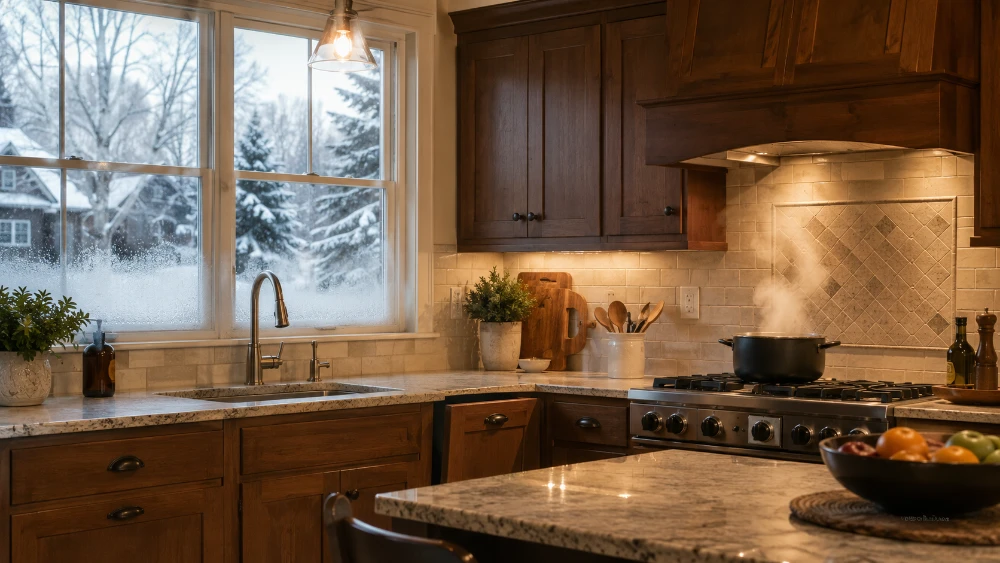
Winter is when a kitchen tells you the truth. The window over the sink fogs up every time a pot boils. A cabinet door that closed perfectly in July drags on its neighbor by January. The exhaust fan hums along while the smell of last night’s dinner settles into the curtains anyway. If you live somewhere with real winters, you already know the season does not create these problems. It reveals them.
That is exactly why homeowners in northern states start pricing kitchen projects in the cold months, and why the first number they hear is so confusing. Ask three people what a kitchen update costs and you will get answers spread across an enormous range. The reason is that they are describing two very different projects, and in a cold climate the line between them matters more than most people realize.
The Two Projects Hiding Inside “New Kitchen”
A refresh keeps your layout and your cabinet boxes and changes what you see and touch: painted or refaced cabinet fronts, new hardware, new countertops, a new backsplash, updated lighting, and a new faucet. In most Wisconsin markets a well-done refresh lands somewhere between ten and twenty-five thousand dollars, depending mostly on the countertop material and whether the cabinets are painted or refaced.
A full remodel opens the room up: new cabinets, possible layout changes, new flooring, and the electrical, plumbing, and ventilation work that comes with moving things. In the upper Midwest, a midrange full remodel typically runs from the low forty thousands well into the seventy thousands, and it climbs from there with custom cabinetry or structural changes.
The refresh costs a third as much, which is why it gets recommended so freely. Whether it is actually the right call depends on questions a paint color cannot answer, and in a cold climate two of them do most of the deciding.
The Moisture Question
Northern homes live through a humidity swing that milder climates never see. Winter air inside a heated house is desert dry, then cooking pushes bursts of steam into it, and every one of those bursts looks for the coldest surface in the room, which is usually the window glass or the inside of an exterior wall cabinet. A house that has been air-sealed and insulated for energy efficiency holds that moisture even longer, because the drafts that once carried it away are gone.
This is why ventilation is the least glamorous and most important line in a cold-climate kitchen budget. A range hood that actually vents outdoors, sized properly for the cooktop and the room, protects everything else you are about to buy. Recirculating hoods that push air through a filter and back into the room do almost nothing for moisture. If the current kitchen shows peeling paint above the stove, chronic window condensation, or a musty smell inside the cabinets on exterior walls, that is moisture talking, and it should be fixed before a dollar goes into surfaces. Sorting out which fixes the room actually needs is where a professional assessment earns its keep, and an Eau Claire kitchen and bath remodeler can usually tell within one walkthrough whether a kitchen is a candidate for a refresh or whether moisture and structure problems mean the budget belongs in a fuller renovation.
The Materials Question
The same humidity swing that fogs the windows also moves your materials. Wood expands and contracts across the seasons, which is why that cabinet door sticks in January and swings free in June. It is also why material choices that are interchangeable in a mild climate genuinely matter here.
Painted solid-wood doors will show hairline cracking at the joints as the wood moves through its seasonal cycle. That is cosmetic, but it surprises people who paid for a flawless finish. Quality plywood cabinet boxes handle humidity swings better than bargain particleboard, which can swell if winter condensation ever reaches it. On floors, tile over an uninsulated slab or a cold basement is beautiful and icy from November through March, which is why in-floor heat shows up so often in northern remodels, while luxury vinyl plank stays warmer underfoot and tolerates the seasonal movement, as long as the installer leaves the expansion gaps the product requires.
None of this says one material is right and another is wrong. It says the cheapest version of a material is punished harder in a cold climate, and the budget should lean toward quality in the pieces that live closest to the moisture and the cold.
How To Know Which Project You Have
A refresh is the right call when the layout already works, the cabinet boxes are square and solid, and the room has no moisture story to tell. In that house, the ten-to-twenty-five-thousand-dollar project delivers most of the visual payoff of a remodel at a fraction of the cost.
The full remodel becomes the honest answer when the boxes are failing, when the ventilation has never been right, or when water has already left its mark. Putting new doors and counters onto a kitchen with an unsolved moisture problem is the renovation equivalent of painting over rust. It looks wonderful for a season or two, and then the old problem climbs back through the new surfaces.
One quiet advantage of a cold climate: winter is the interior season for contractors, and homeowners who plan their kitchen project for the months when outdoor work stops often find better scheduling and more attention than they would competing with the summer rush.
Answer the moisture question first, be honest about the boxes, and the confusing spread of kitchen prices collapses into one clear number: the cost of the project your kitchen actually needs.