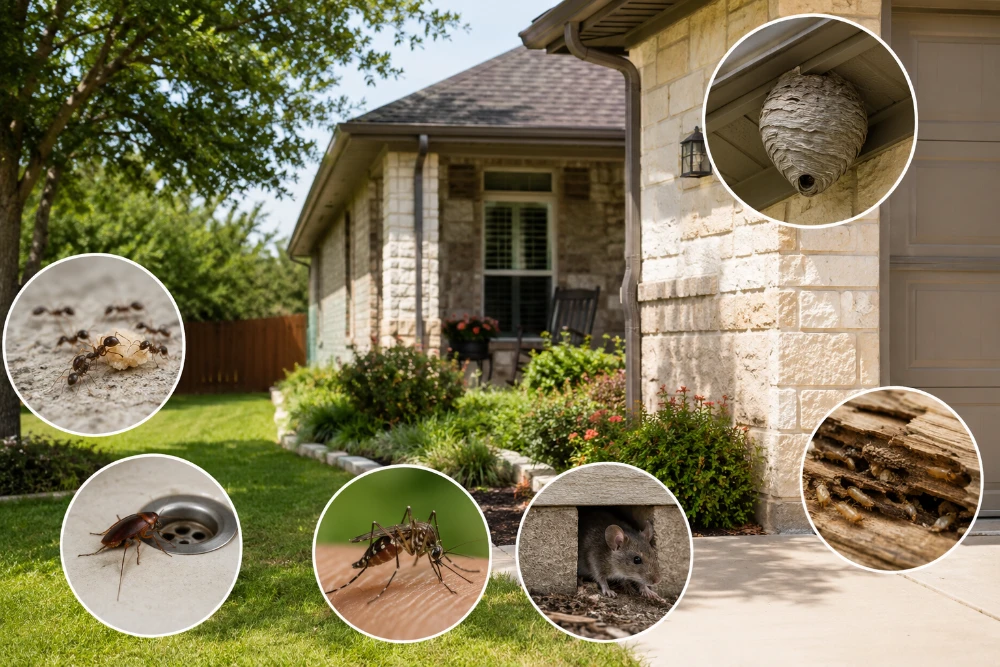
Homes in Temple and Killeen can experience pest activity throughout the year. Warm temperatures, seasonal rainfall, residential landscaping, nearby vegetation, and easy access to food and moisture all create favorable conditions for insects and rodents.
Some pest problems are immediately noticeable, such as ants moving across a kitchen counter or wasps building a nest near an entrance. Others can remain hidden inside walls, attics, garages, or foundations until the infestation becomes more difficult to control.
Effective prevention starts with understanding which pests are most common, why they enter homes, and what conditions allow them to remain. By combining regular property maintenance with timely inspections, homeowners can reduce the risk of recurring infestations and respond before a minor issue develops into a larger problem.
Why Pest Activity Is Common in Temple and Killeen
Central Texas has a climate that supports pest activity during much of the year. Long warm periods allow many insects to remain active, while changes in temperature and rainfall can push pests closer to residential structures.
During hot or dry weather, ants, cockroaches, spiders, and rodents may enter homes in search of water, food, and stable shelter. Heavy rain can flood nests, increase mosquito breeding sites, and drive insects away from saturated soil. Cooler conditions may encourage rodents and other pests to move into attics, garages, wall voids, and storage areas.
Residential development can also disturb natural habitats. Construction, landscaping changes, tree removal, and soil movement may cause insects and rodents to relocate into nearby properties.
Homeowners dealing with repeated activity may need more than a one-time treatment. Professional pest control in Temple, TX can help identify the source of the problem, locate entry points, and address the environmental conditions that allow pests to return.
Ants Around Kitchens, Bathrooms, and Foundations
Ants are among the most common pests found around Central Texas homes. They may enter through cracks in foundations, gaps beneath doors, damaged window seals, plumbing openings, and utility penetrations.
Once ants find a reliable source of food or moisture, they can establish trails between an outdoor colony and an indoor feeding area.
What Attracts Ants Indoors
Common attractants include:
- Crumbs and food residue
- Pet food
- Open waste containers
- Sweet liquids
- Grease beneath appliances
- Moisture around sinks
- Plumbing leaks
- Damp wood
- Unsealed pantry products
Cleaning visible trails may reduce activity temporarily, but it does not necessarily affect the colony. Ants can also change their route when disturbed, making the infestation appear to disappear before returning elsewhere.
How to Reduce Ant Problems
Homeowners can reduce ant pressure by storing food in sealed containers, cleaning spills promptly, repairing leaks, trimming vegetation away from the home, and sealing accessible exterior gaps.
It is also important to identify the species involved. Different ant species may have different nesting habits and may not respond to the same control methods.
Cockroaches in Moist and Protected Areas
Cockroaches are strongly attracted to environments that provide food, warmth, water, and shelter. Kitchens and bathrooms are common problem areas, but cockroaches may also hide in garages, storage rooms, wall voids, drains, cardboard boxes, and spaces around appliances.
Signs of a Cockroach Infestation
Possible warning signs include:
- Live cockroaches, especially at night
- Small dark droppings
- Egg cases
- Shed skins
- Unusual musty odors
- Activity near sinks, drains, or appliances
Seeing one cockroach does not always mean there is a major infestation, but repeated sightings may indicate hidden activity.
Preventive Measures
Good sanitation can significantly reduce the conditions cockroaches need. Food should be stored securely, waste should be removed regularly, and moisture problems should be corrected.
Cardboard boxes and clutter should also be limited, especially in garages and storage areas. These materials provide protected hiding spaces and can make inspections more difficult.
Spiders and the Insects That Attract Them
Spiders often become more noticeable when insect populations increase. Exterior lights, garages, patios, rooflines, eaves, and storage areas may attract insects, which in turn provide food for spiders.
Removing one web does not necessarily solve the problem if the surrounding insect activity remains high.
Where Spiders Commonly Hide
Spiders may be found around:
- Exterior light fixtures
- Window frames
- Garages
- Attics
- Storage boxes
- Patio furniture
- Firewood
- Eaves and rooflines
- Cluttered corners
Reducing spiders often requires limiting their food supply, removing webs, sealing gaps, and controlling insects around the structure.
Outdoor lighting can also affect pest activity. Lights placed directly beside doors and windows may attract flying insects close to potential entry points.
Rodents in Attics, Garages, and Storage Spaces
Mice and rats are more than a nuisance. They can contaminate stored food, damage insulation, disturb storage areas, and gnaw on building materials.
Rodents are capable of entering through small openings around garage doors, rooflines, vents, plumbing lines, and utility penetrations.
Common Signs of Rodent Activity
Homeowners should watch for:
- Droppings
- Gnaw marks
- Scratching sounds
- Damaged food packaging
- Greasy marks along walls
- Shredded nesting materials
- Unusual odors
- Pet attention toward walls or cabinets
Rodents are often most active at night, so homeowners may hear or notice evidence before seeing an animal directly.
Why Exclusion Is Important
Removing existing rodents is only part of the solution. If entry points remain open, new animals can enter the property.
Exclusion may involve sealing gaps, repairing vents, improving garage-door seals, protecting utility openings, and trimming branches away from the roof. Food sources, pet food, birdseed, and waste containers should also be secured.
Mosquitoes Around Yards and Outdoor Living Areas
Mosquitoes can reproduce in surprisingly small amounts of standing water. Containers, plant saucers, clogged gutters, toys, tarps, drainage areas, and unused outdoor equipment may all hold enough water for breeding.
How to Reduce Mosquito Breeding Sites
Homeowners should regularly inspect the yard and remove standing water from:
- Buckets
- Birdbaths
- Plant trays
- Toys
- Clogged gutters
- Outdoor furniture covers
- Wheelbarrows
- Pet bowls
- Drainage areas
Dense vegetation and shaded areas may also provide resting places for adult mosquitoes. Keeping vegetation trimmed and improving airflow around outdoor spaces can make the property less favorable.
Mosquito control is most effective when breeding sites, resting areas, and adult activity are considered together.
Termites and Hidden Structural Activity
Termites can remain concealed while feeding on wood and other cellulose-based materials. They may enter through foundation cracks, expansion joints, plumbing penetrations, wood-to-soil contact, and other protected routes.
Because termites often avoid light and open air, visible damage may appear only after activity has been present for some time.
Possible Warning Signs
Termite-related warning signs may include:
- Mud tubes
- Discarded wings
- Swarming insects
- Hollow-sounding wood
- Damaged trim
- Bubbling paint
- Changes in flooring
- Wood that breaks easily
These signs can sometimes be confused with moisture damage or other structural issues. A professional inspection is usually needed to determine the cause.
Conditions That Increase Termite Risk
Termites are more likely to find favorable conditions where there is:
- Wood touching soil
- Excess moisture near foundations
- Poor drainage
- Leaking plumbing
- Mulch placed against exterior walls
- Stored lumber near the home
- Dead stumps or buried wood
- Limited visibility around foundations
Regular inspections can help identify both active termites and conditions that could support future activity.
How Pests Enter Temple and Killeen Homes
Many infestations begin through small openings that are easy to overlook.
Common access points include:
- Gaps beneath doors
- Damaged screens
- Foundation cracks
- Roofline openings
- Utility penetrations
- Plumbing gaps
- Garage-door edges
- Loose siding
- Attic vents
- Branches touching the structure
Pests may also be brought indoors in packages, cardboard boxes, furniture, firewood, groceries, luggage, and stored items.
A thorough inspection should consider both active pest evidence and the routes pests may be using to enter.
Moisture Problems Can Attract Multiple Pests
Moisture is one of the most important environmental factors in pest activity.
Leaking plumbing, condensation, poor drainage, damaged gutters, overwatering, and standing water can attract or support ants, cockroaches, termites, mosquitoes, and other pests.
Areas That Should Be Checked Regularly
Homeowners should inspect:
- Beneath sinks
- Around toilets
- Near water heaters
- Behind appliances
- Around air-conditioning systems
- Near exterior faucets
- Along foundations
- Beneath decks and patios
- Around gutters and downspouts
Correcting moisture problems can make a property less attractive while also reducing the risk of mold, wood deterioration, and other maintenance issues.
Why One-Time Pest Treatments May Not Be Enough
A one-time treatment may be suitable for an isolated pest issue, but recurring activity usually indicates an unresolved source.
For example, treating ants inside the kitchen may remove visible workers without affecting the outdoor colony. Trapping rodents may not prevent new animals from entering through the same structural gap. Spraying mosquitoes may provide temporary relief while standing water continues to support breeding.
Lasting pest management often requires several connected steps:
- Identifying the pest
- Finding its nesting or harboring areas
- Removing food and moisture sources
- Closing entry points
- Applying an appropriate treatment
- Monitoring for renewed activity
This broader approach helps address why the infestation developed rather than focusing only on the pests currently visible.
Practical Pest Prevention Tips for Homeowners
Consistent maintenance can reduce many common pest risks.
Homeowners can:
- Store food in sealed containers
- Clean crumbs and spills promptly
- Keep pet food covered
- Empty waste containers regularly
- Repair plumbing leaks
- Remove standing water
- Trim vegetation away from exterior walls
- Keep gutters and downspouts clear
- Repair damaged screens
- Seal visible cracks and gaps
- Reduce clutter in garages and attics
- Store firewood away from the structure
- Keep mulch below siding
- Inspect packages before bringing them indoors
- Check foundations for mud tubes or damage
These steps are most effective when performed regularly rather than only after pests appear.
When Professional Pest Control Is Needed
An occasional insect near an open door does not always indicate an infestation. However, repeated sightings, droppings, damaged materials, nests, unexplained noises, mud tubes, or pest activity in several rooms may require professional attention.
Professional help is especially appropriate when:
- The source cannot be located
- Pests repeatedly return
- Rodents or termites may be involved
- Activity is occurring inside walls or attics
- Several pest species are present
- Store-bought treatments have not worked
- Structural entry points are difficult to identify
- The property has recurring moisture problems
Experienced local pest control experts in Killeen, TX can inspect the property, identify contributing conditions, and recommend a treatment plan suited to the type and extent of the infestation.
A Year-Round Approach Provides Better Protection
Pest activity in Temple and Killeen changes with the weather, but it does not disappear completely. Different seasons may bring different pressures, including ants and mosquitoes during warmer periods, rodents during cooler weather, and termites that remain active out of sight.
A year-round prevention strategy combines inspections, sanitation, moisture control, exclusion, appropriate treatments, and ongoing monitoring.
The objective is not only to remove the pest currently visible. It is also to reduce the conditions that make the home accessible and attractive to future infestations.
iPest Solutions provides residential pest-control services for homeowners in the Temple and Killeen areas. A property-specific inspection can help identify current activity, structural vulnerabilities, and practical steps for reducing future pest problems.