This post contains affiliate links. As an Amazon Associate, I earn from qualifying purchases, at no extra cost to you. See our disclosure policy.
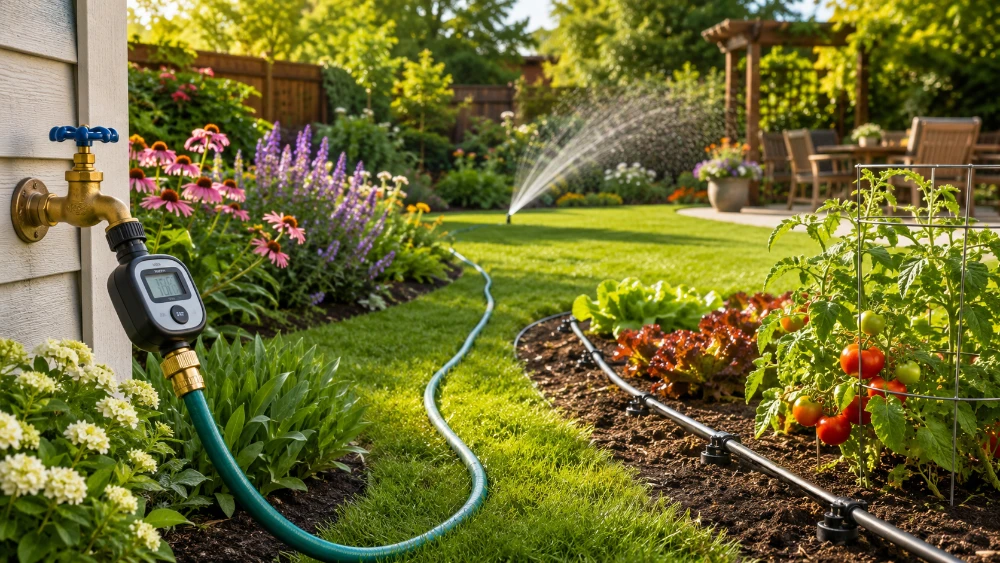
Most of us know how long we water the garden. Far fewer know how much water actually comes out of the hose, sprinkler, or irrigation system during that time. That difference matters because garden water usage can climb surprisingly fast, especially when a sprinkler runs several times a week or multiple irrigation zones operate on the same schedule.
Ten minutes sounds harmless.
But ten minutes through a high-flow sprinkler can use far more water than thirty minutes of carefully controlled drip irrigation. Without measuring what is actually happening, it is easy to water based on routine rather than what your lawn, flowers, vegetables, or shrubs genuinely need.
The good news is that improving outdoor watering does not require turning your yard into a science experiment. A few measurements, some basic calculations, and regular observation can reveal where your water is going and where simple adjustments could make a meaningful difference.
Here is how to get started.
Why Garden Water Usage Is Worth Measuring
Watering is often treated as a matter of time.
Run the sprinkler for twenty minutes. Water the vegetable garden for half an hour. Leave the hose on the flowerbeds while doing something else.
The problem is that time alone tells you very little about garden water usage.
Two hoses can have different flow rates. Two sprinkler heads can distribute dramatically different quantities of water. Even the same outdoor faucet may produce different flow depending on pressure, hose diameter, attachments, and how many irrigation zones are operating.
Measuring water use gives you a more useful picture.
It can help you:
- Reduce unnecessary watering
- Catch leaks or damaged irrigation equipment
- Compare different watering methods
- Adjust sprinkler runtimes more accurately
- Prevent excessive runoff
- Understand which areas of the yard use the most water
- Make seasonal watering changes based on evidence rather than guesswork
There is also a plant-health benefit.
More water is not automatically better. Constantly wet soil can reduce oxygen around plant roots, encourage certain diseases, and create conditions that many garden plants simply do not like.
The goal is not to water as little as possible.
It is to apply the right amount.
Where Is All That Outdoor Water Going?
Before calculating anything, look at where you currently use water outdoors.
For many homes, lawn sprinklers account for the largest share because they cover a broad area and often operate for relatively long periods. But lawns are only part of the picture.
Your garden may include several watering methods.
| Watering Method | Common Use | Efficiency Potential | Common Source of Waste |
|---|---|---|---|
| Lawn sprinklers | Grass and large areas | Moderate | Overspray, wind, runoff |
| Drip irrigation | Beds, shrubs, vegetables | High | Leaks or poor emitter placement |
| Soaker hoses | Borders and garden beds | High | Uneven pressure or excessive runtime |
| Hand watering | Pots and small beds | Varies | Forgetting the running hose |
| Hose-end sprinklers | Lawns and temporary setups | Moderate | Poor positioning and long runtimes |
Each deserves to be evaluated separately.
A beautifully efficient drip line in the vegetable garden will not compensate for a sprinkler spraying the driveway three mornings a week!
How Much Water Does Your Garden Actually Need?
There is no universal answer.
A shaded flowerbed filled with established perennials has very different requirements from a sunny lawn in the middle of summer. Likewise, sandy soil may drain quickly while heavier soil can hold water much longer.
Several factors affect outdoor water demand:
- Plant type
- Root depth
- Soil composition
- Temperature
- Sun exposure
- Wind
- Humidity
- Recent rainfall
- Mulch depth
- Season
- Plant maturity
This is why copying somebody else’s irrigation schedule rarely works perfectly.
Your own landscape needs to guide the decision.
Rather than thinking only in terms of watering minutes, consider both how much water is being delivered and whether it is reaching the root zone effectively.
Watering Time and Water Usage Are Not the Same Thing
This is one of the most useful distinctions to understand.
Imagine two people each watering for thirty minutes.
One uses a hose delivering 3 gallons per minute. The other uses equipment delivering 8 gallons per minute.
Their total use looks like this:
3 gallons × 30 minutes = 90 gallons
8 gallons × 30 minutes = 240 gallons
Same runtime.
Very different consumption.
That is why determining flow rate can make garden water usage much easier to understand.
Flow is commonly measured in gallons per minute, often abbreviated as GPM. Once you know the approximate GPM, you can estimate how much water a hose or irrigation section uses during a normal watering cycle.
The basic calculation is simple:
Gallons Used = Gallons Per Minute × Minutes Running
No complicated math required.
How to Measure Water Flow From a Garden Hose
You can perform a rough flow test with nothing more than a bucket and timer.
Choose a bucket with a known capacity, such as five gallons.
Then:
- Turn the outdoor faucet on to the normal level you use for watering.
- Place the hose into the bucket.
- Start a timer.
- Record how long it takes to fill the bucket.
- Use that result to estimate gallons per minute.
For example, if a five-gallon bucket fills in exactly one minute, your approximate flow is 5 GPM.
If you normally water for twenty minutes:
5 GPM × 20 minutes = 100 gallons
Suddenly, the watering session becomes much easier to understand.
For gardeners who want to track consumption regularly rather than repeating bucket tests, a hose-mounted water flow meter can provide another practical way to monitor the volume passing through an outdoor line.
Either approach is useful.
The important part is moving from “I watered for twenty minutes” to “I applied approximately 100 gallons.”
Measure Your Sprinklers Too
Sprinklers deserve special attention because they can move substantial amounts of water.
Start by estimating their flow rate whenever possible. Manufacturer specifications can help, although real-world flow may vary depending on water pressure and how your irrigation system is configured.
You should also examine where that water lands.
Watch an entire sprinkler cycle at least occasionally.
It sounds basic, but I would rather spend ten minutes watching the sprinklers than spend an entire summer paying to water concrete.
Look for:
- Water hitting sidewalks
- Spray reaching driveways
- Water striking walls or fences
- Areas receiving overlapping coverage
- Dry patches receiving too little water
- Puddling before the cycle ends
- Water running toward drains
Coverage matters as much as volume.
A sprinkler can use a lot of water while still doing a poor job of watering the lawn.
Measure Garden Water Usage by Irrigation Zone
Automatic systems make watering convenient.
They can also hide waste because the irrigation happens without much attention from us.
Instead of evaluating your system as one big unit, examine each zone independently.
A lawn zone may need a very different runtime from a landscaped bed. Shrubs with established root systems may require less frequent watering than shallow-rooted plants, while a vegetable garden may need a completely different schedule again.
Create a simple irrigation record.
| Area | Flow Rate | Runtime | Weekly Cycles | Estimated Weekly Use |
|---|---|---|---|---|
| Front lawn | 8 GPM | 20 min | 3 | 480 gal |
| Flowerbeds | 2 GPM | 25 min | 3 | 150 gal |
| Vegetable garden | 1.5 GPM | 30 min | 4 | 180 gal |
Numbers like these make garden water usage much more tangible.
You may discover that one zone consumes several times more water than everything else combined.
That does not automatically mean the zone is inefficient. A large lawn naturally requires more water than a small flowerbed.
But now you know where to investigate first.
Watch for Signs of Overwatering
Plants communicate.
You just have to pay attention.
Obvious signs of excessive irrigation include standing water and soggy soil, but the symptoms can be more subtle.
Watch for:
- Persistently wet soil long after watering
- Water running across pavement
- Yellowing foliage
- Mushrooms appearing frequently in turf
- Soft or declining plants despite regular watering
- Areas where the soil never seems to dry
- Shallow lawn rooting
- Moss or algae developing in consistently damp locations
Runoff is particularly important.
If water is flowing away from your lawn before the irrigation cycle ends, increasing runtime will not solve the problem. The soil may simply be unable to absorb water at the rate your sprinkler is applying it.
Shorter cycles separated by absorption periods can sometimes work better.
Find Irrigation Waste Before It Becomes Expensive
A small irrigation problem can waste a surprising amount of water when repeated day after day.
Walk your irrigation areas while the system is operating.
Inspect sprinkler heads carefully.
A damaged head might shoot a narrow stream across the yard rather than distributing water evenly. A loose hose connection may drip constantly. A cracked drip line could release much more water than the surrounding emitters.
Pay attention to sudden changes in garden water usage, too.
If a zone normally uses roughly the same amount of water but suddenly begins consuming considerably more without a schedule change, inspect it.
Possible causes include:
- Broken sprinkler heads
- Loose fittings
- Split hoses
- Damaged underground lines
- Stuck valves
- Missing drip emitters
- Excessive pressure
Measurement gives you a baseline.
Without one, unusual consumption is harder to recognize.
Sprinklers vs. Drip Irrigation
Drip irrigation is often described as more efficient than sprinklers.
Generally, it has strong advantages because water can be delivered close to plant roots rather than sprayed across a broad area.
But installation and management still matter.
A badly positioned drip emitter may water empty soil. A leaking line can waste water unnoticed. A system that runs twice as long as necessary is still inefficient.
Sprinklers face different challenges.
Wind can move droplets away from their intended target. Hot conditions increase evaporation. Poorly aimed sprinkler heads may water pavement instead of plants.
So avoid judging efficiency by equipment type alone.
Measure the results.
That is one reason tracking garden water usage is valuable: it replaces assumptions with information specific to your yard.
Let Weather Change Your Watering Schedule
Gardens do not experience the same conditions every week.
Your irrigation schedule should not behave as though they do.
A watering routine that works during hot, dry weather may be completely unnecessary after several rainy days.
Temperature matters.
So does wind.
Humidity can influence how quickly moisture is lost, while cloudy conditions can reduce evaporation compared with intense sun.
If you use an automatic irrigation controller, review the schedule periodically rather than setting it once in spring and ignoring it until fall.
Seasonal adjustments can produce substantial water savings.
Put a Rain Gauge in the Garden
A rain gauge is inexpensive, simple, and incredibly useful.
Weather apps are helpful, but rainfall can vary considerably even within the same general area. Your garden’s actual rainfall is what matters.
Place a gauge in an open location away from roofs, trees, and irrigation spray.
Check it after storms.
If your garden received significant rainfall overnight, running an automatic sprinkler early the next morning may accomplish nothing except adding more water to already moist soil.
Combining rainfall data with your irrigation records gives you a much clearer view of actual garden water usage.
Improve the Soil Before Adding More Water
Sometimes irrigation is not the real problem.
The soil is.
Compacted soil may absorb water slowly, creating runoff even when plants deeper in the ground remain thirsty. Very sandy soil may drain quickly and struggle to retain moisture.
Improving soil structure can help your garden make better use of every watering session.
Depending on your landscape, useful strategies may include:
- Adding compost
- Applying organic mulch around plants
- Aerating compacted lawn areas
- Avoiding unnecessary soil compaction
- Improving garden-bed organic matter over time
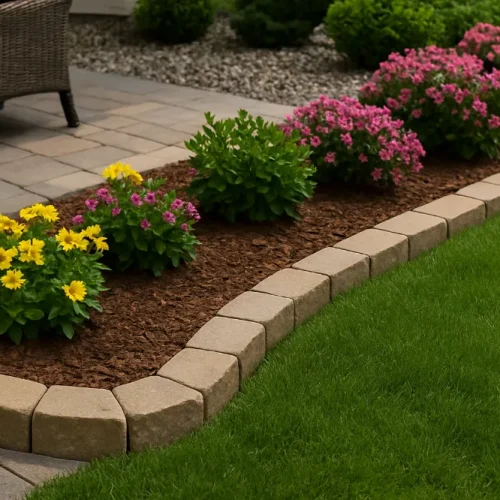
Mulch is particularly valuable around many shrubs, flowers, and vegetables because it helps limit evaporation from exposed soil.
Just keep it away from direct contact with trunks and plant crowns where excessive moisture can cause problems.
Water When Conditions Favor Absorption
Early morning is often an excellent watering window.
Temperatures tend to be cooler, winds may be lighter, and water has more opportunity to soak into the soil before strong daytime heat increases evaporation.
That said, timing is only one part of efficiency.
Running an inefficient sprinkler at 6 a.m. does not magically make it efficient.
Flow, coverage, soil absorption, plant needs, and runtime still matter.
Think of watering time as one adjustment among several.
Group Plants With Similar Water Needs
Your irrigation system should reflect your landscaping.
A bed filled with drought-tolerant plants should not automatically receive the same schedule as thirsty annual flowers nearby.
Grouping plants by water demand makes irrigation much easier to control.
This practice is particularly useful when designing new garden beds.
Place plants with similar moisture requirements together, then configure drip lines or watering routines accordingly.
You avoid the frustrating situation where one plant is drowning while another is still thirsty.
Adjust Irrigation Runtime With a Purpose
Once you know your approximate garden water usage, you can start refining it.
Do not make dramatic reductions just to chase a smaller number.
Make controlled changes.
If a zone appears to be overwatered, shorten its runtime slightly and monitor what happens over the following days. Check soil moisture below the surface. Watch plant condition.
Then adjust again if needed.
Gardens respond better to thoughtful changes than random ones.
You are trying to find the point where plants receive sufficient water without unnecessary loss through runoff, leaks, overspray, or excessive frequency.
Keep a Simple Garden Water Log
You do not need a complicated spreadsheet.
A notebook works perfectly well.
Record:
- Date
- Area watered
- Watering method
- Approximate flow rate
- Runtime
- Estimated gallons used
- Recent rainfall
- Soil condition
- Any schedule changes
After several weeks, patterns become much easier to see.
Perhaps your flowerbeds stay moist long enough that three weekly watering sessions can become two.
Maybe one sprinkler zone consistently produces runoff after fifteen minutes.
Or perhaps your vegetables genuinely need more frequent watering during a hot spell.
A record turns those observations into decisions.
Practical Ways to Reduce Garden Water Usage
Start with waste, not with your plants.
That distinction matters.
Before cutting irrigation dramatically, eliminate the water that is providing little or no benefit.
Focus on:
- Repairing hose leaks
- Replacing damaged sprinkler heads
- Redirecting overspray
- Fixing dripping connections
- Adjusting irrigation zones independently
- Reducing watering after rainfall
- Applying mulch where appropriate
- Improving compacted soil
- Moving drip emitters closer to root zones
- Checking irrigation systems throughout the season
One small repair can sometimes save more water than repeatedly shortening every irrigation cycle.
Efficiency Does Not Mean Using the Least Water Possible
This point deserves emphasis.
A healthy garden requires water.
Trying to achieve the smallest possible number can lead to stressed lawns, wilting vegetables, damaged trees, and struggling ornamental plants.
Instead, measure garden water usage so you can identify unnecessary consumption while continuing to give your landscape what it actually needs.
Efficient watering means putting water where it provides value.
- Not on the driveway.
- Not down the storm drain.
- Not through a leaking hose connection.
- And certainly not into soil that is already saturated.
How Often Should You Measure Garden Water Usage?
You do not need to calculate every drop every day.
Check your system when the information will help you make a decision.
Good times include:
- At the beginning of the main watering season
- After changing irrigation equipment
- After installing a new sprinkler
- When adding new landscaping
- Following irrigation repairs
- During unusually hot or dry periods
- When one area suddenly appears wetter than normal
- Whenever outdoor water consumption seems unusually high
Periodic checks are enough for most gardens.
The objective is awareness, not constant monitoring.
Smarter Watering Starts With Knowing the Numbers
Gardens are easier to manage when you stop guessing.
Measure a hose’s flow. Watch your sprinklers operate. Calculate approximate gallons per cycle. Track rainfall. Check the soil. Then compare what you are applying with what your plants actually seem to need.
That process makes garden water usage visible.
And once it is visible, improving it becomes much simpler.
You may discover a leaking connection that takes five minutes to repair. You might find that one irrigation zone can run ten minutes less without affecting the lawn. Or you may learn that your carefully managed garden is already using water efficiently.
All three outcomes are useful.
The point is not to obsess over every gallon.
It is to understand where your outdoor water goes, make deliberate adjustments, and create a garden that stays healthy without wasting a resource you never needed to waste in the first place.