This post contains affiliate links. As an Amazon Associate, I earn from qualifying purchases, at no extra cost to you. See our disclosure policy.
Commercial cabinetry takes a beating. Retail fixtures, office storage walls, restaurant service areas, and hospitality built-ins all demand materials that hold up under daily stress without looking worn after a year. Aluminum profiles meet that standard in ways that wood or steel often can’t, but picking the wrong one leads to structural problems, poor aesthetics, or costly rework. If you’re specifying or sourcing materials for commercial cabinet projects, getting this right saves time, money, and headaches down the line.
Understanding Profile Types and Their Structural Roles
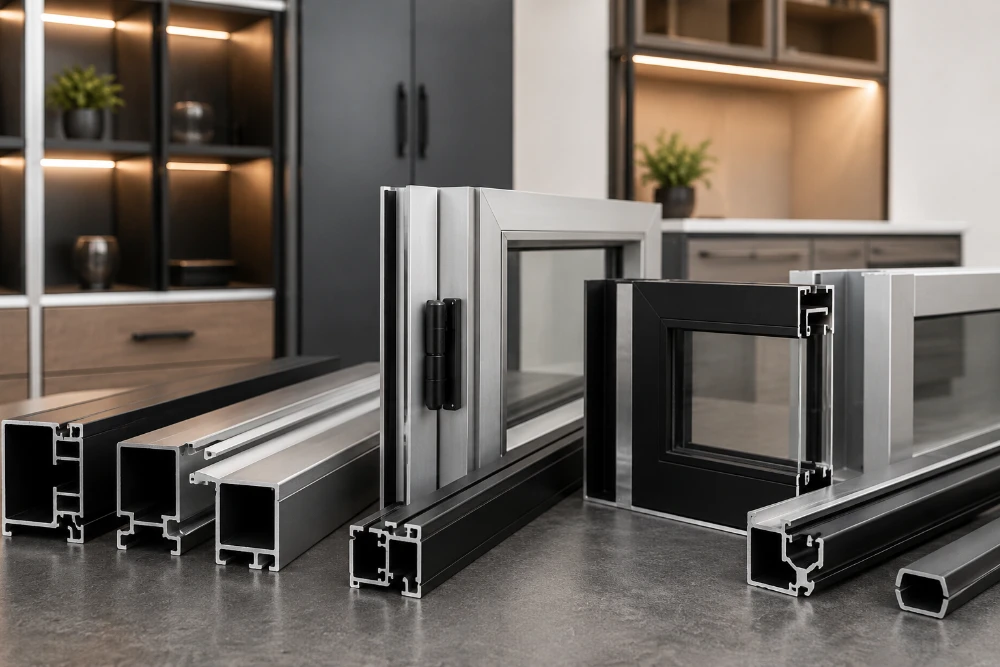
Every profile type serves a different structural function. This is where most commercial buyers start their research. Working with a reputable aluminum profile manufacturer gives access to a full range of product lines, from standard frame extrusions to sophisticated hinged door systems, so you can match the right profile to your specific cabinet configuration. The main categories you’ll encounter include frame profiles, door frame profiles, structural tubes, sliding door rails, and wall panel systems. Each carries a distinct load-bearing role and aesthetic footprint; mixing them without planning produces inconsistent results.
Frame Profiles vs. Structural Tubes
Frame profiles form the backbone of cabinet carcasses. They define the outer dimensions of a unit, provide mounting points for shelves and doors, and determine how units connect to walls or floors. In commercial settings, you’ll choose between a heavier-gauge frame profile and a lighter one based on what the cabinet must hold. A retail display holding decorative objects has very different requirements than a kitchen service cabinet holding heavy equipment. Structural tubes work differently. They’re used for open shelving and modular display units where an industrial, minimal look is the design goal.
Square tube profiles in the 15×15 mm to 25×25 mm range show up constantly in contemporary commercial interiors because they stack cleanly, accept standard hardware, and create a grid-like visual that reads as intentional rather than utilitarian. The decision between frame profiles and structural tubes often boils down to whether the cabinet needs closed, panel-based construction or an open, architectural one. Both require the same careful attention to wall thickness, alloy grade, and finish specification.
Door Frame Profiles for Panel Assembly
Here’s the thing: door frame profiles are a specialized category that many commercial buyers underestimate. In high-traffic settings, doors take more abuse than the cabinet body itself, so the profile that holds a glass or wood panel in place must be precisely engineered. The most critical spec is the rebate depth, which determines how securely the panel seats inside the frame. Too shallow and the panel rattles or falls loose under vibration; too deep and the glass or wood panel requires custom sizing that adds cost. For commercial projects, hunt for door frame profiles that accommodate tempered glass, since most commercial codes require it in public-facing installations.
Also check the hinge assembly: some door frame profiles have built-in hinge pockets rated for 160-degree or 180-degree opening, which matters enormously in tight commercial spaces where a door that swings past 90 degrees creates a clearance problem. And folding door systems that use these profiles can close off large sections of storage without consuming floor space, making them a smart pick for hospitality and office environments.
How to Evaluate Alloy Grade, Finish, and Dimensional Tolerances
Selecting aluminum profiles for commercial cabinet projects means going beyond catalog photos. The performance characteristics that matter most are alloy grade, surface finish specification, and dimensional tolerance; none of these show up clearly in a product image.
Alloy Grade and Wall Thickness
The most common alloy for extruded aluminum profiles in cabinetry is 6063-T5 or 6061-T6. The 6063 series offers better surface quality and anodizes cleanly, which makes it the default choice for visible cabinet components in commercial interiors. The 6061 series is stronger but harder to finish to a high standard, so it works better for structural applications where the profile won’t be exposed. Wall thickness matters just as much. For a commercial cabinet that handles regular use, profiles with a wall thickness below 1.2mm are generally too thin to maintain their geometry over time, especially in door frames that open and close hundreds of times a week.
A wall thickness of 1.5mm to 2.0mm is the practical range for most commercial door and frame applications. Heavier structural profiles used in base or wall-mounted units may go up to 3.0mm depending on the load specification. Always ask the manufacturer for a cross-section drawing so you can verify wall thickness before ordering; catalog descriptions sometimes round these figures.
Finish Specifications That Survive Commercial Use
Anodizing is the finish standard for aluminum profiles used in commercial cabinets. It creates a hard oxide layer directly in the metal surface, so it won’t peel, chip, or scratch the way paint does. For commercial projects, the minimum acceptable anodized coat thickness is 10 microns; 15 to 20 microns is the right target for high-traffic installations like retail or food service environments. Black anodized profiles typically require a thicker coat than silver or natural finishes because the dye process leaves the oxide layer slightly more porous. Powder coating offers an alternative; it provides a wider color range but adds to the profile’s outer dimensions, which affects how panels seat inside door frames.
If you specify powder-coated profiles, account for the added layer thickness in your joinery calculations. Mill finish (raw aluminum) isn’t appropriate for most commercial cabinetry because it oxidizes unevenly and shows fingerprints badly. Whatever finish you choose, get a coated sample and run an abrasion test before signing off on a large order.
Sourcing, Lead Times, and Custom Sizing Considerations
The sourcing side is often where commercial projects run into delays. Standard profiles ship quickly from stock, but commercial cabinet projects frequently require non-standard lengths or custom cross-sections that trigger lead times of four to eight weeks. Plan your profile sourcing early in the project schedule, not after the cabinet shop has finalized drawings. For large commercial installs, coordinate directly with the profile supplier on cut lengths rather than buying full sticks and cutting on-site. This reduces waste, speeds assembly, and keeps dimensional consistency tighter than field cutting can achieve.
Ask about minimum order quantities for custom sizes. Some suppliers require a minimum run of 200 to 500 linear feet for a custom extrusion die, which is a real budget factor on smaller projects. For modular commercial systems where the same profile repeats across many cabinets, investing in a custom die often pays back quickly through reduced fabrication labor. Always verify that the supplier’s tolerance spec matches your shop’s assembly tolerance, since a profile that runs 0.3mm wide on every piece creates compounding fit problems in a large multi-unit installation.
Conclusion
Getting the right aluminum profiles for commercial cabinet projects requires understanding structural roles, material specifications, and realistic sourcing timelines. Match profile type to cabinet function, verify alloy grade and anodize thickness against the demands of your specific environment, and engage suppliers early enough to avoid schedule pressure.
Projects that treat profile selection as a procurement detail rather than a design decision tend to produce cabinets that look fine at installation but fail in service within a few years. The right profile spec, confirmed before fabrication begins, is one of the most cost-effective investments a commercial cabinet project can make.