This post contains affiliate links. As an Amazon Associate, I earn from qualifying purchases, at no extra cost to you. See our disclosure policy.
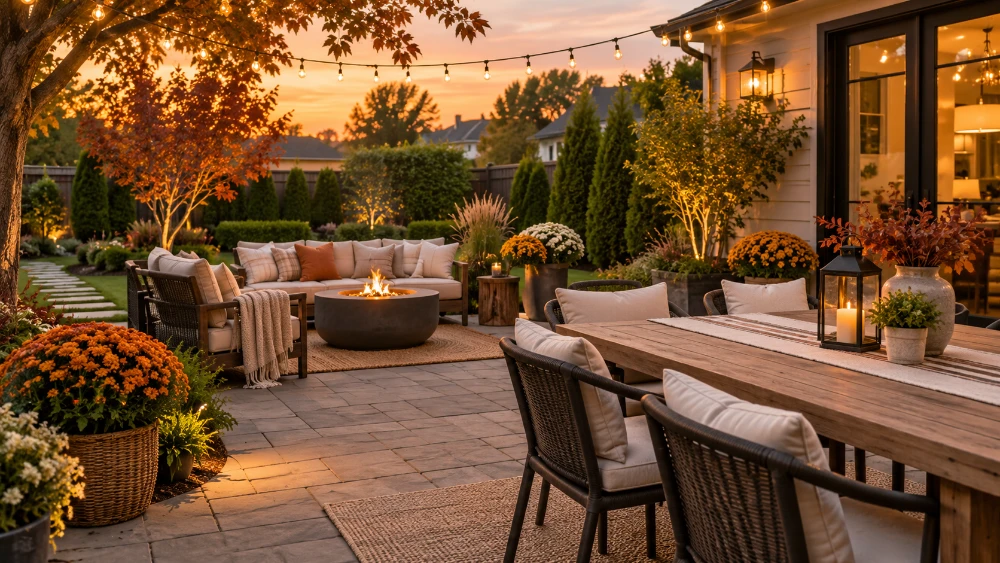
Summer has a way of leaving its mark on the backyard. After months of cookouts, pool days, gardening, kids running across the lawn, and evenings spent on the patio, even a well-kept outdoor space can start to look a little tired.
Fall is a great opportunity to reset it.
And that does not mean launching into an expensive backyard renovation. In fact, some of the best seasonal changes are surprisingly simple: putting away summer clutter, cleaning the patio, rearranging furniture, trimming back overgrown plants, improving the lighting, and bringing in a few cozy details.
The goal is not perfection. It is to create an outdoor space that feels comfortable, intentional, and ready to enjoy as the temperatures cool and entertaining shifts from poolside afternoons to dinners, fire pits, and long conversations outside.
Here is how to give your backyard a practical fall reset without turning it into an enormous weekend project.
Start by Clearing the Summer Clutter
Before adding anything for fall, edit what is already there.
Summer tends to bring a surprising amount of stuff into a backyard: pool floats, watering equipment, children’s toys, sports gear, citronella candles, gardening supplies, extra planters, outdoor games, and cushions that somehow end up everywhere.
Start with a simple sweep of the entire outdoor area.
Divide what you find into three groups:
- Things you will continue using during fall
- Seasonal items that should be cleaned and stored
- Broken, worn, or unnecessary items that can be repaired, donated, recycled, or discarded
Don’t worry about styling anything yet. Just create some visual breathing room.
Removing unused items often makes a backyard look noticeably better before you’ve spent a dollar.
This is also a good opportunity to check outdoor storage. Empty garden boxes or storage benches, sweep them out, and reorganize them so fall essentials are easy to reach. Blankets, grill accessories, outdoor games, and fire-pit tools should not be buried behind pool toys you will not use again until next summer.
Give Your Outdoor Furniture a Quick Refresh
Outdoor furniture works hard during summer.
Dust, pollen, food spills, sunscreen, rain, and general everyday use can make tables and chairs look older than they really are.
Before replacing anything, clean what you have.
Wipe down furniture frames using a method appropriate for the material. Wash removable cushion covers according to their care labels, shake debris from outdoor rugs, and inspect umbrellas or shade structures for mildew, tears, or loose hardware.
Then look at the arrangement.
A summer layout is not always the best fall layout.
During warmer months, chairs may face the pool, lawn, or children’s play area. In fall, you may want the furniture to encourage conversation instead.
Try:
- Angling chairs toward one another rather than lining them up
- Bringing a coffee table or side table within easy reach
- Arranging seats around a fire feature
- Moving dining furniture closer to the grill
- Creating a small conversation zone separate from the main dining area
You may find that simply moving the furniture changes the entire personality of the backyard.
Add Comfort Before Adding Decor
It is tempting to immediately buy pumpkins, lanterns, pillows, and seasonal decorations.
Start with comfort instead.
Ask yourself whether people actually enjoy sitting in the space.
A beautiful chair that is uncomfortable rarely gets used. A gorgeous outdoor dining table will not help much if the lighting is poor or guests constantly have to walk around furniture to get to it.
Prioritize good seating, clear walking paths, useful tables, and lighting. The decorative layers can come afterward.
Refresh Patios, Walkways, and Other Hardscapes
Once the clutter is gone, the patio itself becomes much easier to evaluate.
After a busy summer, outdoor surfaces may have accumulated soil, pollen, grease, spilled drinks, fallen leaves, algae, or discoloration from repeated foot traffic.
Start dry.
Sweep patios and walkways thoroughly before introducing water or cleaning products. Removing loose material first prevents you from turning ordinary dirt into muddy residue that has to be cleaned twice.
Then identify the material you are working with.
Different surfaces require different treatment.
| Outdoor Surface | Good Starting Point | What to Watch For |
|---|---|---|
| Concrete | Sweep, rinse, and spot-clean stains | Excessive pressure can expose aggregate or damage weak areas |
| Brick | Brush loose debris and use gentle cleaning methods | Older mortar joints may be vulnerable |
| Pavers | Sweep joints carefully and spot-clean | Aggressive washing may displace joint sand |
| Natural stone | Use products suitable for the specific stone | Acidic or harsh cleaners may discolor some stone |
| Composite decking | Follow the manufacturer’s cleaning guidance | Abrasive tools can affect the finish |
| Wood decking | Sweep and use wood-appropriate cleaners | Excess water or pressure can damage fibers |
The important point is simple: more pressure does not automatically mean better cleaning.
When researching different approaches, homeowners may encounter local service pages such as pressure washing companies in Springboro that discuss cleaning exterior surfaces. These can provide examples of the types of areas commonly cleaned, but the safest method still depends on your particular patio, deck, driveway, or walkway material.
If you are tackling the work yourself, test any cleaner or cleaning technique in a small, inconspicuous area first.
Pay Attention to the Patio Edges
A patio can be perfectly clean and still look unfinished when the areas around it are messy.
Look at the edges.
Grass creeping over pavers, weeds growing through cracks, leaves collecting behind planters, and soil washing onto walkways can make the whole outdoor area feel neglected.
A quick edge cleanup can make a major visual difference.
Pull weeds, sweep along borders, trim grass where necessary, and remove dead leaves from underneath furniture and containers.
If you use outdoor planters, clean the outside of the pots too. Terra-cotta, ceramic, and lightweight resin containers all tend to collect dust and dirt during summer.
You may not need new planters at all. Freshening up the ones you already own can be enough.
Rework the Landscaping for Cooler Weather
Fall landscaping does not have to mean ripping out half the garden and starting again.
Think of this as editing.
Begin by removing obviously spent seasonal plants and dead foliage. Trim plants that have become so large that they block walkways, seating areas, windows, or outdoor lights.
Sightlines matter more than many homeowners realize.
A shrub extending several feet into the patio can make the area feel smaller. Branches hanging over a pathway can make guests subconsciously avoid that route. Overgrown planting around a sitting area can hide lighting and make the space feel closed in after sunset.
A little selective pruning may accomplish more than adding new plants.
Just avoid treating fall as an excuse to aggressively cut back everything in sight. Different plants have different pruning needs and schedules.
Add Seasonal Interest Without Redesigning the Garden
Once the garden beds are cleaned up, decide whether they actually need anything else.
Sometimes they don’t.
Fresh mulch, tidy borders, and healthy existing plants may provide enough structure.
If your climate supports fall planting, consider introducing a few regionally appropriate plants that offer color, texture, or movement during cooler months.
You can also create seasonal interest with containers.
One large planter near a patio or doorway often has more impact than scattering numerous tiny seasonal decorations around the yard.
Use what makes sense for your climate and home style rather than trying to reproduce someone else’s fall garden exactly.
Create Outdoor “Rooms”
One idea that works especially well when refreshing a backyard is to think of it as a collection of rooms.
You probably organize your interior this way without thinking about it.
The kitchen has one job. The dining room has another. The living room serves a different purpose.
Your backyard can work the same way.
You might have:
- A dining zone
- A grilling zone
- A conversation area
- A fire-pit area
- A quiet reading corner
- An open lawn for games
- A garden area
You do not need walls to separate these spaces.
Outdoor rugs, planters, furniture placement, pathways, lighting, and even changes in ground material can visually define them.
This is especially helpful for fall entertaining because guests understand where to gather naturally rather than clustering immediately outside the back door.
Give the Grilling Area a Seasonal Check
Grilling does not have to end when summer does.
In many homes, fall is one of the nicest times to cook outdoors because the person standing over the grill is no longer doing it in peak summer heat.
Before your first fall gathering, however, give the cooking area some attention.
Clean the grill according to its manufacturer’s instructions and inspect its general condition. Depending on your equipment, this may include checking grates, burners, hoses, connections, grease trays, and other components.
Then clean the surrounding area.
Grease spots, food residue, and debris become especially noticeable after the rest of the patio has been refreshed.
More importantly, make sure the cooking area does not interfere with guest circulation.
People carrying food and hot cooking tools should have a clear route between the grill, serving area, and dining table.
Create a Simple Outdoor Serving Station
You do not necessarily need a built-in outdoor kitchen.
A small weather-appropriate table or cart can do a lot of work.
Use it for:
- Serving platters
- Napkins and utensils
- Condiments
- Drinks
- Grilling tools
- Plates waiting to be filled
Keeping these items close to the cooking area prevents the constant back-and-forth between the kitchen and backyard.
Before buying something new, check your home for a small table, cart, or sturdy piece that could be temporarily repurposed.
Make the Backyard Comfortable After Sunset
One of the biggest seasonal changes is easy to overlook: darkness arrives earlier.
During midsummer, you might eat dinner outside without turning on a single light.
By fall, those same areas can be dark before the evening is over.
That makes lighting both a practical feature and a design tool.
Start with safety lighting.
Make sure people can easily see:
- Steps
- Pathways
- Changes in elevation
- Gates
- Doors
- Deck edges
- Cooking areas
Once those areas are addressed, add softer lighting where people sit.
String lights can help define a patio. Lanterns create small pools of light on tables. Wall-mounted fixtures can illuminate architectural features, while low landscape lights can provide subtle depth around garden beds.
The goal is not to make the backyard as bright as an indoor kitchen.
Layer the light.
A few sources at different heights usually feel much more inviting than one extremely bright fixture.
Bring in Warmth With Textiles
Fall is when outdoor textiles become particularly useful.
A few cushions, throws, and an outdoor rug can make a patio feel more connected to the inside of your home.
You do not have to buy an entirely new seasonal collection.
Look at what you already own first.
Neutral outdoor cushions can often transition easily from summer into fall. Add one or two warmer colors through pillow covers, blankets, or tabletop accessories.
Rust, olive, camel, deep green, muted gold, brown, charcoal, and warm cream can all work beautifully, but the colors should complement your home rather than follow a particular seasonal formula.
A weather-resistant storage box or bench is especially useful for blankets. Guests can grab one when the temperature drops, and everything can be stored again rather than left outside overnight.
Decorate With Natural Materials
Fall decorating can become expensive remarkably quickly.
Fortunately, an outdoor space does not need much.
The season already provides plenty of texture.
Depending on where you live, you may be able to decorate with:
- Interesting branches
- Seasonal foliage
- Pinecones
- Small pumpkins or gourds
- Dried grasses
- Potted herbs
- Fallen leaves in beautiful colors
Keep arrangements simple.
A container of branches on an outdoor table may make a stronger statement than ten small decorations competing for attention.
Natural materials also work particularly well outdoors because they feel connected to the setting instead of looking as though indoor decorations were simply carried onto the patio.
Check the Fire Pit or Outdoor Heater
If your backyard includes a fire pit, fireplace, or patio heater, inspect it before entertaining season begins.
Equipment that has been sitting unused may need cleaning or maintenance. Follow the manufacturer’s instructions and any local rules that apply to outdoor fires or heating appliances.
Keep combustible materials where they belong, and think carefully about furniture placement.
You want people to enjoy the warmth without chairs being pushed too close to a heat source.
For wood-burning fire features, also think about where firewood will be stored. A small, organized supply looks much neater than a loose pile beside the patio.
Don’t Forget the Route From the House
One of the easiest ways to evaluate an entertaining space is to pretend you are a guest.
Start inside.
Walk from the kitchen or living room to the backyard.
What happens along the way?
Is the doorway blocked by shoes, garden equipment, or children’s toys? Is there a dark step outside? Do you have to maneuver around furniture before reaching the patio?
Then walk through the backyard itself.
The route between the house, dining table, grill, fire pit, and other gathering areas should feel obvious.
You should not need signs. The layout itself should guide people.
Make a Small Fall Entertaining Station
A little organization can make spontaneous outdoor evenings much easier.
Choose a basket, cabinet, outdoor cart, or storage bench and keep a few useful entertaining pieces together.
Depending on how you use your backyard, that might include:
- Outdoor-safe serving pieces
- Napkins
- Coasters
- Throws
- Citronella products where appropriate
- Bottle openers
- Outdoor games
- Flashlights
- Grill accessories
The goal is not to create another area that needs constant styling.
It is to reduce the number of times you run back into the house because someone needs a napkin, blanket, or serving spoon.
Use a 60-Minute Backyard Reset When Time Is Short
You do not have to tackle everything at once.
If guests are coming soon, focus on the areas they will actually use.
| Time | Task |
|---|---|
| 10 minutes | Put away obvious summer clutter and toys |
| 10 minutes | Sweep the patio, steps, and main walkway |
| 10 minutes | Wipe down tables and chairs |
| 10 minutes | Trim or remove distracting plants and debris around the gathering space |
| 10 minutes | Check outdoor lighting and arrange the seating |
| 10 minutes | Set up the grill or serving area and add a few simple fall touches |
That one hour may not completely winterize your backyard or finish every maintenance project.
It doesn’t need to.
The idea is to make the areas people see and use feel comfortable and cared for.
Know When to Stop
This may be the most important part of the entire backyard reset.
Stop before your simple seasonal project becomes an unplanned renovation.
You might notice faded patio furniture, old pavers, an outdated fence, or a garden bed you would eventually like to redesign. Make a list for another time.
Not every imperfection needs to be fixed before friends come over.
A backyard becomes inviting because people can relax in it, not because every plant is perfectly trimmed or every piece of furniture coordinates.
Clean the important surfaces. Remove clutter. Provide comfortable seating. Make the pathways safe. Add enough lighting to stay outside after dark.
Then enjoy the space.
Finish With a Guest-Eye Walkthrough
Once the major work is finished, do one final walk through the backyard as though you have never seen it before.
Ask yourself:
- Is there a clear route from the house to the gathering area?
- Can guests see steps and pathways after dark?
- Is the seating arranged for conversation?
- Are tables within reach of the chairs?
- Does anything block the walkway?
- Is the grill area clean and organized?
- Are cushions dry and comfortable?
- Are unnecessary summer items still sitting around?
- Is there somewhere to put drinks and plates?
- Would a blanket be easy to find when the evening gets cool?
These are small details.
But together, they can completely change how the space feels.
A Fall Backyard Should Feel Lived In
The best seasonal backyard reset is not the one that makes your outdoor space look untouched.
It is the one that makes you want to use it.
Summer may have been about swimming, gardening, outdoor games, and long sunny afternoons. Fall brings a different rhythm: dinner outside without the midday heat, warm drinks on the patio, friends gathered around a fire, and evenings that begin just as the outdoor lights come on.
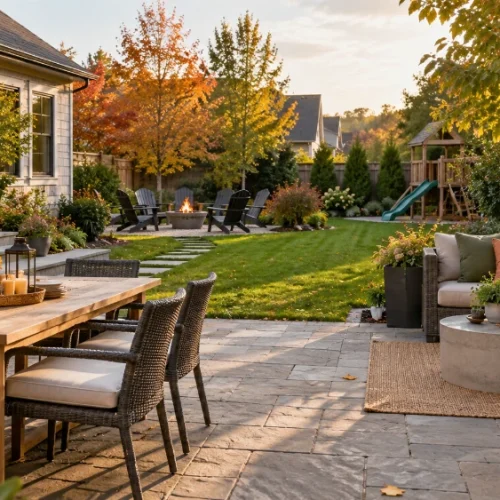
A little cleaning and organizing creates the foundation. Thoughtful furniture placement makes the space more functional. Landscaping gives it structure, while lighting, blankets, and a few natural seasonal touches add warmth.
None of it has to be elaborate.
Start before the first fall gathering is on the calendar, work through the backyard one zone at a time, and concentrate on improvements that make the space easier and more enjoyable to use.
Then put the tools away, light the patio, bring out something good to eat, and enjoy the backyard you already have.