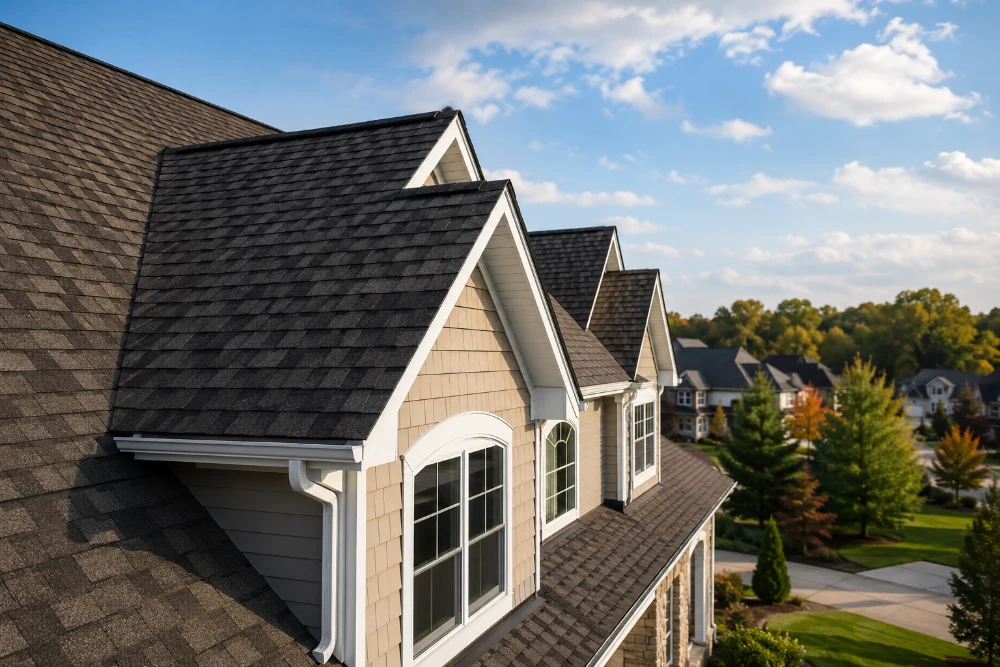
Most roofing decisions get made reactively. The roof starts leaking, or an inspector flags it during a sale, or a storm causes enough damage that replacement becomes unavoidable. Very few homeowners sit down and plan their roof the way they plan other major home investments, and that gap often leads to choices that don’t hold up as well as they could over the long term.
CertainTeed Landmark shingles have built a strong reputation precisely because they reward intentional planning rather than just solving an immediate problem. In Illinois and across the Midwest, where roofs take serious punishment from seasonal weather, choosing a shingle with long-term home planning in mind makes a meaningful difference in what you’re dealing with five, ten, and twenty years down the road.
Here is how CertainTeed Landmark shingles fit into that longer view.
1. They’re Engineered for the Kind of Weather That Shortens Roof Lifespans
The Midwest puts roofs through a full range of conditions. Hot summers, heavy snow loads, freeze-thaw cycles, hail, and wind all take a cumulative toll on roofing materials over time. Shingles that perform adequately in mild climates often struggle under that kind of repeated stress, developing granule loss, cracking, or lifting at the edges years earlier than their rated lifespan would suggest.
CertainTeed Landmark shingles are built with a dual-layered construction that adds thickness and dimensional stability compared to standard three-tab shingles. That construction resists wind uplift more effectively and holds up better under the kind of thermal cycling that Illinois winters and summers create. For homeowners thinking about how long they want their next roof to last, starting with a product engineered for regional conditions rather than a generic one is one of the more consequential early decisions.
2. The Warranty Structure Supports Decade-Long Planning
Homeowners who are thinking ten or twenty years ahead need a product whose warranty reflects that horizon. CertainTeed Landmark shingles come with a limited lifetime warranty when installed by a certified SureStart contractor, covering manufacturing defects and providing wind resistance coverage that varies by product tier. This means that when planning a long-term CertainTeed landmark singles Illinois installation, working with a certified contractor matters as much as the product itself. Contractors such as Lakeland Exteriors & Roofing hold the certifications required to activate the full warranty terms, which protect the homeowner’s investment over the full lifespan of the product.
Understanding what the warranty actually covers, and what conditions it requires, is part of what makes a roofing decision genuinely long-term rather than just optimistic.
3. Color and Style Stability Affects Long-Term Curb Appeal
A roof that looks great the day it’s installed but fades significantly within five years creates a curb appeal problem that homeowners didn’t plan for. CertainTeed Landmark shingles include StreakFighter technology, an algae-resistant treatment that slows the growth of blue-green algae responsible for the dark streaking that appears on roofs in humid conditions. That treatment helps the shingles maintain their appearance over time rather than requiring cleaning or premature replacement to keep the exterior looking cared for.
Color selection also plays into long-term planning in ways that go beyond personal preference. Darker shingles absorb more heat, which can affect attic temperatures and energy costs in the summer months. Lighter colors reflect more but can show dirt or weathering more visibly over time. Thinking about how a color performs over fifteen years, not just how it looks on an installation day, is the kind of consideration that separates a reactive roofing decision from a planned one.
4. Resale Timing and Roof Age Are Closely Connected
Real estate professionals consistently note that roof condition is one of the first things buyers and their inspectors scrutinize. A roof that’s approaching the end of its useful life, or one with visible wear, becomes a negotiating point that can reduce sale price or delay closing. A relatively new roof with documented installation history and a recognized product brand is the opposite: it’s a selling point that reduces buyer hesitation.
According to a 2025 report from the National Association of Realtors, roofing replacement ranks as one of the home remodelling projects with the highest ROI in the home’s resale value. For homeowners who are five to ten years from a planned sale, installing a long-lasting shingle gives them the added advantage of enjoying the aesthetics during that time while being able to recoup the cost when they finally decide to sell.
5. Installation Quality Determines Whether the Product Performs as Rated
A shingle is only as good as its installation. CertainTeed Landmark shingles have strong performance ratings, but those ratings assume correct installation. Improper nailing patterns, inadequate underlayment, poor flashing at penetrations, and incorrect ventilation all compromise how a shingle performs over its lifespan, regardless of the product quality.
Improper installation can shorten the effective lifespan of a roof by years before any manufacturing defect would ever come into play. Choosing a certified installer who follows manufacturer specifications isn’t just about warranty compliance. It’s about making sure the investment performs the way it’s designed to over the full planning horizon.
The Key Takeaway
Roofs are long-term assets, and treating them that way from the start changes the decisions you make and the outcomes you get. Choosing a product with the durability, warranty, and aesthetic stability to serve a home for decades rather than just years is what long-term home planning actually looks like in practice, and it starts with understanding what you’re buying before the installation truck pulls up.