This post contains affiliate links. As an Amazon Associate, I earn from qualifying purchases, at no extra cost to you. See our disclosure policy.
Most homes have a few little things tucked away in drawers, boxes, or baskets. They might be vintage buttons from a grandmother, souvenir pins from trips, handmade ornaments, matchbooks from memorable restaurants, or tiny keepsakes collected over the years.
Individually, these pieces may not seem large enough to decorate with. Together, they can tell a story that feels more personal than anything bought to fill a blank wall.
The key is giving small collections a little intention. With a simple display idea and a defined place in your home, even the tiniest objects can become charming, meaningful decor.
Start With the Story Behind the Collection
Before choosing a frame, shelf, or shadow box, think about what the collection represents.
Is it tied to travel? Family history? A hobby? A favorite color palette? A season of life?
A collection of enamel pins from road trips has a different feeling than a group of antique keys or pressed pennies. One might feel playful and colorful, while the other may lean vintage and quiet. Understanding the mood helps you decide where it belongs and how to display it.
For example, a set of beach-town souvenirs could look right at home in a casual hallway near family photos. A group of heirloom brooches might feel more fitting in a bedroom, dressing area, or small gallery wall.
When the display matches the story, it feels natural instead of cluttered.
Choose One Defined Display Area
Small items can look scattered when they are spread throughout a room. Grouping them in one defined area gives them presence.
This does not mean you need a large wall or a custom cabinet. A narrow ledge, a small frame, the side of a bookcase, or the space above a desk can be enough.
Try choosing one of these simple display zones:
- A shadow box above a console table
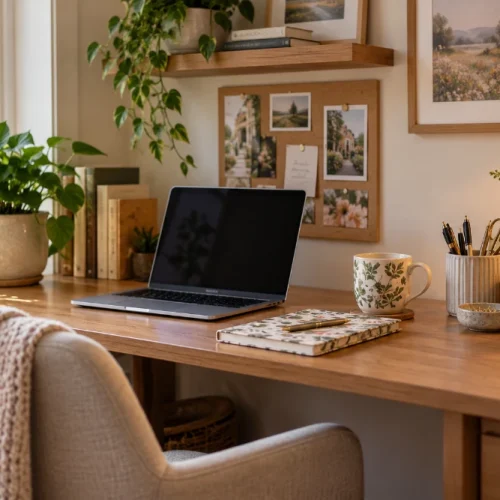
- A cork board in a craft room
- A framed linen panel in a bedroom
- A small tray on a dresser
- A shelf mixed with books and framed photos
- A floating frame in a hallway
Keeping the collection contained helps it read as a design choice rather than a pile of keepsakes.
Use Fabric as a Warm Backdrop
Fabric can make small objects feel more polished. Linen, canvas, velvet, burlap, or even a remnant from an old curtain can create a soft backdrop with texture.
For pins, brooches, medals, patches, and lightweight ornaments, fabric also makes display easy. Stretch the fabric over a piece of foam board, cardboard, or cork, then place it inside a frame or shadow box. The items can be arranged and rearranged without damaging a wall.
A neutral fabric keeps the focus on colorful pieces. A darker fabric can make metallic items stand out. A patterned fabric works nicely if the collection is simple and not too busy.
This approach is especially useful in homes where the decor feels layered, collected, and personal. It adds warmth without making the display feel overly formal.
Mix Function With Decoration
A collection does not always need to sit behind glass. Sometimes it can become part of everyday life.
Pins can be attached to a canvas tote that hangs by the door. Pretty buttons can be sewn onto a pillow cover. Vintage postcards can be clipped to a rotating inspiration board. Small ceramic pieces can hold rings, paper clips, or keys.
If you are starting a new collection or creating designs for a club, shop, or family event, MyEnamelPins offers a helpful starting point for turning small artwork into display-worthy pieces.
The goal is not to make everything useful. It is to let meaningful objects live where they can be seen and enjoyed, rather than hidden away for years.
Create a Rotating Display
One reason small collections become overwhelming is that people try to show everything at once. A rotating display solves this problem.
Choose a limited number of pieces to display for a few months, then swap them out. This works beautifully with seasonal items, travel souvenirs, children’s artwork, craft projects, or family mementos.
For instance, you might display colorful pins and postcards in the summer, then switch to vintage ornaments or metallic keepsakes during the holidays. In spring, pressed flowers, seed packets, and garden markers could take their place.
A rotating display keeps your home feeling fresh without buying new decor. It also gives forgotten items a chance to be appreciated again.
Pay Attention to Spacing
Small items need breathing room. When everything is packed too tightly, the display can feel busy and hard to appreciate.
Lay the pieces out on a table before attaching them to a backing or placing them on a shelf. Try different arrangements and take a quick photo of each one. Looking at the photo can make it easier to see whether the spacing feels balanced.
A few simple guidelines can help:
- Leave more space around special pieces
- Group similar colors together for a calm look
- Use odd numbers when arranging objects on a shelf
- Vary height and size when possible
- Avoid lining everything up too perfectly unless you want a clean, grid-like style
A little negative space can make humble objects feel more intentional.
Pair Keepsakes With Everyday Decor
Small collections often work well when mixed with familiar home pieces. A display does not have to stand alone.
Try pairing keepsakes with:
- Framed family photos
- A small lamp
- Stacked books
- A plant
- A candle
- A woven basket
- A mirror
This helps the collection blend into the room instead of feeling like a separate exhibit. A few pins displayed near a travel photo, for example, can make a shelf feel personal without taking over the space.
The same idea works on a mantel, nightstand, entry table, or home office shelf. One or two collected pieces can add personality to a simple vignette.
Make It Easy to Add New Pieces
If your collection is still growing, choose a display method that leaves room for additions.
A cork board, fabric-covered panel, peg rail, or open shadow box can be updated over time. This is useful for families who collect souvenirs on trips, kids who trade pins or patches, or anyone who likes to bring home small reminders from special places.
Leaving open space also gives the display a relaxed feeling. It suggests the story is still unfolding, which is often part of the charm.
If you prefer a finished look, create smaller themed displays instead. One frame might hold travel pieces, another could feature family heirlooms, and another might show handmade items. This keeps each group focused while still allowing the overall collection to grow.
Keep Sentimental Value at the Center
The most inviting homes usually have something personal in them. Not everything needs to be new, coordinated, or styled to look untouched.
A small collection can bring warmth because it reflects real experiences. It might remind you of a place you loved, a person who mattered, or a hobby that made a certain season of life brighter. That meaning is what makes the display work.
When choosing what to show, do not worry too much about whether every piece matches. Instead, ask whether it makes you smile or adds a small piece of your story to the room.
Conclusion
Decorating with small collections is less about having rare objects and more about noticing what already matters to you.
A simple frame, fabric panel, shelf, or tray can turn overlooked keepsakes into decor that feels personal and lived-in. By grouping pieces thoughtfully, giving them space, and placing them where they fit naturally, you can create a home that tells a richer story.
Sometimes the smallest objects carry the most personality. They just need a place to shine.