Some kitchens feel like a place to cook. Others feel like a place to live. The difference often comes down to one corner: a deep white sink under the window, and a cushioned seat nearby where someone can sit with a coffee while the dishes soak.
That pairing has become a favorite in farmhouse-style kitchens for a reason. The sink brings the classic look and the everyday function, and the window seat brings the comfort. Together they turn the brightest spot in the room into the one everyone gathers around.
Here is how to put that corner together so it looks good on day one and still works after years of real family life.
Let the Sink Set the Tone
In a farmhouse kitchen, the sink is not something to hide. The exposed front panel is a design feature in its own right, so it makes sense to choose it early and let it guide the rest of the corner.
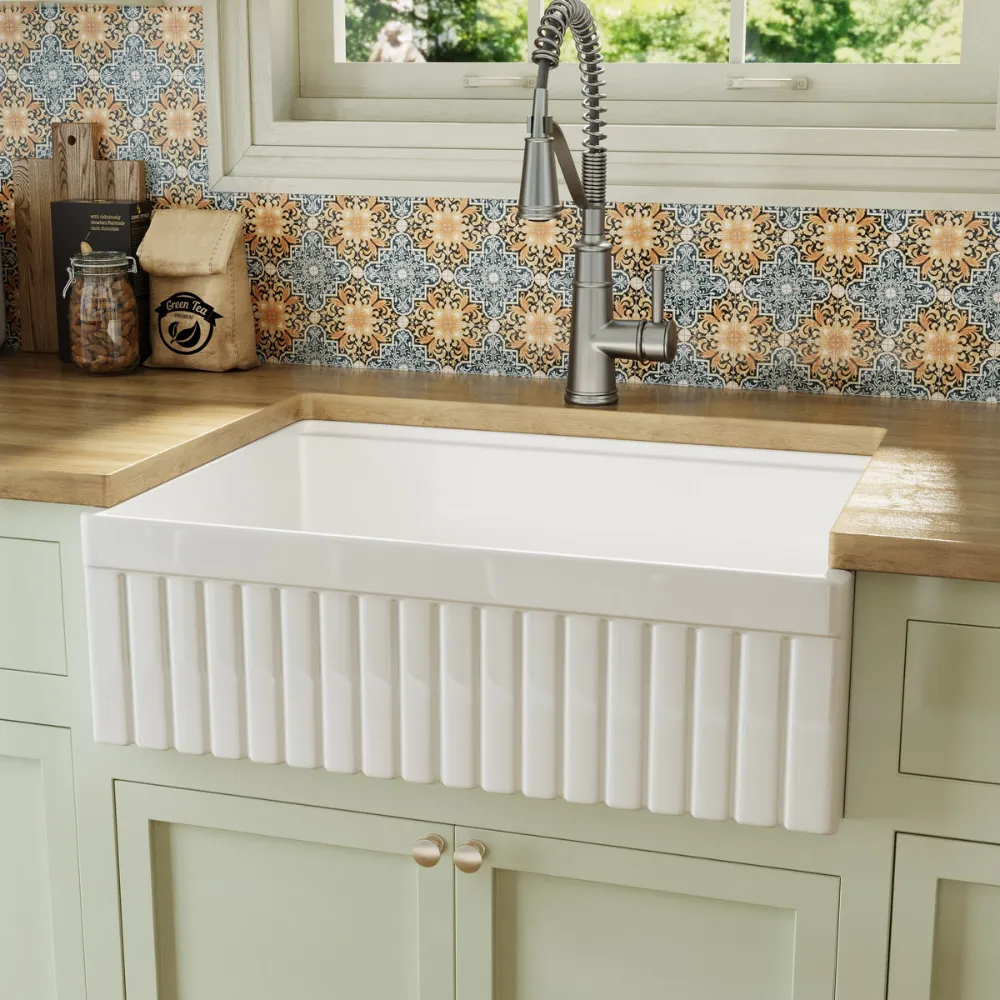
Fireclay farmhouse sinks are the traditional choice. The clay is fired at high temperature and finished with a glaze, which gives that soft, glossy white and a surface that resists stains well. That white also makes an easy anchor for the rest of the palette: warm wood, brass or black hardware, and textiles in cream, sage or blue all sit comfortably beside it.
A few style decisions to make while you shop:
- Smooth or detailed apron. A smooth front reads clean and simple. A fluted or grooved front adds texture and a more vintage feel, and it pairs nicely with shaker cabinets.
- Single or double bowl. One large bowl handles sheet pans and stockpots. Two bowls make it easier to wash and rinse at the same time.
- Workstation features. Some sinks include a ledge for a cutting board, rack or colander. If counter space is tight, that ledge earns its keep.
Living With Fireclay Day to Day
A fireclay sink is not fussy, but it does like a gentle hand. Sink manufacturers give very similar advice:
- Clean with warm water, mild dish soap and a soft cloth or sponge.
- Skip steel wool, scouring pads and harsh abrasive cleaners. They can dull the glaze over time.
- Use a bottom grid. It keeps heavy pots and pans off the glaze and helps prevent chips and scuffs.
- Gray marks left by metal pans are usually residue on the surface rather than scratches, and they can often be wiped away with a non-abrasive cleaner.
- Avoid pouring boiling water straight onto a cold sink. Run some cold water first.
Fireclay is tough, but it is still a glazed ceramic, so a heavy cast-iron pan dropped from height can chip it. Check your sink’s care sheet, since the manufacturer’s instructions come first.
Turn the Window Into a Seat
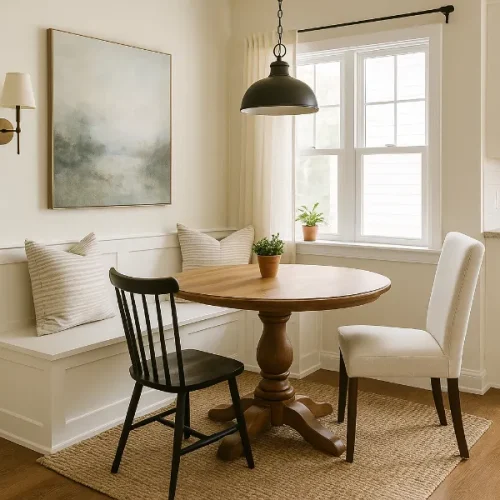
The same window that lights up the sink can make the perfect spot for a built-in seat. If the sink window is part of a bay, the seat can sit right beside it. If not, a nearby window or a small breakfast nook works just as well.
A window seat earns its place in a kitchen in several ways:
- Extra seating without crowding the floor with chairs.
- Hidden storage underneath for table linens, seasonal serving pieces or kids’ art supplies.
- A natural gathering spot where family and guests can keep the cook company without getting in the way.
For comfort, aim for a total height of about 18 inches from the floor to the top of the cushion, similar to a dining chair. If the bench is already built, take the cushion thickness into account so the seat does not end up too high.
Get a Cushion That Actually Fits
Nothing makes a window seat look unfinished faster than a cushion that is too small, too thin or sliding around. Because most built-in benches are not a standard size, an off-the-shelf cushion rarely fits well.
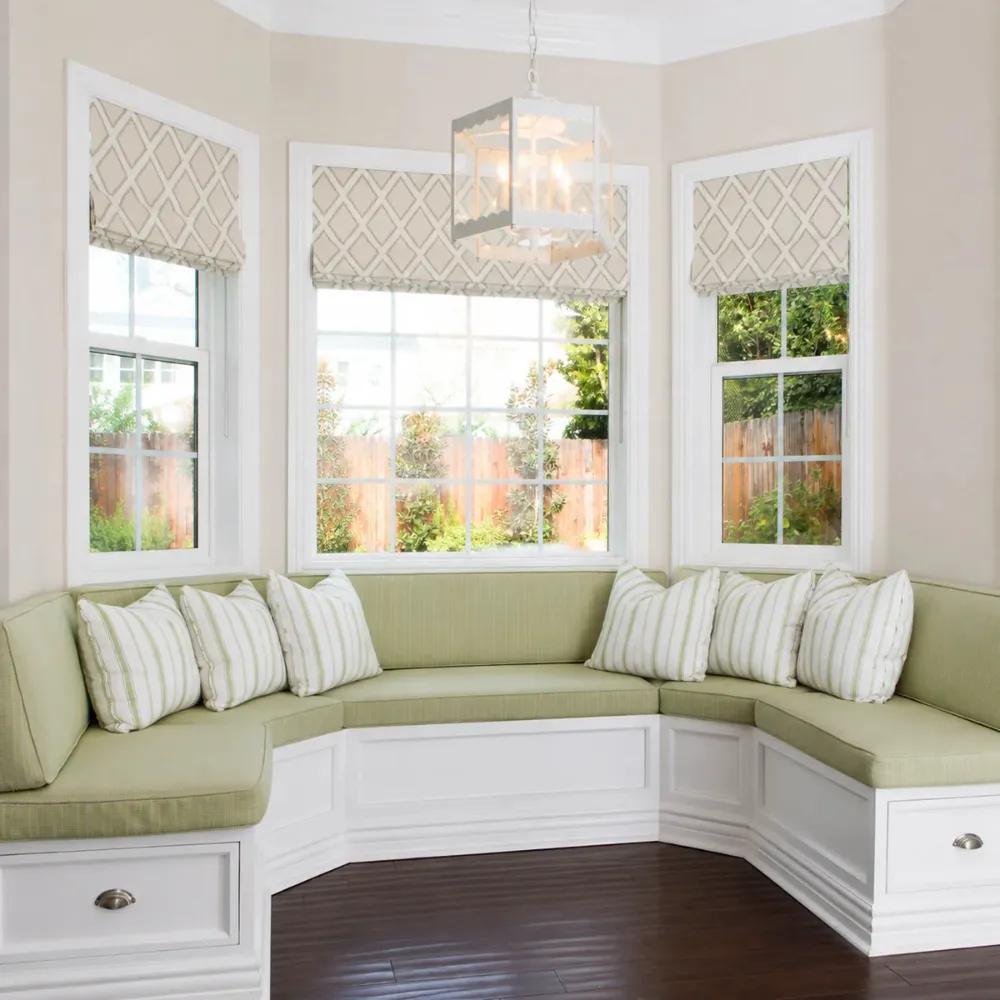
Measure the finished seat, including the length at both the front and the back, and the depth at each end. Bay windows and angled nooks are often wider at one edge than the other, so measure every side rather than assuming a rectangle. Then order made-to-measure window seat cushions cut to those exact numbers, so the cushion fills the space edge to edge.
A few details make a big difference:
- Thickness. Two inches looks slim and tailored. Three inches is a comfortable middle ground for most seats. Four inches feels plush and lounge-like.
- Edge style. A boxed cushion with straight sides looks crisp and built-in. Piping along the edges adds definition and gives the cushion a more tailored outline.
- Staying put. If the seat gets a lot of use, a non-slip backing or ties will keep the cushion from creeping forward.
Choose Fabric for a Sunny, Busy Kitchen
A kitchen window seat works harder than a seat in the living room. It sits in direct sunlight for hours, and it is close to coffee cups, sticky fingers and the occasional splash from the sink. Choose the fabric with that in mind.
- Think about sun first. Window seats get more direct sun than almost any other seat in the house, so fade resistance matters. Solution-dyed fabrics, where the color goes through the fiber rather than sitting on the surface, hold their color best.
- Linen for the look. Linen and linen blends give that relaxed, lived-in farmhouse feel, and they breathe well. The trade-off is wrinkles and more visible stains. Be aware that “performance linen” can mean very different things, from a true linen blend with a stain-resistant finish to a mostly synthetic fabric with a linen look, so check the fiber content.
- Performance fabrics for real life. If kids, pets or a lot of cooking are part of the picture, a fabric that can be spot-cleaned easily will save a lot of worry.
- Coordinate, don’t match. Next to a white sink, a soft tonal fabric such as oatmeal, warm gray or muted green keeps the corner calm. A small check or stripe adds farmhouse charm without competing with the sink’s apron.
Layer the Corner for Comfort
Once the sink and seat are in place, a few finishing touches turn the corner into the coziest spot in the house:
- Pillows. Two or three throw pillows against the wall make the seat comfortable for longer sitting. Mix one patterned pillow with solids.
- Lighting. A wall sconce or small pendant over the seat makes it useful after dark, whether for reading or homework.
- Baskets and bins. If the seat has open storage, matching baskets keep it tidy.
- A sill or shelf for plants. Herbs on the windowsill tie the seat and the sink together and are handy for cooking.
- Airflow at the window. Leave a little space between the cushion and the glass, especially in winter, so moisture from condensation can dry rather than getting trapped in the fabric.
Your Farmhouse Corner Checklist
- Choose the sink style first: apron finish, bowl layout and workstation features.
- Plan for gentle cleaning and a bottom grid to protect the glaze.
- Decide where the window seat will go and keep the total seat height around 18 inches.
- Measure the finished seat carefully, including every side of an angled bay.
- Pick a cushion thickness and edge style that suit how the seat will be used.
- Choose fade-resistant, easy-to-clean fabric in a color that complements the sink.
- Finish with pillows, lighting and storage.
The Bottom Line
A farmhouse kitchen corner does not need a big budget to feel special. It needs a few well-chosen pieces that work together: a sink that is beautiful and practical, a seat that fits the space, and fabrics that can handle sunlight and everyday mess. Get those right, and the window corner becomes the spot where mornings start and conversations linger.