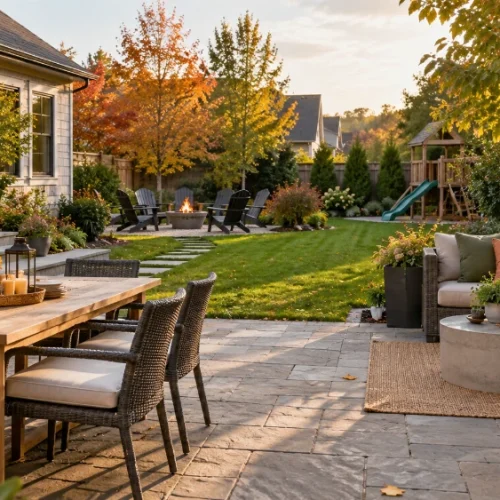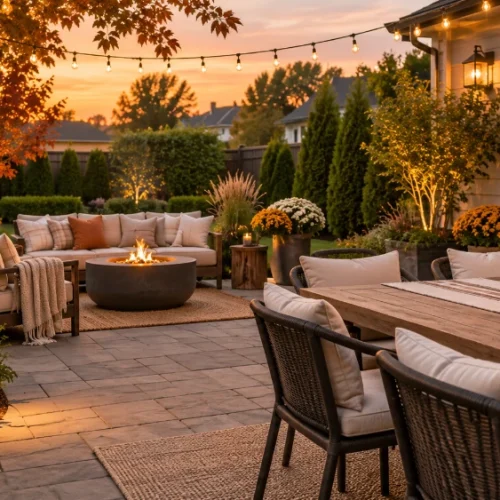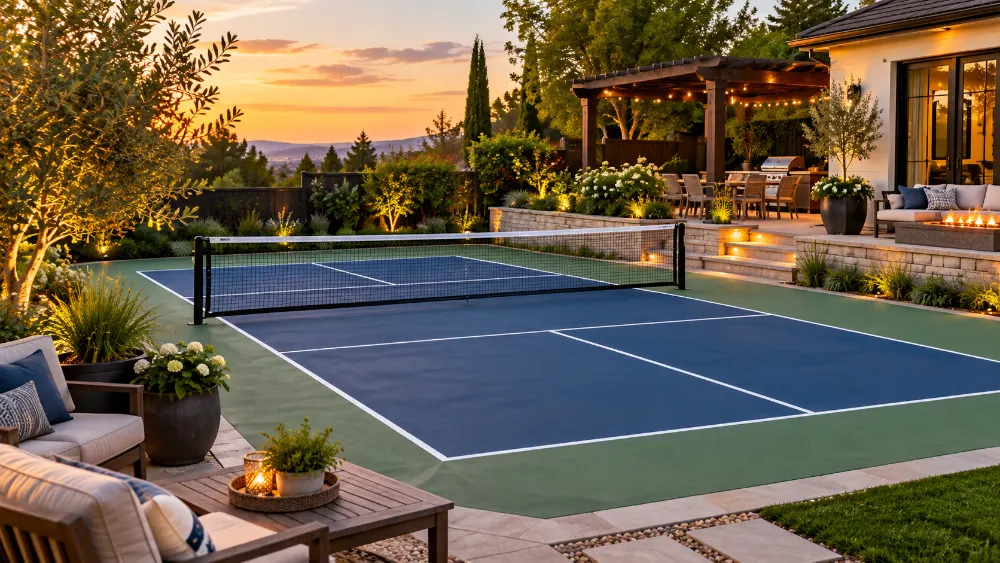
A backyard pickleball court can be much more than a place to play a few games. With the right updates, it can become a natural extension of your outdoor living space—a place where family members gather, friends spend an afternoon, and even people who are not playing have somewhere comfortable to relax.
The problem is that courts do not always age gracefully. Surface colors fade. Small cracks appear. Leaves collect along the fence. Paddles and balls end up piled near the gate. Seating gets added wherever it happens to fit, and before long the court can feel separate from the rest of an otherwise thoughtfully designed backyard.
Fortunately, improving the space does not necessarily require rebuilding the court or redesigning the entire yard.
A better approach is to think of the project as an outdoor-room refresh. Start with the practical issues that affect how the court performs, then work outward with seating, storage, landscaping, lighting, and decorative details that connect the area visually with your home.
Start by Looking at the Court as Part of the Entire Backyard
Before choosing paint colors, furniture, or planters, spend some time looking at the court from different parts of your property.
Stand on the patio.
Look through the kitchen or living room windows.
Walk from the house to the court as a guest would.
Then stand inside the court and look back toward the home.
This simple exercise can reveal problems that are easy to overlook when you focus only on the playing surface.
For example, the court itself may be in relatively good condition, but the walkway leading to it could feel unfinished. The fence might visually dominate the yard. A collection of equipment near the entrance may create clutter, or the court colors may have little connection with the patio, house, or landscaping around it.
Create two basic lists while you look around:
| Repair and Maintenance | Design and Comfort |
|---|---|
| Cracks | Seating |
| Peeling coating | Planters |
| Standing water | Outdoor lighting |
| Low spots | Storage |
| Damaged fencing | Decorative accessories |
| Loose surface material | Color coordination |
| Drainage problems | Shade |
Address the left side before spending heavily on the right.
There is little benefit in decorating a seating area beside a court that may need drainage work or major surface repairs a few months later.
Inspect the Court After Rain, Not Just on a Sunny Day
A dry afternoon can hide some of the most important problems affecting an outdoor court.
Walk around the area again after a good rainfall.
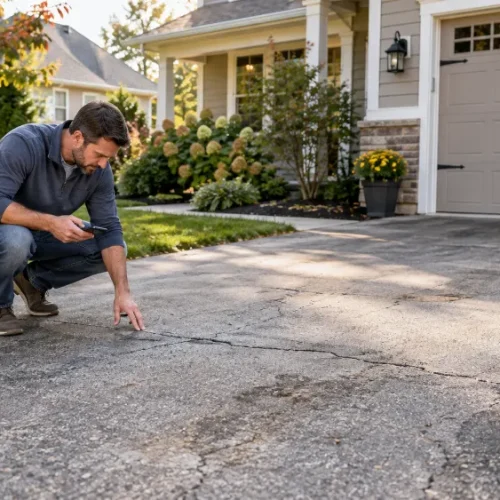
Look for water that remains long after surrounding surfaces begin to dry. Pay particular attention to corners, fence lines, court edges, and transitions between the court and nearby landscaping.
Try to determine where the water is coming from.
It could be runoff from the yard, a nearby roof downspout, irrigation overspray, poorly graded landscaping, or a low section of the court itself.
Take pictures of persistent puddles and note approximately how long they remain.
Standing water should not simply be treated as an inconvenience. Repeated moisture can accelerate surface deterioration, make areas slippery, encourage organic growth, and sometimes point toward a larger drainage problem.
Decorative improvements can come later. Water management deserves priority.
Take Care of Surface Problems Before Making Cosmetic Changes
A fresh court color can dramatically improve the backyard, but new coatings should not become a way to hide existing problems.
Look closely for:
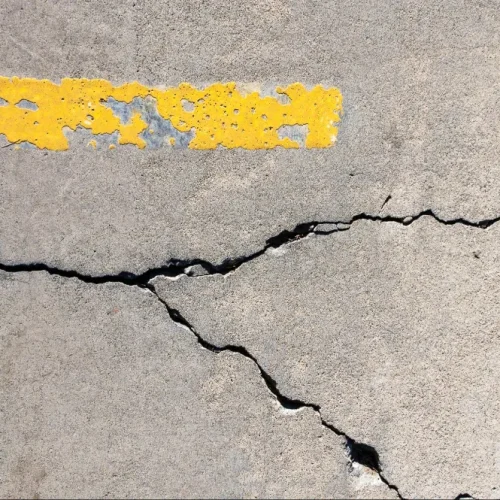
- Repeated or widening cracks
- Areas where the coating has separated
- Flaking or peeling material
- Noticeable low spots
- Uneven transitions
- Persistent stains or moisture
- Sections that feel different underfoot
- Vegetation growing through cracks or edges
Not every crack means the court needs to be rebuilt. However, understanding why the damage appeared is important before resurfacing it.
Some deterioration may be limited to the coating. Other problems can be related to movement underneath the playing surface, drainage, age, or previous repairs.
A qualified sports-surface contractor can help determine what needs attention.
If the existing finish is showing significant wear, researching Pickleball Court Resurfacing | Destination options can also help you prepare better questions before discussing the project with an installer.
Ask specifically:
- How will existing cracks be treated?
- Are low spots included in the preparation?
- Does drainage need improvement first?
- What preparation will be performed before coating?
- How long should the new surface cure before play?
- What maintenance does the proposed surface require?
- How long should the resurfacing system reasonably last under local conditions?
This is also one area where a backyard DIY mindset has limits.
Painting a planter or organizing paddles is a perfectly reasonable weekend project. Diagnosing structural movement beneath a court is different.
Use DIY projects where they make sense, but bring in the appropriate expertise when the condition of the playing surface is involved.
Give the Court a Color Palette That Belongs in Your Yard
Sports courts naturally draw attention because they contain large areas of uninterrupted color.
That means the color you choose can have a surprisingly large effect on how your backyard looks.
Instead of considering the court in isolation, look at the colors already present around your home.
Pay attention to:
- Siding
- Brick
- Stone
- Decking
- Patio pavers
- Fencing
- Outdoor furniture
- Roof colors
- Garden structures
- Existing planters
You do not need everything to match.
In fact, trying to match every outdoor surface often makes a backyard feel overly coordinated. The goal is simply to create enough visual connection that the court feels intentional.
A house surrounded by warm wood and natural stone, for example, may work well with subdued greens. A contemporary backyard with gray pavers, black fencing, and simple furniture could pair nicely with certain blues or cooler greens.
Always prioritize the visibility of playing lines and proper court function when selecting colors.
And before making a final choice, look at physical samples outside.
Outdoor colors change considerably between direct sunlight, shade, cloudy conditions, early morning, and late afternoon.
Repeat Court Colors in Small Ways
You do not need to repaint your patio furniture simply because you changed the court color.
Small repetitions usually work better.
If the playing surface contains green, perhaps that shade appears again in:
- Outdoor cushions
- A serving tray
- Planters
- An outdoor rug
- Towels
- Storage containers
- Decorative pillows
Blue could be repeated in ceramic pots or chair cushions.
Neutral court colors might connect naturally with wood furniture, stone planters, or woven accessories.
These small details create continuity without making the backyard look themed around pickleball.
The court remains functional while also becoming visually connected to the rest of the property.
Create a Small Spectator Area
Not everyone in the backyard will be playing at the same time.
Someone may be waiting for the next game. Guests might prefer watching. Parents may want somewhere to sit while children play.
A dedicated seating area makes the court much more useful as a gathering space.
It does not need to be elaborate.
Two comfortable outdoor chairs and a small side table may be enough.
If space allows, consider a simple arrangement with:
- Weather-resistant chairs
- A compact table for drinks
- An outdoor storage box or cabinet
- A basket for clean towels
- A small waste bin
- Shade when practical
Keep furniture completely outside the active playing area and away from normal player movement.
Also consider circulation.
Guests should ideally be able to reach the seating area without repeatedly walking across the court during games.
Use Shade Carefully
A sunny court may be great in mild weather but uncomfortable during a long afternoon outside.
If your backyard lacks natural shade, consider whether the nearby seating area—not necessarily the court itself—could benefit from additional protection.
Depending on the layout, that could involve a patio umbrella, shade structure, covered seating area, or strategically positioned landscaping.
Avoid creating obstacles around the playing area.
Umbrella bases, furniture, planters, and decorative pieces should be positioned where an enthusiastic player cannot accidentally run into them.
Even a relatively small shaded sitting area can make the entire space more enjoyable because players have somewhere comfortable to rest between games.
Connect the Court to an Existing Patio
Many homeowners already have an outdoor living area near the house.
Instead of creating an entirely separate entertaining zone around the pickleball court, look for ways to connect the two.
Sometimes the missing piece is simply the transition between them.
A defined pathway can make an enormous difference.
Depending on your yard, that might involve stepping stones, pavers, an existing concrete path, or another appropriately installed walking surface.
You can visually connect the two spaces by repeating materials or design details.
For example:
- Use similar planters in both areas.
- Repeat a furniture finish.
- Carry one accent color between spaces.
- Use similar landscape edging.
- Repeat outdoor lighting styles.
- Keep planting themes consistent.
When there is visual continuity between the patio and court, moving between the two areas feels more natural.
Add Landscaping Without Creating More Court Maintenance
Plants can soften fencing and large areas of hard surface, helping a backyard court blend into its surroundings.
Placement matters, though.
The prettiest landscaping choice is not always the most practical choice beside a sports court.
Avoid plants that constantly drop:
- Fruit
- Berries
- Large leaves
- Seed pods
- Sticky flowers
- Heavy quantities of debris
Anything that repeatedly lands on the playing surface creates additional maintenance and may interfere with play.
Containers can be particularly useful because they are easy to control and reposition.
Try placing coordinated planters near the court entrance or seating area rather than directly along active playing edges.
Keep planters clear of drainage routes and walkways.
Also pay attention to sprinklers.
An irrigation head that repeatedly sprays the court can leave stains, keep the surface unnecessarily wet, and contribute to maintenance problems.
Redirecting irrigation may be a small project with an outsized benefit.
Make the Fence Feel Less Utilitarian
Court fencing is functional, but it can sometimes make a backyard resemble a recreation facility rather than a private outdoor space.
You do not necessarily need to cover the entire fence.
Instead, soften the visual effect from key viewpoints.
Landscaping outside portions of the fence may help. Coordinated planting near the entrance can also shift attention away from the structure itself.
If privacy screening is being considered, make sure anything attached to the fence is appropriate for the existing structure and local wind conditions. Added screening can increase wind load significantly.
Sometimes the simplest improvement is maintenance.
Clean the gate area, repair damaged sections, remove weeds along the perimeter, straighten accessories, and keep unnecessary items from being hung randomly along the fence.
A tidy fence often looks much better without any major redesign.
Give Every Paddle and Ball a Place to Go
Outdoor spaces become cluttered remarkably quickly when storage is treated as an afterthought.
Pickleball equipment is no exception.
Paddles end up on chairs. Balls collect in corners. Water bottles remain near the fence, and bags are dropped beside the gate.
Designate one storage area.
A weather-resistant cabinet near the seating area can work well. Another option is to dedicate a section of an existing shed or garage to court equipment.
Consider separate storage for:
- Paddles
- Balls
- Towels
- Water bottles
- Bags
- Portable accessories
- Cleaning equipment
You can also prepare a small game-day basket containing balls and commonly used items. Carry it out when people want to play, then return everything at once afterward.
That simple routine helps keep the court looking like part of a thoughtfully maintained backyard rather than permanent equipment storage.
Consider Lighting for the Surrounding Area
Outdoor lighting can make the entire court area feel more connected to the home, even if you do not intend to play after dark.
Path lighting can make the walk between the house and court easier.
Soft lighting near seating can create a pleasant place to talk after a game.
Landscape lighting can highlight nearby planting and make the court less visually isolated when viewed from inside the house at night.
Actual lighting intended for nighttime pickleball is a different matter.
Sports lighting needs to illuminate the playing area appropriately while limiting glare for players, neighbors, and nearby homes. If nighttime play is part of your plan, consider professional guidance and check applicable neighborhood or local requirements.
Decorative lighting and functional court lighting do not necessarily serve the same purpose.
Create a Simple Refresh Budget
It is easy for an outdoor project to grow once you begin looking at furniture, landscaping, lighting, storage, and resurfacing at the same time.
Break the project into stages.
| Priority | Examples |
|---|---|
| 1. Necessary repairs | Drainage, cracks, damaged surface |
| 2. Court maintenance | Cleaning, resurfacing, fencing |
| 3. Function | Storage, pathways, seating |
| 4. Comfort | Shade, tables, towels |
| 5. Landscaping | Containers, edging, planting |
| 6. Style | Cushions, accessories, decorative lighting |
This approach is especially useful when the project needs to stay within a reasonable household budget.
Complete the improvements that protect the court and make the space function properly first.
The decorative details can be added gradually.
Look Around the Yard Before Buying Anything New
Refreshing an outdoor space does not mean every item has to be new.
You may already own pieces that could work with a little attention.
An older outdoor chair might need cleaning and a new cushion.
A side table from another section of the patio might work perfectly near the court.
Unused planters can be grouped together rather than replaced.
An existing storage cabinet might simply need reorganizing.
Even changing furniture placement can improve the space without costing anything.
This is where treating the court like another outdoor room can be helpful. Start by working with what you have, identify what is genuinely missing, and purchase new items only when they solve a specific problem.
Keep the Playing Area Uncluttered
Because the court is part of your backyard, it can be tempting to decorate right up to its edges.
Resist that temptation.
The playing area should remain focused on playing.
Furniture, fire features, grills, decorative pots, storage boxes, toys, and other backyard accessories belong outside the space players need to move safely.
Give the court some visual breathing room.
You can create plenty of personality around it without placing decorations where they interfere with movement.
A clean, uncluttered court will usually look better anyway.
Make Maintenance Part of the Design
A beautiful outdoor area becomes frustrating when keeping it beautiful requires constant work.
Think about maintenance while making improvements.
Select furniture designed for outdoor exposure.
Choose landscaping suited to your climate and available sunlight.
Store equipment where people can realistically return it after games.
Keep drainage routes accessible.
Avoid positioning heavy furniture where it will regularly need to be dragged across the court.
For routine care, remove leaves, dirt, and grit using methods appropriate for the surface. Follow the recommendations provided by the surface manufacturer or installer when selecting cleaning products and equipment.
More aggressive cleaning is not necessarily better.
Using unsuitable chemicals, pressure, or equipment can damage certain coatings.
Do a Quick Court Reset After Gatherings
One useful habit is to give the area a five-minute reset after friends or family leave.
Return paddles and balls to storage.
Pick up water bottles.
Straighten chairs.
Remove obvious debris.
Put towels away.
Check that the gate is secure.
Small resets prevent several weeks of minor clutter from turning into a much larger cleaning project.
After storms, do a similar inspection.
Look for branches, debris, new puddling, blocked drains, or changes around existing cracks.
If something repeatedly looks different after rain, photograph it.
Having a simple visual record can help you determine whether a problem is remaining stable or getting worse over time.
Let the Court Be More Than a Court
One of the best things about having a recreational feature in the backyard is that it gives people another reason to spend time outside.
That makes the surrounding environment just as important as the game itself.
A comfortable chair encourages someone to stay and watch.
A table gives friends somewhere to leave their drinks.
A tidy equipment cabinet removes visual clutter.
Thoughtful landscaping connects the court to the garden.
Good pathways make moving between the house, patio, and court easier.
None of those improvements changes the dimensions of the playing surface. Yet together they can completely change how the backyard feels.
The result is not simply a better pickleball court.
It is a backyard that works better as a whole.
Refresh in Stages Instead of Tackling Everything at Once
You do not need to complete every improvement in one weekend.
In fact, allowing the project to develop gradually can produce better results.
Start with the essentials:
- Inspect the court and drainage.
- Correct necessary repairs.
- Clean or resurface the playing area when appropriate.
- Organize equipment.
- Establish a comfortable seating zone.
- Improve the path between the house and court.
- Add practical landscaping.
- Introduce decorative details and lighting.
Use the space for a while after each stage.
You may discover that something you originally thought was essential is unnecessary, while another small improvement makes a much bigger difference than expected.
That is one of the advantages of refreshing an existing backyard rather than starting from scratch.
Turn an Existing Court Into a Backyard You Actually Want to Use
A backyard pickleball court is a significant feature, so it makes sense to treat it as part of your home rather than an isolated slab behind the house.
Begin with the unglamorous work.
Check drainage. Understand cracks. Address surface problems. Keep the court clean and functional.
Then have fun with the surrounding space.
Bring in comfortable seating, organized storage, practical landscaping, subtle lighting, and colors that connect with your home.
You do not need a massive renovation or an elaborate outdoor entertainment complex.
A series of thoughtful improvements can make the court feel considerably more polished while making the entire yard more welcoming.
And ultimately, that is the goal of a good backyard refresh: not simply creating something attractive to look at, but making your outdoor space easier and more enjoyable to use.