As the days grow noticeably shorter and the crisp Australian winter air finally sets in, our homes transition into our ultimate daily refuge. Whether you are dealing with biting winds or simply a cooler evening breeze, there is an undeniable shift in how we want our living spaces to feel. Instead of the light, breezy, open-door aesthetic we embrace during summer, we start craving environments that feel protective, intimate, and infinitely cosy. Transforming your living room for winter certainly does not require a complete structural overhaul or an enormous budget. Often, it is simply about introducing intentional layers that appeal directly to our physical senses.
The Psychology of a Cosy Environment
Before diving into specific styling elements, it helps to understand exactly why we naturally gravitate towards certain fabrics and setups when the temperatures drop. According to experts studying how your space impacts your mood, incorporating natural materials and plush textures actively evokes emotional comfort and cosiness. The tactile experience of a room directly influences our nervous system. This means that designing a space with soft, reassuring textures genuinely reduces daily stress and promotes deeper relaxation. Your living area becomes more than just a place to sit, transforming into a restorative sanctuary that shelters you from the elements outside.
Draping Premium Textiles for Instant Warmth
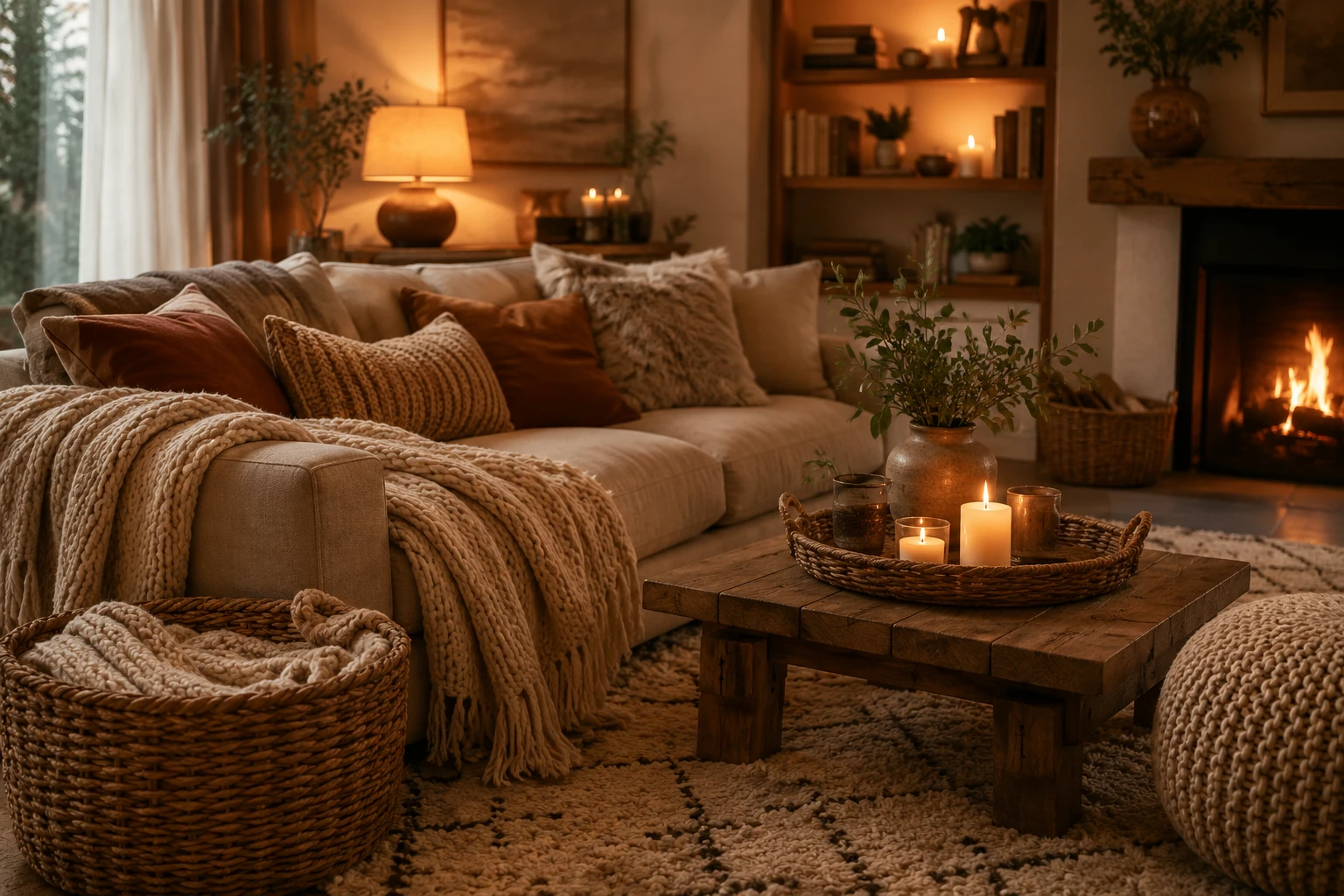
The most effective and visually impactful way to transition a room for winter is through the clever use of textiles. When curating a genuinely winter-ready lounge room, high-quality fabrics are absolutely essential for both form and function. Draping natural fibre Throws over the arm of your main sofa or the back of a dedicated reading chair instantly softens the rigid lines of modern furniture. Natural fibres like pure wool and alpaca are particularly excellent choices for the cooler season because they are highly breathable while simultaneously offering superior insulation. Unlike synthetic alternatives, natural textiles regulate body temperature beautifully. Plus, having a premium blanket artfully styled within arm’s reach ensures you and your guests are always prepared for a chilly, quiet evening of reading or watching movies.
Layering Luxurious Fabrics and Natural Fibres
As you look to layer your space for the colder months, remember the power of incorporating soft touches that make a house feel like home. This can be as simple as swapping out your lightweight summer linens and crisp cottons for heavier, more insulating fabrics. Think along the lines of chunky cable knits, deep velvet cushions, brushed cotton slipcovers, and faux fur accents. Mixing these distinctly different textures creates a visually rich and incredibly inviting atmosphere that begs you to sink into the sofa and stay a while. Do not be afraid to mix patterns either, provided they share a cohesive, warm colour palette.
Warm Up the Floor with Textured Rugs
Hardwood, polished concrete, or tiled floors are beautiful in the summer, but they can make a room feel stark and cold by the time July rolls around. Adding a thick, textured area rug is a fantastic way to visually anchor your living space and provide much-needed thermal warmth underfoot. If you already have a large, flat-weave or low-pile rug in place, consider layering a smaller, high-pile Moroccan style or sheepskin rug directly over the top of it. This layering technique creates an eclectic, lived-in bohemian vibe that maximises comfort while adding significant visual depth to your floor plan.
Incorporating Warm Lighting and Ambient Details
Texture is definitely not limited to fabrics alone. The way that light plays across different surfaces also significantly contributes to the perceived warmth and texture of a room. During the darker winter months, it is best to turn off the harsh, bright overhead lights and rely instead on softer, ambient sources to cast a golden, comforting glow across your newly layered textiles.
Here are a few simple ways to enhance your room’s winter ambience through lighting and accessories:
- Switch to warm white globes (ideally around 2700K to 3000K) in all your floor and table lamps to effectively replicate the inviting glow of firelight.
- Cluster pillar candles of varying heights or use high-quality flameless alternatives on your coffee table to create a flickering, dynamic light source.
- Bring in raw, natural wood elements, like a rustic timber serving tray or hand-woven rattan baskets, to add earthy, grounding textures to smooth surfaces.
- Introduce a large, woven seagrass basket specifically for storing your extra winter blankets, keeping the room perfectly tidy while keeping absolute comfort close at hand.
Conclusion
Creating a cosy winter haven is ultimately all about appealing to the senses and slowing down. By thoughtfully layering tactile fabrics, embracing the psychological benefits of natural materials, and adjusting your lighting to suit the season, you can easily turn a standard living area into a warm, inviting retreat. As the weather cools down outside, these small but mighty styling adjustments will ensure your home remains a deeply comforting sanctuary all season long.
FAQs
Adding layered textiles like throws, cushions, and rugs is one of the fastest and most affordable ways to create warmth and comfort.
Natural fibres such as wool, alpaca, velvet, brushed cotton, and chunky knits are excellent choices because they add both insulation and texture.
Textured rugs soften hard flooring, provide warmth underfoot, and visually create a more inviting and comfortable environment.
Yes. Warm-toned lighting creates a softer atmosphere that psychologically feels more relaxing and comforting during colder months.
Natural materials are often preferred because they are breathable, durable, and provide a more authentic, grounding texture within the space.
Simple changes like adding throws, rearranging lighting, using candles, and introducing textured cushions can dramatically improve comfort on a budget.
Earthy neutrals, deep greens, warm browns, terracotta tones, creams, and muted charcoal shades typically create a cosy seasonal atmosphere.
Absolutely. Combining soft, smooth, woven, and plush textures adds depth and makes a room feel more visually interesting and welcoming.
Candles create soft flickering light that enhances relaxation and adds warmth without overwhelming the room with harsh brightness.
Many people rely only on heating while overlooking softer details like lighting, fabrics, and texture that truly make a room feel comfortable and inviting.