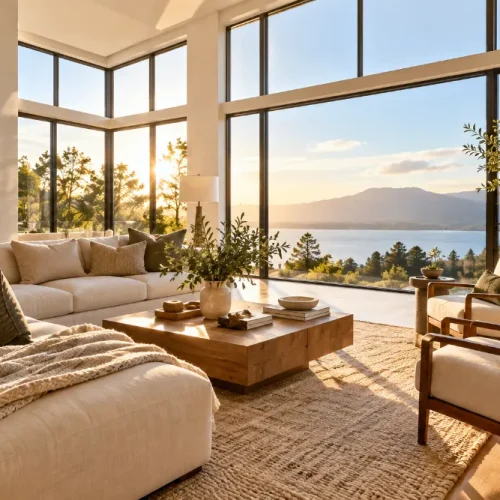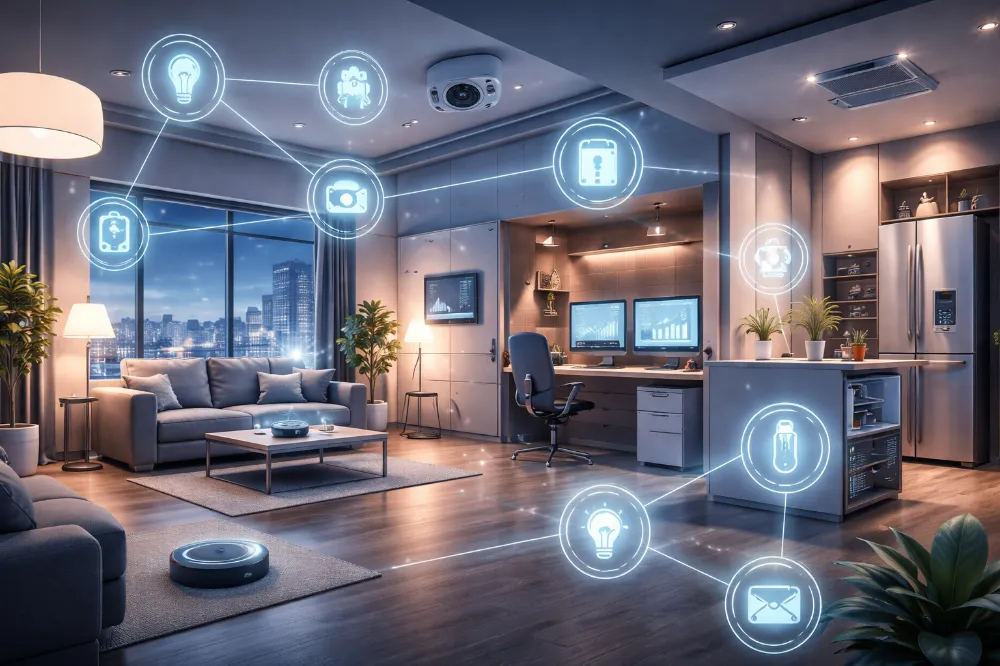
Smart spaces have become an inherent part of day-to-day activities, affecting the interaction between individuals and their environment. Connected technology is used to increase efficiency and comfort in these environments. People now want spaces that respond to them, making everyday life easier and more pleasant. Having a clearer sense of the benefits, practical applications, and key features of such environments can hopefully help people make more informed decisions about whether to introduce some form of technology into their home or place of work. This article helps you understand the benefits, use cases, and key features of smart spaces.
Defining Smart Spaces
Smart spaces use information collected and communicated by sensors, devices, and software in a multi-dimensional network. This can foster an environment that is responsive to its users. These environments can consist of automated artificial lighting, temperature control, and security systems, etc. Smart spaces are able to sense habits of persons in connected systems and thus make unique adjustments for each user. This makes for a truly responsive and adaptive environment.
Key Benefits of Smart Spaces
The biggest advantage is the added convenience these smart spaces offer. Automated processes can take care of most of this menial work and free up time for more essential tasks. Energy efficiency is another big benefit. Advanced thermostats and lighting systems reduce excessive expenditure, which in turn lowers bills. People with smart spaces shop at alarm system store for enhanced safety, using surveillance cameras and alarm monitoring systems that provide greater comfort and peace of mind.
Common Uses in Everyday Life
Most houses these days use smart devices on a day-to-day basis. A lighting automation, as an example, can change itself at various times of the day or turn on and off depending on whether someone is around or not. Smart speakers enable voice control for your music, news, and reminders. In the workplace, connected systems can schedule meeting rooms and check air quality. Traditional artificial intelligence tools help hospitals boost patient care and hospital management. Interactive classrooms that get updated with teaching styles and the learning needs of students help educational institutions.
What Is Different about Smart Spaces
Connected devices are a key part of a smart environment. While the sensors measure change, the controller works on this information by changing the settings when required. Devices communicate without latency, thanks to wireless connectivity. Systems can learn from users and adjust their situation through the use of artificial intelligence. The security features safeguard information and ensure the confidentiality of everyone using the space.
Sustainability and Efficiency
Smart environments are a natural fit for eco-friendly practices. Heating, cooling, and lighting are automatically managed by occupancy sensors to eliminate energy waste. Water-saving technologies can help monitor usage and also detect any leakages before they turn into a bigger problem. Such solutions save resources and reduce long-term costs. Smart spaces are also fostering the sustainability of communities by encouraging responsible usage of energy. More efficient operation also means less maintenance and avoiding unnecessary breakdowns, which saves money.
Safety and Security Enhancements
Security is one of the priorities for the users of intelligent environments. Automated locks, surveillance cameras, and alarm systems can help you 24/7. They warn users of unusual activity or environmental hazards through sensors. Fire and burglary detection features will initiate response measures autonomously. Through privacy controls, personal information remains private as you and your devices interact. Together, these steps help to make homes and workplaces more secure.
Improved Comfort and Productivity
Smart spaces offer features to personalize lighting, temperature, and sound settings according to individual preferences. It can have a more pleasant ambiance for relaxation or work. Smart solutions in offices allow managing meeting schedules, handling lighting control, and securing the best air quality. We tend to be much more productive and happy in comfortable surroundings. Smart spaces free us from distractions and monotonous activities so we can spend that energy on things that truly matter to us.
Future Outlook
As technology continues to improve, intelligent environments are becoming more suitable and affordable. Recent innovations guarantee much more involvement and intelligent automation. These adoption rates will continue to rise as the world realizes just how valuable these environments can be. Smart spaces will soon become the new normal of homes and offices where individual gets maximum advantage, optimally living with machines and humans, comfortably adding value to efficient, effective, optimized, and secured living.
Conclusion
Smart spaces hand folks a whole new way to engage with their surroundings. They come with a variety of advantages, practical applications, and advanced features to make your surroundings personalized and comfortable. By using intelligent solutions, individuals can provide a more pleasant, appropriate, and safe environment for their daily life.
FAQs
A smart space is an environment that uses connected devices, sensors, and software to automatically respond to user needs.
They increase convenience, comfort, and efficiency by automating tasks like lighting, temperature, and security.
No, smart spaces are used in offices, hospitals, schools, retail stores, and public buildings.
Yes, they optimize energy use through automation, reducing waste and lowering utility costs.
Sensors, wireless networks, AI, data analytics, and automated control systems are key components.
Most smart spaces include security features like encryption, access controls, and monitoring systems to protect data and users.
Yes, many systems learn user habits and adjust settings to match personal preferences.
They enhance comfort, manage resources efficiently, and reduce distractions, helping employees work better.
Costs vary, but many solutions are becoming more affordable and scalable over time.
Smart spaces are expected to become more intelligent, accessible, and widely adopted across homes and businesses.