This post contains affiliate links. As an Amazon Associate, I earn from qualifying purchases, at no extra cost to you. See our disclosure policy.
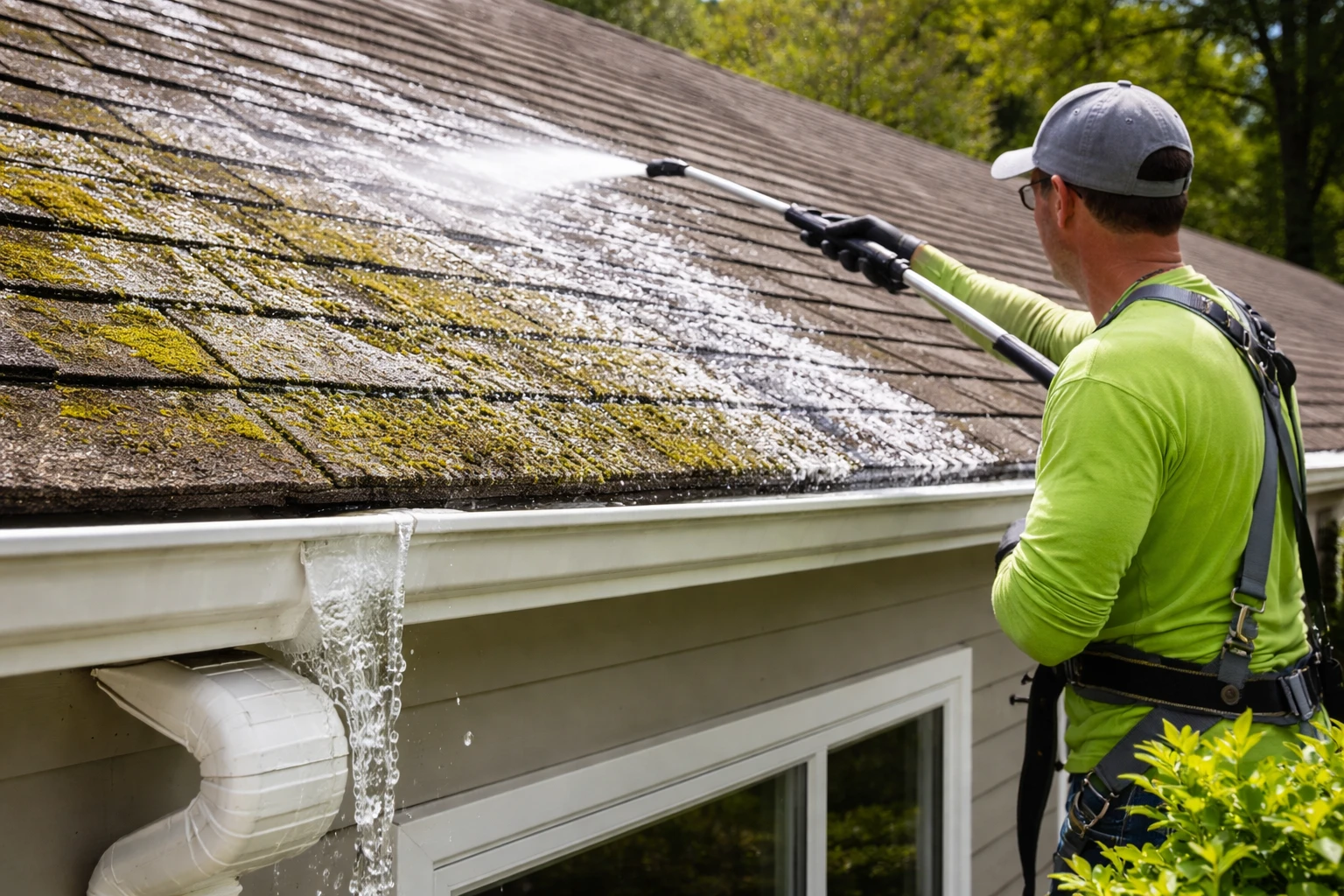
Most homeowners think roof maintenance is about curb appeal. It’s not. At least, not primarily. How Soft Wash Roof Cleaning Protects Your Gutters and Downspouts is a conversation about drainage, structural protection, and preventing expensive repairs before they start. If you live in a humid climate like Orlando, FL, this matters even more.
Here’s the truth: your roof, gutters, and downspouts are one connected water-management system. When one part fails, the others follow. And when organic growth is allowed to build up on your roof, it doesn’t stay there. It moves.
I’ve seen it over and over again. A homeowner hires a roof cleaning service because of black streaks. What they don’t realize is that those streaks are quietly feeding sludge into the gutter channels below. It’s a slow chain reaction. But it’s real.
This article breaks it down. We’ll look at how soft wash roof cleaning protects your gutters and downspouts from clogging, corrosion, overflow, and long-term structural damage—and why it should be part of your preventative maintenance plan.
Let’s get into it.
The Roof–Gutter–Downspout System: One Connected Drainage Network
Water doesn’t fall off your roof randomly. It follows a path.
Here’s the flow:
- Rain hits the roof surface
- Water runs down shingles
- Debris and organic growth travel with it
- Water collects in the gutter trough
- It funnels into the downspout
- It exits away from the foundation
That’s the system. Simple. But only when it’s clean.
When roofs are coated with algae, moss, and organic residue, rainwater carries that contamination directly into the gutters. If the roof isn’t maintained, the gutter system becomes the dumping ground.
Soft wash roof cleaning interrupts that process at the source.
What Happens When Roofs Are Not Soft Washed
Let’s talk about consequences. Not cosmetic ones. Structural ones.
1. Algae Growth and Black Streaks
Those dark streaks aren’t dirt. They’re typically algae colonies thriving in moisture-rich climates like Orlando, FL.
When it rains:
- Dead algae runs into gutters
- It mixes with dust and granules
- Sludge begins forming
Sludge thickens. Flow slows. Blockages start.
2. Moss and Lichen Growth
Moss holds moisture like a sponge. Lichen roots into shingles.
When chunks break loose, they don’t disappear. They land in the gutter. Heavy. Wet. Compact.
Over time, they:
- Trap additional debris
- Block downspout openings
- Cause standing water
Standing water is where damage begins.
3. Shingle Granule Loss
If a roof is aggressively treated or simply aging, granules shed.
Those granules collect in the gutter channel and settle in downspouts. It’s like pouring sand into a drain. Eventually, water struggles to pass through.
4. Leaves Stick to Contaminated Roofs
Organic buildup makes shingles sticky. Leaves adhere. When storms hit, entire clumps slide into the gutter system at once.
Overflow becomes inevitable.
This is where understanding how soft wash roof cleaning protects your gutters and downspouts becomes critical. It removes these growths before they migrate.
How Soft Wash Roof Cleaning Prevents Gutter Clogs
Prevention beats repair. Every time.
A. Eliminates Organic Growth at the Source
Soft wash roof cleaning uses a controlled, low-pressure application of cleaning solution to break down algae, moss, and lichen at their roots.
No surface blasting. No shingle damage.
When growth is eliminated:
- Less organic matter flows into gutters
- Sludge buildup decreases
- Gutter cleaning frequency drops
It’s a ripple effect.
B. Preserves Shingle Integrity
Because soft washing avoids mechanical force, it reduces unnecessary granule loss.
Fewer granules in the gutter = clearer water pathways.
C. Improves Water Flow Efficiency
Clean shingles allow water to glide smoothly toward the gutter system. No pooling. No erratic runoff patterns.
Consistent flow protects the gutter brackets and fascia boards from strain.
D. Reduces Organic Adhesion
A clean roof sheds leaves more easily. Debris is less likely to stick and build up in thick layers.
That means lighter gutter loads during storms.
This is one of the most overlooked reasons how soft wash roof cleaning protects your gutters and downspouts.
How Soft Wash Roof Cleaning Protects Downspouts
Gutters are visible. Downspouts are not. But downspouts are often where real problems hide.
1. Prevents Sediment Blockage
Downspouts are narrow. It doesn’t take much to clog them.
When roof debris mixes with water, it settles at elbows and joints. Over time, this creates a dam effect.
Soft wash roof cleaning reduces that sediment at the beginning of the chain.
2. Reduces Internal Corrosion
Organic debris holds moisture. Constant moisture leads to rust in metal downspouts.
Clear downspouts dry faster between storms. That extends lifespan.
3. Protects Foundation Drainage
Blocked downspouts force water to overflow at the top. Instead of flowing away from the home, water cascades directly down siding and pools near the foundation.
In humid regions like Orlando, FL, repeated saturation can contribute to:
- Soil erosion
- Foundation settling
- Moisture intrusion
Preventing that starts at the roof.
The Hidden Damage Caused by Gutter Overflow
Overflow doesn’t look dramatic at first. But it’s expensive.
Here’s what long-term overflow can cause:
- Fascia board rot
- Soffit deterioration
- Exterior paint damage
- Landscape washout
- Foundation cracks
- Mold growth in walls
All from neglected drainage.
Consider this comparison:
| Issue | Average Repair Cost | Preventative Soft Wash |
| Gutter Replacement | $1,500–$3,000 | $$ |
| Fascia Repair | $600–$2,000 | $$ |
| Foundation Repair | $5,000+ | $$ |
| Downspout Replacement | $200–$800 | $$ |
When evaluating how soft wash roof cleaning protects your gutters and downspouts, think in terms of risk mitigation. It’s not cosmetic. It’s structural insurance.
Seasonal Impact: Timing Matters
Different seasons create different risks.
Spring
Pollen mixes with moisture and algae, accelerating roof staining and runoff contamination.
Summer
Heat and humidity—especially in Orlando, FL—fuel organic growth at high speed.
Fall
Leaves drop. If they land on a dirty roof, they stick.
Winter
In cooler climates, clogged gutters contribute to ice formation and expansion damage.
The takeaway? Annual or bi-annual soft wash roof cleaning helps maintain year-round drainage efficiency.
How Often Should You Schedule Soft Wash Roof Cleaning?
There isn’t a one-size answer. But here are general guidelines:
- Heavy tree coverage: Every 12 months
- High humidity climates: Every 12–18 months
- Minimal shade exposure: Every 18–24 months
- After major storms: Inspection recommended
If black streaks are visible, it’s time.
If gutters overflow during moderate rain, it may already be overdue.
What to Expect During Professional Soft Wash Roof Cleaning
Professional service should follow a structured process.
Typical steps include:
- Roof inspection
- Gutter assessment
- Targeted application of cleaning solution
- Dwell time for organic breakdown
- Controlled rinse
- Post-cleaning flow check
Landscaping should be protected. Downspouts should be checked for clear discharge. A thorough provider treats the roof and drainage system as a unit.
This is central to understanding how soft wash roof cleaning protects your gutters and downspouts. It’s system-based maintenance.
Signs Your Roof Is Already Affecting Your Gutters
Be proactive. Watch for:
- Black streaks on shingles
- Plants growing in gutters
- Gutter overflow in light rain
- Downspout water trickling slowly
- Grit or sediment collecting in gutter troughs
These are early warnings. Don’t ignore them.
Why This Matters More in Orlando, FL
Humidity accelerates everything.
Algae thrives in warm, moist climates. Storm cycles bring heavy rain. Organic growth doesn’t take years to form. It takes months.
That means drainage systems are constantly under pressure.
For property owners in Orlando, FL, routine soft wash roof cleaning isn’t optional maintenance. It’s strategic property protection.
The Bigger Picture: Asset Protection
- Your roof protects your interior.
- Your gutters protect your roof edge.
- Your downspouts protect your foundation.
It’s a chain.
Break one link, and water finds a new path. Usually through materials that were never meant to handle it.
How soft wash roof cleaning protects your gutters and downspouts ultimately comes down to one principle: stop problems at the highest point before gravity carries them downward.
Final Thoughts
Roof maintenance is often reactive. It shouldn’t be.
When homeowners understand how soft wash roof cleaning protects your gutters and downspouts, the conversation shifts from appearance to prevention.
- It’s not about streaks.
- It’s about drainage.
- And it’s about protecting fascia, preventing overflow, and safeguarding foundations.
Clean roof. Clear gutters. Functional downspouts.
Simple system. Powerful impact.
If the roof hasn’t been evaluated recently, now is the time. Because what washes off your roof doesn’t disappear. It goes somewhere.
Make sure it goes where it’s supposed to.
FAQs
It removes algae, moss, and debris at the source so less sludge and sediment wash into your gutter system.
Most homes benefit from cleaning every 12–24 months, depending on tree coverage and climate conditions.
Yes. When algae dies and mixes with granules and debris, it forms sludge that slows or blocks water flow.
No. The process uses low pressure and specialized solutions designed to protect roofing materials.
Yes. By reducing debris runoff, it improves water flow and lowers the risk of overflow during storms.
Yes. Gutter cleaning removes buildup, but roof cleaning prevents much of that buildup from forming in the first place.
Absolutely. Blocked downspouts can cause water to pool near the foundation, leading to erosion or cracks.
Professional services take steps to protect plants and rinse surrounding areas during the cleaning process.
Yes. Humid areas and heavy tree coverage accelerate organic growth and debris accumulation.
Black streaks, gutter overflow during light rain, slow-draining downspouts, and visible sediment buildup are common warning signs.