This post contains affiliate links. As an Amazon Associate, I earn from qualifying purchases, at no extra cost to you. See our disclosure policy.
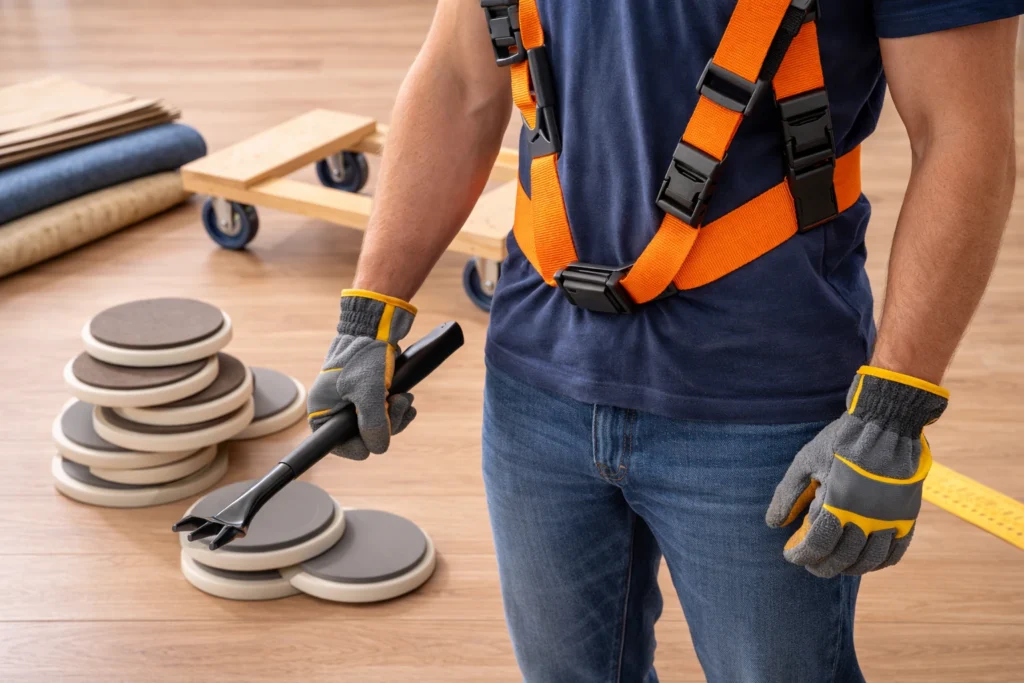
Moving heavy furniture on carpet by yourself sounds simple until you try it. You push. It barely moves. You pull harder. The carpet grips back. Your shoulders tense. Your lower back starts sending warnings. And suddenly, what should’ve been a quick rearrangement turns into a battle of friction and fatigue.
Carpet changes everything. Unlike hardwood or tile, it creates resistance. The fibers grab. The padding compresses. The weight sinks in. That’s why understanding the tools needed to move heavy furniture on carpet by yourself is the difference between a smooth shift and a sore back. Let’s break this down the smart way. No guesswork. No brute force. Just practical tools and proven methods.
Why Carpet Makes Moving Furniture Harder
Before we talk tools, it helps to understand the problem. Carpet creates drag. When heavy furniture presses into the fibers and padding, it increases surface resistance. The heavier the piece, the deeper it sinks. The deeper it sinks, the harder it becomes to move.
Dragging furniture across carpet can:
- Tear fibers
- Stretch the carpet
- Damage padding
- Leave permanent dents
- Scratch wood legs
- Cause back strain
And unlike hardwood floors, carpet doesn’t “slide friendly.” It fights movement. That’s why the right equipment matters.
The Most Important Tool: Furniture Sliders
If you buy only one thing, make it this.
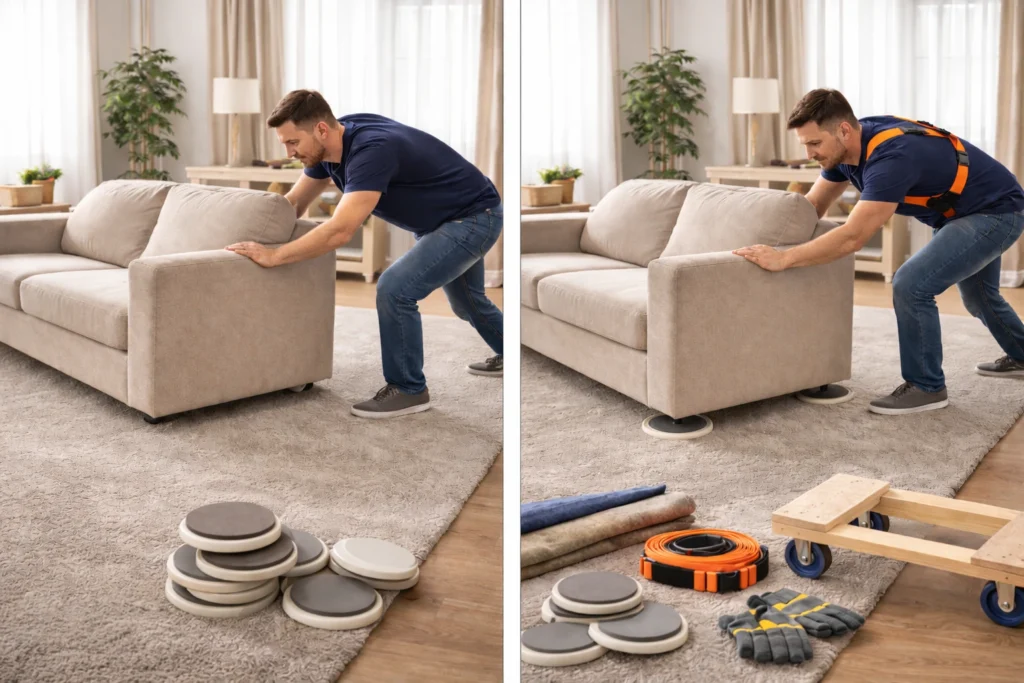
Furniture sliders are the foundation of successfully moving heavy items on carpet alone. They dramatically reduce friction by placing a smooth surface between the furniture and the carpet.
Why They Work
Sliders distribute weight more evenly and allow furniture to glide instead of dig in. The difference is immediate. What once required force now requires guidance.
For example, if you’re figuring out how to move a couch on carpet by yourself safely, sliders are non-negotiable. Without them, a sofa’s wide frame and heavy base can grab onto carpet fibers and make controlled movement nearly impossible.
From a physics standpoint, sliders reduce friction the resistive force between two surfaces in contact. Less friction means less force required. Less force means less strain on your body.
Types of Sliders for Carpet
Not all sliders are the same.
For carpet, you need:
- Hard plastic bottom sliders (best for medium to thick carpet)
- Rigid polymer sliders for heavy pieces
- Large surface-area sliders for wide furniture legs
Avoid felt sliders. Those are for hardwood floors.
Size Matters
Choose sliders slightly larger than the furniture legs. A small slider under a heavy dresser won’t distribute weight properly and can sink into the carpet. For oversized items like sectionals or armoires, use heavy-duty sliders rated for higher weight limits.
Furniture Lifting Straps
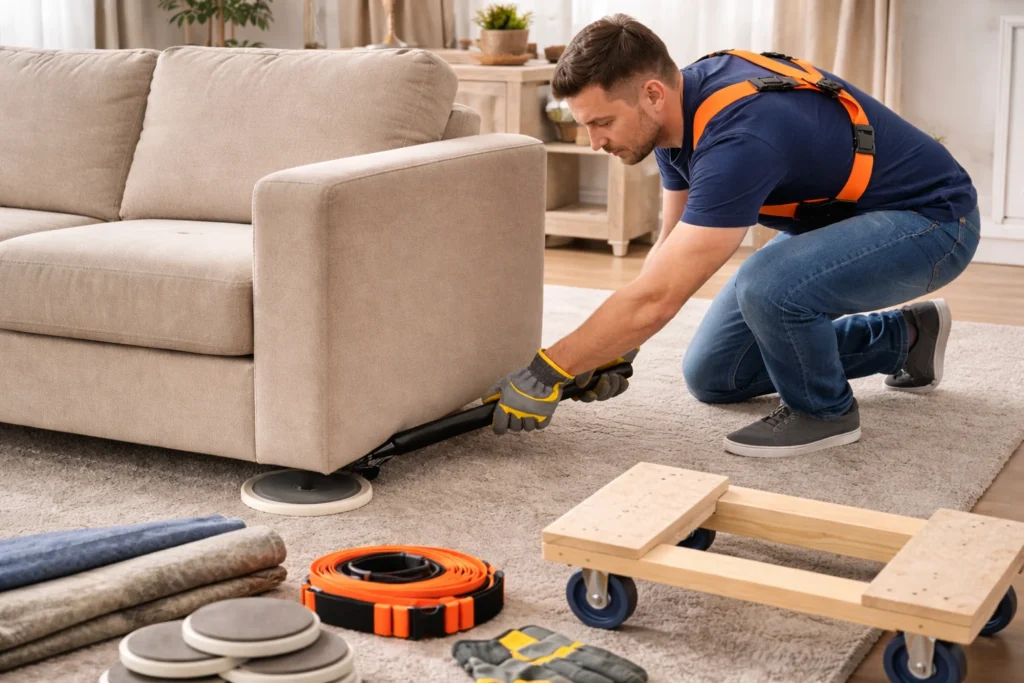
Sliders help you push. Straps help you lift.
Lifting straps are one of the most overlooked tools needed to move heavy furniture on carpet by yourself. They transfer weight from your back to your legs the strongest muscle group in your body.
Two Common Types
- Forearm lifting straps
- Shoulder lifting harness straps
If you’re moving something tall or awkward, straps give you stability and leverage.
Why Straps Matter
When furniture is too heavy to lift safely with your hands alone, straps:
- Improve balance
- Reduce back strain
- Increase lifting capacity
- Keep items closer to your center of gravity
They’re especially helpful for dressers, washing machines, and large bookcases.
Furniture Dolly (Carpet-Compatible)
A dolly is a wheeled platform that carries weight for you. But here’s the catch: standard small-wheel dollies don’t perform well on plush carpet. The wheels can sink and stall.
What to Look For
If you’re buying a dolly for carpet use, choose:
- Large rubber wheels
- Wide wheelbase
- High weight rating
- Low center of gravity design
Flat furniture dollies are best for wide pieces like sofas or cabinets. Two-wheel upright dollies are better for appliances and tall items.
Pry Bar or Furniture Lifter
Here’s something most people forget: getting sliders underneath furniture can be difficult.
That’s where a furniture lifter or pry bar comes in.
This small lever tool allows you to lift one corner of a heavy piece safely and insert a slider underneath. It uses leverage instead of brute force. Trying to tilt heavy furniture manually increases the risk of finger injuries and sudden shifts. A pry bar gives you controlled lift.
Small tool. Big advantage.
Moving Blankets
Moving blankets protect:
- Furniture edges
- Corners
- Upholstery
- Door frames
- Baseboards
When sliding furniture, especially across thresholds, surfaces can scrape. Blankets add a protective layer and prevent finish damage.
Cardboard or Masonite Boards
For extremely heavy items, sometimes sliders aren’t enough.
If the carpet is thick or plush, create a temporary smooth pathway using:
- Flattened cardboard
- Plywood sheets
- Masonite boards
Lay them down in front of the furniture, slide the piece forward, then move the boards ahead again.
It’s simple. It works.
Matching Tools to Carpet Type
Low-pile carpet? Standard sliders work. High-pile or plush carpet? Use larger, rigid sliders or board tracks.
Berber carpet? Avoid dragging. The loops can snag easily. The key is distributing weight and reducing friction at every contact point.
Safety First
Lift with your legs. Not your back. Keep furniture close to your body.
Move slowly and deliberately.
If something feels unstable or too heavy, stop. No room arrangement is worth a muscle tear.
Final Thoughts
Moving furniture on carpet alone doesn’t require brute strength. It requires understanding friction, leverage, and smart preparation. The right tools needed to move heavy furniture on carpet by yourself reduce effort, prevent carpet damage, and protect your body. Work smarter. Use sliders. Use straps. Use leverage. Measure first. Because the difference between injury and efficiency is often just one tool.
FAQs
Furniture sliders are the most essential tool because they reduce friction and allow heavy items to glide instead of drag.
It’s possible, but not recommended, as dragging furniture can damage carpet fibers and strain your back.
Lifting straps aren’t always required, but they significantly reduce back strain and improve balance when handling heavy pieces.
Hard plastic or heavy-duty rigid sliders with a large surface area work best on thick or plush carpet.
It can if you drag items directly, but using sliders and proper techniques minimizes the risk of tears and dents.
Place an ice cube in the dent, let it melt, then fluff the fibers gently and vacuum the area.
Yes, but choose one with large rubber wheels designed to roll over carpet without sinking.
Wrap edges and corners with moving blankets to prevent scratches and impact damage.
It can be safe if you use sliders, lifting straps, and proper lifting techniques, but avoid attempting it if the couch is extremely heavy.
Consider hiring professionals if the furniture is oversized, extremely heavy, fragile, or needs to go up or down stairs.