Moving heavy furniture is never easy. Add carpet into the equation and it becomes a full-body workout. Thick fibers grip furniture legs. Padding underneath creates resistance. Every inch feels earned.
But here’s the good news: you absolutely can move heavy furniture on carpet without furniture sliders. You just need the right approach, smart substitutes, and solid technique. This guide walks you through practical, safe, and realistic methods that work even if you’re doing it alone.
Why Carpet Makes Moving Furniture So Difficult
Carpet isn’t smooth like hardwood or tile. It has texture. It has pile. It has padding underneath that compresses and pushes back against weight. That combination creates friction.
When a heavy sofa or dresser sits on carpet:
- The legs sink slightly into the fibers
- The padding underneath absorbs weight
- Friction increases dramatically compared to hard flooring
Dragging furniture directly across carpet can cause:
- Fiber stretching
- Snagging (especially on looped carpet like Berber)
- Compression dents
- Torn seams
And that’s just the carpet. Your back is also at risk.
So instead of brute force, you need strategy.
Safety First: Preparation Before You Move Anything
Before you lift, push, or tilt prepare.
1. Clear the Path
Remove rugs, cords, decor, and anything that could catch under the furniture. Even small objects can stop momentum and cause sudden strain.
Check doorways. Open doors fully. Remove obstacles from hallways.
A clear path reduces resistance and risk.
2. Lighten the Load
Empty everything.
- Remove dresser drawers
- Take cushions off couches
- Detach shelves if possible
- Remove mattress from bed frame
Every pound removed makes the job easier and safer.
3. Gather the Right Household Tools
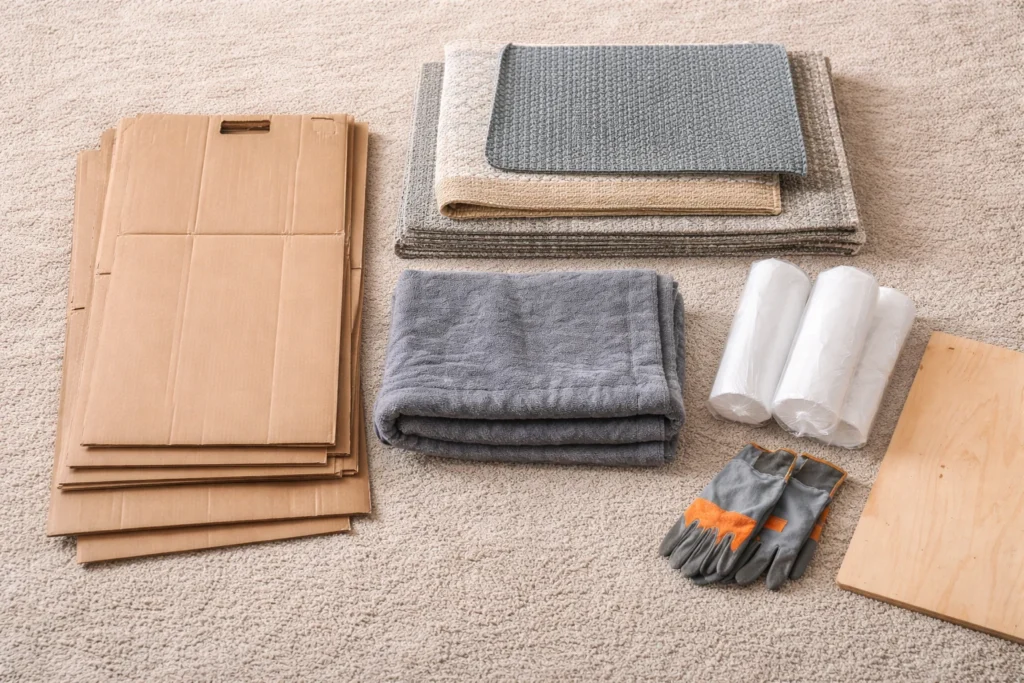
Even if you don’t have sliders, you still need proper support materials. Some of the most practical tools needed to move heavy furniture on carpet by yourself include thick cardboard sheets, moving blankets, heavy-duty plastic bags, plywood panels, Maxiflex gloves for grip, and sturdy closed-toe shoes. These simple items reduce friction, protect carpet fibers, and prevent injury.
Preparation saves repair costs later.
Understanding Injury Risks and Proper Lifting
Moving heavy furniture improperly can lead to serious strain or musculoskeletal injuries. According to the Occupational Safety and Health Administration (OSHA), improper lifting techniques are a leading cause of back injuries in the workplace. You can review safe lifting recommendations directly from OSHA.
Additionally, understanding how the back functions under load can help you move more safely. The structure of the human spine and how it responds to pressure is well explained. These resources reinforce why posture and body mechanics matter so much when moving heavy items alone.
Household Alternatives to Furniture Sliders
No sliders? No problem. Many common household items can reduce friction and help you glide furniture safely.
Thick Cardboard
Cardboard is one of the best substitutes.
It provides:
- A flat barrier between furniture legs and carpet
- Reduced direct friction
- Minimal fiber damage
Use double-layered cardboard for heavier items. Cut pieces slightly larger than furniture legs.
Moving Blankets or Thick Towels
Fabric reduces carpet friction surprisingly well.
Fold a blanket thickly and place it under one side of the furniture. Once fully positioned, the entire piece can glide more smoothly across carpet.
This method works especially well for couches and armchairs.
Heavy-Duty Plastic Bags
The smooth exterior of plastic garbage bags creates glide.
Place them under each leg with the smooth side facing down. The slick surface reduces friction significantly. Best for medium-weight furniture. Not ideal for extremely heavy items.
Plywood or Masonite Sheets
For very heavy pieces, create your own temporary “hard floor.” Lay plywood sheets down to form a pathway. Move furniture across them section by section. This method dramatically reduces resistance but requires space and careful setup.
Area Rugs (Upside Down)
Flip a rug so the backing faces up. The smoother underside can act as a sliding surface. It’s not perfect, but in short distances it works well.
Step-by-Step: Moving Furniture Without Sliders
Now let’s get practical.
The Tilt-and-Place Method
This is the safest and most controlled approach.
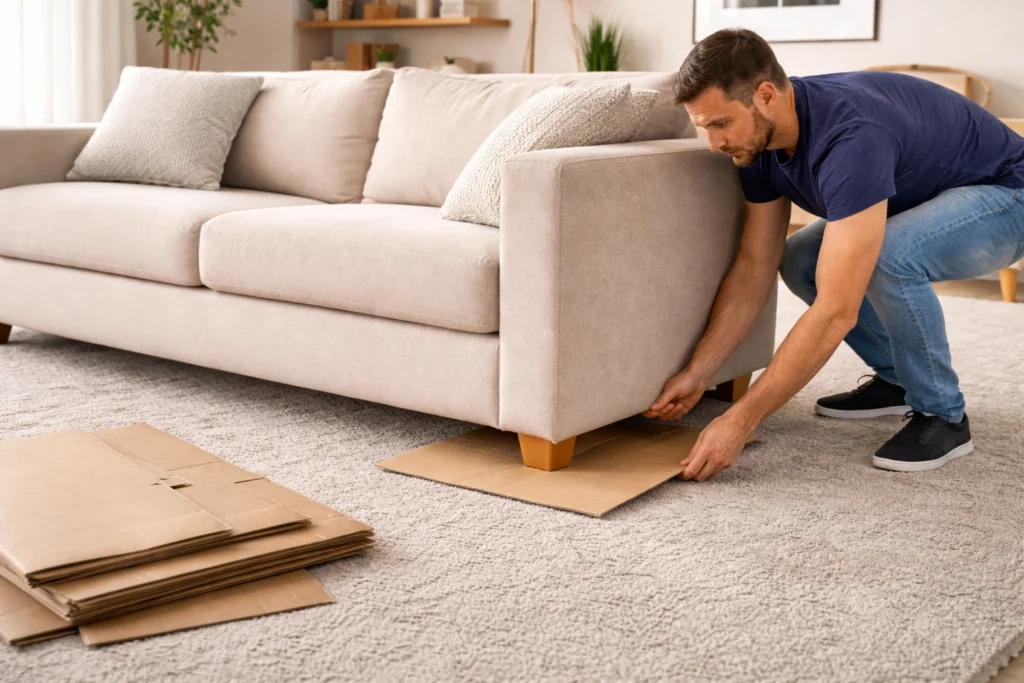
- Slightly tilt one side of the furniture
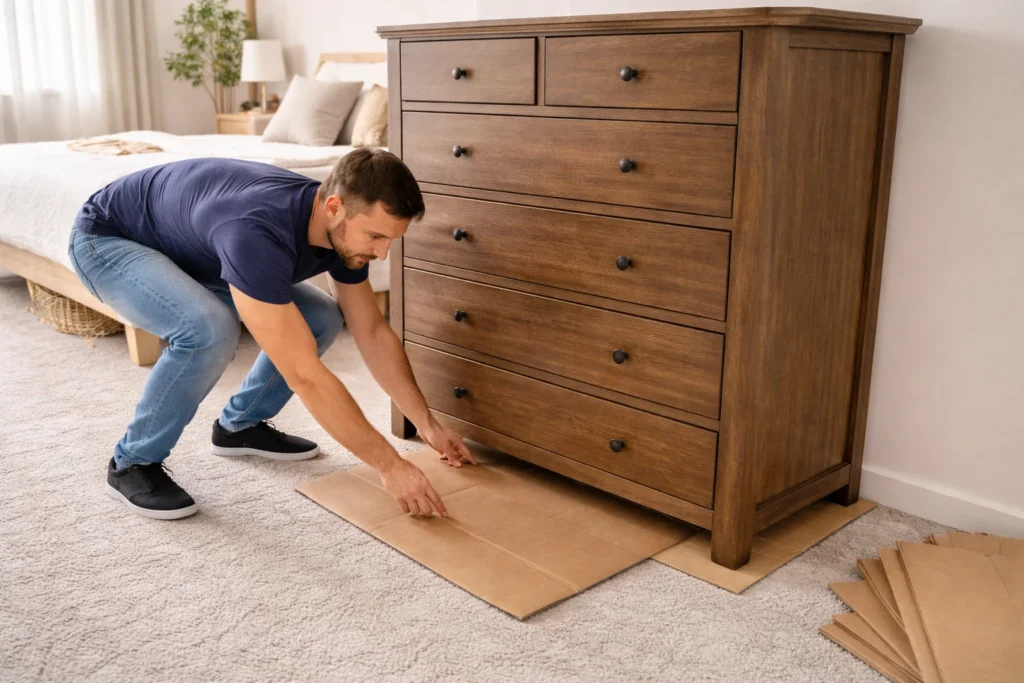
- Slide cardboard, blanket, or plastic underneath the legs
- Repeat on the opposite side
- Gently push in the direction of movement
Keep movements slow and steady. Avoid jerking motions.
Small adjustments prevent carpet damage.
The Rocking Method
If lifting is difficult, try rocking.
Gently rock the furniture forward and backward. With each motion, slide your barrier slightly farther underneath. This method reduces strain because you’re not fully lifting the weight at once.
Push, Don’t Pull (When Possible)
Pushing keeps your spine in better alignment.
Stand behind the furniture:
- Bend at the knees
- Keep your back straight
- Use your legs to generate force
Pulling can cause twisting. Twisting plus weight equals injury risk.
Pivot Instead of Dragging
Sometimes the shortest route isn’t straight.
Instead of dragging long distances, rotate furniture in place. Pivot it gradually toward its new position. This minimizes friction and reduces fiber stress.
Moving Specific Types of Heavy Furniture
Different furniture requires different strategies.
Couches and Sectionals
Remove cushions first. If it’s a sectional, separate the pieces. Place blankets or cardboard under the front legs first. Tilt carefully. Move in small increments. Sofas distribute weight unevenly, so slow movement is critical.
Dressers and Armoires
Remove drawers completely. This reduces weight and prevents internal shifting. Secure doors with tape or wrap to prevent swinging. For tall pieces, keep them upright if possible to maintain balance.
Beds and Bed Frames
Disassemble whenever possible.
Move the mattress separately. Bed frames are lighter when broken down and much easier to maneuver across carpet.
Heavy Appliances on Carpet
Proceed with caution.
Appliances are extremely heavy and often have concentrated weight points. Without proper equipment, moving them alone on carpet can cause damage or injury.
If in doubt, get help.
Protecting Your Carpet During the Move
Carpet damage is often permanent. Prevention matters.
Always Use a Barrier
Never drag furniture directly across carpet. Even thick pile carpet can stretch and tear. Use cardboard, blankets, plywood, or plastic as protection.
Move Slowly
Fast movements increase fiber pull and create snags. Slow, controlled motion keeps fibers intact.
Fixing Carpet Dents After Moving
Even careful moves can leave compression marks.
Try the ice cube method:
- Place an ice cube in the dent
- Let it melt completely
- Blot excess moisture
- Gently fluff fibers with a spoon or fork
The moisture helps fibers regain shape.
Proper Body Mechanics to Prevent Injury
Your back is more important than any furniture.
Bend at the Knees
Never bend at the waist.
Squat slightly. Keep your chest lifted.
Keep Weight Close
The farther furniture is from your body, the more strain on your spine. Stay close and centered.
Avoid Twisting
Turn your entire body instead of twisting your torso. Twisting under load is a leading cause of back injury.
Take Breaks
Heavy moving is exhausting. Short breaks reduce fatigue, and fatigue increases mistakes.
When to Ask for Help
Moving heavy furniture on carpet without furniture sliders is doable. But not every situation is a solo job.
Consider getting help if:
- The item exceeds 200 pounds
- You must navigate stairs
- You feel strain immediately
- The path includes tight turns
There’s no prize for doing it alone.
Final Thoughts
Carpet creates friction. That friction creates resistance. Resistance creates strain. But resistance can be managed. With cardboard, blankets, plastic, plywood, and proper body mechanics, you can move heavy furniture safely and effectively. The key is preparation, patience, and protection. Never drag directly across carpet. Always use a barrier. Move slowly. Protect your back. You don’t need expensive sliders to get the job done. You just need strategy.
And now you have it.
FAQs
Yes, if you use proper lifting techniques, reduce the weight, and place protective barriers like cardboard or blankets underneath.
You can use thick cardboard, moving blankets, heavy-duty plastic bags, plywood sheets, or even upside-down rugs.
Yes, dragging directly on carpet can stretch fibers, cause snags, and leave permanent dents.
Bend at the knees, keep your back straight, avoid twisting, and move slowly in small increments.
In most cases, pushing is safer because it helps maintain better spinal alignment and control.
Place an ice cube in the dent, let it melt, blot excess moisture, and gently fluff the fibers.
Yes, the smooth surface of heavy-duty plastic bags reduces friction and makes movement easier.
Whenever possible, yes. Removing drawers, cushions, or detachable parts reduces weight and risk.
If the item is extremely heavy, bulky, requires navigating stairs, or causes strain, ask for help.
Use folded towels, cardboard guards, and move slowly to prevent dents and scratches.