This post contains affiliate links. As an Amazon Associate, I earn from qualifying purchases, at no extra cost to you. See our disclosure policy.
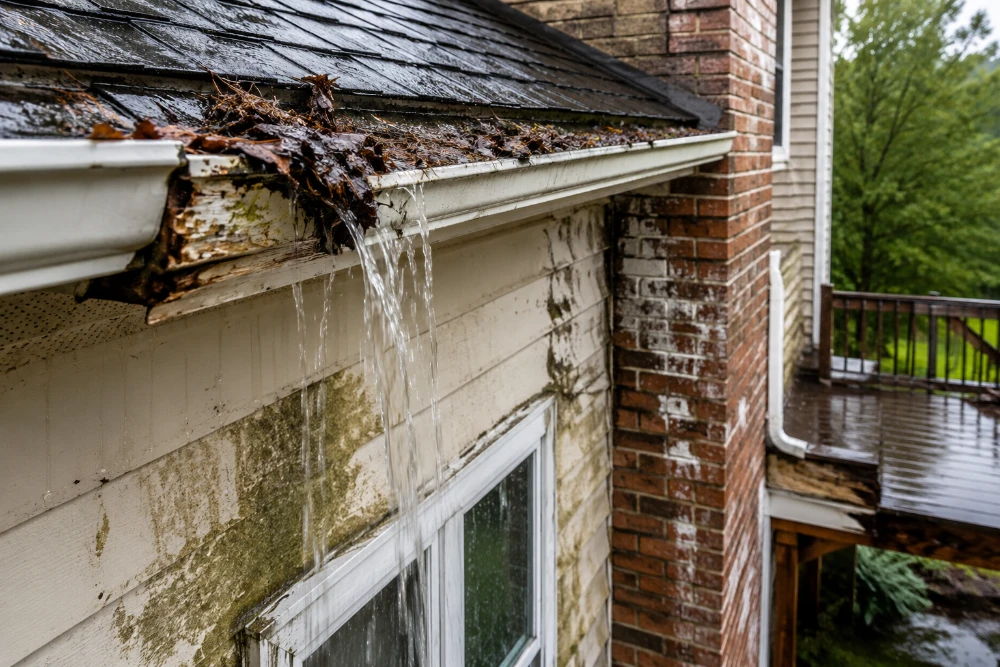
A home’s exterior is designed to protect everything inside from the elements. Roofing, siding, brickwork, windows, and trim all work together to keep moisture out and maintain the integrity of the structure. However, when a gutter system becomes clogged, damaged, or poorly maintained, water can no longer be directed safely away from the home. Over time, this can lead to costly exterior water damage that affects multiple areas of the property.
Many homeowners overlook gutter maintenance because the system is largely out of sight. Yet a small gutter problem can quickly escalate into widespread structural issues if left unaddressed.
Damage to the Fascia and Soffit
One of the first areas affected by failing gutters is the fascia board, which runs along the roofline and supports the gutter system. When gutters become clogged with leaves, debris, or standing water, moisture can back up against the fascia for extended periods.
Repeated exposure to moisture causes wood fascia boards to weaken, discolor, and eventually rot. As the damage spreads, nearby soffits can also become compromised. Once rot reaches these components, repairs often involve replacing entire sections rather than performing simple maintenance. Protecting the fascia board through regular gutter cleaning can help homeowners avoid expensive restoration work.
Siding Vulnerability
Overflowing gutters often allow water to run directly down exterior walls. Instead of being channeled away from the home, moisture seeps into seams, joints, and vulnerable areas of siding.
For wood siding, this can lead to warping, peeling paint, and decay. Vinyl siding may appear unaffected on the surface, but water can become trapped behind panels, creating ideal conditions for mold growth and hidden structural deterioration. Window trim, decorative molding, and other horizontal surfaces are particularly susceptible because they tend to hold water longer.
The Hidden Risks to Brick and Masonry
Brick homes are often considered low-maintenance, but they are not immune to water-related issues. Brick naturally absorbs moisture, and consistent exposure from overflowing gutters can cause long-term damage.
Excess water running down masonry surfaces may lead to efflorescence, a white mineral residue that appears on brick faces. Over time, mortar joints can weaken and deteriorate. In colder climates, trapped moisture may freeze and expand, causing bricks to crack or flake. Preventing unnecessary water exposure helps preserve both the appearance and structural integrity of masonry exteriors.
Window and Door Frame Problems
Windows and doors rely on properly sealed frames to keep moisture out. When water repeatedly flows down exterior walls due to a gutter malfunction, caulking and flashing around these openings can begin to break down.
Once seals are compromised, water can penetrate around the frames and enter the wall cavity. What starts as a simple gutter problem may eventually result in damaged insulation, interior water stains, or even the need for window replacement.
Impact on Decks, Porches, and Outdoor Living Spaces
Outdoor structures attached to a home can also suffer from poor gutter performance. Decks, porches, and covered patios often sit directly beneath rooflines where overflowing gutters discharge water.
Constant exposure to moisture can damage decking materials, promote wood rot, and weaken structural connections. Ledger boards, which connect decks to the home, are especially vulnerable when exposed to ongoing water intrusion. Maintaining effective drainage helps protect these valuable outdoor living areas and extends their lifespan.
Why Water Damage Continues to Spread
One of the most challenging aspects of exterior water damage is that it rarely remains isolated. Moisture affecting one component often spreads to adjacent materials. Rotting fascia can impact soffits and roof decking. Water behind siding can reach wall sheathing. Damaged window seals can allow moisture to enter interior living spaces.
Because these issues develop gradually, homeowners may not notice the damage until repairs become extensive and costly. Routine inspections and seasonal gutter maintenance remain some of the most effective ways to protect a home’s exterior and prevent long-term structural problems.
Final Thoughts
A properly functioning gutter system does far more than manage rainwater—it protects nearly every part of a home’s exterior. By addressing minor gutter issues early, homeowners can avoid costly repairs, preserve curb appeal, and maintain a safe, durable living environment for years to come. Regular cleaning, inspections, and prompt repairs are small investments that can prevent significant water damage down the road.