This post contains affiliate links. As an Amazon Associate, I earn from qualifying purchases, at no extra cost to you. See our disclosure policy.
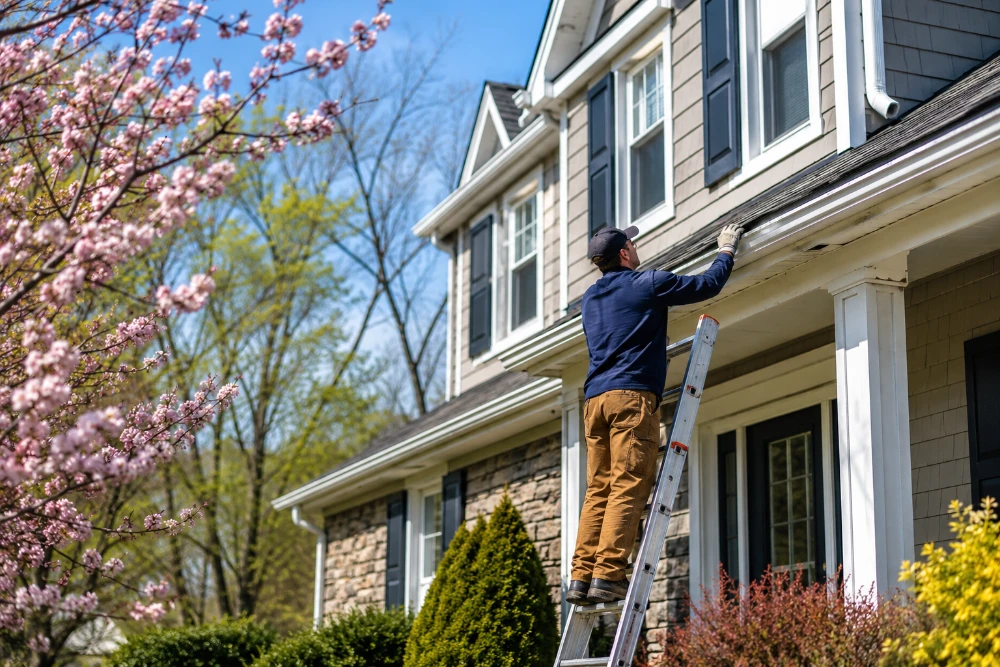
Every spring, homes across New England emerge from winter carrying the evidence of months of freeze-thaw cycling, ice accumulation, and the sustained stress of cold and moisture that the region’s climate imposes more aggressively than almost anywhere else in the country. The windows that fogged with condensation through January. The gutters that collected ice along the eaves. The painted wood trim that expanded and contracted with each temperature swing. None of these processes are invisible in their effects, and spring is the season when attentive homeowners walk the perimeter of their property and take stock of what the winter left behind — before the issues they find have a chance to progress through another season into something more expensive to address.
Why Spring Exterior Inspection Pays Back More Than Almost Any Other Maintenance Investment
The return on time invested in a thorough spring exterior inspection is disproportionately high because of the relationship between the size of a defect and the cost of addressing it. Exterior maintenance companies that work year-round across Greater Boston — specialists like Plum Pro Exteriors — consistently report that the most expensive repair work they encounter is not damage that appeared suddenly but damage that was present in small, addressable form a season or two earlier and was not caught. A caulk failure at a window corner that could have been resealed for a small fraction of the eventual repair cost. A section of fascia showing early rot that progressed through another wet season into the framing behind it. The spring inspection is the mechanism that catches these conditions while they are still inexpensive to resolve.
The exterior components that most commonly reveal winter damage on New England homes fall into a predictable pattern — one that any homeowner who walks their property systematically in April can identify without professional expertise. Paint that has bubbled or peeled indicates that moisture found a pathway behind the film during the winter. Caulk that has cracked, shrunk away from the adjacent surface, or developed gaps at window and door perimeters has lost its elastic function and needs to be replaced before the next wet season. Gutters that are visibly misaligned, sagging, or pulling away from the fascia will direct water against the building during spring rains rather than away from it.
The Interior Signals That Point to Exterior Problems
Some of the most useful information about a home’s exterior condition comes from inside the house. Water staining on ceiling surfaces beneath the roof, condensation or frost that appeared on window frames or sill plates during the winter, and musty odors in basement or crawl space areas that were not present before the cold season are all interior symptoms of exterior conditions that need to be addressed. These signals are worth noting and investigating through the spring inspection rather than being attributed to the general dampness of the season — because in most cases, they point to specific entry points or moisture management failures that can be identified and corrected before the problem they indicate has progressed further into the structure.
The Priority List: What to Address First When Budget Limits Are Real
Most homeowners face some constraint on what they can address in any given season, and prioritizing exterior maintenance effectively requires understanding which conditions carry the highest risk of progression versus which are primarily cosmetic. The framework that most experienced exterior contractors recommend prioritizes:
- Active moisture entry points — any location where water is demonstrably getting into the wall assembly, the roof structure, or the foundation. These are non-negotiable first priorities because they are actively causing damage with every rain event.
- Structural wood in early-stage decay — rot that has not yet compromised the structural contribution of the affected member but that will if left untreated through another wet season. Early-stage decay is far less expensive to remediate than advanced decay that has spread into adjacent framing.
- Failed seals at penetrations and transitions — caulk failures at windows, doors, utility penetrations, and any location where two different materials or planes meet. These are the entry points that produce the moisture infiltration that drives most of the expensive damage found in older New England homes.
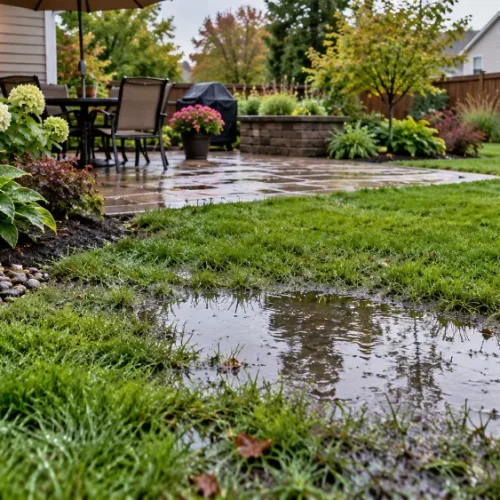
- Gutter and drainage system deficiencies — gutters that are not functioning correctly direct water against the building’s foundation and walls rather than away from them, creating the sustained moisture exposure that is responsible for a large share of exterior damage on homes across the region.
- Paint failure on wood surfaces — not cosmetically important on its own, but a signal that the protective function of the paint film has been compromised and that the wood beneath it is now exposed to the moisture and UV cycles that accelerate deterioration without that protection.
When to Call a Professional Versus Handle It Yourself
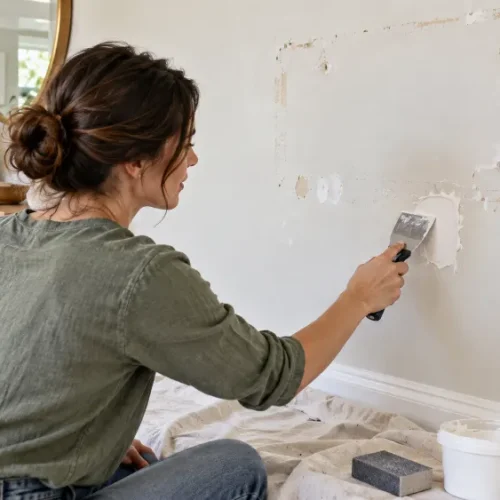
The spring exterior inspection is something most homeowners can conduct themselves with reasonable thoroughness. The repairs that follow the inspection divide more clearly between those within the capability of a competent DIYer and those that warrant professional involvement. Recaulking window perimeters, touching up small areas of paint failure, and clearing gutters of winter debris are all reasonable DIY tasks on single-story homes where safe access is not a concern. Anything involving work at height on a two-story or taller home, anything that requires assessment of structural wood condition below the surface, and anything where the visible symptom suggests moisture infiltration into the wall assembly are all situations where the cost of professional assessment is typically well justified by the diagnostic accuracy it provides and the liability risk it avoids.
Preparing the Exterior for Summer: Beyond Repair Into Improvement
Spring maintenance is primarily about addressing what winter has done. But the season also presents a natural opportunity to evaluate whether the home’s exterior systems are performing as well as they could — not just whether they have survived another winter without catastrophic failure, but whether they are genuinely suited to the demands the local climate places on them. Energy performance that is worse than it needs to be. Siding that requires more maintenance than modern alternatives would demand. Windows that are technically functional but have long since ceased to provide the thermal performance that current products can deliver. These are not emergencies, but they are conditions that compound in cost over time and that are most economically addressed as part of a planned project rather than as reactive responses to eventual failure.
The homeowners who manage their properties most effectively over long time horizons are those who treat the spring inspection not just as a damage assessment but as a planning exercise — noting the conditions that need immediate attention alongside those that are manageable now but trending in a direction that will require investment within the next few years. That forward-looking perspective is what converts reactive maintenance into proactive management, and it is the approach that consistently produces the best outcomes for both the condition of the home and the economics of owning it.