This post contains affiliate links. As an Amazon Associate, I earn from qualifying purchases, at no extra cost to you. See our disclosure policy.
Relocating to a new country is an exciting adventure, but it also brings a unique set of logistical challenges. With destinations like Thailand ranking among the top global relocation spots recently, more families are navigating the complexities of long-haul moves. Transporting your life across borders requires careful organisation, especially when it comes to your cherished home furnishings. The pieces you have carefully curated over the years hold sentimental value and help anchor you in a new environment. As you begin to plan a stress-free house move, packing your décor is just one specific step in the overall journey, yet it is often the most anxiety-inducing part of the process.
Sorting and Evaluating Your Décor
Before wrapping a single vase, take the time to thoroughly evaluate your collection. Global mobility benchmark studies indicate that corporate relocation programmes are increasingly prioritising cost-control. This shift makes the protection of existing high-value décor much more financially prudent than attempting to replace everything abroad. Start by categorising your items based on their sentimental and monetary value, separating the irreplaceable pieces from those that might not survive a strenuous journey.
Deciding what makes the journey requires practical thinking about your destination. When moving across the globe, partnering with regional destination experts is highly recommended to manage these logistics. For instance, if your journey takes you to Southeast Asia, enlisting experienced international moving services Bangkok can help you safely handle your belongings, navigate regional regulations, and carefully unpack delicate pieces upon arrival. These professionals understand the specific humidity and temperature fluctuations that occur during long sea-freight journeys, which is an absolute necessity for protecting sensitive materials like canvas and untreated timber.
Navigating International Customs and Regulations
Crossing international borders means your personal effects will be subject to strict agricultural and customs regulations. Every country has unique entry requirements that can directly impact your home furnishings. For example, the Thai Customs Department allows used household goods and personal effects to be imported duty-free, provided the owner meets specific documentation and residency requirements. If goods do not qualify for this exemption, they are typically subject to assessed import duties plus a Value Added Tax based on their overall freight value.
Quarantine authorities also closely monitor organic materials, meaning that certain home décor pieces might face heavy restrictions. To avoid unexpected confiscations, keep these material guidelines in mind:
- Dried floral arrangements, raw wood pieces, and soil-bearing plants are often seized to prevent agricultural risks.
- Solid wood furniture and wooden shipping crates typically require a formal Certificate of Fumigation, proving they have been treated for wood-boring insects via heat or Methyl Bromide.
- Items made from processed wood panels, such as plywood or particleboard, are generally exempt from the strict fumigation requirements applied to raw logs.
- Heavily painted solid wood furniture may also bypass certain quarantine measures, though proper documentation is always recommended.
Best Practices for Packing Fragile Items
Moving insurers consistently cite glassware, large artwork, and flat-screen televisions as the most frequently damaged items during residential moves. This damage is largely due to improper packing methods rather than the journey itself. Large mirrors and heavy picture frames are structurally weakest when laid flat. As a result, international moving guidelines dictate that these items must always be packed and transported in a vertical, upright position. Furthermore, canvas paintings should be wrapped in breathable protective paper rather than tightly sealed in plastic, preventing moisture condensation and mould buildup during transit.
When it comes to delicate ceramics and crystals, specific strategies are necessary to survive a bumpy transit. According to moving experts, the most effective approach for delicate pieces involves a strategic tiering method where the heaviest pieces are packed at the bottom, medium items in the middle, and lightweight items on top. Their extensive guidance highlights that incorporating cellular dividers and foam pouch inserts is absolutely essential to prevent individual pieces from shifting and breaking during transport.
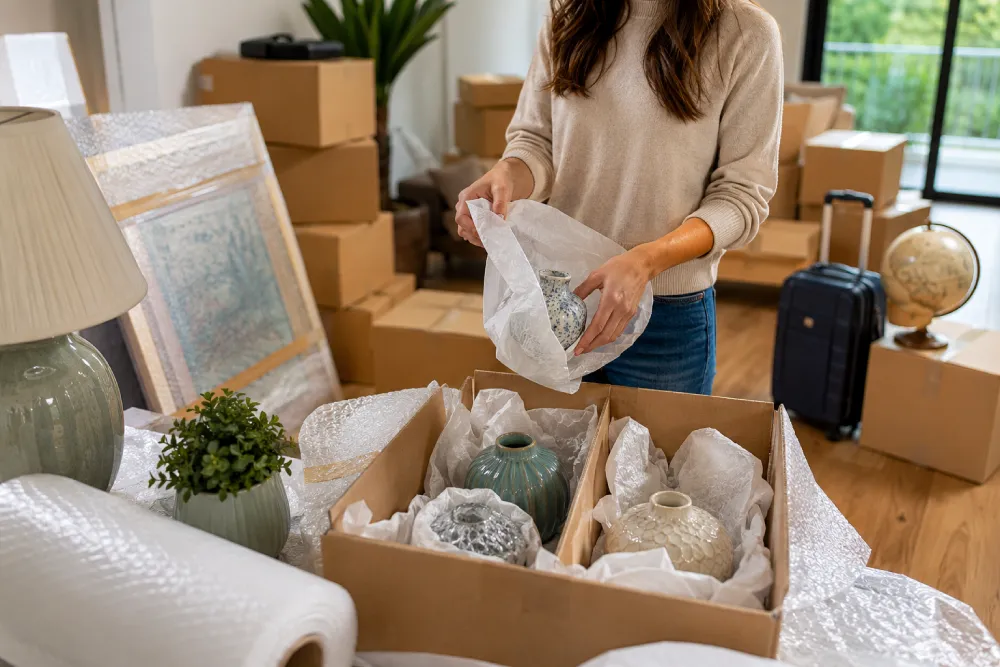
Additionally, when packing hollow decorative vases, filling the empty interior space with tissue paper or soft linens is a proven method to absorb shock and prevent the piece from crushing inward. Moving professionals also recommend removing any detachable legs from coffee tables and wrapping glass tops separately in packing paper, bubble wrap, and rigid cardboard on both faces to prevent shattering. Taking a few extra moments to secure these vulnerable points makes a substantial difference.
Conclusion
Taking your carefully curated style with you across the globe is entirely possible with the right preparation. By understanding international customs, investing in high-quality packing materials, and working with experienced professionals, you can successfully safeguard your most treasured home décor. When you finally unpack your boxes in your new country, those familiar, well-loved pieces will instantly turn an unfamiliar house into a welcoming and beautiful home.