This post contains affiliate links. As an Amazon Associate, I earn from qualifying purchases, at no extra cost to you. See our disclosure policy.

Queensland has a way of shaping the homes inside it. The same state that gives you Brisbane’s polished riverside towers also gives you Cairns’ palms and timber verandahs and the Gold Coast’s bleached-out coastal cottages. Three regions, three climates, three completely different ideas of what a beautiful home should feel like.
The good news for the rest of us is that you do not need to live in Queensland to borrow these looks. Each of the three styles is built around a clear set of materials, colours, and habits, and each one translates well to homes anywhere with a bit of light and a willingness to slow down. What follows is a working guide to all three: what they look like, what makes them work, and how to bring a piece of each home into your own.
Coastal: the Gold Coast way of living lightly
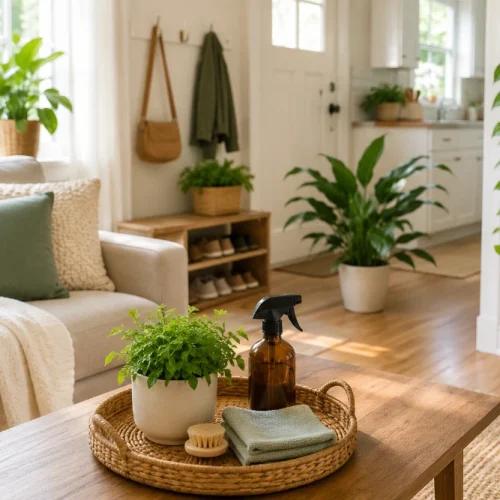
The Gold Coast style is what most of us picture when we hear “Australian beach house,” and the southern end of the Coast (Burleigh, Palm Beach, Currumbin) has spent the last decade refining it into something genuinely covetable. The look reads relaxed but it is not careless. Every choice serves the same goal: keep the house cool, keep the light moving, and let the outside in.
The palette
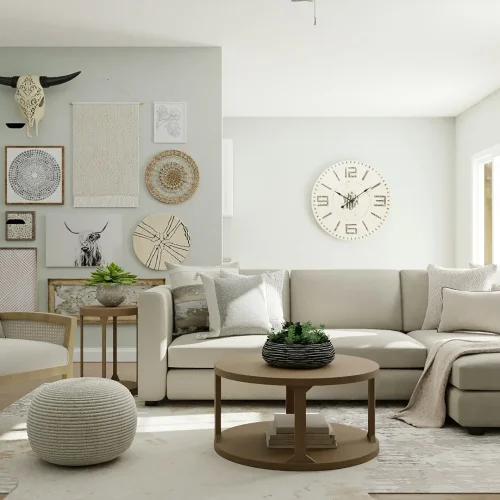
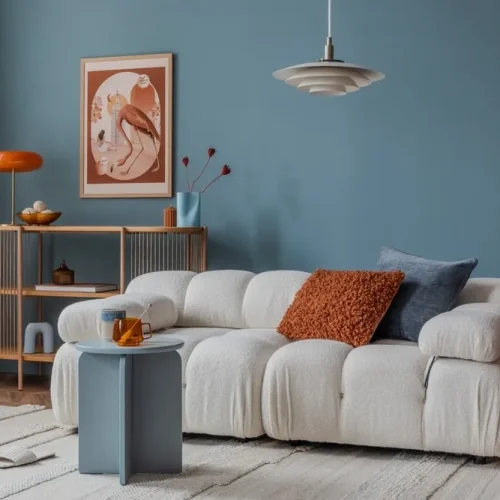
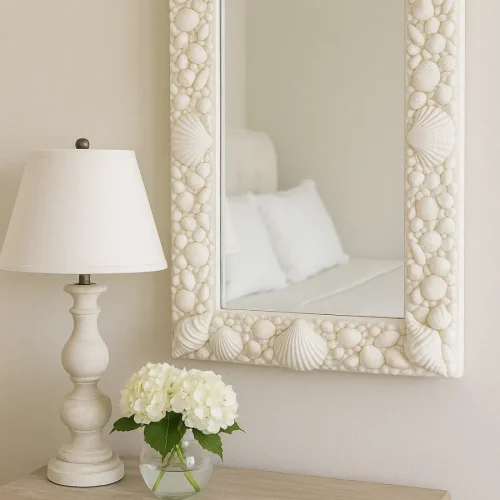
Start with white. Specifically, a soft warm white on the walls, not a cool blue-white. Dulux Natural White, Antique White U.S.A., or Whisper White all work and are widely available outside Australia under similar names. The supporting colours are the ones you find on a beach at low tide: driftwood greys, sand-bleached oak, soft sage, dusty blue, and the occasional black accent for grounding. Avoid bright primary colour on walls or large furniture. The Coast look reads quiet.
The materials
Pale timber is the workhorse: oak, ash, blonde rattan, and limed pine. Linen is everywhere, both in upholstery and in window treatments. Sisal, jute, and seagrass rugs ground rooms without competing with the rest of the palette. Brass is the metal of choice for door handles, tapware, and lighting, in a soft brushed or aged finish, never high shine. Glass is used generously: in pendant lights, in coffee tables, in shower screens.
The furniture
Look for low, soft, comfortable shapes. A linen-slipcovered three-seater sofa is the heart of a Coast living room, ideally one you can throw a cover into the washing machine when sand inevitably gets tracked in. Coffee tables are often a single block of pale timber or a vintage cane piece. Dining chairs are mixed: cane backs, leather seats, the occasional bentwood. Built-in joinery is painted white and kept clean of clutter.
The textiles
Crisp white bedlinen with a single feature throw at the foot of the bed. Linen cushions in stonewashed neutrals. Towels in white or natural with a thin contrast stripe. The trick is to keep the textile story restrained: choose one accent colour (dusty blue, faded sage, or muted terracotta) and repeat it gently across rooms rather than introducing new colours in every space.
The art and details
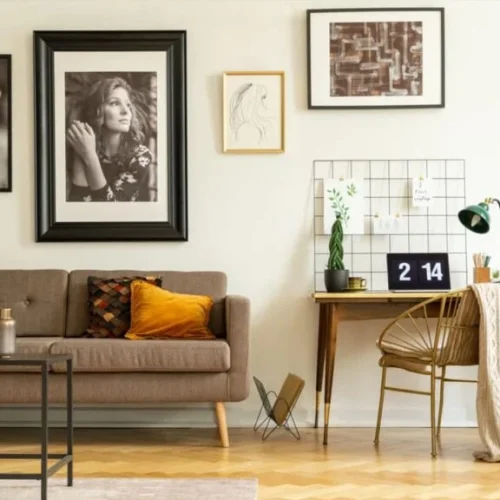
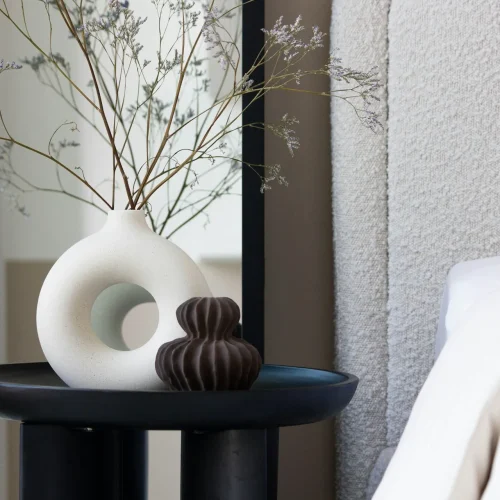
Black-and-white photography, especially of surf, headlands, or the Pacific. Framed botanicals. The occasional vintage print or original watercolour from a local artist. Frames are slim and either black or natural oak. Accessories are kept to a few hero pieces: a large ceramic urn, a stack of coffee-table books, a piece of driftwood, a single oversized vase with native foliage.
The outdoor link
A coastal home that does not flow to the outside is missing the point. Sliding doors stay open whenever the weather allows. Outdoor furniture mirrors the inside: pale timber, linen-style cushions in outdoor fabrics, a low coffee table with a tray and a hurricane lamp. Greenery is structural rather than fussy: a frangipani in a large pot, a row of pandanus, a strip of warrigal greens along a path.
Families settling into the southern end of the Coast often begin the styling process before the keys turn over, sketching room plans while they are still in the middle of the move. Working with reliable local removalists Gold Coast teams makes the transition easier, because furniture arrives in the right order and the heavy lifting is done before the styling decisions start.
Tropical: the Cairns approach to indoor-outdoor living
If the Coast is about lightness, the Cairns tropical look is about lushness. Far North Queensland has a climate that asks the home to perform: heat, humidity, and dramatic afternoon storms. The decor that has evolved in response is greener, more textural, and more confident with colour than anything else in the state.
The palette
The walls in a tropical Cairns home are rarely pure white. A warm off-white or a creamy beige (Half Antique White U.S.A. or Hog Bristle) sets a softer base, and the supporting colours come from the rainforest: deep forest green, terracotta, ochre, palm-leaf green, and warm browns. Black or charcoal is used as a frame, particularly on window joinery and pendant lights. The look is richer than the Coast, but still considered: too much colour and the room starts to fight with the view outside.
The materials
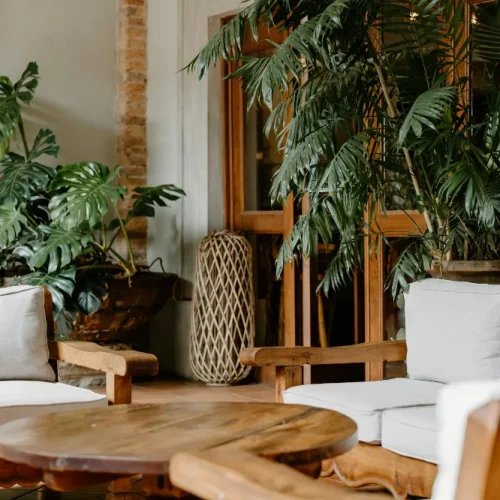
Tropical timber is darker and heavier than coastal: think Queensland walnut, blackbutt, and stained teak. Rattan and bamboo do most of the heavy lifting for furniture frames and lighting. Stone is used generously, especially in the form of crushed-shell terrazzo, polished concrete, and travertine floors that stay cool underfoot. Brass and matte black share the metalwork. Ceiling fans are not an afterthought, they are a design feature.
The furniture
Low, generous, and breathable. Linen and outdoor-grade cotton win over leather because leather struggles in the humidity. Cane and rattan chairs appear in nearly every room. Beds are usually four-poster or canopy style, draped with sheer mosquito netting that does double duty as styling. Dining tables are large and made for long lunches, often in dark timber with rattan or cane chairs around them.
The textiles
Tropical textiles lean into pattern more than coastal textiles do. Block-print cushions in indigo, ochre, and rust. Banana-leaf prints. Vintage Indonesian batik throws. Rugs are flat-weave or natural fibre, often patterned. Bedding is layered with linen sheets, a quilted coverlet, and a folded throw at the foot. The trick is repetition: choose two or three patterns and use them with confidence rather than mixing in a new motif every season.
The art and details
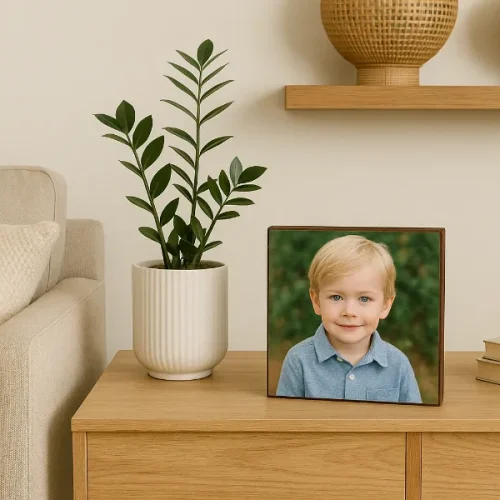
Botanicals, again, but bigger and bolder than the Coast version. Original paintings of the rainforest. Indigenous Australian art purchased through reputable galleries and artist co-operatives. Carved timber pieces. Ceramic vessels in earthy glazes. Mirrors framed in cane or rattan. Plants are everywhere: monstera, fiddle-leaf fig, philodendron, and ferns in oversized woven baskets.
The indoor-outdoor flow
A tropical home is built around the verandah. Louvred windows, bi-fold doors, and wide eaves let air move through the house from morning to evening. The outdoor living area is treated as another room, with a daybed, low coffee table, and an outdoor rug. Lighting is soft and warm: festoon lights along the eaves, candles on the table, a single oversized lantern by the front door.
Families relocating to Cairns from cooler parts of the country often need to rethink their existing furniture before it even arrives. Dark heavy pieces from a Melbourne home can look out of place against tropical light, and dense upholstery can struggle in the wet season. Booking experienced removalists Cairns teams in advance gives you the chance to decide what comes north with you and what is better sold or stored before the move.
City Modern: Brisbane’s confident urban edge
Brisbane has spent the last fifteen years quietly becoming one of the most interesting design cities in the country. The Queenslander cottage has been reinvented as a modern family home. New apartments in Teneriffe, West End, and Bowen Hills are setting the national standard for inner-city living. The look that has emerged is harder to pin down than coastal or tropical, because it borrows freely from both while adding a confident urban edge.
The palette
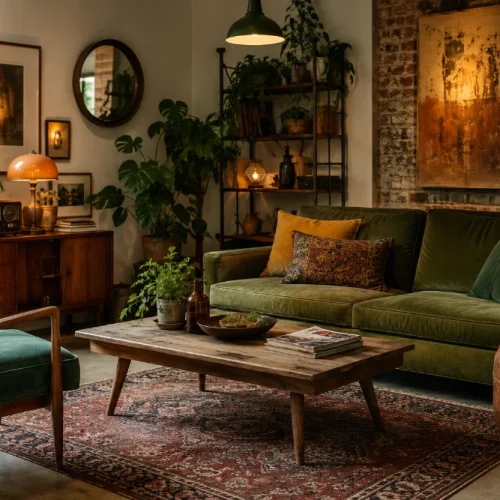
Brisbane interiors are more layered and more confident with darker tones than their coastal cousins. Walls are still mostly off-white, but the supporting colours expand to include deep navy, forest green, burgundy, mustard, and rich charcoal. Feature walls in colour or wallpaper are common. Black joinery and black-framed windows are a signature, especially in renovations of pre-war Queenslanders.
The materials
Brisbane mixes more freely than the other two regions. Polished concrete sits next to warm timber. Marble (or quality marble-look porcelain) appears on benchtops and bathrooms. Velvet and leather upholstery are both at home, especially in dining chairs and bed-heads. Brass, blackened steel, and matte black hardware all coexist. Built-in joinery is typically dark stained timber rather than white-painted.
The furniture
The Brisbane style is more architectural. Sofas have cleaner lines. Coffee tables are sculptural, often in marble, timber, or a combination. Dining tables are statement pieces: a single slab of timber, a marble round, or a custom piece from a local maker. Mid-century influence runs through the city’s design culture, and you will see Hans Wegner-style chairs, Eames lounges, and Saarinen-inspired tulip tables in both apartments and homes.
The textiles
Brisbane textiles are richer and more tactile. Velvet, boucle, and heavyweight linen all feature in upholstery. Bed-heads are upholstered in deep tones. Cushions are layered in textures rather than patterns, and throws are merino, alpaca, or wool. Rugs are larger and more central to the room, with vintage Persian or Turkish styles winning over flat-weave naturals.
The art and details
The Brisbane art collection is more varied and more personal. Original works from emerging Queensland artists. Large-scale photography. Sculptural ceramics from local makers. Books are curated rather than stacked. Decorative objects are chosen for their craft and provenance: a hand-blown glass vase, a bronze sculpture, a vintage timber bowl.
The apartment factor
Much of the new Brisbane is being built upwards. Apartments and townhouses are the dominant new-build typology, and they have pushed the city style toward editing and intention. Built-in storage matters more. Furniture has to do double duty. The colour palette has to flatter both natural and artificial light. The result is an interior style that feels grown up without feeling stiff.
Brisbane attracts a steady stream of arrivals from Sydney and Melbourne, many of them downsizing from larger houses into apartments. Coordinating the move with experienced removalists Brisbane teams pays off, because city apartment moves involve building managers, lift bookings, and tight unload windows that benefit from professional handling.
How to borrow from all three
The three Queensland styles look different on the surface, but they share more than they let on. All three are built around natural materials. All three lean on quality over quantity. All three respect the relationship between the inside of the home and the world outside the windows. If you are styling a home anywhere in the country, or anywhere with seasons and sunlight, you can borrow from all three without anything feeling forced.
A few patterns to keep in mind as you mix:
- Anchor your space with one of the three palettes and use the other two only as accents. A coastal-base room can pick up a single tropical pattern in a cushion or a single Brisbane-style marble accent on a coffee table. Choose one lead voice.
- Repeat materials before you repeat colours. Two pale timber pieces in a room read as intentional. Two terracotta pieces in a room read as a colour scheme. Material repetition is the easier win.
- Keep one wall for art and one wall for nothing. Both Brisbane and Coast interiors leave breathing space on at least one wall in every room. The eye needs somewhere to land.
- Buy the lighting last but invest in it most. All three Queensland styles take lighting seriously, and the right pendant, lamp, or wall sconce can shift the entire mood of a room more than any furniture piece.
- Bring something living into every space. A pot of native foliage, a citrus tree by a sunny window, a herb pot in the kitchen. The Queensland looks all assume that plants are part of the styling, not an afterthought.
The thread that ties them together
The thing all three styles have in common is patience. None of them are built in a weekend. The coastal home that looks effortless has been edited and re-edited over months. The tropical home that feels lush has been planted, layered, and lived in. The city home that reads confident has been chosen piece by piece. The Queensland approach, whichever version of it you prefer, is to build a home slowly, with materials and choices that improve with time rather than need replacing in a season.
If you take only one thing from these three regions, let it be the willingness to wait for the right piece. A linen-slipcovered sofa, a rattan pendant, a marble coffee table: each of these is worth saving for, and each rewards the wait with years of looking better than the day you bought it. Good decor, like good homes, is built on patience and care.
The Queensland coast, the Queensland tropics, and the Queensland city all prove that point in their own way. Borrow what speaks to you, leave what does not, and let your home become a quiet record of the choices you made along the way.