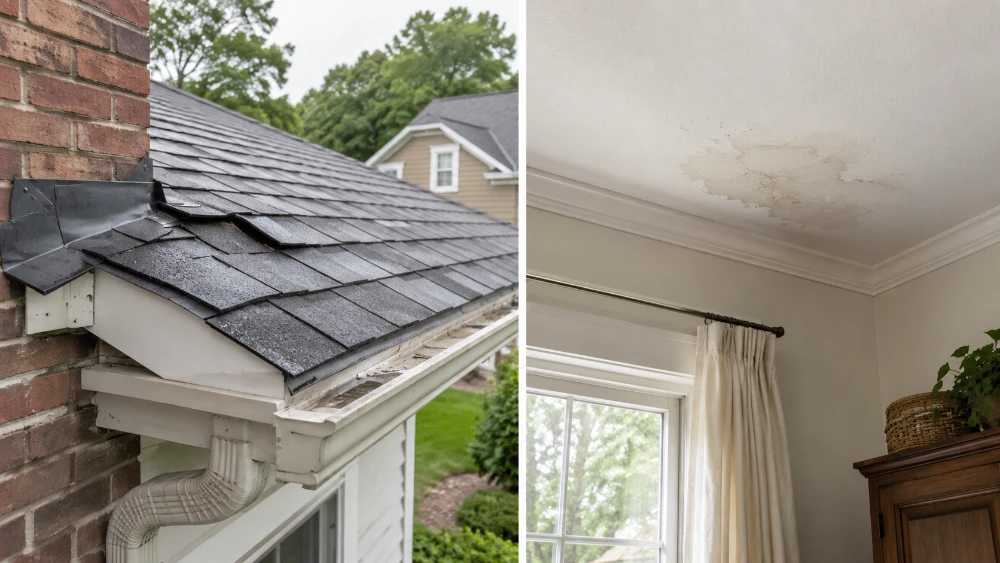
A damp patch does not always appear directly below the place where rain entered. Water can follow underlay, rafters or masonry before reaching a visible ceiling or wall. That is why painting over a stain rarely solves the underlying issue and why a careful inspection should consider the whole route.
Start Above The Affected Area
Chimneys, valleys, dormers and wall junctions are common places for water to change direction. A loose flashing or blocked valley may admit only a small amount during prolonged or wind-driven rain. Note when the mark appears, whether it grows and what the weather was doing at the time.
Check Drainage As Well As Coverings
An overflowing gutter can saturate the top of a wall and resemble a roof leak. Cracked joints, blocked outlets and downpipes that discharge poorly should therefore be included in the investigation. Dark marks beneath the eaves offer useful clues.
Avoid Guesswork Repairs
Applying sealant to the first visible gap can divert water elsewhere or make a later repair more difficult. A review by roofers Chichester should trace the likely route, inspect connected details and distinguish a local defect from a wider drainage problem.
The calm approach is to record the evidence, protect belongings below the stain and arrange an assessment. Finding the cause matters more than disguising the symptom.
Allow The Area To Dry Properly
Once the source has been repaired, wet insulation, timber and finishes may need time and ventilation to dry. Redecorating too quickly can trap moisture or hide whether the repair has worked. Monitor the mark through suitable weather, follow professional advice on damaged materials and only restore finishes when the underlying area is demonstrably dry.
Distinguish Roof Water From Plumbing
Bathrooms, tanks and pipework can create moisture close to a roof defect, so the weather relationship matters. If a mark grows during dry conditions or after water use, plumbing should be considered. If it follows prolonged rain, an external route becomes more likely. This simple timeline can prevent unnecessary roof work and help the right trade investigate first. Avoid opening ceilings or moving services without knowing what lies behind them.
Follow Water Without Assuming A Straight Line
Water can travel along a rafter, underlay or the back of plaster before gravity brings it into view. A ceiling stain may therefore sit away from the entry point. Valleys and chimney junctions are particularly capable of directing water sideways. A careful inspection works outwards from the symptom and considers the roof form above rather than cutting into the first surface that looks damp.
Protect The Room While Investigating
Move furniture and valuable items away from the affected area. If water is actively dripping, use a container in a safe position and keep clear of electrical fittings. A bulging ceiling can hold water and should not be punctured casually. If there is any electrical concern or risk of material falling, isolate the area and seek appropriate urgent help. Temporary protection should reduce harm without disguising the evidence needed to find the source.
Review Connected External Details
Cracked render, failed pointing or a blocked hopper can allow moisture to enter near the roof while the covering itself remains sound. Chimney caps, parapets and abutment walls also sit above internal spaces. The inspection should review these connected elements and explain how each is ruled in or out. A repair based on the whole envelope is more reliable than repeatedly sealing whichever gap is easiest to reach.
Keep Evidence After The Repair
Retain photographs of the affected room and the repaired external detail. Note the dates of heavy rain and whether the area remained dry. Moisture readings, where used correctly, can help track drying but should be interpreted in context. This record supports later decorating decisions and provides a clear reference if a separate problem appears in the same part of the house.
Use Drying As Part Of The Diagnosis
The way an area dries can provide further evidence. A patch that steadily recedes after external repair behaves differently from one that returns during dry weather or spreads from a plumbing route. Ventilate the room appropriately and avoid placing impermeable finishes over damp material. Where insulation has been saturated, professional advice may be needed on whether it can dry in place or should be replaced. The objective is to confirm that the moisture source has stopped, then restore finishes only when the underlying construction is ready.
Check Connected Indoor Ventilation
Where a damp mark sits close to a bathroom or kitchen, confirm that extract ventilation is operating and discharging correctly. Moist air entering a cold roof space can complicate the picture. This check does not replace external inspection, but it helps prevent two different moisture sources being treated as one problem.