This post contains affiliate links. As an Amazon Associate, I earn from qualifying purchases, at no extra cost to you. See our disclosure policy.
Your home’s foundation doesn’t fail overnight. It sends warnings first. Cracks that appear along door frames. Floors that feel slightly off. Windows that used to open easily but now stick. These signals are easy to attribute to normal settling or seasonal changes, and sometimes that’s exactly what they are.
But sometimes they’re not. And the homeowners who act on early warning signs protect their investment for a fraction of what those who wait eventually pay.
Why Foundations Fail in the First Place
Most foundation problems begin with the soil beneath a home. As soil absorbs moisture and dries out, it expands and contracts. Over time, this movement can cause a foundation to shift, settle, or become uneven.
Clay-rich soils, poor drainage, tree roots, and inadequately compacted fill soil are among the most common causes. When the ground can no longer support the structure evenly, foundation issues begin to appear.
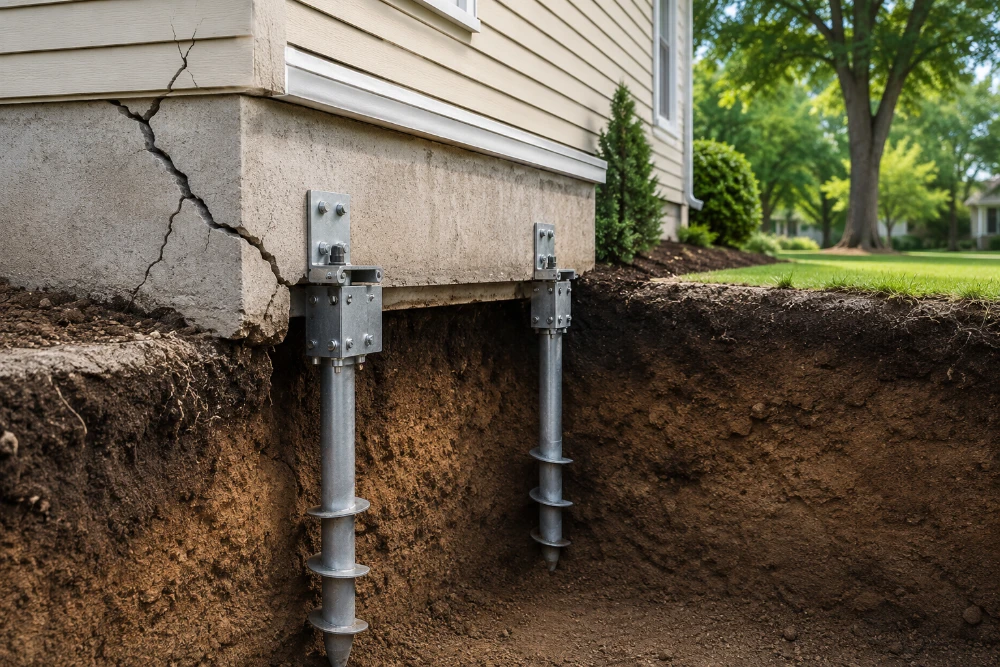
Helical piers address this problem by transferring the weight of the home past unstable surface soils and into deeper, more stable ground. This creates a stronger and more reliable foundation support system.
Warning Sign 1: Cracks in Interior Walls and Ceilings
Not all cracks indicate foundation problems. Hairline cracks from normal settling, particularly in plaster finishes, are usually benign. The cracks that warrant serious attention have specific characteristics.
Diagonal cracks from corners of door and window frames: Cracks that run at 45-degree angles from the corners of openings indicate differential settlement, where one part of the foundation is moving more than another. This creates tension in the structure that expresses diagonal cracking at the weakest points, which are window and door corners.
Stair-step cracks in brick or block: In masonry construction or brick veneer, cracking that follows the mortar joints in a stair-step pattern indicates movement in the foundation behind the masonry. These cracks often close and reopen seasonally, which itself indicates ongoing movement.
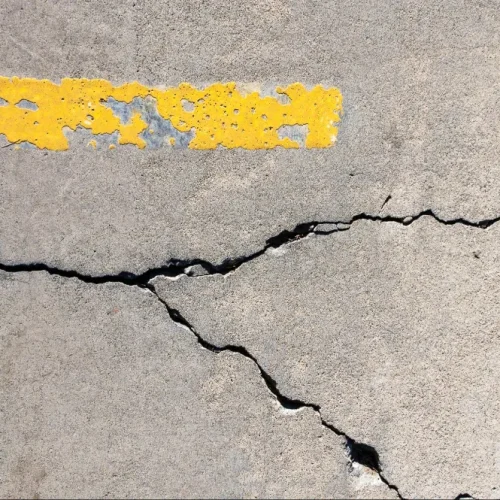
Cracks that are wider at one end than the other: A crack that is wider at the top than the bottom suggests the foundation is rotating or tilting in a specific direction. This is more concerning than a uniform crack and warrants prompt investigation.
Cracks that are growing: Monitoring a crack over time is a simple and effective diagnostic tool. Mark the ends with pencil and date them. If the crack extends beyond your marks over weeks or months, the movement causing it is ongoing.
Warning Sign 2: Doors and Windows That Don’t Operate Correctly
A door that has always opened smoothly suddenly sticking, or a window that has always closed fully now leaving a gap, is one of the most reliable early indicators of foundation movement.
The reason is simple: door and window frames are rigid rectangles. If the wall they’re set in moves even slightly out of square because of foundation movement, the frame distorts and the door or window no longer fits correctly.
Pay particular attention to:
- Doors that stick in the same corner every time, particularly in wet weather
- Gaps that appear between doors and their frames, especially at the top
- Windows that have become difficult to open or close without forcing
- Doors that swing open or closed on their own, which can indicate the floor has developed a slope
Warning Sign 3: Floors That Feel Uneven or Springy
A floor that wasn’t uneven before is communicating structural information. Uneven floors can result from several causes, but when they’re accompanied by other warning signs, foundation movement is a serious possibility.
Walk the floor slowly and pay attention to:
- Areas that feel noticeably lower than surrounding areas
- Sections that feel springy or give underfoot more than they should
- Visible slope that’s apparent when you look across the floor from a low angle
- Tiles or hardwood flooring that have separated, buckled, or cracked in patterns
Warning Sign 4: Gaps Around Windows and Doors
If you can see light, feel drafts, or see daylight around window frames or door frames that used to be sealed, the structure has shifted enough to open gaps that weren’t there before.
These gaps indicate movement has already occurred. In many cases, the movement is continuing. Sealing gaps without addressing the underlying foundation is cosmetic repair that will fail again as movement continues.
Warning Sign 5: Visible Foundation Cracks or Bowing
Periodic inspection of the visible foundation, either in the basement or crawl space, is one of the most direct ways to catch problems early.
Look for:
- Horizontal cracks in concrete block or brick foundation walls, which indicate lateral soil pressure
- Walls that appear to bow or curve inward
- Vertical cracks in poured concrete that are wider than 1/4 inch
- Water infiltration following any crack pattern, since water finding a path in is evidence of movement creating that path
Horizontal cracks and bowing walls are among the most serious foundation indicators. They suggest the wall is under significant lateral pressure and may be approaching structural failure.
What Helical Piers Do and Why They Work
When foundation issues are present, the goal is to stop the movement and restore or maintain the structure’s position. Helical piers accomplish this by bypassing the problem soil entirely.
Steel shafts with helical flights are hydraulically driven into the ground adjacent to the foundation, past the unstable upper soil layer, into stable bearing material below. Brackets are then attached to the foundation, and load is transferred through the piers to the stable bearing layer.
The process is relatively minimally invasive compared to alternatives like full foundation replacement. Work is done from outside the home in most cases, with limited excavation, and the home remains occupied throughout.
Helical Piers are used for exactly the warning signs described above, from differential settlement causing cracking to ongoing movement that doors and windows are signalling. Dry Otter Waterproofing provides helical pier installation as part of a comprehensive foundation repair approach that addresses both the structural stabilisation and the drainage or waterproofing conditions that may have contributed to the original soil problem.
When to Call a Professional
The warning signs described above are not a definitive diagnosis. They’re indicators that professional assessment is warranted. A qualified foundation specialist can determine whether the warning signs are from benign settling or from active movement that requires intervention.
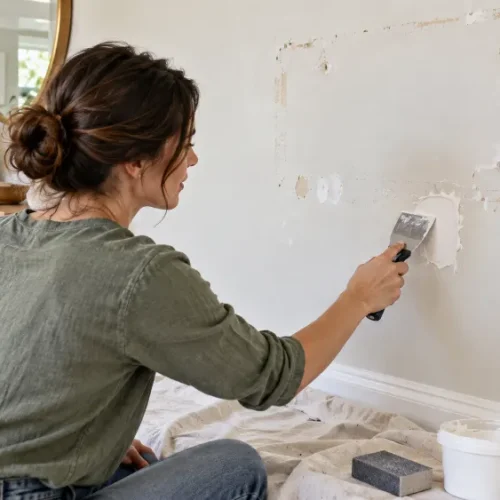
What homeowners should not do is ignore warning signs that are present and growing, or treat them purely cosmetically by filling cracks and sanding down sticking doors without investigating their cause.
Conclusion
Foundation problems that are caught early are significantly less expensive and less disruptive to address than those caught after years of progression. The warning signs are usually present well before structural failure occurs.
If your home is showing two or more of the signs described above, the most valuable thing you can do is get a professional assessment. The information it provides is worth far more than the cost of the assessment itself.