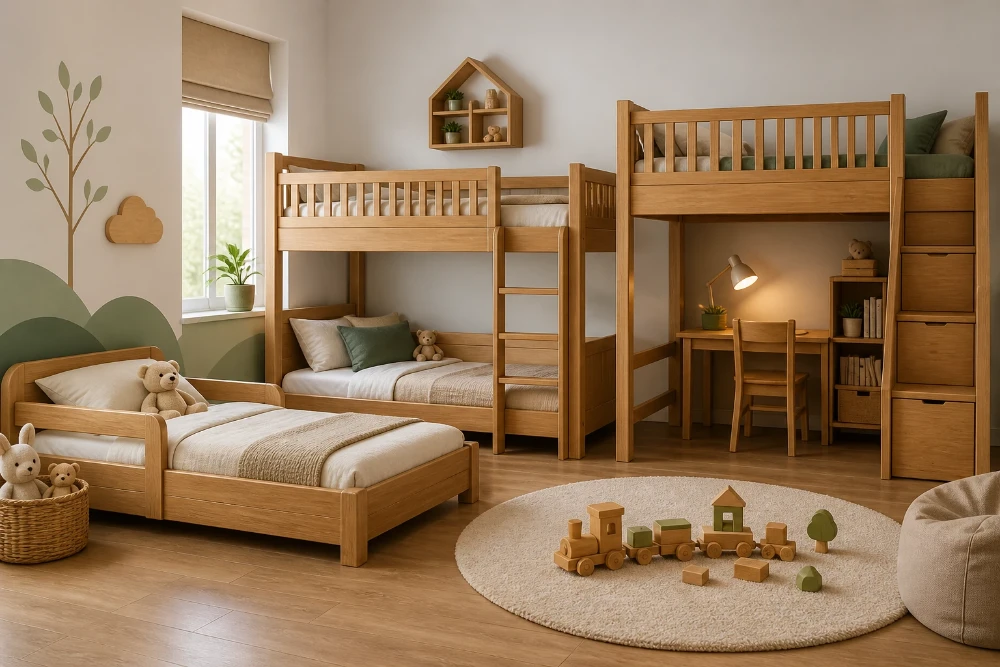
The safest type of wooden bed for children is a low-height, solid wood bed with guardrails, non-toxic finishes, and sturdy construction, designed to minimise falls and support healthy sleep. Whether you are choosing a wooden bed for kids (this is commonly referred to as เตียงนอนไม้สำหรับเด็ก in Thai), a bunk bed, or a loft design, safety comes down to stability, proper materials, and age-appropriate features.
Why Bed Safety Matters in Modern Homes
In real estate today, especially in compact family homes or shared bedrooms, space-efficient furniture like bunk and loft beds is increasingly popular. However, safety should never be compromised for space.
Falls are the most common cause of injuries in elevated beds, particularly from the top bunk. That is why selecting the right type of wooden bed is not just a furniture decision, it is a critical home safety investment.
Safest Types of Wooden Beds for Children
1. Low Wooden Beds (Best for Toddlers)
Low beds sit closer to the floor, reducing the risk of injury if a child rolls off.
Why they are safe:
- Minimal fall height
- Easier access for young children
- Suitable for early transition from cots
These are ideal for modern family homes focused on safe, child-friendly interiors.
2. Solid Wood Single Beds with Guardrails
A standard wooden bed with added guardrails is one of the safest long-term options.
Key safety features:
- Guardrails prevent rolling out of bed
- Strong wooden slats support the mattress securely
- Stable frame reduces wobbling
Guardrails should extend at least 5 inches above the mattress to prevent falls.
3. Wooden Bunk Beds (Safely Designed)
Bunk beds are common in shared bedrooms and maximise floor space, making them highly relevant in real estate layouts.
Safe when designed properly:
- Guardrails on all sides of the top bunk
- Secure, fixed ladder
- Proper mattress fit
Children below six years old should not use the top bunk due to risk of falling.
4. Wooden Loft Beds (For Older Children)
Loft beds elevate the sleeping area while freeing space below for study or storage.
Best for:
- Older children
- Small bedrooms needing multi-functional space
Ensure the same safety standards as bunk beds, including guardrails and structural stability.
Key Safety Features to Look For
When selecting any wooden bed, prioritise the following:
Materials and Build
- Solid wood like oak or maple for durability
- Smooth edges and no sharp corners
- Strong joints and stable frame
Safety Components
- Guardrails with minimal gaps to prevent entrapment
- Secure ladder or steps
- Correct mattress size with a snug fit
Finishes
- Non-toxic, child-safe coatings
- No harmful chemicals or peeling paint
Non-toxic finishes are essential to protect children’s health while maintaining indoor air quality.
Bedroom Layout Considerations (Real Estate Perspective)
Safety is not just about the bed itself, but also how it fits within the room.
Best practices:
- Place beds away from windows and ceiling fans
- Ensure enough space around ladders
- Avoid placing near cords or blinds
Positioning bunk beds in a corner can reduce fall risks by limiting exposed sides.
Common Mistakes to Avoid
- Using oversized mattresses that reduce guardrail effectiveness
- Allowing young children on top bunks
- Ignoring weight limits
- Buying low-quality or uncertified beds
Regular inspection is also important, as wear and tear can weaken structural safety over time.
Choosing Safety Over Style
The safest wooden bed for children is one that balances low risk, strong construction, and age-appropriate design. For real estate-conscious families, investing in a safe bed also enhances the functionality and long-term value of a child’s bedroom.
If you are planning to upgrade your child’s bedroom with safe and stylish designs, explore the range available at Tomato Kidz Thailand, where quality wooden beds are designed with both safety and modern living in mind.