Some shipments don’t fail loudly. They arrive with subtle shifts, rubbed edges, or stress marks that weren’t there at departure. Those quiet failures are often traced back to packaging that wasn’t built for the load it carried. In industrial warehousing, few storage options absorb that pressure better than properly built wood crates, especially when freight refuses to fit neatly into standard dimensions. Understanding how and when to use them helps warehouses protect inventory before problems show up downstream.
Why Wood Crates Still Matter in Industrial Warehousing
Packaging trends come and go, but wood crates remain a steady presence in facilities handling heavy, oversized, or high-value items. Their strength comes from rigidity and customization. Unlike standardized pallets or totes, crates can be built to match the exact shape and weight distribution of the product inside. That matters when loads are dense, uneven, or sensitive to movement. A crate that fits correctly reduces internal shifting and minimizes the risk of impact damage during handling and transport.
How Wooden Crates Are Built for Load Stability
Construction quality determines how a crate performs under stress. Board thickness, joint design, and fastener placement all play a role. Thin panels or weak framing introduce flex, which allows loads to move even when secured.
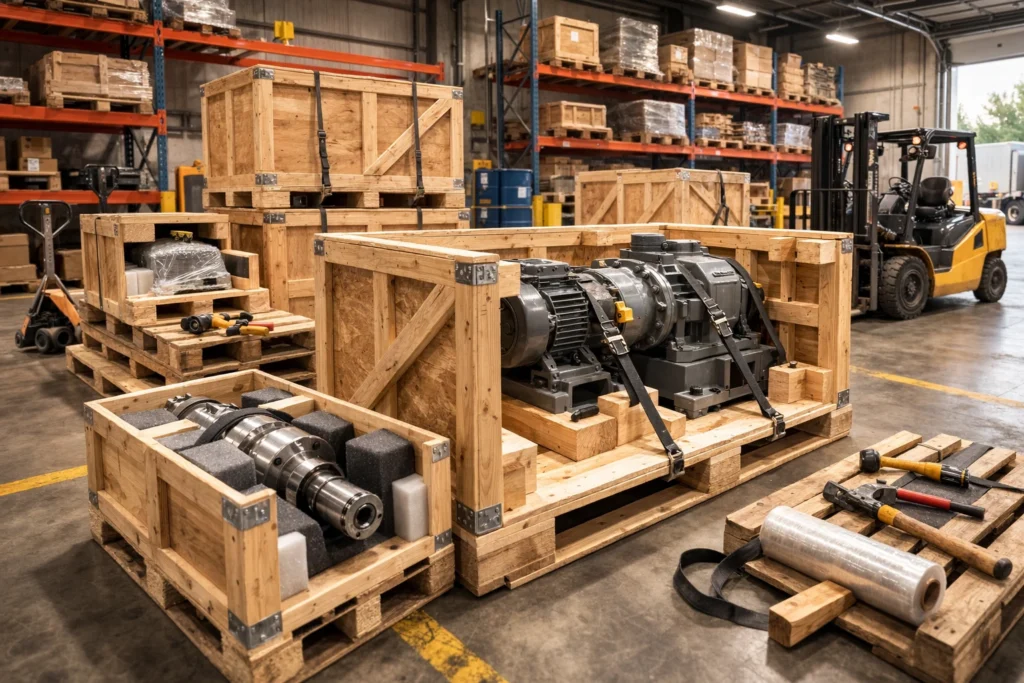
Well-built wood crates use reinforced corners and solid bases to distribute weight evenly. Skid-mounted designs improve forklift access and reduce point loading. Slatted or solid sides are selected based on visibility needs and protection requirements. When warehouses match crate design to real-world conditions, damage rates tend to drop quickly.
Internal Blocking and Bracing in Wood Crates
Blocking and bracing turn an empty shell into a protective system. Internal supports prevent movement in transit and help absorb vibration. This is especially useful for machinery, fabricated assemblies, and components with uneven weight distribution. Bracing also protects edges and contact points, which are common failure zones during long-distance shipping.
How Wooden Crates Handle Irregular and Oversized Freight
Irregular freight creates challenges that standardized containers can’t solve. Long parts, tall equipment, or mixed-material assemblies often require custom containment to remain stable. Wooden crates allow internal customization that adapts to the product instead of forcing the product to adapt to the container. That flexibility becomes critical for export shipments or multi-stop transport, where repeated handling magnifies small weaknesses.
Wood Crates and Compliance for International Shipping
Global shipments add another layer of responsibility. Crates used for international transport must meet treatment standards to prevent pest transfer. Heat-treated lumber and proper marking help avoid customs delays and rejected loads. Warehouses that ship overseas benefit from sourcing compliant crates upfront rather than retrofitting at the dock. Doing so keeps freight moving and avoids costly rework.
Reuse and Lifecycle Value of Wooden Crates
Many crates are discarded after a single use, even though they’re built to last longer. With inspection and minor repairs, crates can be reused internally or resold once their initial job is complete. Facilities that track packaging assets often find surplus inventory occupying valuable floor space. Secondary markets make it easier to recover value from those assets instead of absorbing disposal costs. During seasonal surges, buyers frequently look for wood crates for sale that meet known specs without commissioning new builds.
Cost Control Without Sacrificing Protection
Initial price matters, but replacement frequency matters more. A crate that fails once costs more than a durable crate reused several times. Warehouses focused on total cost evaluate strength, reuse potential, and resale value together. Used inventory can lower costs further when sourced carefully. Inspected and well-maintained crates often perform just as reliably as new ones, especially for internal movements or repeat shipping lanes.
Storage Planning for Empty Wood Crates
Empty crates require space management. Non-collapsible designs can crowd aisles if storage plans aren’t in place. Some facilities stack intact units, while others disassemble crates for flat storage between uses. Clear processes keep crates from becoming clutter and ensure they remain assets rather than obstacles.
Final Take: When Strength and Fit Matter Most
Wood crates remain a practical solution for freight that demands rigidity, customization, and dependable protection. When designed correctly and sourced smartly, they reduce damage, support compliance, and offer reuse value that offsets their footprint. For businesses looking to buy or sell reusable packaging, Container Exchanger offers a straightforward marketplace across North America. Sellers can move surplus crates instead of storing them indefinitely, while buyers gain access to reliable inventory at reduced costs. With the right sourcing partner, heavy-duty packaging continues to pay off long after the first shipment.
FAQs
Wood crates provide full enclosure and structural rigidity, preventing load shifting and protecting sensitive or irregular freight.
Custom wood crates are ideal for oversized, irregular, fragile, or export-bound shipments that require precise fit and added stability.
Internal blocking, bracing, and reinforced framing secure the load and reduce vibration or movement during handling.
Yes, but they must meet ISPM-15 standards with proper heat treatment and certification markings for export compliance.
Many wood crates can be reused multiple times if inspected and maintained properly, especially for internal transport.
Board thickness, joint construction, fastener placement, base design, and internal reinforcement all impact load performance.
Warehouses can stack intact crates or disassemble them for flat storage to save floor space and maintain organization.
Inspected and well-maintained used crates can perform just as reliably as new ones for many applications.
Their durability and resale potential reduce replacement frequency and help recover packaging investment.
Machinery, fabricated components, industrial equipment, large assemblies, and export freight commonly require wood crates.