The hardest part of any evening is often the transition. One moment you are answering messages, folding laundry, or scrolling through a phone screen, and the next you are supposed to be asleep. The brain does not switch gears that quickly. It needs cues: lower light, repeated habits, a quieter room, and a signal that the day is finally ending.
Lavender scent can be one of those signals. It is simple, familiar, and easy to add to a nighttime routine without turning your bedroom into a complicated wellness project. Some people use lavender oil, others prefer sprays or sachets, and many enjoy the soft glow of a candle before bed. If you already know you prefer candlelight as part of your routine, this guide to the best lavender candle for sleep compares several calming options for bedtime.
Why Lavender Scent Feels Calming
Lavender has a long reputation as a calming plant, but its appeal is not only tradition. Its scent is often associated with rest, cleanliness, and quiet spaces. For many people, that association alone helps the mind slow down. When a scent is repeated every night before bed, the brain can start to connect it with the idea of winding down.
That does not mean lavender is a magic fix for poor sleep. It should not be treated as a cure for insomnia, anxiety, or sleep disorders. Its real value is smaller and more practical: it can support a calmer environment when paired with other good habits. A dimmer room, less screen time, a comfortable bed, and a consistent bedtime routine matter just as much.
The best way to think about lavender is as a cue, not a solution by itself. It helps set the mood. It reminds the body that the active part of the day is over. Used consistently, it can become part of a ritual that feels familiar and reassuring.
Building a Simple Lavender Bedtime Ritual
A lavender-based routine does not need to be complicated. In fact, the simpler it is, the more likely you are to repeat it. Start with one small action about 30 minutes before bed.
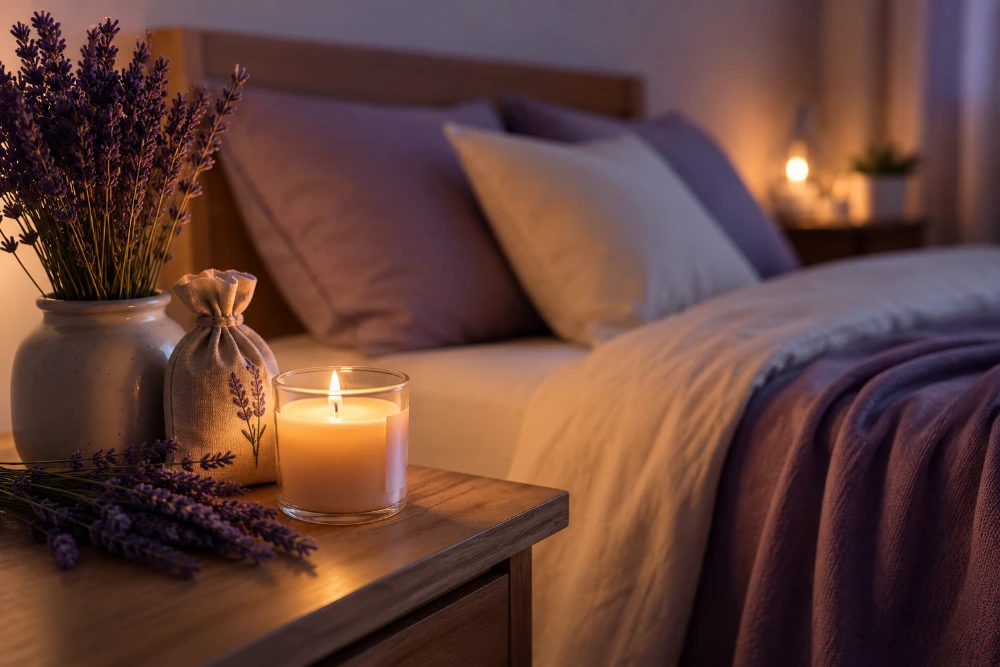
You might place a small lavender sachet near the bed, use a light pillow spray, add a few drops of lavender oil to a diffuser, or light a lavender candle while you read, stretch, journal, or tidy the room. The point is not to overwhelm the bedroom with fragrance. The point is to create a gentle, repeated signal.
Candles work especially well for people who respond to atmosphere. A candle adds scent, but it also adds warm light. That matters because light changes how a room feels. Harsh overhead lighting keeps the space alert and active. Soft candlelight makes the room feel slower, quieter, and more separate from the rest of the day.
The safest approach is to burn the candle before sleep, not during sleep. Light it while you are awake and present, let the fragrance settle into the room, then blow it out before getting into bed. Never fall asleep with a candle burning.
Lavender Candles vs Oils, Sprays, and Diffusers
Each lavender option has a slightly different role. Lavender oil is direct and flexible. A diffuser can spread the scent evenly through the room. A pillow spray is quick and convenient. Sachets are subtle and low-maintenance. A candle, however, adds something the others do not: visual warmth.
That is why candles often feel more like a ritual than a product. Lighting a candle creates a pause. You are no longer just adding scent; you are marking the beginning of the evening slowdown. For some people, that small act is enough to make the routine feel intentional.
Still, not every lavender candle is right for bedtime. Some are too sweet, too smoky, too artificial, or too strong for a bedroom. A calming candle should smell gentle, not heavy. It should support the room, not dominate it.
If your goal is sleep, avoid candles that feel more like party fragrance or strong home décor scent. Look for softer lavender notes, cleaner wax blends, and a burn style that feels steady rather than overpowering. For a more focused comparison, you can choose a lavender candle that actually fits your bedtime routine by reviewing options designed specifically around calm, scent balance, and bedroom use.
Pairing Scent with Soft Lighting
Lavender works best when the rest of the room supports the same message. If the candle is burning beside bright screens, loud audio, and overhead lights, the brain receives mixed signals. The scent says “slow down,” but the environment says “stay awake.”
About an hour before bed, try reducing visual stimulation. Switch from ceiling lights to smaller lamps. Lower the brightness on screens or put them away entirely. Keep the room cooler and quieter if possible. Then add lavender as the final sensory cue.
This combination matters because sleep routines are built through repetition. Your brain learns patterns. When dim lighting, lavender scent, and a calm activity happen together night after night, they become linked. Over time, the routine itself starts doing part of the work.
Safety, Sensitivity, and Practical Tips
Lavender is generally well tolerated, but not everyone enjoys it. Some people find strong floral scents too heavy or headache-inducing. Start with a mild scent and increase only if needed. If a candle makes the room feel stuffy, it is too strong for bedtime.
Avoid synthetic-smelling candles that feel sharp or overly sweet. Also avoid burning any candle in a closed room for too long. A little ventilation can help keep the air comfortable.
The most important rule is simple: never sleep with a candle burning. Use it before bed, while you are awake. Place it on a stable surface, away from bedding, curtains, books, pets, and children. Blow it out fully before lying down.
If you use oils instead of candles, do not apply undiluted essential oil directly to the skin. Use a carrier oil if applying topically, and be cautious if you have asthma, allergies, pregnancy concerns, or scent sensitivity.
Final Thoughts
Lavender scent can help create a calmer bedtime routine, but it works best as part of a bigger environment. It is not just about fragrance. It is about repetition, lighting, safety, comfort, and the feeling that the day is ending.
A lavender candle can be a good choice if you want both scent and atmosphere. Used carefully before bed, it can make the bedroom feel warmer, quieter, and more intentional. The key is choosing something gentle, clean, and suitable for a sleep-focused space — not simply the strongest-smelling candle on the shelf.
FAQs
Lavender scent is often used to create a calming atmosphere and signal that it is time to relax before sleep.
Lavender may support a more relaxing bedtime environment, but it is not a treatment for insomnia or other sleep disorders.
Many people use lavender candles, diffusers, pillow sprays, or sachets about 30–60 minutes before bedtime as part of a consistent routine.
Neither is necessarily better; candles provide both fragrance and soft lighting, while diffusers offer continuous scent without an open flame.
A gentle, subtle fragrance is usually best. If the scent feels overwhelming or causes discomfort, it is likely too strong for bedtime use.
No. Always extinguish a candle before going to sleep to reduce the risk of fire.
No. Lavender works best when combined with good sleep habits such as limiting screen time, maintaining a consistent bedtime, and creating a comfortable sleep environment.
Many people associate lavender with relaxation, cleanliness, and quiet spaces, which can help reinforce bedtime routines.
Individuals with scent sensitivities, allergies, asthma, or specific medical concerns should use lavender products cautiously and consult a healthcare professional if needed.
The effect varies by person, but using lavender consistently alongside other calming habits can help create a familiar nighttime ritual over time.