This post contains affiliate links. As an Amazon Associate, I earn from qualifying purchases, at no extra cost to you. See our disclosure policy.
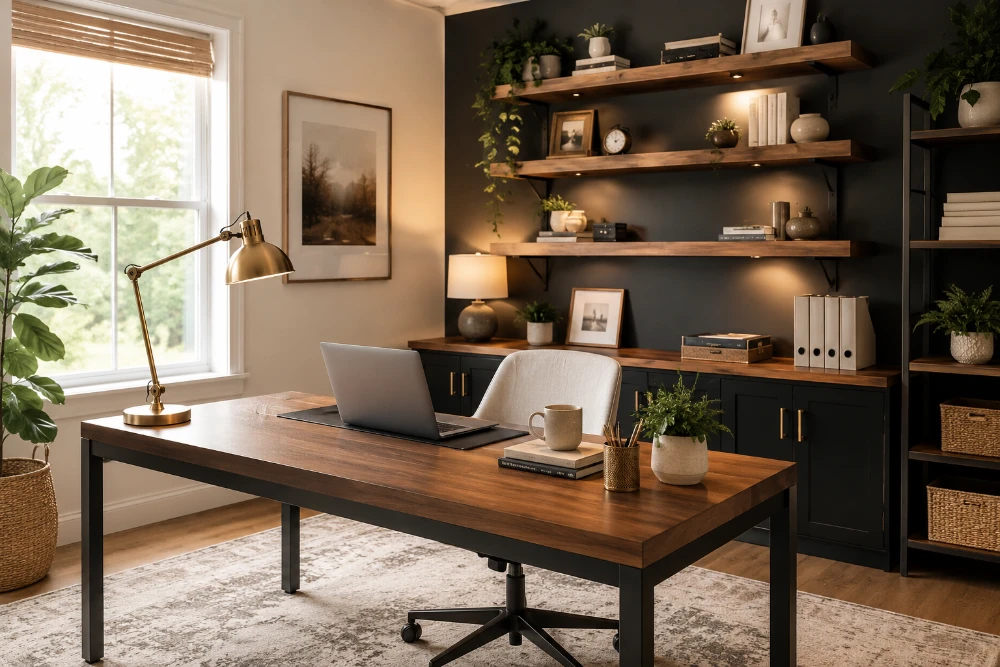
A beautiful home office doesn’t have to drain your bank account. In fact, some of the most impressive workspaces I’ve seen were created with smart planning rather than a huge budget. A few strategic upgrades can completely transform an ordinary room into a polished, professional environment that looks far more expensive than it actually is.
The good news? You don’t need custom cabinetry, designer furniture, or a complete renovation. Small changes often create the biggest visual impact. Whether you’re working remotely full-time, running a business from home, or simply need a productive place to focus, these budget-friendly makeover ideas can help you create a home office that feels high-end without the premium price tag.
Why Your Home Office Doesn’t Need a Huge Budget
Many people assume luxury equals spending. That’s rarely true.
Professional interior designers understand that visual appeal often comes from color, lighting, organization, and layout rather than expensive purchases. A carefully arranged room with thoughtful details can easily outperform a cluttered office filled with costly furniture.
A well-designed home office offers benefits beyond aesthetics:
- Improved productivity
- Better concentration
- Reduced stress
- More professional video calls
- Increased comfort throughout the day
Most importantly, you’ll actually enjoy spending time there.
Start With a Declutter and Deep Clean
Before spending a single dollar, start by removing unnecessary items.
This step costs nothing. Yet it often delivers the most dramatic results.
Look around your workspace. Are there old notebooks, tangled cables, stacks of paperwork, or random supplies taking up valuable space? Remove them.
Create three piles:
- Keep
- Donate
- Discard
Be ruthless.
Every item should have a purpose.
Once you’ve decluttered, perform a thorough cleaning. Dust shelves, wipe down surfaces, clean windows, and vacuum corners that haven’t seen attention in months.
A clean room immediately feels more expensive.
Rearrange Before You Replace
Many homeowners overlook this simple trick.
Move your desk.
Reposition shelving.
Relocate decorative pieces.
Sometimes changing the layout creates an entirely new experience without spending a penny.
Natural light should be a priority whenever possible. Position your desk near a window to make the space feel brighter and more open.
Give Your Walls a Designer Upgrade
Walls occupy a huge percentage of visual space.
That’s why updating them often produces an outsized return on investment.
Paint Is Still the Best Budget Upgrade
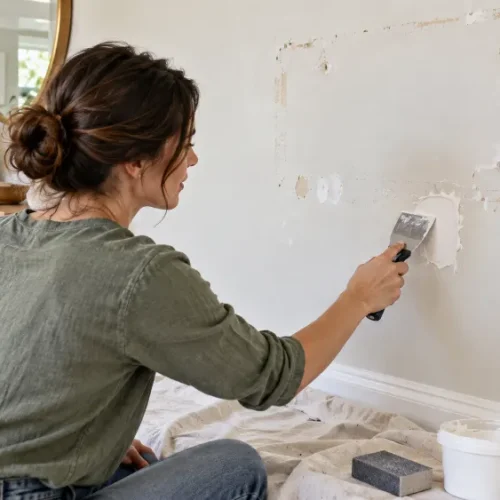
A gallon of paint can completely change the mood of a room.
Consider sophisticated colors such as:
| Color | Effect |
| Soft Gray | Modern and professional |
| Warm White | Bright and timeless |
| Sage Green | Calm and productive |
| Deep Navy | Rich and dramatic |
| Greige | Elegant and versatile |
Lighter colors generally make small spaces feel larger. Darker shades can add depth and sophistication when used strategically.
Try Peel-and-Stick Wallpaper
Want a designer look without the commitment?
Peel-and-stick wallpaper has improved dramatically in recent years.
Use it on:
- One accent wall
- The area behind your desk
- Built-in shelving backs
- Small office nooks
The visual impact is often far greater than the cost.
Add Affordable Artwork
Bare walls can make a room feel unfinished.
Instead of purchasing expensive originals, consider:
- Printable art
- Framed photography
- Vintage maps
- Black-and-white prints
- Personal travel photos
Large artwork often looks more expensive than several small pieces.
Upgrade Your Desk Without Buying a New One
Your desk is the centerpiece of your home office.
However, replacing it isn’t always necessary.
Refresh What You Already Own
A few updates can breathe new life into an older desk.
Try:
- Painting the base
- Refinishing wood surfaces
- Replacing drawer pulls
- Applying contact paper for a wood or marble effect
Many budget desks look surprisingly high-end after a weekend makeover.
Style Your Desk Like a Professional
Expensive offices rarely feel crowded.
Keep only essential items visible.
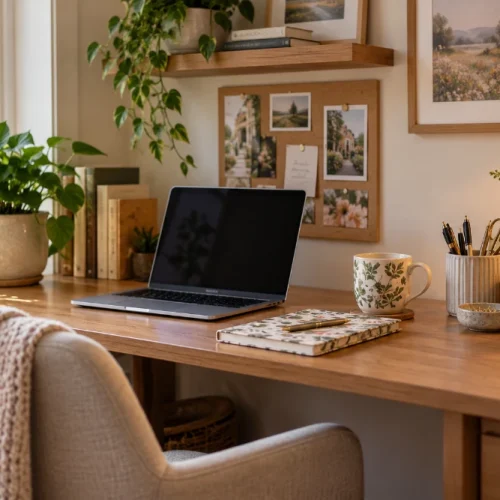
A simple setup might include:
- Laptop or monitor
- Desk lamp
- Small plant
- Notebook
- Pen holder
That’s it.
The less visual clutter you have, the more expensive the workspace appears.
Invest in Better Lighting
Lighting changes everything.
Unfortunately, many home offices rely on a single overhead fixture that creates harsh shadows and an uninspiring atmosphere.
Professional spaces use layered lighting.
You can do the same without spending much.
Create Three Layers of Light
Ambient Lighting
This is your primary light source.
Examples include:
- Ceiling fixtures
- Recessed lighting
- Floor lamps
Task Lighting
Focused lighting helps reduce eye strain.
Examples include:
- Adjustable desk lamps
- Reading lights
- Monitor lighting bars
Accent Lighting
Accent lighting adds warmth and sophistication.
Examples include:
- LED strips behind shelves
- Small table lamps
- Picture lights
Warm white bulbs often create a richer and more inviting environment than cool blue lighting.
Elevate Your Seating for Comfort and Style
An uncomfortable chair becomes a daily frustration.
Yet you don’t necessarily need a premium ergonomic chair costing hundreds of dollars.
What Matters Most
Focus on:
- Adjustable height
- Proper back support
- Comfortable seat cushion
- Stable construction
If your existing chair functions well, consider upgrading its appearance instead.
Budget Chair Improvements
Simple improvements include:
- New seat cushions
- Decorative lumbar pillows
- Chair slipcovers
- Armrest padding
These small changes can dramatically improve both comfort and appearance.
Add Storage That Looks Custom Built
Storage is where many home offices fall apart.
The goal isn’t simply storing items.
It’s storing them beautifully.
Floating Shelves
Floating shelves instantly create a custom appearance.
Use them to display:
- Books
- Plants
- Awards
- Framed photos
- Decorative objects
Leave empty space between items.
Professional styling depends on restraint.
Decorative Storage Solutions
Avoid visible plastic bins whenever possible.
Instead, consider:
- Woven baskets
- Fabric storage cubes
- Decorative boxes
- Wooden crates
They hide clutter while enhancing the room’s design.
Think Vertically
When floor space is limited, go upward.
Tall shelving units create storage without making a room feel crowded.
This approach works especially well in a small home office.
Incorporate Luxury-Looking Accessories
Accessories provide personality.
However, too many accessories create chaos.
Choose carefully.
Upgrade Everyday Office Supplies
Small details matter.
Replace mismatched items with coordinated alternatives.
Examples include:
- Matching file organizers
- Uniform storage containers
- Metal desk accessories
- Minimalist organizers
Consistency creates a polished appearance.
Add Plants
Plants instantly improve almost any workspace.
They add:
- Texture
- Color
- Warmth
- Visual interest
Low-maintenance options include:
- Snake plants
- Pothos
- ZZ plants
- Peace lilies
If natural plants aren’t practical, high-quality faux versions can still provide visual appeal.
Use Textiles Strategically
A soft rug can completely transform a room.
Likewise, curtains help soften hard surfaces and improve acoustics.
Focus on neutral colors and quality textures rather than bold patterns.
Create a Professional Video Call Background
Remote work has changed how people view their workspace.
Your background now matters.
A lot.
Clients, coworkers, and potential employers often form impressions based on what they see behind you.
Elements of a Strong Background
Consider including:
- Clean shelving
- Framed artwork
- Plants
- Books
- Soft lighting
Avoid overcrowding.
The best backgrounds feel intentional rather than staged.
Position Lighting Correctly
Place light sources in front of you whenever possible.
Backlighting often creates shadows and poor image quality.
Good lighting can make even a modest home office appear significantly more professional.
Smart DIY Projects for a High-End Home Office
Some of the most impressive upgrades require a little effort rather than a lot of money.
Build Floating Shelves
Materials are relatively inexpensive.
The result often looks custom-made.
Create an Accent Wall
Options include:
- Wood slats
- Geometric paint designs
- Board and batten
- Peel-and-stick panels
Accent walls add visual interest without overwhelming the room.
Build a Custom Bulletin Board
Use:
- Cork
- Fabric
- Decorative trim
A custom bulletin board can become both a functional and decorative focal point.
Upcycle Secondhand Finds
Thrift stores frequently contain hidden gems.
Look for:
- Solid wood desks
- Bookcases
- Filing cabinets
- Side tables
A little paint and creativity can transform outdated pieces into standout features.
Don’t Forget Multipurpose Furniture
Many homeowners work with limited square footage.
That’s where multipurpose furniture shines.
For example, a compact Conference Table can serve several purposes:
- Team meetings
- Video conferences
- Collaborative projects
- Extra workspace
- Guest seating area
Rather than dedicating space to a single-use piece, look for furniture that performs multiple functions.
This approach maximizes both value and efficiency.
Budget Breakdown for Different Spending Levels
Here’s what you can realistically accomplish at various budgets.
| Budget | Recommended Upgrades |
| Under $100 | Paint, organization tools, decor refresh |
| Under $300 | Lighting upgrades, shelving, accessories |
| Under $500 | Chair improvements, furniture refinishing, complete makeover |
| $500+ | Larger furniture replacements and advanced customization |
Notice that even modest budgets can create significant visual improvements.
Common Mistakes That Make a Home Office Look Cheap
Sometimes what you avoid matters as much as what you add.
Overcrowding the Space
Too much furniture creates visual noise.
Leave breathing room.
Ignoring Cable Management
Visible cords instantly reduce the professional appearance of a workspace.
Use:
- Cable sleeves
- Cord clips
- Under-desk trays
Using Too Many Colors
Limit your palette.
Three primary colors are usually enough.
Poor Lighting
Dark rooms feel less inviting and less productive.
Layer your lighting whenever possible.
Following Trends Blindly
Trends come and go.
Function lasts.
Choose upgrades that genuinely improve your workspace rather than simply following social media inspiration.
Conclusion
Creating an expensive-looking home office doesn’t require a luxury budget. It requires thoughtful decisions.
Start with decluttering. Improve your lighting. Refresh your walls. Upgrade storage. Add carefully chosen accessories. Most importantly, focus on creating a workspace that supports how you actually work.
I’ve found that the most successful makeovers rarely happen all at once. Instead, they evolve through a series of smart, intentional upgrades.
Take one project at a time.
Before long, you’ll have a professional, stylish, and highly functional home office that looks like it cost far more than it actually did.