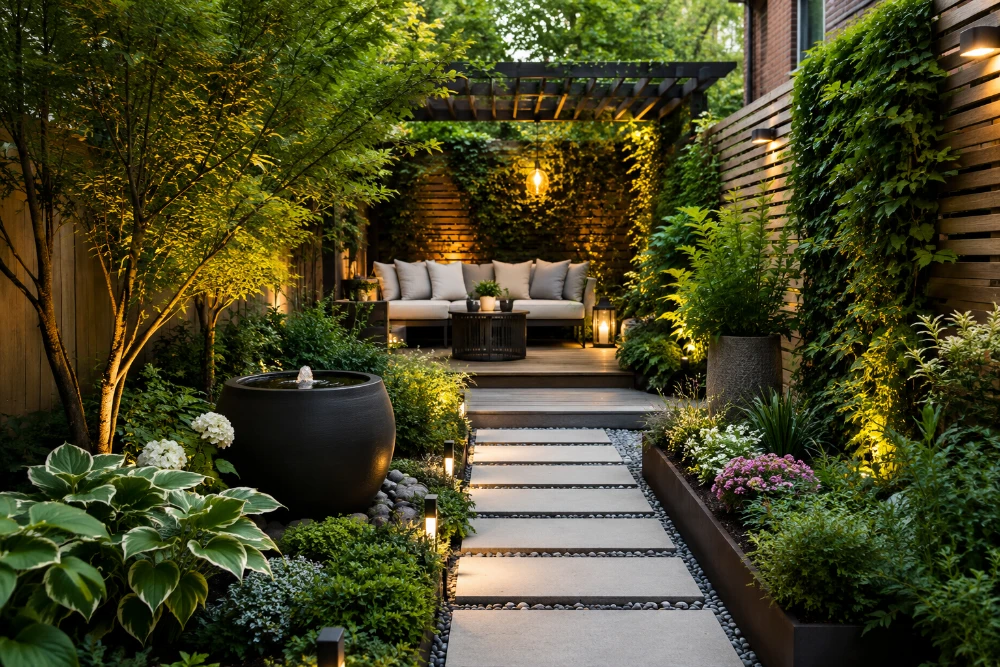
Small gardens have a reputation for being limiting, but that’s mostly a mindset problem. Some of the most beautiful outdoor spaces are compact ones — where every element is intentional, every corner earns its place, and the result feels considered rather than crowded. The challenge isn’t the size. It’s knowing how to work with it.
Whether you have a narrow side yard, a modest backyard, or a postage-stamp front garden, these ideas can genuinely transform what you’re working with.
1. Define Zones to Create the Illusion of Space
One of the fastest ways to make a small garden feel larger is to divide it into distinct zones rather than treating it as one undifferentiated area. When a space has visual layers — a seating area here, a planting bed there, a pathway connecting them — it creates depth and interest that draws the eye through the garden rather than letting it land on the boundary.
This doesn’t require hard walls or fences. A simple shift in surface material, a low hedge, or even a change in elevation can signal a new “room.” The effect is psychological as much as physical: zones make a space feel like there’s more to discover.
Homeowners working with professional landscape design services often find that this kind of spatial planning is where professional expertise adds the most value in small gardens — not just in plant selection, but in the layout logic that makes a tight space feel generous.
Firms like Growing Solutions Landscaping & Design approach small-space projects with this kind of full-property thinking, considering how each element connects to the next rather than designing individual features in isolation.
2. Use Vertical Space Aggressively
Ground space is limited — but vertical space is almost always underused. Walls, fences, trellises, and structures all offer opportunities to add greenery, texture, and visual interest without consuming a single square foot of floor area.
Climbing plants like clematis, hydrangea petiolaris, or star jasmine can transform a bare fence into a living wall. Vertical planters work well for herbs or small flowering plants near a back door or patio. A simple pergola with climbing vines adds overhead enclosure that makes a seating area feel private and complete without shrinking the footprint.
The key is treating vertical surfaces as part of your design canvas from the beginning, not as an afterthought once the ground-level plan is set.
3. Choose Plants That Work Harder
In a small garden, every plant needs to justify its presence. That doesn’t mean sticking to miniature varieties of everything — it means selecting plants that offer multiple seasons of interest, serve more than one purpose, or contribute something year-round.
A few principles that help:
- Multi-season performers — plants that offer spring bloom, summer foliage, fall color, and winter structure don’t leave the garden looking bare for months at a time
- Texture contrast — pairing fine-leaved plants with broad-leaved ones creates visual complexity even when nothing is in flower
- Ground covers — low-growing plants that spread between feature plants suppress weeds and keep the space looking tidy without additional maintenance
Layered planting — using plants of varying heights and forms — is one of the most effective techniques for making small gardens feel rich and full without overcrowding them.
4. Simplify the Hardscaping Palette
It’s tempting to use a small garden as an opportunity to try interesting materials — mixed paving, decorative gravel, patterned tile. But too much variety in hardscaping can make a small space feel visually busy and actually smaller.
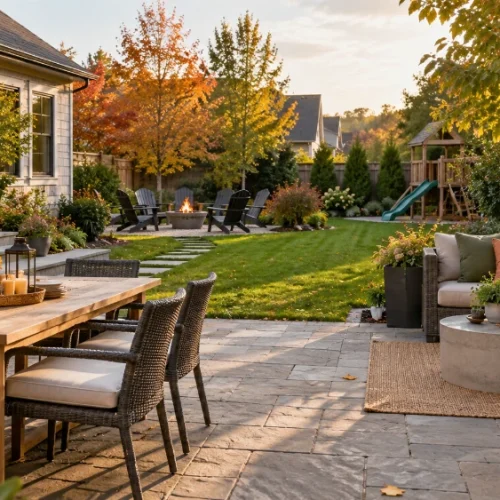
A more effective approach is to choose one or two materials and use them consistently. A single paving stone carried from the path to the patio creates visual continuity that expands the perceived space. Clean, simple edging between hardscaping and planting beds keeps everything looking intentional.
This is also a durability consideration. Fewer material transitions mean fewer places where things can shift, settle unevenly, or require repair over time.
5. Add Focal Points to Draw Attention
Every garden benefits from something that anchors the eye — a feature that says “this is the center of what’s happening here.” In a small garden, a well-chosen focal point does double duty: it creates visual interest and it pulls attention away from the boundaries of the space.
Good focal points for small gardens include:
- A specimen plant with strong form or seasonal drama — a Japanese maple, an olive, a ornamental grass
- A simple water feature, which adds movement and sound without requiring much space
- A piece of sculpture or garden art placed thoughtfully at the end of a sightline
- A statement container or planted urn that anchors a corner or patio edge
The placement matters as much as the feature itself. A focal point positioned at the far end of the garden draws the eye forward, making the space feel longer. One positioned at the center creates a natural gathering orientation.
6. Keep Lawn Areas Small or Eliminate Them
Lawn in a small garden rarely does what people hope it will. A small patch of grass requires all the maintenance of a large lawn — mowing, edging, fertilizing — but delivers very little of the expansive, open feel that makes lawn worthwhile in larger spaces. It can also look tired and patchy in shaded or heavily used small gardens.
Replacing lawn with a combination of low-maintenance ground cover, gravel with plantings, or a properly sized patio almost always improves both the appearance and usability of a small garden. If you do want some soft surface for children or pets, consider a limited, clearly defined grass area with crisp edging rather than a lawn that spreads to fill the space by default.
7. Use Lighting to Extend the Space Into Evening
A garden that disappears after dark is essentially only usable for half the year in many climates. Outdoor lighting, thoughtfully placed, extends the life of a small garden into evening hours and transforms how the space looks and feels after sunset.
The goal isn’t to flood the space with light. Subtle, layered lighting almost always looks better than bright overhead fixtures:
- Path lighting — low-level lights along walkways add safety and mark the garden’s dimensions
- Uplighting — directed at a feature plant or wall, this creates drama and depth after dark
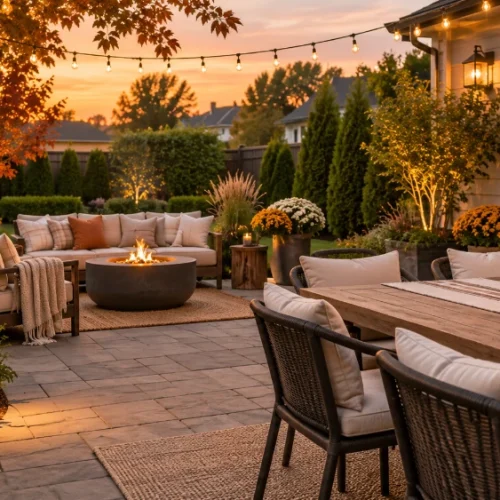
- String lights — strung across a seating area, these create a warm canopy that makes even a tiny patio feel like a destination
- Step lighting — embedded into any level changes, these add both safety and a polished finish
Good lighting reveals the garden rather than illuminating it flatly, and in a small space, that distinction makes a noticeable difference to how large and inviting it feels.
Final Thoughts
Small gardens reward intentional thinking. When every decision considers how elements relate to each other — how zones connect, how plants layer, how materials flow, how light plays at different hours — the result is a space that feels complete and considered rather than squeezed.
The size of a garden is rarely the real constraint. With the right approach, even the smallest outdoor space can become somewhere you genuinely want to spend time.