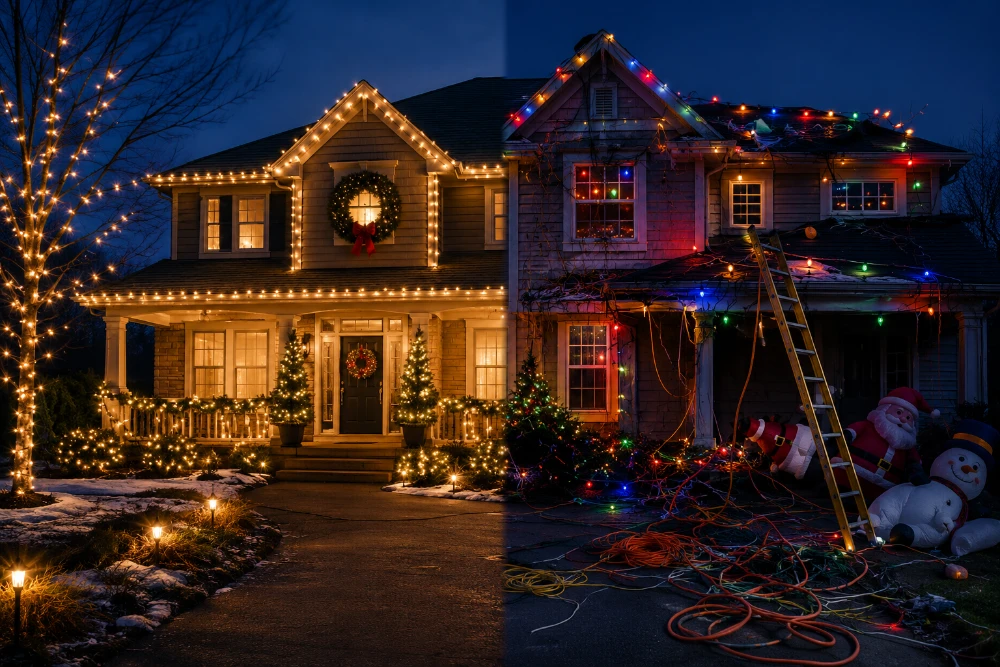
Outdoor holiday decorating looks easy from the street.
Flip on a few lights. Hang decorations along the roofline. Add inflatables to the yard. Done, right?
Not exactly.
Many homeowners realize their biggest outdoor decorating mistakes only after the display is fully installed. Sometimes the problems are cosmetic. Other times they become expensive, dangerous, or incredibly frustrating halfway through the holiday season.
I’ve seen it happen repeatedly. A display that looked perfect during setup suddenly appears crooked at night. Extension cords start overheating. Decorations collapse after the first windstorm. Different shades of white lighting clash so badly the entire home looks disconnected.
The good news? Most of these issues are preventable with planning, patience, and smarter installation choices.
This guide breaks down the most common outdoor decorating mistakes homeowners notice too late, along with practical ways to avoid them from the start.
Last-Minute Decorating Creates Bigger Problems
Rushing is usually where everything begins to go wrong.
People wait until temperatures drop. Then suddenly they are climbing ladders in freezing weather trying to install an entire display in one weekend. That pressure leads to shortcuts. Shortcuts lead to mistakes.
Fast setups often create:
- Uneven lighting
- Unsafe electrical connections
- Poorly secured decorations
- Damaged gutters
- Broken shingles
- Tangled wiring
- Inconsistent design themes
And once the display is fully installed, fixing mistakes becomes far more difficult.
A smarter approach starts weeks earlier.
Test every light strand before installation. Measure rooflines ahead of time. Sketch the layout. Identify power sources. Decide on a consistent color palette before buying decorations.
Planning sounds boring. But honestly? It saves enormous amounts of time later.
Overloaded Extension Cords Are a Serious Problem
This is one of the most dangerous outdoor decorating mistakes homeowners make every year.
People underestimate electrical demand constantly.
One extension cord becomes three. Then five. Suddenly an entire yard display is running through a single outlet that was never designed for that kind of load.
That creates real fire risks.
Common Warning Signs
Watch for these problems immediately:
| Warning Sign | What It May Mean |
| Warm extension cords | Overloaded circuits |
| Flickering lights | Voltage instability |
| Breakers repeatedly tripping | Excessive power draw |
| Burning smell near plugs | Dangerous overheating |
| Dim lighting sections | Poor electrical distribution |
These issues should never be ignored.
Another common mistake involves using indoor extension cords outdoors. Moisture exposure changes everything. A cord that works perfectly indoors may become hazardous during rain, frost, or snow.
Outdoor-rated equipment matters.
Smarter Electrical Setup Tips
A safer holiday lighting setup usually includes:
- Outdoor-rated extension cords
- GFCI-protected outlets
- Distributed power loads
- Weatherproof cord covers
- Timers or smart plugs
- LED lighting instead of older incandescent bulbs
LED lights dramatically reduce electrical demand. They also generate less heat.
That matters more than people realize.
Some homeowners eventually hire professional Christmas lights installation crews simply because electrical planning becomes overwhelming on larger homes. A qualified installer can calculate safe power distribution while keeping wiring hidden and organized.
Uneven Roofline Lighting Ruins the Entire Look
You might not notice uneven spacing while standing on a ladder.
But at night? From the street?
It becomes painfully obvious.
Crooked roofline lighting immediately makes the entire display feel sloppy, even when expensive decorations are being used.
And unfortunately, this is one of the most visible outdoor decorating mistakes homeowners notice too late.
Why Roofline Lighting Looks Uneven
Several small issues usually combine together:
- Guessing measurements
- Uneven clip placement
- Sagging wires
- Mixing bulb sizes
- Inconsistent spacing
- Ignoring roof angles
One side of the house ends up brighter than the other. Certain sections droop. Corners look compressed while straight runs appear stretched.
The human eye notices symmetry problems instantly.
How to Fix It Before Installation
The best roofline lighting displays are carefully measured beforehand.
Professional-looking results usually involve:
- Measuring every roof section individually
- Using identical bulb spacing
- Testing lights before final mounting
- Viewing the display from the street during setup
- Creating a layout plan first
A simple lighting map helps enormously.
Even experienced homeowners sometimes underestimate how different roof elevations affect visibility. Multi-story homes create additional complexity because viewing angles change dramatically from the ground.
That is one reason some homeowners work with a Lancaster PA Christmas light installation company for larger displays requiring balanced roofline symmetry across multiple elevations.
Poorly Secured Decorations Become Dangerous Fast
Wind changes everything.
A decoration that seemed secure during installation may shift dramatically after one stormy night. Heavy rain, snow, and ice only make matters worse.
And once decorations start moving, damage often follows.
Common Problems Caused by Loose Decorations
Poorly secured decorations can lead to:
- Detached gutters
- Roof damage
- Broken siding
- Injuries from falling décor
- Damaged landscaping
- Neighbor disputes
Inflatables are especially problematic.
Many homeowners underestimate how much force wind creates against large holiday decorations. Weak stakes loosen quickly in wet ground. Anchors fail. Entire decorations end up sliding across yards overnight.
Not exactly festive.
Better Ways to Secure Outdoor Displays
Here are smarter installation methods:
| Decoration Type | Better Securing Method |
| Roofline lights | Plastic clips designed for gutters/shingles |
| Inflatables | Heavy-duty spiral ground stakes |
| Yard decorations | Weighted bases and multiple anchor points |
| Garland | UV-resistant outdoor zip ties |
| Large ornaments | Reinforced hanging brackets |
Avoid nails whenever possible on roofing materials.
Puncturing shingles or fascia boards creates long-term moisture risks. Many homeowners discover roof leaks months later without realizing the holiday installation caused the issue.
Mismatched Color Temperatures Make Displays Look Chaotic
This problem surprises homeowners every year.
They buy lights from different stores. Different brands. Different years. Then suddenly the house looks strangely inconsistent after dark.
One section appears blue-white. Another looks yellow. Trees glow cool white while the roofline feels warm amber.
The result feels disorganized.
Understanding Color Temperature
Outdoor holiday lights typically fall into three categories:
| Lighting Type | Appearance |
| Warm white | Soft golden tone |
| Cool white | Crisp bright white |
| Daylight white | Blue-toned brightness |
Mixing them carelessly creates visual conflict.
Warm white lighting tends to feel traditional and cozy. Cool white often creates a sharper, modern appearance. Neither is wrong. Problems happen when both are used randomly throughout the same display.
Creating a More Cohesive Look
Consistency matters far more than brightness.
Before installation:
- Plug all lights in together
- Compare color tones side-by-side
- Choose one dominant lighting temperature
- Coordinate pathways, trees, rooflines, and wreaths
- Avoid mixing bulb styles excessively
A cohesive display almost always looks more expensive than an oversized chaotic one.
Roof and Ladder Safety Mistakes Happen Constantly
Holiday decorating injuries are incredibly common.
And honestly, many happen because homeowners rush.
They overreach on ladders. Work during wet weather. Carry too many supplies while climbing. Lean ladders against gutters improperly.
Small mistakes escalate quickly at roof height.
Common Ladder Mistakes
These issues appear constantly:
- Using unstable ladders on uneven ground
- Climbing during icy conditions
- Leaning sideways instead of repositioning
- Standing too high on extension ladders
- Installing lights alone
Working with a second person dramatically improves safety.
One person stabilizes the ladder while the other installs decorations. Simple. Effective. Often ignored.
Roof Damage Homeowners Miss Initially
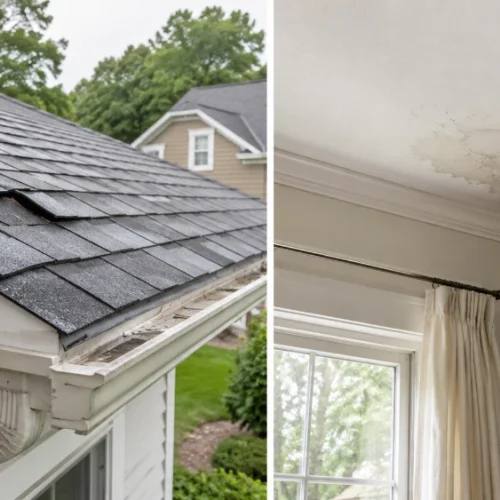
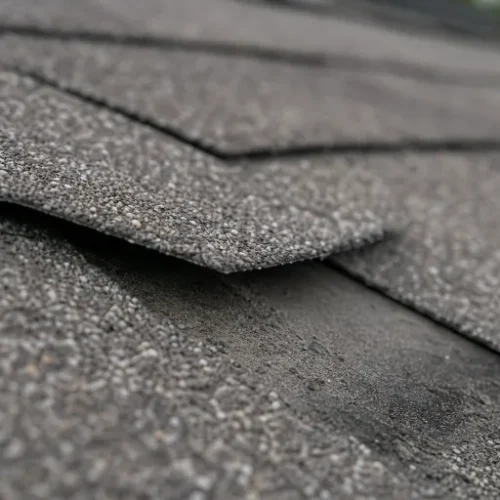
Decorating can also damage roofing materials without immediate visibility.
Problems include:
- Cracked shingles
- Bent gutters
- Damaged flashing
- Detached fascia boards
- Granule loss from excessive foot traffic
These issues sometimes remain unnoticed until spring inspections.
That delayed discovery is exactly why outdoor decorating mistakes become so frustrating.
Using Indoor Decorations Outdoors Creates Expensive Failures
Not all holiday decorations belong outside.
Yet every year, homeowners use indoor-rated lights and decorations outdoors because they are cheaper or easier to find.
Then winter weather destroys them.
Outdoor Conditions Are Brutal
Exterior decorations face:
- Rain
- Snow
- UV exposure
- Temperature swings
- Wind
- Ice accumulation
Indoor products are not built for those conditions.
Plastic cracks faster. Wiring deteriorates quicker. Moisture enters electrical connections.
Suddenly decorations fail halfway through December.
What to Look for Instead
Always check for:
- Outdoor safety ratings
- Weather-resistant construction
- UV-protected materials
- Waterproof electrical connections
- Commercial-grade clips and anchors
Cheap decorations often cost more long-term because they fail repeatedly.
Blocking Walkways and Driveways Creates Daily Frustration
This mistake usually seems minor initially.
Until someone trips.
Or backs into a decoration at night.
Holiday displays should enhance the property, not interfere with basic movement around it.
Common Layout Problems
Homeowners frequently create:
- Extension cords across sidewalks
- Decorations blocking parking areas
- Narrow walking paths
- Poor nighttime visibility
- Overcrowded entryways
These issues become especially dangerous during rain or icy weather.
Better Layout Planning
Prioritize movement first.
Then decorate around it.
A safer display usually includes:
- Clear pathways
- Hidden cord routing
- Illuminated walkways
- Open driveway access
- Visible steps and elevation changes
Practicality matters just as much as aesthetics.
Overdecorating Without a Design Plan Looks Messy
Bigger is not automatically better.
This might be the most overlooked outdoor decorating mistake of all.
People continue adding decorations without considering overall balance. Eventually the display loses focus completely.
Too many competing elements create visual chaos.
Signs a Display Is Overcrowded
Common symptoms include:
- Excessive flashing patterns
- Too many colors competing together
- No central focal point
- Decorations stacked too closely
- Multiple themes conflicting
More decorations do not necessarily create more impact.
Sometimes the opposite happens.
Why Simpler Displays Often Look More Expensive
Professional-looking displays usually rely on restraint.
They emphasize:
- Consistent color palettes
- Symmetry
- Layered lighting
- Strategic focal points
- Clean spacing
One beautifully illuminated roofline often creates more curb appeal than dozens of unrelated decorations scattered across the yard.
Intentional design always wins.
Poor Maintenance During the Season Causes Problems Later
Installation is only part of the process.
Displays still require maintenance throughout the season.
Unfortunately, many homeowners ignore developing issues once everything is installed.
Problems That Should Be Addressed Quickly
Watch for:
- Burned-out bulbs
- Sagging wires
- Loose anchors
- Water accumulation
- Frayed cords
- Tilted decorations
Small issues become larger ones surprisingly fast during winter weather.
End-of-Season Storage Mistakes
Storage problems also create future headaches.
Poor storage leads to:
| Storage Mistake | Future Problem |
| Tangled light strands | Damaged wiring |
| Damp storage containers | Corrosion and mold |
| Crushed decorations | Broken components |
| Missing labels | Confusing reinstallation |
Organized storage saves enormous frustration next season.
Label bins clearly. Wrap cords properly. Keep electrical components dry.
Simple habits extend decoration lifespan significantly.
Why Professional Christmas Lights Installation Continues Growing
Many homeowners eventually decide the process simply becomes too time-consuming or risky.
Especially on larger homes.
Professional installers handle:
- Design planning
- Electrical load management
- Roofline measurements
- Secure mounting
- Seasonal maintenance
- Safe removal
For multi-story homes or complex displays, the convenience alone can be worth it.
Not everyone enjoys climbing icy ladders in December.
And honestly, there is nothing wrong with outsourcing difficult seasonal work if it improves safety and results.
Conclusion
Most outdoor decorating mistakes do not look serious at first.
That is what makes them so frustrating.
A slightly overloaded extension cord. Uneven lighting spacing. Poor anchoring. Mixed color temperatures. Tiny installation shortcuts.
Then nighttime arrives.
Or wind.
Or rain.
Suddenly the problems become obvious.
The best outdoor holiday displays are not necessarily the biggest or most expensive. They are the most intentional. They balance safety, symmetry, electrical planning, and design consistency from the beginning.
That is the real difference.
Whether homeowners handle installations themselves or hire professionals, careful planning prevents most outdoor decorating mistakes long before they become expensive headaches.
FAQs
The most common outdoor decorating mistakes include overloaded extension cords, uneven roofline lighting, poor decoration anchoring, and mismatched light colors.
Uneven spacing, sagging wires, and inconsistent clip placement often become much more noticeable once the lights are viewed from the street at night.
Yes. Overloaded cords can overheat, trip breakers, or even create fire hazards if too many decorations run through a single outlet.
Always use outdoor-rated extension cords designed for weather exposure and higher electrical demand during holiday lighting installations.
Different bulb color temperatures create inconsistent tones, especially when warm white and cool white lights are mixed together randomly.
Yes. Improper installation methods, excessive foot traffic, and attaching decorations incorrectly can damage shingles, gutters, and flashing.
Using weather-resistant clips, heavy-duty anchors, and proper mounting hardware helps decorations stay stable during wind and winter storms.
For larger homes or complex displays, professional installation can improve safety, electrical planning, and overall visual consistency.
Planning several weeks before installation allows time to test lights, measure rooflines, organize layouts, and avoid rushed decisions.
Consistent lighting colors, balanced spacing, clean wiring, and a simple coordinated theme usually create the best visual results.