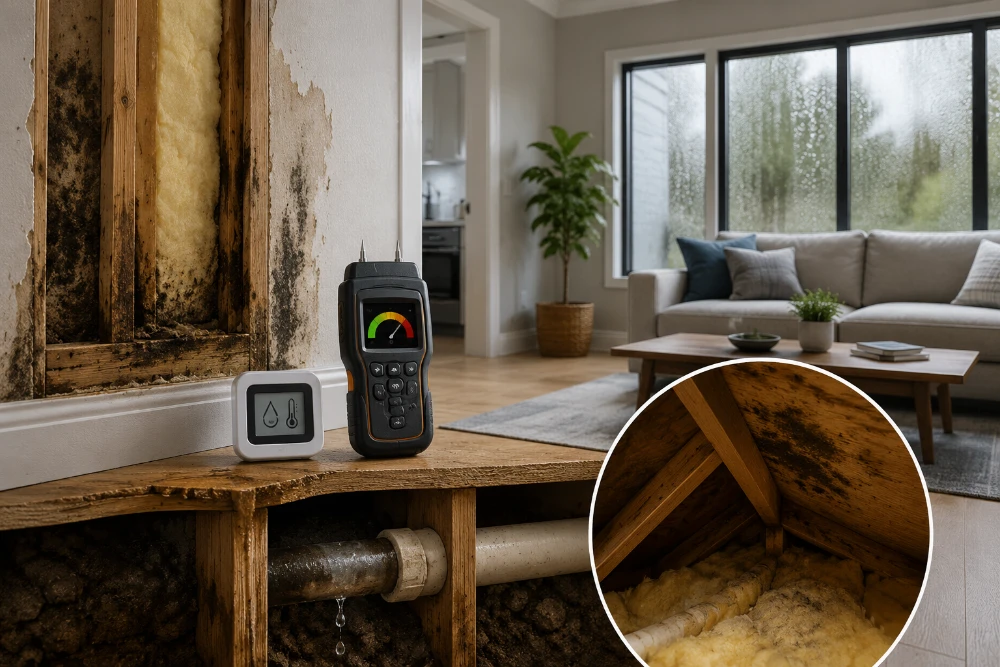
Most homeowners think about moisture when there’s visible water, a leak under the sink, condensation on windows, a damp patch on the ceiling. These are the obvious signals, and they usually get addressed.
What’s harder to detect, and in many ways more damaging, is moisture that hides. Inside walls. Under flooring. In roof cavities. In the structural timber behind cladding. The moisture you can’t see is often the moisture that causes the most harm.
Here’s what’s actually happening in your home’s invisible spaces, and what you can do about it.
Why Hidden Moisture Is Such a Problem
Moisture in building materials doesn’t just sit there. It creates conditions, and those conditions cause cascading problems that are expensive, unhealthy, and often invisible until they’ve become significant.
Mold growth is the most immediate concern. Mold spores are present in every home, they’re benign until moisture gives them the conditions to colonise. Once established, mold spreads within 24 to 48 hours under the right conditions. Many mold colonies begin inside wall cavities, under subfloors, or in roof spaces, where they can grow extensively before becoming visible.
Structural timber damage is the longer-term concern. Wood at sustained elevated moisture levels deteriorates through rot, warping, and eventually structural compromise. Subfloor joists, wall framing, and roof trusses are the components most commonly affected, and replacing structural timber is not a minor or cheap undertaking.
Indoor air quality degradation is the health dimension. Mold spores and the volatile organic compounds produced by mold colonies enter the living space through gaps and air movement. Residents breathe this air, often without connecting respiratory symptoms, fatigue, or allergy-like reactions to the moisture problem in the structure.
According to the World Health Organization’s guidelines on indoor air quality related to dampness and mold, dampness affects an estimated 10–50% of indoor environments in developed countries, and the health consequences, particularly for respiratory conditions, are well-documented.
The Sources of Hidden Moisture You’re Most Likely Missing
Hidden moisture enters homes through several pathways that are easily overlooked:
Rising damp — moisture from the ground moving upward through masonry or concrete floors and walls. Common in older homes and those without adequate damp-proof membranes.
Interstitial condensation — warm, humid indoor air meeting cold surfaces within wall and roof assemblies. The condensation point occurs inside the structure rather than on visible surfaces. This is particularly common in cold climates and in homes with improved draught-proofing that hasn’t been accompanied by improved ventilation.
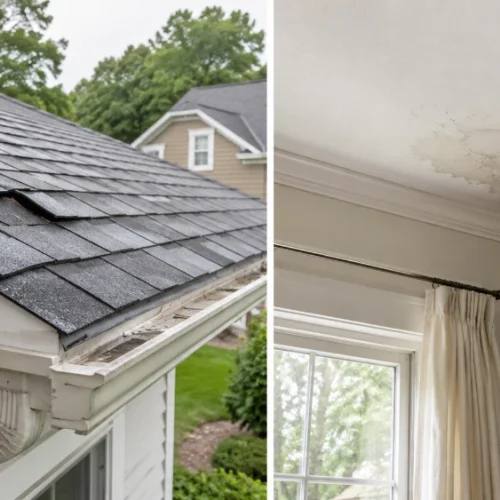
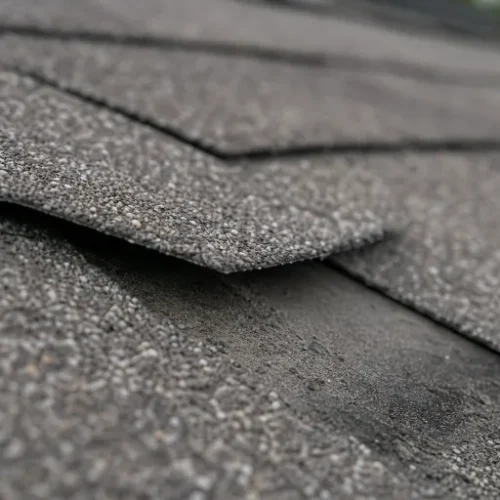
Roof and window frame leaks — small failures in sealing or flashing that allow water ingress at roof penetrations, around windows, or at wall-roof junctions. These leaks often travel some distance from their entry point before becoming visible.
Plumbing leaks within wall cavities — slow leaks from water supply or drain pipes can wet wall framing and insulation for months before any external sign appears.
Construction moisture — new builds and renovations introduce significant moisture through wet trades. If the building envelope is closed before adequate drying occurs, that moisture becomes trapped within the structure.
How to Monitor Moisture Levels in Your Home
Knowing your home has a moisture problem before it becomes a significant damage or health event requires monitoring, not just waiting for visible signs.
The most practical approach combines several layers:
Humidity monitoring in living spaces. A basic indoor hygrometer tracks relative humidity in occupied areas. Sustained indoor relative humidity above 60–65% creates conditions favouring mold growth and indicates that moisture management in the home needs attention.
Moisture meters for structural materials. Measuring moisture content directly in timber, plasterboard, masonry, and flooring materials around known risk areas, under sinks, around windows, at external walls, gives direct information about material moisture levels rather than ambient air conditions alone.
Visual inspection of high-risk areas. Regular physical inspection of roof spaces, subfloors, and areas around plumbing penetrations catches early-stage issues before they’ve caused significant damage.
Ventilation assessment. Many moisture problems are driven by inadequate ventilation rather than water ingress. Checking that mechanical extraction in bathrooms and kitchens is functional and appropriately sized matters.
For homeowners who want a connected, always-on approach to monitoring, Sensorahome provides smart home environmental sensors that track temperature, humidity, and air quality conditions continuously. It gives you visibility into your home’s moisture environment without manual monitoring or periodic spot checks. Having that data over time reveals patterns, rooms with persistently elevated humidity, seasonal moisture cycles, that inform targeted action.
What to Do When You Find a Problem
Early identification means more options and lower costs. Here’s a practical response framework:
- Identify the source before treating the symptom — condensation on walls is a symptom; the source is a ventilation, insulation, or heating issue. Mold on a wall may indicate an external ingress point. Fix the cause first
- Improve ventilation — in most homes, targeted ventilation improvement addresses a significant proportion of moisture problems; ensure extraction in high-humidity rooms is effective and used consistently
- Address ingress points promptly — a small roof or window seal repair is a minor cost; the same ingress left for another year is a structural and mold remediation project
- Dry affected materials thoroughly before sealing — closing up wet materials traps moisture and accelerates damage
- Seek specialist assessment for significant mold — visible mold over a square metre or more, or mold in HVAC systems, warrants professional remediation rather than DIY treatment
Renovation and Improvement Considerations
Home improvements can change moisture behaviour in ways many homeowners don’t expect. Better insulation without better ventilation can increase condensation risk. Draught-proofing without adequate airflow can trap humidity indoors.
New cladding or insulation can also block existing ventilation paths and trap moisture inside the structure. Any upgrade that changes a home’s airtightness or thermal performance should also consider moisture management. Ideally, that advice should come from someone who understands overall building performance, not just a single trade.
Conclusion
Hidden moisture is patient. It doesn’t announce itself with dramatic water damage. It quietly builds conditions, in your timber, your walls, your roof space, that cause damage and health impacts over months and years.
The homeowners who fare best are those who monitor consistently, respond to early signals, and understand their home as an environment where moisture needs active management rather than reactive attention.
The tools and knowledge to do this are accessible. The cost of not doing it is considerably higher than the cost of the sensors, the ventilation, and the occasional professional inspection that keep hidden moisture from becoming a serious problem.