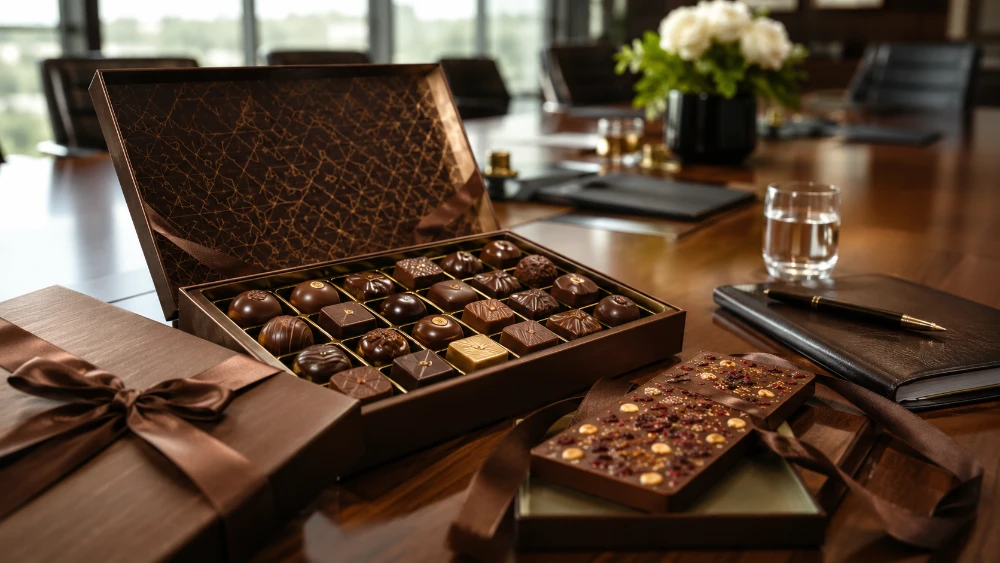
Somewhere between the branded stress balls and the engraved pens, corporate gifting hit a wall. Recipients stopped opening the boxes. Procurement stopped tracking the spend. Then custom made chocolate started showing up on desks across finance, tech, and law firms, and people actually started talking about it.
Knack’s 2023 Corporate Gifting Report found that 57 percent of recipients say food and beverage gifts are the category they most want to receive. Chocolate specifically outranks wine, coffee, and gourmet snacks in repeat-purchase data tracked by Coresight Research. Combine that preference with a wave of small-batch chocolatiers willing to print logos on bars and emboss truffles, and cocoa has turned into one of the more strategic gifts a brand can send.
The Numbers Behind The Cocoa Boom
The global premium chocolate market reached roughly $29 billion in 2023 according to Statista, with a projected CAGR of 8.6 percent through 2030. The personalized and corporate gifting slice inside that figure is growing faster than the category overall, and Mintel’s 2024 Chocolate Confectionery report put customized and gift-occasion chocolate ahead of seasonal and impulse purchases at the leading edge of premium growth.
Why chocolate, though? A 2019 study in Food Quality and Preference found that chocolate ranks higher than almost any other food category for emotional recall. Recipients remember who sent it and when. Logistics help too: chocolate ships well in cool months, has a longer shelf life than baked goods, and scales from a $15 bar to a $500 sculptural showpiece without losing perceived value.
And then there is the death of the swag closet. Companies that once spent $40,000 a year on logo backpacks are reallocating to fewer, better gifts. A bar with a company’s wordmark stamped into dark Madagascar single-origin tells a different story than a synthetic tote bag from a trade show.
What Makes A Custom Made Chocolate Actually Custom
The customisable chocolate space has tiers that get conflated constantly.
Packaging customization is the cheapest entry point, often under $10 per unit. A standard bar or truffle box gets a sleeve, label, or ribbon printed with a logo, and the chocolate itself is off the shelf. This is what most brands mean when they say “corporate chocolate gift.”
Mold and surface customization is the next step up. The chocolate is poured into a branded mold, embossed with a logo, or printed with edible ink directly on the surface. Cocoa printers from companies like Selmi and Savy Goiseau have made this accessible to mid-size chocolatiers over the last five years. Pricing usually lands between $15 and $40 per unit.
Then there is full recipe development, where the chocolatier formulates a bespoke flavor profile, sources specific origin beans, and produces a chocolate that exists only for that client. This is what a private label launch looks like, what high-end law firms commission for partner anniversaries, what hotels use to differentiate their turndown service. Costs start around $50 per unit and climb fast depending on volume and packaging.
Most buyers think they want the third option and end up with the first.
The Chocolatiers Leading The Personalization Wave
A handful of makers have built reputations specifically around custom work. MarieBelle in New York pioneered the printed-ganache truffle aesthetic that now defines luxury hotel amenities. Norman Love Confections in Florida runs one of the largest custom production lines in North America, producing branded confections for resort chains and luxury automakers. In Los Angeles, Compartes chocolate has built a corporate program around full packaging and recipe customization, working with film studios and fashion houses on bars and boxes that read more like editorial objects than confections.
Pierre Marcolini in Brussels and La Maison du Chocolat in Paris both offer customised chocolate programs for European corporate clients, though their lead times can stretch to twelve weeks for bespoke work. The accessibility gap between American and European programs has narrowed since 2020, mostly because domestic chocolatiers invested in printing and molding equipment during the pandemic slowdown.
The operators worth working with publish minimum order quantities clearly, usually starting around 50 to 100 units for mid-tier work. They keep design in-house instead of outsourcing to print brokers. They treat chocolate as a perishable product with real shipping logistics, cold-pack guarantees, seasonal cutoffs, the whole thing.
Where Personalized Chocolate Actually Works
The use cases that perform well are narrower than the marketing copy suggests.
Client retention gifting works. A 2022 study from the Advertising Specialty Institute found that food gifts in the $25 to $75 range produced the highest reported sentiment lift among B2B clients, outperforming both lower and higher price tiers. A box of eight to twelve pieces with branded packaging, delivered around contract renewals or post-close milestones, seems to be the sweet spot.
Wedding favors are the other proven category. The Knot’s 2023 Real Weddings Study reported that 64 percent of couples included edible favors, and chocolate dominated. Customised bars with a monogram or wedding date sit in a completely different category than mass-produced almonds in tulle.
Event activations work too, particularly product launches and brand pop-ups. The tactile experience of unwrapping a logoed bar creates a photographable moment that survives on social feeds longer than a step-and-repeat photo.
Employee recognition at scale is where the format falls apart. Sending the same custom made chocolates to 4,000 employees feels impersonal no matter how nice the box is. Tiered recognition programs do better than blanket distribution.
The Pitfalls Worth Knowing
Lead times are the most common point of failure. Custom chocolate is made fresh, usually after artwork approval, mold creation, and quality testing, and six to eight weeks is standard. Brands that try to order in November for December delivery often get turned away or pushed into the cheapest packaging-only option.
Shipping is the other big one. Chocolate ships poorly above 75 degrees Fahrenheit, and most chocolatiers stop shipping to hot climates between May and September unless cold packs are added. Budget at least $15 to $25 per shipment for proper insulation on summer orders.
The quieter issue is flavor. A logo printed on a bar that nobody wants to eat is worse than no gift at all. The chocolatiers worth working with will push back on bad flavor decisions, suggest origin matches for brand palettes, and occasionally refuse projects they cannot execute well. That pushback is the whole point of hiring them.
What The Next Few Years Look Like
Single-origin transparency is starting to matter. Buyers are asking where the cocoa actually comes from, and the answer is becoming part of the gift’s story rather than a technicality at the back of the brochure. Bars marked Dominican Republic or Tanzanian carry more weight than generic dark.
Sustainability documentation is the other quiet shift. Fairtrade, Rainforest Alliance, and direct-trade certifications are showing up on custom corporate orders that would have ignored them five years ago, because procurement teams with ESG mandates need the paperwork on file.
And the line between gift and product is blurring. Some companies are commissioning custom made chocolate runs not as gifts but as branded merchandise sold through their own channels, and the small-batch economics now support that in a way they did not a decade ago. Those bars often outperform traditional branded merchandise on both margin and sentiment.
The corporate gift category needed a reset. Cocoa happened to be ready for it.