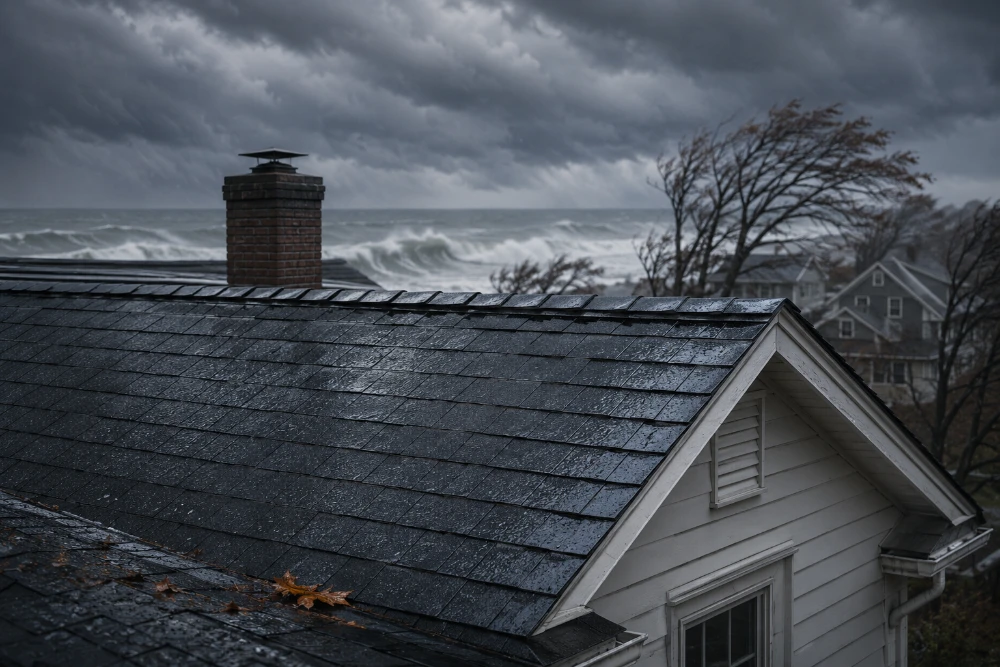
There’s a particular sound a roof makes at 2 a.m. when the wind picks up: a low flexing groan that makes you stare at the ceiling and wonder what’s going on up there. In the Northeast, that sound comes around a lot. Between winter nor’easters, spring downpours, summer humidity, and the freeze-thaw cycles that pry at everything through the colder months, roofs in this part of the country work harder than most.
The good news is that the difference between a roof that shrugs off a storm and one that fails in the middle of one usually comes down to a handful of small, unglamorous habits. Here’s how to get ahead of the weather instead of scrambling after it.
Why Northeast Roofs Take Such a Beating
A roof in a mild, dry climate can coast for years. A roof in the Northeast doesn’t get that luxury. Water is the real enemy, and this region delivers it in every form: driving rain, wet snow that sits and melts, and ice that forms in gaps and expands until it lifts materials apart. Add the coastal and inland windstorms that catch the edges of shingles, and you have an environment that finds every weak point a roof has.
That’s why the roofs that last here aren’t necessarily the most expensive ones. They’re the ones that get looked at regularly and fixed early, before a small opening becomes an open invitation for water.
The Twice-a-Year Habit That Prevents Most Emergencies
You don’t need to climb anything to do a useful roof check. Most early warning signs are visible from the ground with a decent pair of binoculars, and twice a year — once in fall before storm season, once in spring after it — is the rhythm most professionals recommend.
Walk the perimeter of your house and look for:
- Shingles that are cracked, curling, or missing. Even one gap is enough for water to start working its way in.
- Dark streaks or patches, which can signal algae, trapped moisture, or granule loss.
- Granules collecting in your gutters; that sandy grit is the shingle’s protective coating, and piles of it mean the surface is wearing thin.
- Sagging lines or damaged flashing around chimneys and vents, where leaks most often begin.
Inside, a quick trip to the attic after heavy rain tells you a lot. Water stains, a musty smell, or daylight visible through the roof deck all point to something upstream that has failed.
What You Can Handle Yourself — and What You Shouldn’t
Plenty of roof maintenance is genuinely DIY-friendly. Keeping gutters clear so water can actually leave the roof, trimming back branches that scrape the surface or drop debris, and gently rinsing algae streaks from the ground are all weekend-doable and make a real difference.
Where the line gets drawn is anything that puts you on the roof, especially a wet or steep one. Ladder falls send a startling number of homeowners to the emergency room every year, and a roof mid-repair is one of the least forgiving places to lose your footing. If a fix requires walking the surface, working around the edge, or climbing up after a storm to assess damage, that’s the point to hand it off.
After the Storm: Repair, Document, Decide
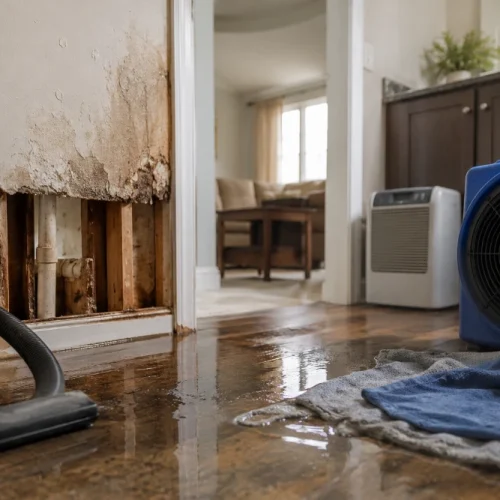
When a storm has already done its work — shingles scattered across the lawn, a stain blooming across the ceiling, flashing peeled back from a chimney — the priority shifts from prevention to a fast, documented response. This is where calling in a licensed contractor beats climbing a ladder yourself, and not only for safety reasons. Regional specialists like Jersey Eco Roofing handle storm damage roof repair and the insurance paperwork side by side, which matters more than most homeowners realize: the documentation window on a weather claim is often tighter than expected, and photos taken by someone who knows what an adjuster looks for can be the difference between a covered repair and an out-of-pocket one.
Two practical moves in the first 24 hours: take your own timestamped photos from the ground, and get a professional inspection on the calendar before the next system rolls through. Temporary tarping to stop active water intrusion is worth doing right away; the permanent fix can follow once the damage has been properly assessed.
Repair or Replace? How to Tell
Not every problem means a new roof, and a good contractor will tell you so. The rough rule of thumb most homeowners can use:
Lean toward repair if the roof is under about 15 years old and the damage is localized; a few missing shingles, a single leak, one stretch of failed flashing.
Lean toward replacement if the roof is past 20 years, shows widespread wear like heavy granule loss or curling across the whole surface, or keeps producing new problems in the same season.
The honest test is cost over time, not cost today. Patching a roof that’s three storms from the end of its life just delays the bill and adds risk in between. When the wear is genuinely widespread, a professional roof replacement usually costs less over its lifespan than a running tab of emergency repairs — and it resets the clock on everything the old roof was no longer protecting.
If You’re Replacing, Look Past the Shingles
A full replacement is also the one moment when upgrading the whole system is easy, because everything is already open. It’s worth asking your contractor about ventilation and attic insulation while the roof is off — in the Northeast, poor airflow is a leading cause of ice dams and premature shingle wear.
It’s also the natural time to consider energy-efficient roofing materials, from reflective options to better-insulated assemblies, which can take the edge off both summer cooling and winter heating bills. The upgrade rarely costs much more when it’s folded into work you’re already paying for, and it pays back every month afterward.
A Few Questions Homeowners Ask
Twice a year is the standard (before and after the harshest weather season) plus an extra look after any major storm with high winds or hail.
Sudden weather damage often is, but coverage and timelines vary, and some events like flooding usually require separate policies. Reviewing your policy each year and documenting damage quickly gives you the best footing.
A well-installed asphalt shingle roof typically lasts around 20 to 25 years, though Northeast weather can shorten that if maintenance slips. Regular upkeep is what gets you to the top of that range instead of the bottom.
Rarely a good idea. A minor leak in fall becomes a freeze-thaw problem all winter, and water that has been traveling behind your walls for months does far more damage than the original gap ever would.
Conclusion
A storm-ready roof isn’t about spending the most money. It’s about looking up a couple of times a year, clearing what you can safely reach, and knowing when a problem has outgrown a ladder and a free Saturday. Do that, and most of those 2 a.m. wind sounds stay exactly what they should be: just noise.