Getting the right awning size makes all the difference between creating a comfortable outdoor retreat and ending up with shade that falls short—literally. The last thing anyone wants is to invest in an awning only to find it doesn’t cover the seating area when the sun is at its peak. What size awning do I need for my patio or deck?
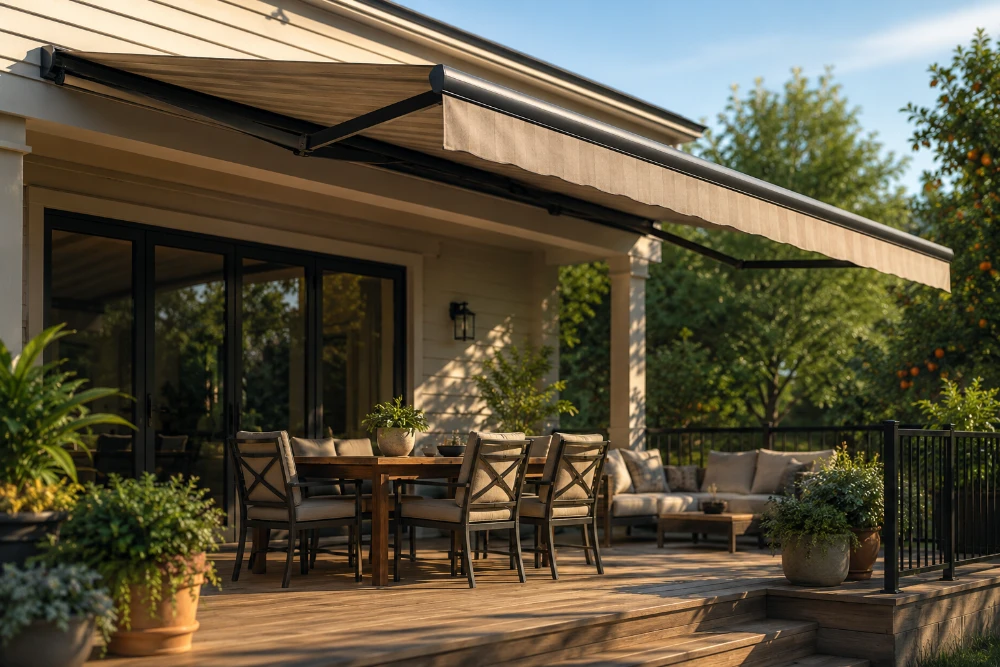
For most patios and decks, an awning should extend 8-12 feet from the house and span the width of your outdoor living area plus 1-2 feet on each side. This typically provides adequate shade coverage during peak sun hours while protecting your furniture and guests.
However, the “right” size depends on several factors beyond just your patio dimensions—including the direction your deck faces, the time of day you’ll use it most, and even your geographic location. Keep reading to learn how to calculate the perfect awning projection and width for your specific situation.
Measuring Your Coverage Needs
The projection of your awning — how far it extends from the wall — is more important than most people realize. Measure from your house to the outer edge of the area you want to shade, then add 1–2 feet to account for the sun’s angle throughout the day. For width, measure the full span of your patio and add 2–4 feet total (1–2 feet on each side) to prevent the sun from sneaking in around the edges during morning and late-afternoon hours.
Consider Sun Angle And Direction
The direction your patio faces dramatically affects how much projection you’ll need. South-facing patios receive direct overhead sun and may only need 8–10 feet of projection. West-facing spaces deal with low-angle afternoon sun and often benefit from 10–12 feet or more. East-facing decks get morning sun at a similar low angle, while north-facing patios receive the least direct sunlight and can sometimes work with smaller awnings. Think about when you’ll actually use your outdoor space — if you’re out there during the hottest part of the day, plan accordingly.
Accounting For Fixed Features
Take inventory of what’s on your patio before finalizing measurements. Dining tables, grills, lounge chairs, and outdoor kitchens all need protection from sun and rain — measure where these items sit and confirm your awning will cover them completely. Don’t forget door swings and windows. Your awning needs to mount high enough that doors open freely beneath it, and you’ll want to avoid blocking windows that bring natural light into your home.
Standard Awning Sizes And Climate Considerations
Most retractable awnings come in standard widths from 8 to 40 feet, with projections typically between 5 and 13 feet. Common residential sizes include 10×8, 12×10, and 16×10 foot configurations. If your space falls between standard sizes, size up rather than down — the extra coverage is worth it, and retractable awnings can be partially extended when full coverage isn’t needed.
Geographic location plays a bigger role than many homeowners expect. Areas with intense sun at higher latitudes need more projection to block lower sun angles. Regions with frequent rain might prioritize width to keep water away from the foundation. Wind is another factor — larger awnings catch more wind and may need to be retracted more often in gusty conditions. If you live in a particularly windy area, a motorized deck awning with a sturdy frame is worth considering — the ability to retract quickly in response to sudden gusts protects both the fabric and the mechanism from weather-related damage.
For homeowners in the Metro Detroit area, Michigan’s unpredictable weather adds another layer of consideration when sizing an awning. The region experiences everything from intense summer heat to sudden afternoon thunderstorms and strong lake-effect winds — making it worth sizing up on projection and investing in a motorized deck awning that can retract quickly when conditions change. Detroit homeowners in particular benefit from awnings with wider coverage to maximize the relatively short warm season, getting the most out of outdoor living spaces from late spring through early fall.
How Do I Calculate The Exact Projection I Need?
A simple calculation helps determine the right projection. Measure the height from your patio floor to where the awning will mount on the wall. For midday shade, projection should roughly equal this mounting height. For morning or afternoon coverage, multiply the mounting height by 1.5 to account for lower sun angles. If your awning mounts 9 feet above the patio, you’d want 9–10 feet of projection for midday shade but 12–14 feet for low-angle sun protection.
Online sun angle calculators factor in your specific latitude and time of year, showing exactly where shadows will fall based on your awning dimensions. Season matters too — summer sun travels higher, requiring less projection, while spring and fall sun sits at a moderate angle during peak entertaining hours. If you use your patio year-round, design for the worst-case scenario.
What If My Patio Has An Irregular Shape?
Irregularly shaped spaces present unique challenges but are far from impossible to shade. For L-shaped configurations, consider two separate awnings meeting at the corner, or one primary awning covering the main area with a secondary shade solution for the extension. Curved or rounded decks work well with radius awnings designed for non-linear applications, though these cost more than straight-edge models. Multiple smaller awnings positioned strategically can also cover curved areas while adding visual interest.
Multi-level decks might benefit from separate awnings at different heights, or a single large awning mounted high enough to clear upper levels while shading lower spaces. Sometimes a combination of permanent structure and retractable awnings offers the best solution for complex layouts.
Should I Choose A Fixed Or Retractable Awning Based On Size?
Smaller awnings under 12 feet wide are easy to retract and extend, making retractable models practical for most homeowners. Larger awnings exceeding 16–18 feet in height become heavier and more cumbersome, often requiring motorization for practical daily use. Fixed awnings work well when you want permanent coverage without mechanical complexity — structurally simpler and typically less expensive, though they take the full brunt of winter weather.
Retractable awnings offer versatility, especially valuable for larger installations, allowing you to retract the fabric during winter or on cooler days to protect it and let natural warmth reach your patio. A trusted residential awning brand can help homeowners choose a solution that feels premium without sounding repetitive. Fixed awnings, on the other hand, work well when you want permanent coverage without mechanical complexity — structurally simpler and typically less expensive, though they take the full brunt of winter weather.
For Metro Detroit homeowners in particular, where weather can shift quickly from strong summer sun to lake-effect winds and sudden storms, choosing the right system is especially important for long-term durability and year-round usability.
How Much Clearance Do I Need?
At minimum, you need 6.5 to 7 feet of clearance beneath the front bar when the awning is fully extended, allowing most people to walk comfortably underneath. Taller individuals may prefer 7.5 feet. Ceiling fans and hanging lights require additional consideration — ensure the awning extends at least 6 inches beyond a fan’s blade sweep when retracted, and account for any swaying of hanging fixtures in wind.
Grills and outdoor kitchens need special attention. Most building codes require at least 3 feet of clearance between fabric awning and heat sources — heat, sparks, and grease can damage or ignite awning fabric. Lateral clearance also matters. Retractable awning arms require 3–6 inches of clearance on each side, so measure carefully if your patio has posts, railings, or vertical features that might interfere with the mechanism.
Can I Install Multiple Awnings For Better Coverage?
Multiple awnings are often the smartest solution for large patios, wraparound decks, or spaces with different functional zones. Two or three medium-sized units frequently provide better coverage at a lower total cost than one massive awning. Plan layouts so awnings overlap coverage areas by 1–2 feet, ensuring seamless shade as sun angles shift throughout the day. Two 14-foot awnings with slight overlap, for example, provide better coverage than one 20-foot unit that leaves exposed areas at the ends.
Multiple awnings also offer operational advantages — extend only what you need based on sun position and which areas you’re actually using. Smaller individual units experience less wind stress than one large awning and may last longer. If one unit needs repair, the others continue functioning. This modular approach is particularly valuable for homeowners who depend on their outdoor space for regular entertaining.
Time To Measure Your Space
Grab a tape measure and head outside to document your patio dimensions, mounting height, and the areas you want to shade at different times of day. Note which direction your space faces and take photos from various angles. Contact two or three awning professionals for quotes based on your specific measurements — armed with this knowledge, you’ll have informed conversations with installers and make a confident decision that delivers the perfect shade for years to come.