This post contains affiliate links. As an Amazon Associate, I earn from qualifying purchases, at no extra cost to you. See our disclosure policy.
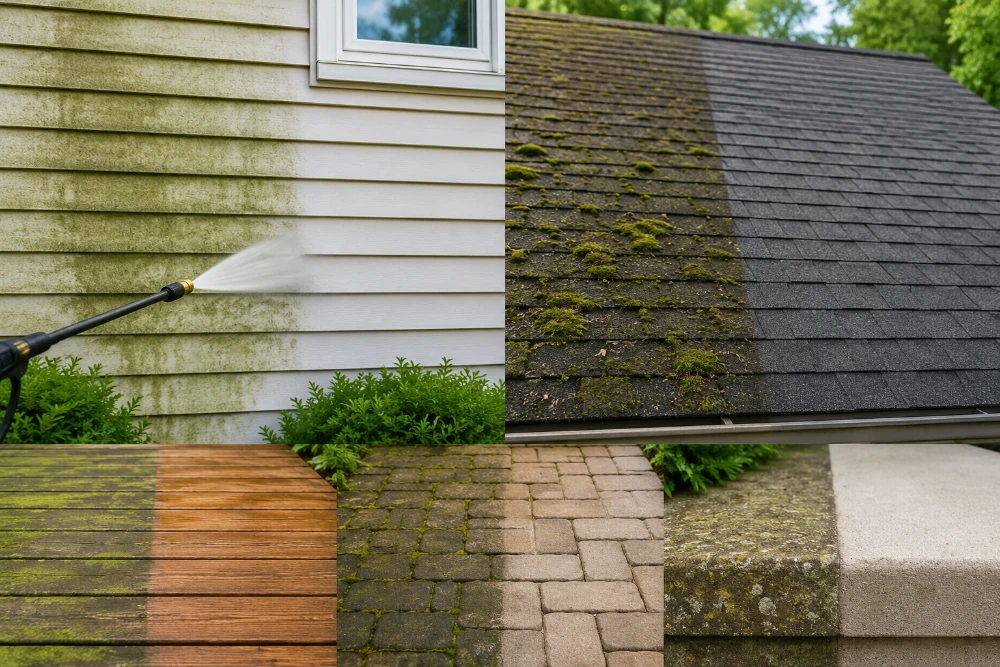
Exterior surfaces take a beating year after year. Rain, humidity, shade, and changing temperatures create the perfect environment for unwanted organic growth. If you’ve been searching for how to remove algae, you’re not alone. Green streaks on siding, moss-covered walkways, and stubborn lichen patches on roofs are common problems for homeowners everywhere.
The good news? Most of these issues can be addressed before they cause serious damage.
I’ve seen homeowners spend thousands replacing materials that could have lasted years longer with proper maintenance. A little attention today can save significant repair costs tomorrow.
Whether you’re dealing with algae on siding, moss on a roof, or lichen on a concrete patio, understanding what you’re looking at is the first step toward solving the problem.
Understanding the Difference Between Algae, Moss, and Lichen
Many people use these terms interchangeably. They shouldn’t.
Each organism behaves differently and requires a slightly different removal approach.
What Is Algae?
Algae is typically the easiest to identify.
It often appears as:
- Green streaks
- Dark discoloration
- Slimy patches
- Green films on surfaces
Algae thrives in damp environments with limited sunlight. North-facing walls and shaded roof sections frequently become breeding grounds.
Although algae may appear harmless initially, it can trap moisture against surfaces and contribute to premature deterioration.
What Is Moss?
Moss is more noticeable because it has a soft, fuzzy appearance.
Unlike algae, moss develops root-like structures that attach to surfaces.
You’ll commonly find moss on:
- Roof shingles
- Stone walkways
- Brick walls
- Wooden decks
- Concrete driveways
Moss retains moisture exceptionally well. That moisture can eventually damage building materials.
What Is Lichen?
Lichen is often the most stubborn growth you’ll encounter.
It appears as:
- Crusty patches
- Circular growths
- Gray, green, yellow, or white spots
Lichen forms through a partnership between algae and fungi. This combination allows it to attach firmly to surfaces and survive harsh conditions.
Because of its strong attachment, lichen frequently requires more aggressive treatment than algae or moss.
Why It Is Important to Remove Algae, Moss, and Lichen
Some homeowners view these growths as cosmetic issues.
That can be an expensive mistake.
Prevent Structural Damage
Organic growth constantly holds moisture.
Over time, that moisture may contribute to:
- Wood rot
- Shingle deterioration
- Surface staining
- Concrete degradation
- Premature aging
What starts as a few green streaks can eventually become a costly repair project.
Improve Safety
Slippery surfaces create real hazards.
Walkways covered with algae or moss become dangerous after rain.
Common risk areas include:
- Front walkways
- Pool decks
- Patios
- Steps
- Driveways
Removing growth helps reduce slip-and-fall accidents.
Protect Curb Appeal
Let’s be honest.
A home covered with green stains looks neglected.
Clean exterior surfaces immediately improve:
- Appearance
- Property value
- Buyer perception
- Neighborhood appeal
Many homeowners are surprised by how much cleaner and newer their property looks after removing biological growth.
How to Identify the Type of Growth on Your Property
Before deciding how to clean a surface, identify the problem correctly.
| Growth Type | Appearance | Texture | Common Locations |
| Algae | Green or black streaks | Slimy or smooth | Siding, roofs |
| Moss | Thick green clumps | Soft and fuzzy | Roofs, concrete, stone |
| Lichen | Crusty patches | Hard and attached | Roofs, masonry, siding |
Taking a few minutes to identify the growth can prevent using the wrong cleaning method.
How to Remove Algae From Exterior Surfaces
When people search for how to remove algae, they often jump straight to pressure washing.
That isn’t always the best solution.
In fact, excessive pressure can damage many surfaces.
Step 1: Gather Safety Equipment
Before starting, assemble:
- Rubber gloves
- Eye protection
- Garden hose
- Pump sprayer
- Soft-bristle brush
- Ladder if necessary
- Cleaning solution
Safety should never be an afterthought.
Wet surfaces can become extremely slippery.
Step 2: Choose the Right Cleaning Solution
Several options work well for algae removal.
Commercial Algae Removers
These products are specifically formulated for exterior surfaces.
Advantages include:
- Fast results
- Reduced scrubbing
- Long-lasting effectiveness
Always follow manufacturer instructions.
Vinegar Solution
For smaller areas, vinegar can be effective.
Mix:
- One part white vinegar
- One part water
Apply generously and allow the solution to sit before scrubbing.
Oxygen Bleach
Oxygen bleach offers another effective alternative.
Unlike chlorine bleach, it is generally less harsh on surrounding vegetation when used correctly.
Step 3: Apply the Cleaning Solution
This step requires patience.
Spray the affected area thoroughly.
Allow the solution to remain on the surface for 15 to 30 minutes.
Avoid applying cleaners during extremely hot weather.
Direct sunlight can cause solutions to dry too quickly.
Step 4: Scrub Gently
A soft-bristle brush usually provides sufficient cleaning power.
Focus on:
- Stained sections
- Heavy buildup
- Crevices
- Surface textures
Avoid wire brushes whenever possible.
Aggressive scrubbing can damage paint, siding, and roofing materials.
Step 5: Rinse Thoroughly
After cleaning, rinse the area completely.
A standard garden hose is often sufficient.
Pressure washers should be used cautiously.
Improper pressure washing may:
- Strip paint
- Damage siding
- Loosen shingles
- Force water behind surfaces
When learning how to remove algae, remember that lower pressure often delivers better long-term results.
How to Remove Moss From Exterior Surfaces
Moss removal requires a different approach.
Because moss has stronger attachment structures, simply washing it away rarely solves the problem.
Removing Moss From Roofs
Roof cleaning demands caution.
Never walk on a steep or wet roof without proper safety equipment.
Start by gently removing loose moss using a soft brush.
Work downward.
Never brush upward against shingles.
Doing so can loosen roofing materials and create opportunities for water intrusion.
After removing loose growth:
- Apply a moss treatment.
- Allow the product to work according to instructions.
- Rinse if required.
- Monitor regrowth over the following weeks.
Removing Moss From Concrete and Stone
Concrete surfaces often collect moss in shaded locations.
The process typically includes:
- Sweeping loose debris
- Applying treatment
- Scrubbing stubborn areas
- Rinsing thoroughly
For severe growth, repeated treatments may be necessary.
Patience pays off.
Removing Moss From Wood Surfaces
Wood decks and fences require special care.
Excessive pressure can gouge wood fibers.
Instead:
- Apply a suitable cleaner
- Allow proper dwell time
- Scrub gently
- Rinse carefully
Protecting the wood is just as important as removing the moss.
Benefits of Professional Exterior Cleaning Services
Some algae, moss, and lichen problems extend beyond what typical DIY methods can safely address. Professional exterior cleaning services have access to commercial-grade equipment, specialized treatments, and the experience needed to clean delicate surfaces without causing damage.
Surface-Specific Cleaning Tips
Not every surface should be cleaned the same way.
Roof Cleaning
Roof materials vary significantly.
Asphalt Shingles
Use soft washing methods whenever possible.
Avoid high-pressure washing.
Metal Roofs
Metal surfaces can generally tolerate more aggressive cleaning but still benefit from controlled pressure.
Tile Roofs
Tile roofs are durable but can crack under improper handling.
Always use caution.
Siding Cleaning
Many homeowners researching how to remove algae are dealing with siding stains.
Vinyl Siding
Vinyl responds well to soft washing and light scrubbing.
Fiber Cement Siding
Fiber cement can be cleaned effectively with manufacturer-approved cleaners.
Wood Siding
Wood requires gentler treatment to prevent surface damage and moisture intrusion.
The goal is always the same.
Remove the growth without harming the material underneath.
FAQs
Algae typically develops in damp, shaded areas where moisture remains on surfaces for extended periods.
Most homes benefit from exterior cleaning every one to three years, depending on climate, shade, and moisture levels.
Not always. Soft washing is often safer and more effective for delicate surfaces such as roofs and siding.
Yes. Over time, algae can trap moisture against surfaces, contributing to staining and premature material deterioration.
Algae appears as stains or streaks, moss forms thick green clumps, and lichen creates crusty patches that attach firmly to surfaces.
Yes. Solutions such as diluted vinegar or oxygen bleach can be effective for light algae growth on certain surfaces.
Improve drainage, trim vegetation, increase sunlight exposure, and schedule routine exterior cleaning to reduce regrowth.
Moss often causes greater concern because it retains more moisture and can physically lift or damage certain materials.
Consider professional help when growth covers large areas, affects roofs, or involves surfaces that could be damaged by improper cleaning.
Yes. Lichen attaches more aggressively to surfaces and often requires specialized cleaners and additional treatment time.