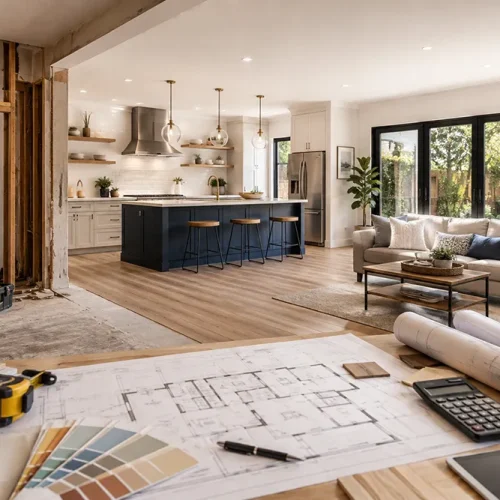
Kitchen remodeling often begins with excitement because homeowners imagine a space that feels fresh, functional, and visually appealing. The kitchen is one of the most used rooms in a house, so naturally, people want it to look beautiful. However, redesigning a kitchen involves dozens of decisions about layout, materials, lighting, and storage.
When these decisions are made without careful planning, even an expensive renovation can result in frustrating design mistakes that affect how the space functions. Understanding the most common interior design errors before starting a kitchen remodeling project can help you avoid unnecessary costs.
1. Ignoring Workflow and Kitchen Layout
One of the biggest mistakes in kitchen remodeling is focusing only on appearance while ignoring how people actually move through the space. A kitchen may look impressive in photos, but if the layout does not support easy movement between appliances and work surfaces, it quickly becomes inconvenient.
Interior designers often talk about the concept of the kitchen work triangle, which refers to the relationship between the stove, refrigerator, and sink. When these three elements are placed thoughtfully, cooking becomes smoother; when they are poorly positioned, it can feel frustrating. Another common issue appears when homeowners choose large kitchen islands without considering the available walking space around them. While islands can add storage and seating, they should never block pathways or make the kitchen feel cramped. A well designed kitchen allows people to move naturally without constantly bumping into cabinets or appliances.
2. Overlooking Value When Making Design Choices
Kitchen remodeling projects often involve significant investment, which is why it is important to think about long term value and style preferences. Many homeowners choose trendy materials or decorative features without considering whether those choices will age well or appeal to future buyers.
This is where minor kitchen remodel ROI often becomes relevant, because when people research renovation projects, they frequently encounter reports showing that some remodels tend to outperform many other home improvement projects. However, that potential value can quickly disappear if the remodel focuses only on luxury details without addressing usability. For example, installing expensive finishes while ignoring storage needs may look impressive initially, but can make the kitchen less functional in the long run. Your focus should be on quality over quantity; the most successful kitchen remodels often include durable materials, neutral design choices, and smart storage solutions that appeal to a wide range of homeowners.
3. Poor Lighting Design
Lighting is often treated as a finishing detail during kitchen remodeling, but it plays a major role in both safety and atmosphere. A kitchen that relies solely on a single overhead light can feel dim and uncomfortable, especially when shadows fall across countertops where food preparation takes place.
A well designed kitchen should include several layers of lighting that serve different purposes. Examples are how task lighting under cabinets illuminates countertops, pendant lights above islands create visual interest while improving visibility, and ambient lighting fills the room with a comfortable glow. Ignoring these layers can result in a kitchen that looks stylish but feels impractical in everyday use. Good lighting design not only improves visibility but also highlights textures, materials, and colors throughout the space.
4. Selecting Materials Without Considering Maintenance
Another common interior design mistake occurs when homeowners select materials solely for appearance, without considering maintenance. Certain countertops, flooring types, and cabinet finishes may look stunning in showrooms but require more upkeep than many households expect.
For example, some natural stone surfaces need regular sealing to prevent stains, as glossy cabinet finishes may show fingerprints easily, especially in homes with children. Similarly, light colored flooring can highlight dirt and spills more quickly than darker tones. Before committing to materials, it is important to consider how they will perform in different situations, because kitchens experience constant activity, heat, moisture, and spills, so surfaces should be chosen with durability and maintenance in mind.
5. Choosing Style Over Storage
Storage is one of the most important elements of kitchen design, yet it is often underestimated during remodeling projects. Homeowners sometimes remove upper cabinets in favor of open shelving because the look feels modern and minimal, but they later discover that the loss of enclosed storage creates daily frustration. Open shelves can be beautiful when styled carefully, but they require constant organization because everything remains visible. Plates, bowls, and kitchen tools quickly collect dust or become cluttered when there is not enough cabinet space to hide certain items.
Another storage mistake occurs when cabinets are installed without considering how they will actually be used. Deep cabinets may look spacious, but can become difficult to manage if items get lost in the back. For instance, pull out drawers, vertical dividers, and built-in organizers often provide more practical solutions that keep the kitchen functional while maintaining a clean interior design. Hence, effective storage should be all about planning to maintain a tidy kitchen without sacrificing design aesthetics.
Endnote
Kitchen remodeling offers the opportunity to transform one of the most important rooms in a home, but success depends on balancing creativity with practicality. A thoughtful approach should ensure that the remodel does more than improve appearance by creating a space where cooking, gathering, and daily living happen naturally and effortlessly.
FAQs
Focusing too much on aesthetics while ignoring functionality and workflow is one of the most common mistakes.
It improves efficiency by optimizing the distance between the sink, stove, and refrigerator.
Ideally, allow at least 36–42 inches of clearance for comfortable movement.
A combination of task, ambient, and accent lighting provides the best balance.
Not necessarily, but overly trendy choices may not age well or appeal to future buyers.
Quartz countertops, matte finishes, and durable flooring like vinyl or tile are low-maintenance options.
It can be stylish but often requires more upkeep and organization than closed cabinets.
Use pull-out drawers, vertical dividers, and built-in organizers to maximize space.
Many homeowners treat it as a finishing touch instead of a core design element.
Prioritize layout, storage, and durability first, then layer in aesthetic elements.