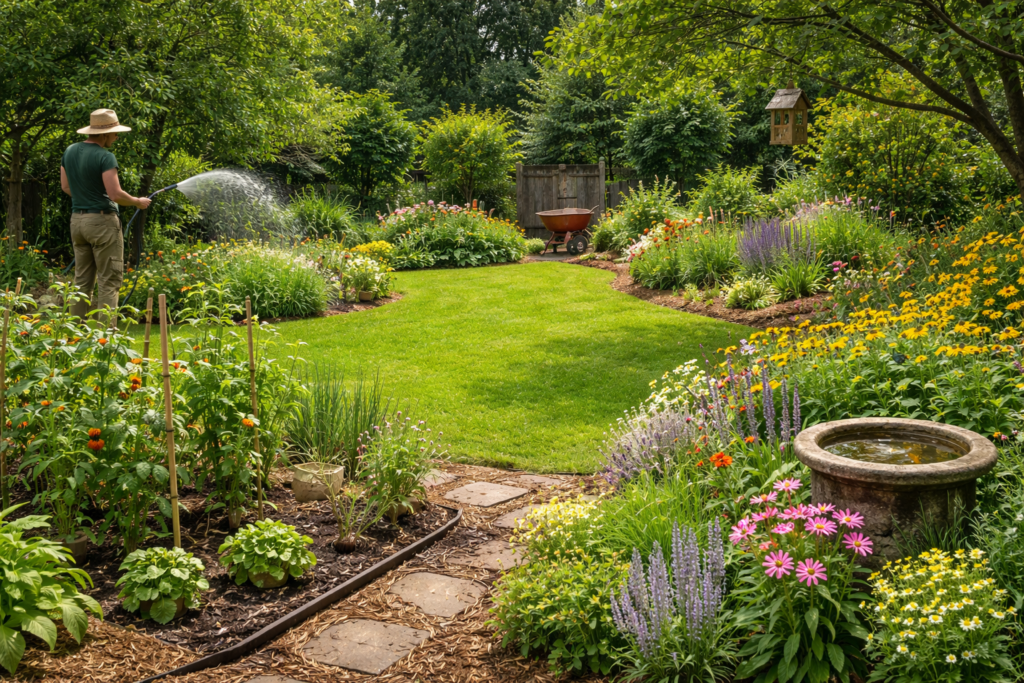
Maintaining a vibrant, healthy yard without relying on heavy chemical use is absolutely achievable with the right strategy. The key is to think like a steward of a small ecosystem. When soil is alive, plants are well matched to the site, and water is managed wisely, your landscape becomes naturally resilient. Add smart monitoring and targeted responses, and you can solve most problems before they spread. The goal is not perfection but balance, where lawns, beds, and trees thrive while you minimize products that are harsh on people, pets, and pollinators.
Build Strong Soil First
Healthy soil is the foundation of a low‑chemical yard. Start by adding organic matter through compost and finely shredded leaf mulch. These materials feed soil microbes that cycle nutrients and help plants grow sturdy roots. If your soil is compacted, aerate lawns and loosen garden beds with a digging fork rather than tilling, which can disrupt beneficial organisms. Aim to keep soil covered year round with mulch or groundcovers to reduce erosion and maintain moisture. Test your soil every couple of years to guide amendments accurately. Balanced fertility, good structure, and a thriving microbial community reduce plant stress, which is the real reason many yard problems take hold in the first place.
Choose Plants for Place and Design for Resilience
Match each plant to the sunlight, drainage, and space available. When plants fit their site, they require fewer inputs and resist common stressors. Favor native or well‑adapted species that stand up to local weather and support pollinators. Group plants by water needs so irrigation can be efficient, and layer your beds with a canopy of trees, understory shrubs, and diverse perennials to create natural shade and wind protection. Diversity matters. A yard dominated by a single species can spiral into repeated problems, while a mixed planting tends to buffer swings in weather and pest pressure. In lawn areas, consider high‑quality seed blends with endophyte‑enhanced turf varieties that add natural toughness without extra chemicals.
Water and Mow in Ways That Prevent Problems
Watering deeply but infrequently trains roots to grow downward where soil stays cooler and more stable. Early morning is the best time to irrigate because leaves dry quickly and disease pressure remains lower. Install drip lines or soaker hoses in planting beds to deliver moisture right at the roots while keeping foliage dry. For lawns, raise the mower deck to the highest recommended height for your grass type. Taller blades shade the soil, conserve moisture, and crowd out many opportunistic weeds. Keep mower blades sharp to avoid tearing, and leave a light layer of grass clippings to return nutrients to the soil. These straightforward habits reduce stress on plants and make them less likely to require additional treatments.
Prevent, Scout, and Act with Precision
A preventive mindset keeps chemical use low. Seal outdoor trash, clean gutters, remove leaf piles, and thin dense shrubbery to improve airflow. Walk your yard weekly and look for early clues like chewed leaves, off‑color patches, or sticky residue. Confirm the exact issue before you act, then set a reasonable threshold for intervention. Hand picking, pruning out hot spots, or washing pests off with a strong stream of water can solve many problems when caught early. If you choose professional help, look for providers who emphasize inspection, exclusion, and targeted products only where needed. Homeowners who want local expertise often seek low‑toxicity pest control solutions in Charlotte NC that align with an integrated approach and protect pollinators, pets, and nearby waterways.
Use Natural Controls and Targeted Treatments
Encourage beneficial insects by planting pollen and nectar sources that bloom from spring through fall. Yarrow, mountain mint, asters, and coneflowers attract lady beetles, lacewings, hoverflies, and parasitic wasps that keep common yard pests in check. In vegetable beds, use floating row covers to protect tender crops and rotate plant families from season to season to break recurring cycles. Where a treatment is warranted, reach first for options like horticultural soaps, botanical oils, or microbial products that are selective and used according to label directions. Spot treat only the affected area rather than broadcasting across the yard. Finish with a follow‑up check a week or two later to confirm that the issue is resolved and to prevent overtreatment.
Conclusion
A healthy yard without excessive chemicals comes from consistent, thoughtful habits. Build living soil with organic matter, select plants that belong in your conditions, manage water wisely, and keep a regular eye on early signs that something needs attention. Favor prevention and precise action over blanket applications. Over time, these practices create a landscape that is easier to care for, safer for people and pets, and welcoming to pollinators and wildlife. With a balanced plan and steady follow‑through, your yard can stay lush, functional, and beautiful while keeping chemical use to a minimum.
FAQs
Adding compost and organic mulch regularly helps build nutrient-rich soil and supports beneficial microbes.
Water deeply but less frequently, typically once or twice a week, to encourage strong root growth and resilience.
Yes, native plants are adapted to local conditions, making them more resistant to pests and requiring fewer inputs.
Use natural methods like hand-picking, strong water sprays, or introducing beneficial insects like ladybugs.
Keep grass slightly taller and mow with sharp blades to shade out weeds and promote healthier turf.
Yes, mulch helps retain moisture, suppress weeds, and improve soil quality, reducing the need for herbicides.
Options include neem oil, insecticidal soap, and microbial treatments that target specific pests safely.
Ensure proper spacing, airflow, and watering techniques to reduce moisture buildup that leads to disease.
Yes, testing every couple of years helps you apply the right nutrients and avoid unnecessary treatments.
They naturally control pest populations, reducing the need for chemical interventions.