This post contains affiliate links. As an Amazon Associate, I earn from qualifying purchases, at no extra cost to you. See our disclosure policy.
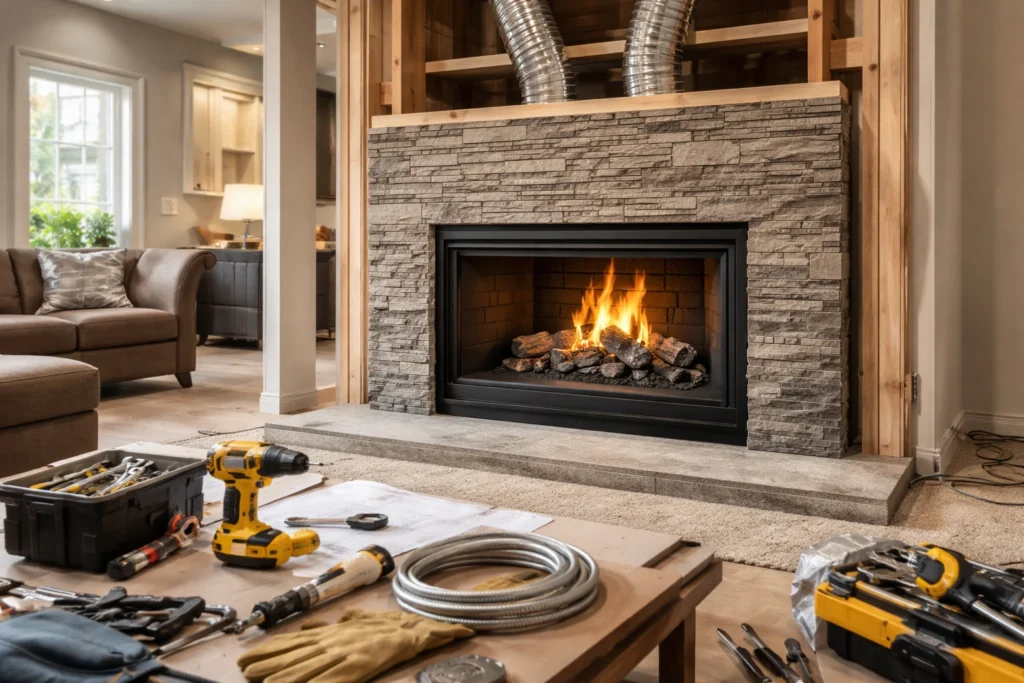
Homeowners value gas fireplaces because they deliver steady warmth and refined visual appeal. Careful project evaluation supports smart decisions and prevents unnecessary installation complications. Property owners should review installation factors early and consult experienced installers for dependable guidance.
Several technical and structural elements determine the final gas fireplace install cost. Installation complexity, ventilation design, fuel supply access, and finishing materials shape project pricing. Clear knowledge of these elements supports accurate budgeting and thoughtful planning decisions. Early project assessment encourages smoother installation schedules and reliable long-term fireplace performance.
Type and Design of Gas Fireplaces
Gas fireplaces appear in several formats, and each design influences installation effort and expense. Built-in fireplaces require framing work, enclosure preparation, and dedicated ventilation components. Freestanding units require less structural alteration and demand secure fuel connections.
Insert fireplaces fit inside existing masonry openings and reduce extensive structural modification. Model size, heat output capacity, and manufacturer specifications influence labour time and equipment selection. Installers evaluate product design carefully to ensure proper ventilation configuration and safe operation.
Type and Requirements of Ventilation System
Ventilation systems control airflow, combustion safety, and indoor air quality. Each configuration requires distinct materials, wall penetrations, and structural adjustments.
Direct Vent System Configuration
Direct vent fireplaces operate through sealed combustion chambers and dual-channel vent pipes. One pipe introduces outside air, and another pipe releases combustion gases outdoors. Exterior wall penetration, vent pipe length, and sealing materials affect installation labour requirements.
Ventless Fireplace Design Considerations
Ventless fireplaces operate without external vent pipes through controlled indoor combustion systems. Installation still requires strict compliance with local building codes and clearance guidelines. Professional evaluation confirms safe room size, oxygen levels, and approved fireplace placement.
Gas Line Placement and Accessibility
Reliable fuel delivery forms a central element within any gas fireplace installation plan. Existing gas lines located near the fireplace position reduce installation labour and material costs. Long gas line extensions require pipe routing through walls, floors, or crawl spaces.
Installers evaluate pipe diameter, shutoff valves, and regulator requirements during system preparation. Certified technicians perform pressure tests and leak inspections before appliance activation. Proper fuel supply preparation ensures safe combustion performance and dependable fireplace operation.
Location of the Fireplace Within the Home
Placement inside the home influences construction effort, ventilation routing, and overall project planning. Strategic placement reduces structural disruption and improves installation efficiency.
Wall-Mounted Placement Considerations
Wall placement offers convenient installation access and simplified vent routing through exterior walls. Installers construct supportive framing and secure the fireplace unit within wall cavities. Finishing materials such as tile, stone, or decorative panels complete the visual design.
Corner Placement Design Factors
Corner placement suits rooms with limited wall space and improves interior layout flexibility. Installers construct angled framing structures that support the fireplace’s weight and ventilation pipes. Careful measurement ensures adequate clearance from nearby furniture and building materials.
Finishing Materials and Labor Costs
Decorative finishes influence the visual impact and total project expense. Stone veneers, brick surrounds, and wooden mantels require specialized craftsmanship and precise measurements. Premium materials demand careful cutting, fitting, and secure mounting during installation.
Custom fireplace enclosures require carpentry work and additional finishing components. Labour duration increases when intricate design details appear within the fireplace surround. Professional craftsmanship ensures durable construction and polished aesthetic results.
Professional craftsmanship ensures durable construction and polished aesthetic results. For homeowners looking to enhance appearance without significantly increasing costs, simpler updates such as applying fireplace paint to an existing surround or mantel can refresh the overall look without extensive labour.
Gas fireplace projects involve multiple structural and mechanical considerations that shape installation expenses. Ventilation design, fireplace type, placement location, and finishing materials determine the final gas fireplace install cost. Property owners should consult qualified installers and evaluate installation details carefully. Professional planning supports efficient installation and dependable indoor comfort for many seasons.
FAQs
The cost typically ranges from $2,000 to $8,000 depending on the type, labor, and materials involved.
Yes, gas fireplaces usually cost less because they require less structural work and simpler venting systems.
Absolutely. Built-in units cost more due to framing and venting, while inserts and freestanding models are generally more affordable.
Ventilation can significantly increase costs, especially for direct vent systems that require wall or roof modifications.
Yes, ventless models are usually less expensive since they don’t require external venting, but they must meet strict safety codes.
Yes, extending or installing a new gas line can add several hundred to a few thousand dollars depending on complexity.
Hard-to-access locations or areas requiring structural changes will increase labor and material costs.
Yes, premium materials like stone or custom mantels can greatly increase overall installation expenses.
Yes, hiring certified professionals ensures safe gas connections, proper ventilation, and compliance with building codes.
Yes, it can enhance home appeal and potentially increase resale value due to improved comfort and aesthetics.