Lighting is one of the fastest ways to change how a room feels, not just how bright it is. And among all the fixture types available, rattan light fixture occupy a unique position: they add warmth, texture, and a handcrafted quality that most other materials simply cannot replicate.
Unlike glass, metal, or plastic shades, rattan shades diffuse light through their weave rather than block or reflect it. The result is a soft, ambient glow with subtle shadow patterns on the walls and ceiling, the kind of light that makes a room feel inhabited and warm rather than staged and bright. It’s no coincidence that rattan pendants appear in interiors ranging from coastal beach houses to Japandi apartments to modern organic family kitchens. The material travels well across styles because its warmth is universal.
This guide covers where rattan pendants work best, which shapes suit which spaces, how to size and hang them correctly, and the pairing decisions that make the difference between a pendant that looks placed and one that looks like it belongs. For a well-curated range of handcrafted options, Rowabi Lighting offers woven pendant lights designed to balance natural texture with clean, considered proportions.
Quick Answer: The best rattan pendant lights use woven natural materials to soften modern interiors and create warm layered lighting. Dome and drum styles work best for dining rooms, while cone and basket pendants are popular for kitchen islands and relaxed organic-modern spaces.
Why Rattan Light Pendants Work in Modern Interiors
Rattan light pendants work in modern interiors because they bring natural warmth and tactile texture to spaces that might otherwise feel too polished or minimal.
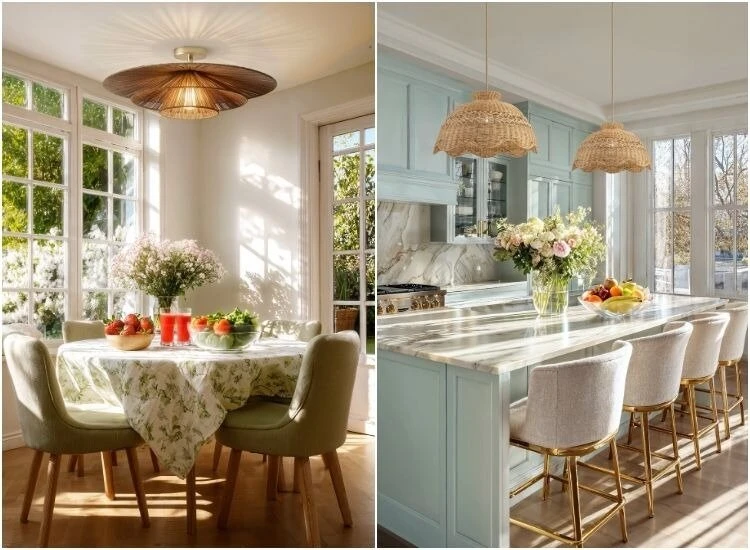
Contemporary interior design has moved steadily toward harder, smoother surfaces, such as concrete floors, marble countertops, brushed-metal hardware, and matte-painted walls. These elements create a clean, refined foundation, but they can also make a room feel cold if there’s nothing to counterbalance them. Natural materials do that work. A rattan pendant over a kitchen island or dining table introduces the organic irregularity that a room full of precise surfaces is missing.
There’s also the light quality itself. A woven shade softens the bulb’s output by filtering it through the weave’s gaps rather than concentrating it downward. This creates a diffused, layered glow that reads as warmer than the same bulb in a solid shade, even at the same wattage. Combined with a 2700K warm white bulb, a rattan pendant produces the kind of light that makes food look better, conversations feel easier, and rooms feel like somewhere worth spending time.
Finally, rattan has longevity. Unlike many fixture trends that date themselves within a few years, woven natural fiber has been used in interiors for centuries. A well-made rattan pendant is not a trend piece; it’s a material choice that holds its relevance across decades of changing styles.
Best Places to Use Rattan Light Pendants
Rattan pendants work in almost every room, but they perform best where warmth and atmosphere matter more than raw brightness.
Kitchen Island
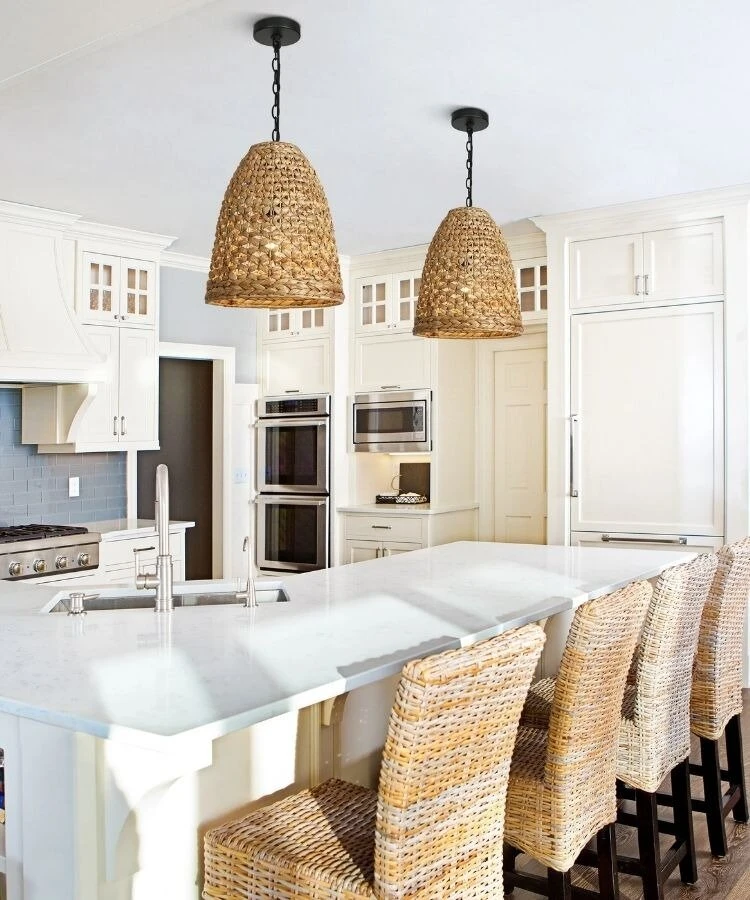
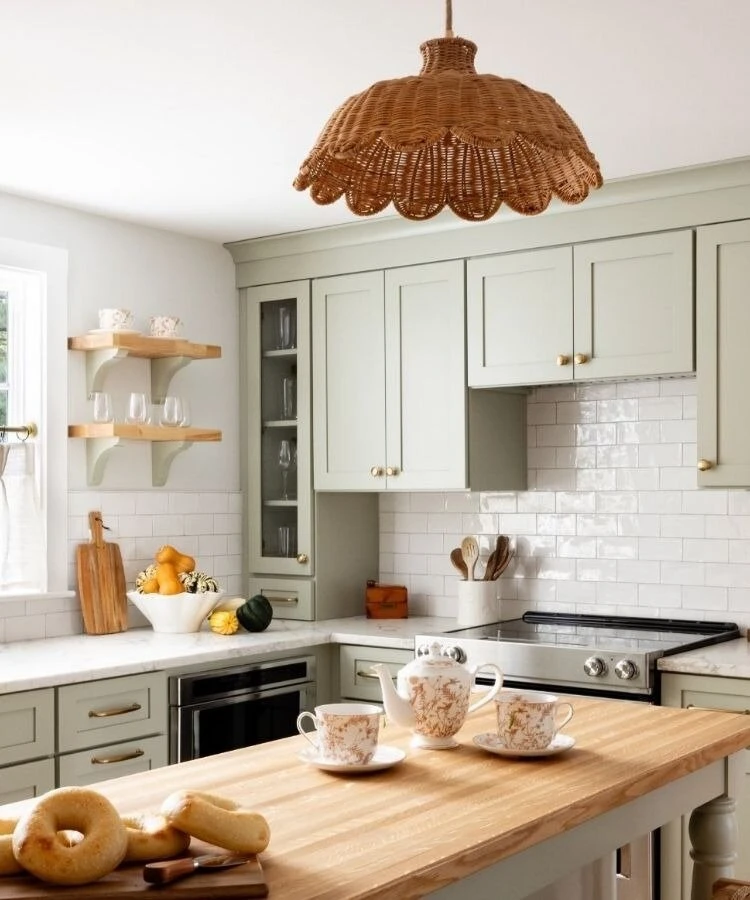
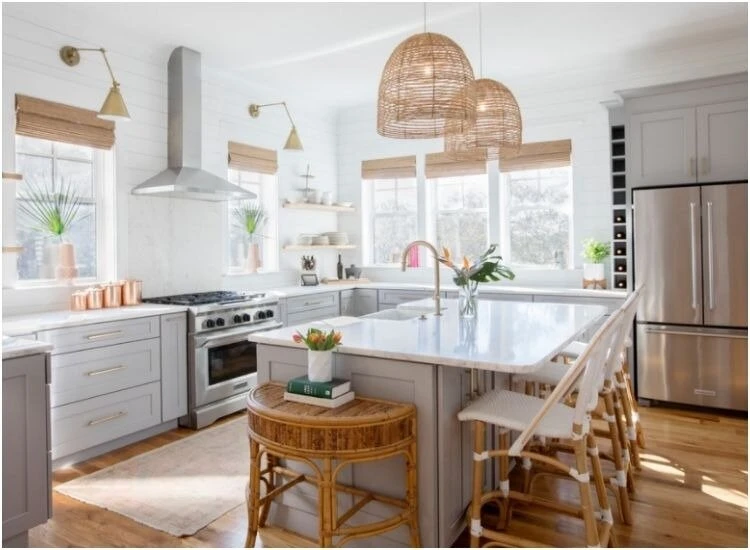
The kitchen island is the single most impactful location for a pendant light in most homes. A rattan pendant, or a pair or trio for longer islands, anchors the space visually and provides focused, warm light over the work surface. The natural material softens what can be a hard, utilitarian zone of the kitchen and makes the island feel like the center of the home rather than just a prep station.
Dining Room
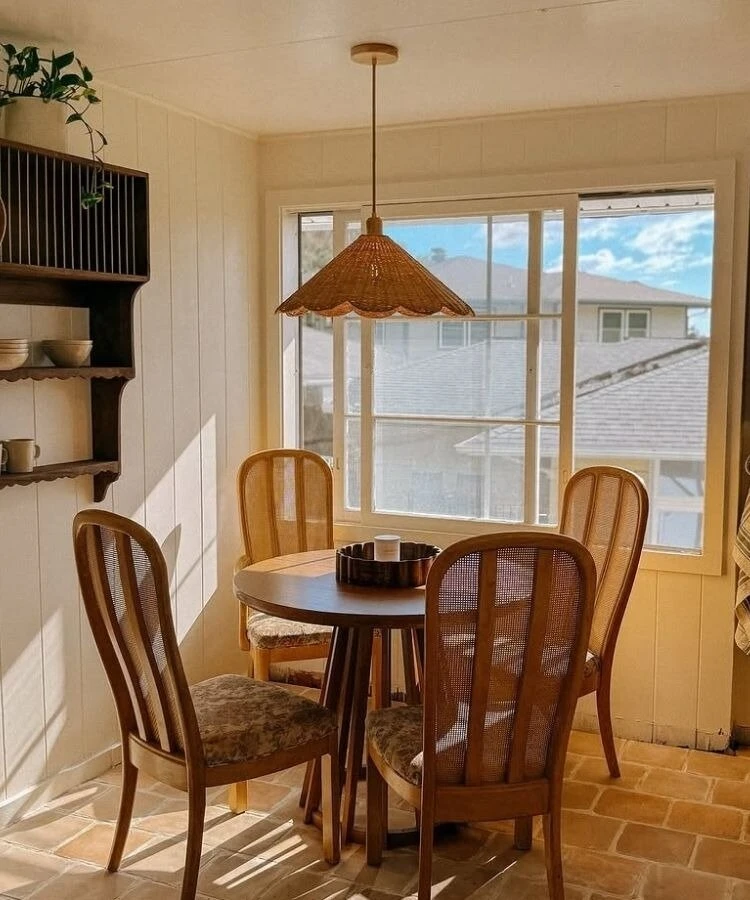
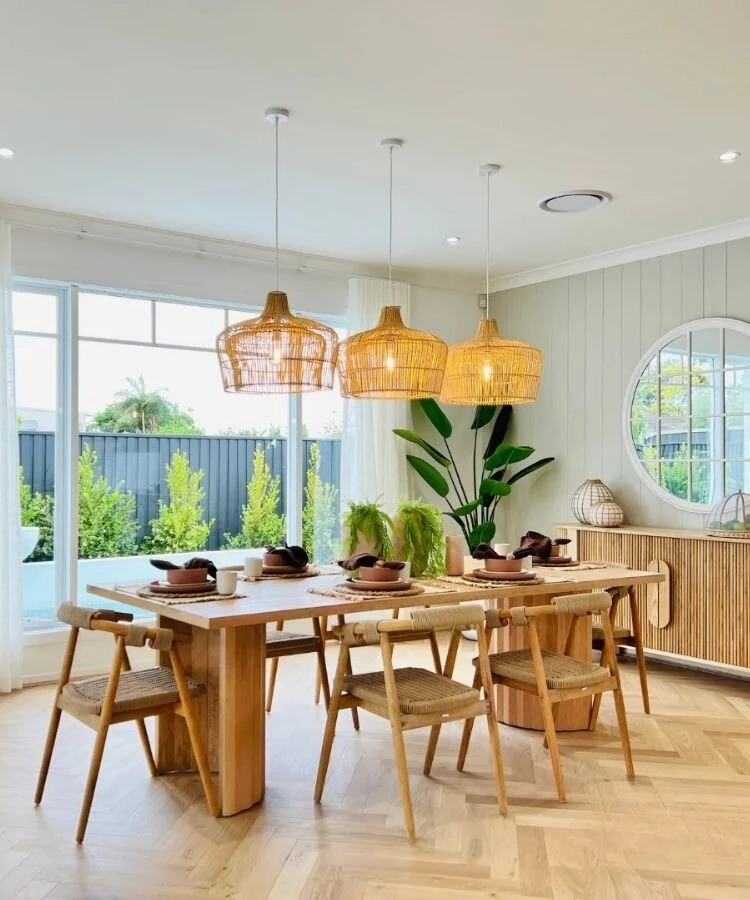
A rattan pendant over a dining table creates an intimate zone within the room. The light draws people in and makes meals feel like an occasion rather than a routine. The warm, diffused glow is flattering for faces and food alike, which is exactly what dining lighting should do. A single dome or bell-shaped pendant centered over the table is the most classic approach; for longer tables, two pendants in a line work equally well.
Bedroom
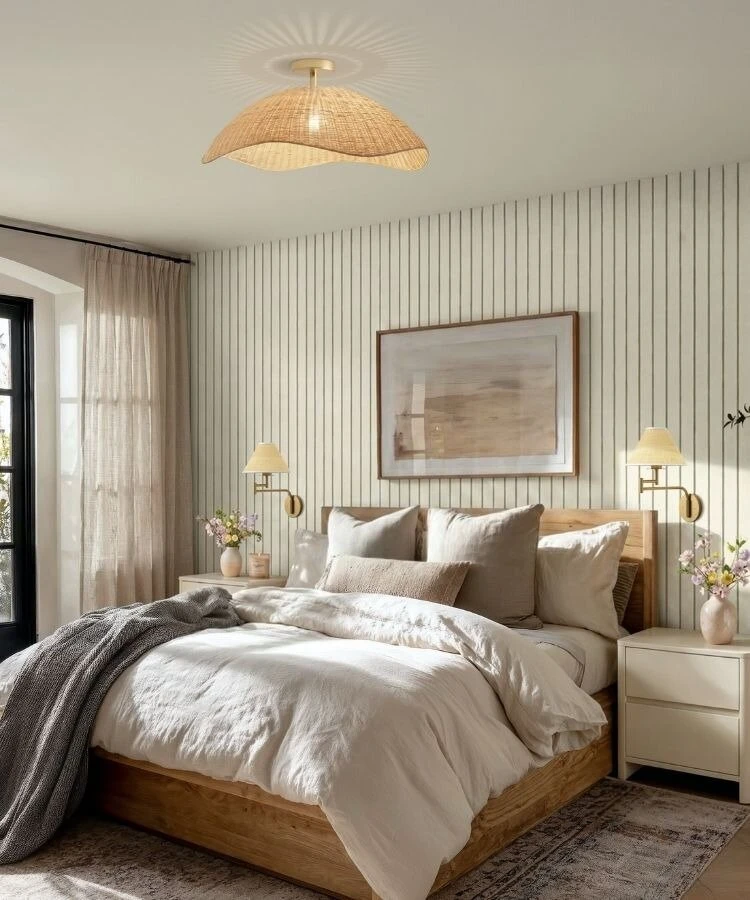
Bedside pendants in place of table lamps are among the most practical and elegant upgrades for a bedroom. Hanging rattan pendants on either side of the bed frees up space on the nightstands, creates a symmetrical composition that feels intentional, and provides soft, directional light for reading. The organic texture of rattan also suits the restful quality a bedroom needs.
Entryway
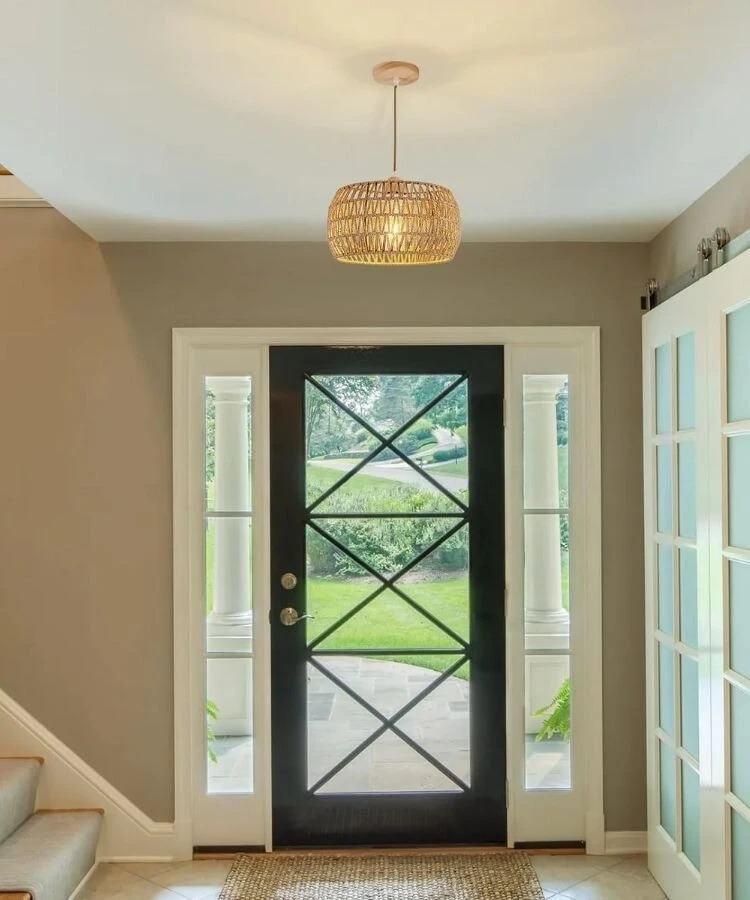
A single rattan pendant in an entryway sets the tone for the rest of the home. It signals warmth and care before a guest has seen anything else. In taller entryways or double-height foyers, a larger or longer pendant makes a genuine architectural statement.
Living Room Corner
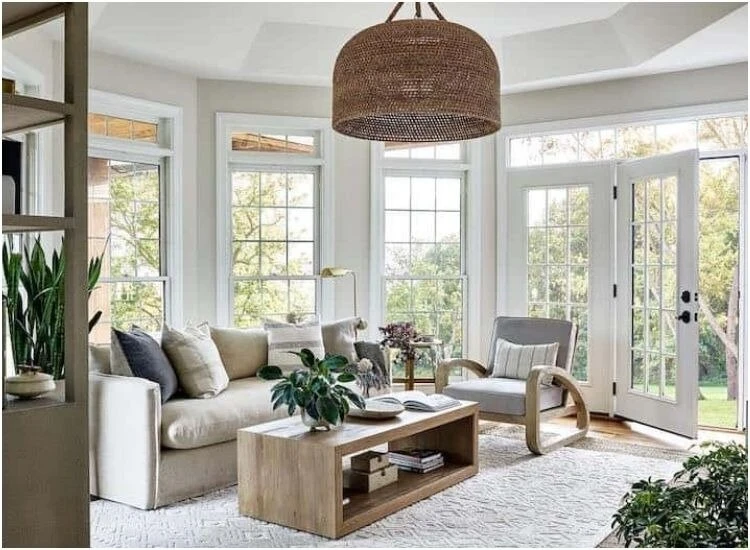
While living rooms more often use floor and table lamps, a pendant in a corner or above a reading chair creates a defined zone within a larger open space. It adds the kind of overhead-but-intimate light that makes a specific spot feel like somewhere to settle in.
Popular Shapes: Dome, Bell, Cone, Drum, and Basket Styles
Shape is the first decision in choosing a rattan pendant, and different silhouettes suit different rooms and functions.
Dome
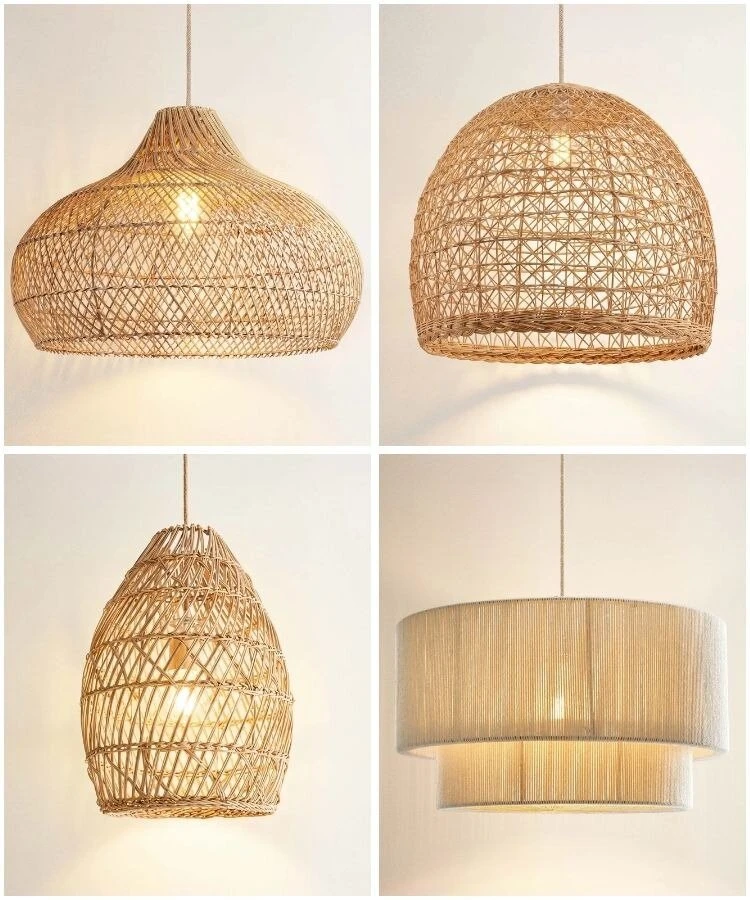
The dome is the most versatile and enduring of the rattan pendant shapes. Its smooth, continuous curve focuses light downward while allowing a warm glow to radiate through the sides. Domes work well over dining tables, kitchen islands, and beside beds. They read as settled and resolved, the kind of fixture that completes a room rather than competing with it.
Bell
Similar to the dome but with a slightly flared lower opening, the bell shade casts more downward light and has a more traditional silhouette. It suits dining rooms and entryways particularly well and pairs naturally with furniture with curved or tapered legs.
Cone
A cone shade is more directional and contemporary than a dome or bell; it focuses light downward with precision, making it well-suited for task-oriented spaces like kitchen islands and reading nooks. In a three-pendant arrangement over a long island, cone shades create a clean, modern rhythm.
Drum
Drum shades cast light both downward and upward through the open top, creating a more ambient effect than directional shapes. They work well in living rooms and bedrooms where overall warmth matters more than focused task lighting. A wide drum shade also has a strong visual presence on its own, making it a good choice for an entryway or dining room where the fixture is meant to be noticed.
Basket and Open Weave
Basket-style and open-weave rattan pendants let significantly more light pass through the shade, creating dramatic shadow patterns on the walls and ceiling when lit. These are the most atmospheric of all rattan pendant shapes, best used in bedrooms, dining rooms, and living spaces where the play of light and shadow is integral to the design. They require a bulb with attractive aesthetics on its own, since it will be visible through the weave.
How to Choose the Right Size and Hanging Height
Getting the scale and height right is as important as choosing the right style. A beautiful pendant in the wrong size or position still looks wrong.
Over a dining table
As a general starting point, the pendant diameter should be roughly half the width of the table below it. For a 36-inch-wide table, a pendant in the 16–20-inch range works well. For a longer table, two pendants rather than one are often the better solution.
Hang the bottom of the pendant 28–34 inches above the tabletop. This positions the light low enough to feel intimate and focused, yet high enough that seated guests can see each other across the table without the fixture in their line of sight.
Over a kitchen island
The pendant diameter should correspond to the island’s length. A useful rule: your pendants combined should cover roughly 50–60% of the island’s total length. For a 60-inch island, two 16–18-inch pendants hit this range comfortably. For a 96-inch island, three 18-inch pendants are a natural fit.
Hang kitchen island pendants 30–36 inches above the counter surface, slightly higher than dining table pendants, since the countertop is a work surface and clearance matters.
Ceiling height
In rooms with standard 8-foot ceilings, keep pendants compact; oversized fixtures in low-ceilinged rooms feel oppressive. In rooms with 9-foot or taller ceilings, you have more range, and a larger or longer pendant reads proportionately rather than overwhelming.
Number of pendants
Single pendants suit round or square tables, shorter islands, and entryways. Two pendants work well for rectangular dining tables and medium-length islands. Three pendants are the standard for kitchen islands 72 inches and longer.
How to Match Rattan With Furniture and Finishes
Rattan is a natural neutral; it pairs with a wide range of materials and finishes without clashing. But some combinations are more considered than others.
Stone and marble provide a useful contrast. The hardness and cool tone of stone against the warmth of rattan creates a balanced, high-low tension that many well-designed kitchens use to great effect. A rattan pendant over a marble island is one of the most reliable combinations in contemporary kitchen design.
Linen and cotton textiles share rattan’s natural, understated quality. Linen curtains, cotton upholstery, and woven cushions sit alongside rattan pendants without creating visual competition. They reinforce each other’s organic character.
Warm wood is rattan’s most natural companion. Oak, walnut, teak, and bamboo furniture sit alongside rattan pendants as if they were designed together. The organic warmth of one reinforces the other. This combination is the backbone of modern organic, Japandi, and Coastal interiors.
Brass hardware is the metal finish that pairs most naturally with rattan. The warm gold tone of brass complements the amber hues of natural fiber and ages gracefully over time. Look for brass canopy and arm details on rattan pendants when matching existing fixtures or hardware.
Black metal creates a clean contrast. Black pendant arms, canopies, or hardware against a natural rattan shade is a contemporary pairing that works well in spaces with other black accents, such as window frames, cabinet hardware, or bar stools. It keeps the organic material from feeling too soft or rustic.
Jute, cane, and seagrass are natural-fiber companions to rattan. A jute rug, cane-front cabinets, or a seagrass storage basket in the same room as a rattan pendant creates a cohesive natural-materials story without feeling like everything was ordered from the same catalog.
Common Mistakes to Avoid
Wrong scale. Undersized pendants over a large table or long island look like an afterthought. Oversized pendants in low-ceilinged rooms create a claustrophobic effect. Always verify the pendant diameter against the surface below and the ceiling height above before ordering.
Cold or daylight bulbs. A rattan shade paired with a 4000K or 5000K bulb loses all its warmth. The cool light strips the material of its amber tones and makes the fixture feel clinical rather than inviting. Use warm white bulbs in the 2700K–3000K range, without exception.
Overcrowding with too many pendants. Three pendants over a standard 72-inch island are appropriate. Four pendants over the same island start to feel crowded. More fixtures do not always mean better lighting. Spacing and breathing room are part of what makes a multi-pendant arrangement look deliberate.
Choosing a fixture not rated for the intended location. Rattan is a natural fiber and should not be installed in locations exposed to direct water. For covered outdoor areas, bathrooms, or spaces with high humidity, confirm that the fixture is rated for damp or wet locations before purchasing. An indoor-rated rattan pendant in a humid outdoor space will deteriorate quickly.
Ignoring the cord or chain style. The hanging cord or chain is visible from the moment you enter the room. A cord in a finish or color that clashes with the pendant or the ceiling canopy disrupts the fixture’s visual continuity. Match the cord finish to the canopy and hardware, or choose a natural cord that blends with the rattan shade itself.
Final Thoughts
Rattan pendants are among the most accessible ways to bring the warmth of natural materials into a home. They don’t require a room redesign or a significant budget. A single pendant over a dining table or kitchen island changes the character of the entire space.
The principles are straightforward: choose the right shape for the room, get the size and height proportionate to the surface below, pair with warm white bulbs, and let the material do the rest. Rattan has been part of interiors for centuries for good reason. It ages well, crosses styles, and makes light feel worth noticing.