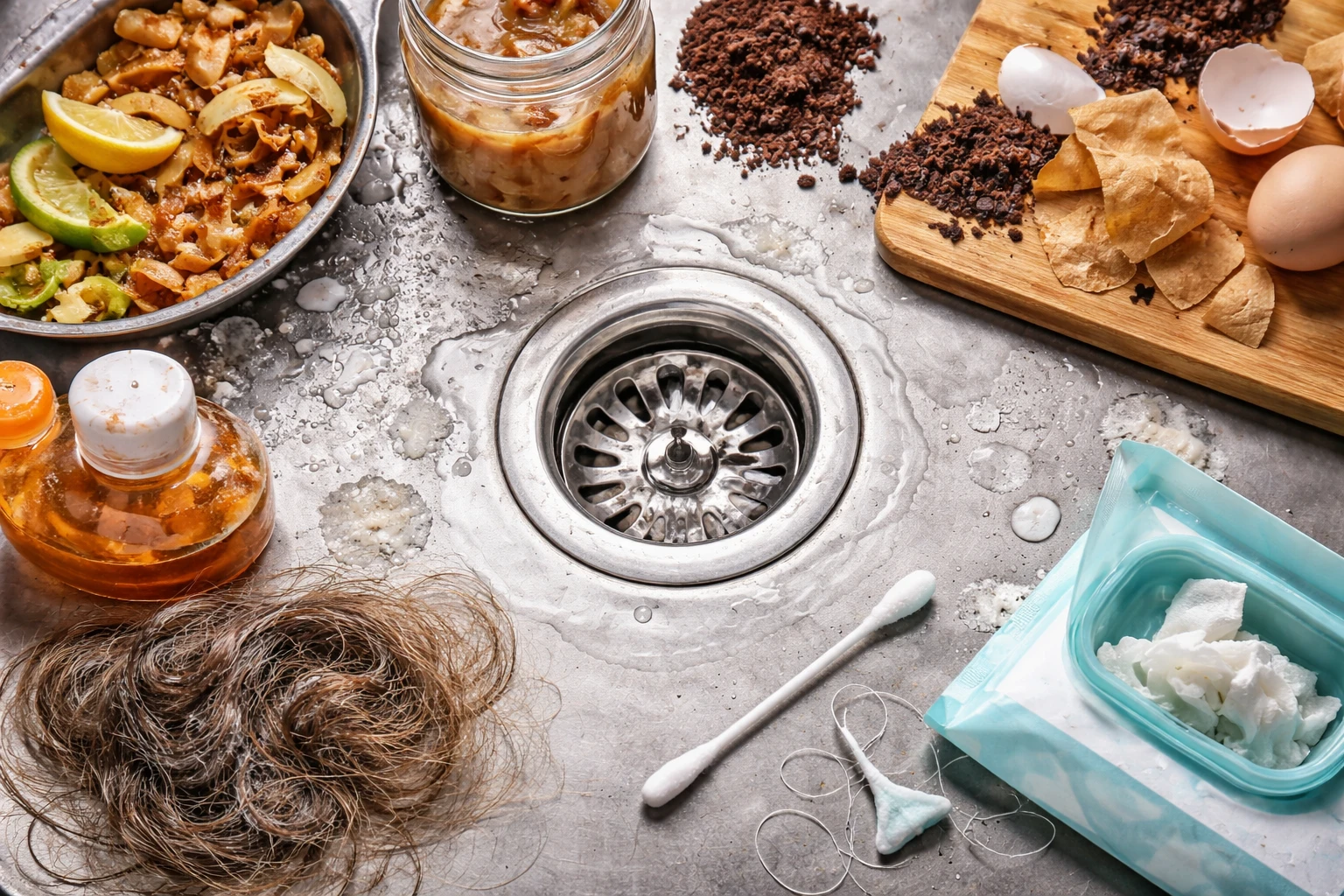
Clogged drains are one of the most common plumbing problems homeowners face. A slow-draining sink, standing water in the shower, or a backed-up kitchen drain can quickly disrupt daily routines. While many people turn to drain cleaners for a quick fix, understanding what causes clogs in the first place can help prevent recurring plumbing issues.
Several everyday household habits and materials can contribute to blocked drains over time.
Hair Buildup
Hair is one of the most frequent causes of clogged bathroom drains. When hair goes down the shower or sink drain, it often combines with soap residue and other debris. This mixture can form clumps that get stuck inside the pipes and gradually restrict water flow.
As more hair accumulates, the blockage grows larger and can eventually prevent water from draining altogether. Using drain covers or strainers in bathroom sinks and showers can help catch hair before it enters the plumbing system.
Grease and Cooking Oils
Kitchen drains commonly clog because of grease, fats, and cooking oils. These substances may appear liquid when they are poured down the drain, but they quickly solidify as they cool inside the pipes.
Once grease sticks to the pipe walls, it can trap food particles and other debris passing through the drain. Over time, the buildup thickens and narrows the pipe, making it harder for water to flow freely. Disposing of grease in a sealed container instead of pouring it down the sink can help prevent this type of clog.
Food Scraps
Even with garbage disposals, certain food items can cause drain problems. Starchy foods such as pasta, rice, and potatoes can expand when exposed to water, creating thick residue that sticks to pipes. Coffee grounds are another common culprit, as they can clump together and settle inside the drain.
To reduce the risk of clogs, it’s best to scrape large food scraps into the trash before rinsing dishes in the sink.
Soap Scum
Soap residue can also contribute to clogged drains, especially in bathrooms. Traditional bar soaps often contain fats and minerals that leave behind a sticky film known as soap scum. Over time, this residue builds up inside the pipes and can trap other debris like hair and dirt.
As the buildup increases, it narrows the pipe opening and slows water flow. Regularly cleaning drains and switching to liquid soap can help minimize soap scum buildup.
Foreign Objects
Another common cause of drain blockages is foreign objects accidentally entering the plumbing system. Items such as cotton swabs, paper towels, dental floss, wipes, and small hygiene products are not designed to dissolve in water.
Once these objects become lodged in the pipes, they can quickly cause a blockage. Even products labeled as flushable may not break down easily and can contribute to plumbing problems.
Mineral Buildup
In areas with hard water, mineral deposits can gradually accumulate inside pipes. Minerals such as calcium and magnesium can attach to pipe walls, reducing the diameter of the pipe and making it easier for debris to collect.
This buildup can slow water flow and increase the likelihood of clogs forming over time.
Tree Roots in Sewer Lines
Clogs aren’t always caused by materials inside the home. In some cases, tree roots can grow into underground sewer lines through small cracks or joints in the pipe. Roots are naturally drawn to moisture and can expand inside the pipe, eventually blocking wastewater flow.
Root intrusion is a more serious plumbing issue that often requires professional repair.
Preventing Drain Problems
Preventing clogs is usually easier than dealing with them once they occur. Being mindful of what goes down the drain, using drain strainers, and performing regular maintenance can help keep plumbing systems running smoothly.
Understanding the common causes of clogged drains allows homeowners to take simple steps that reduce the risk of blockages and keep their plumbing functioning properly.
FAQs
Hair buildup is one of the most common causes, especially in bathroom sinks and showers where it mixes with soap residue and forms blockages.
Yes. Grease and cooking oils may look liquid when hot, but they solidify as they cool, sticking to pipe walls and trapping debris.
No. Items like pasta, rice, potato peels, and coffee grounds can expand or clump together, increasing the risk of drain clogs.
Soap scum forms when soap combines with minerals in water, leaving a sticky residue that collects inside pipes and traps debris.
Yes. Items like cotton swabs, dental floss, wipes, and paper towels do not break down easily and can quickly block pipes.
Hard water contains minerals that gradually build up inside pipes, narrowing the passage and making it easier for debris to accumulate.
Yes. Tree roots are attracted to moisture and can grow into small cracks in sewer pipes, eventually blocking wastewater flow.
Often they do. Many flushable wipes do not break down quickly in plumbing systems and can contribute to stubborn clogs.
Using drain strainers, avoiding grease disposal in sinks, and throwing food scraps in the trash can significantly reduce the risk of clogs.
If a clog keeps returning, affects multiple drains, or causes sewage backup, it’s best to contact a professional plumber for proper inspection and repair.