This post contains affiliate links. As an Amazon Associate, I earn from qualifying purchases, at no extra cost to you. See our disclosure policy.
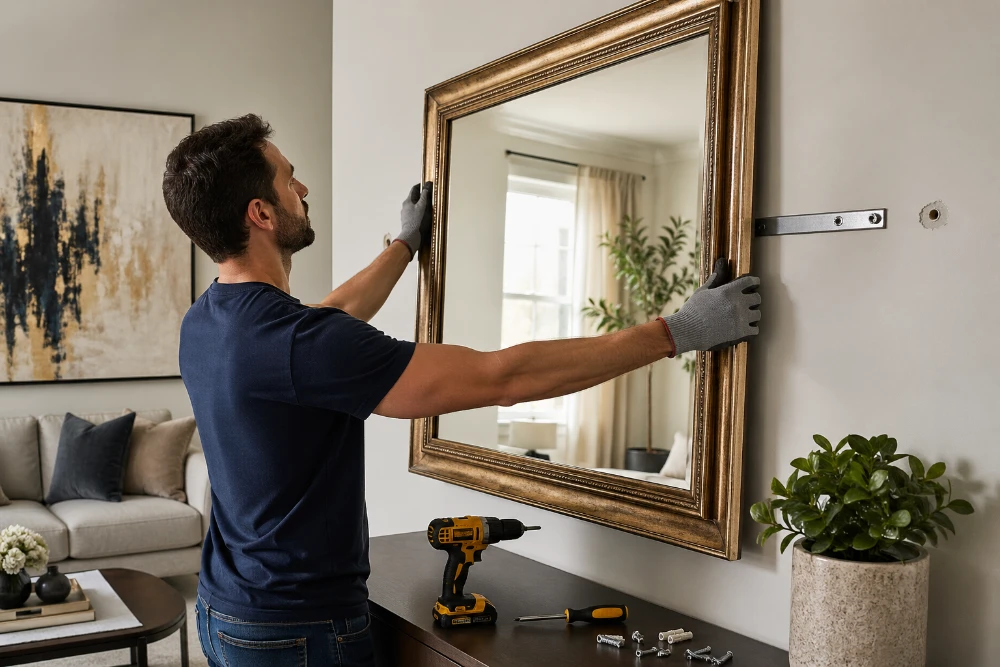
A massive, ornate mirror or a sprawling piece of statement art can completely transform a room. These oversized elements bounce natural light around the space, create stunning focal points, and bring an undeniable sense of luxury to otherwise blank walls. Whether you are leaning towards a grand, gilded antique mirror for your hallway or a vast, modern canvas to sit proudly above the sofa, the visual impact is always spectacular. However, mounting these magnificent pieces requires more than just a quick hammer and a stray nail.
Heavy objects pose a significant risk to your walls, your flooring, and your personal safety if they are not secured properly. A falling mirror can shatter into dangerous shards and gouge your hardwood floors in the process. Before you attempt to mount that gorgeous but incredibly heavy frame, it is absolutely vital to understand the mechanics of weight distribution and the underlying structural support of your home.
Knowing When to DIY and When to Delegate
Tackling home decor updates yourself is incredibly rewarding, but it is important to recognise your limits before starting a complex project. Large mirrors, solid timber frames, and modern resin artworks can easily weigh over 20 kilograms. This extreme weight puts immense, constant strain on standard plasterboard or drywall. If you are dealing with a delicate heritage property, crumbling fragile masonry, or an exceptionally heavy antique that holds sentimental value, making a mistake could lead to thousands of dollars in property damage.
In these high-stakes scenarios, enlisting the help of professional art hangers is often the smartest choice to ensure your valuable items are secured flawlessly. Experts have the specific tools and experience to mount heavy pieces on challenging surfaces without causing unnecessary destruction. For standard walls and moderately heavy modern frames, however, a careful and highly informed DIY approach can work perfectly well.
Understanding Wall Types and Hardware Limits
The secret to safely displaying heavy items lies entirely in the hardware you choose. Never rely on the basic picture hooks or standard fixings that come in pre-packaged hanging kits. These generic supplies are generally designed for lightweight canvas prints or small family photographs, not substantial statement pieces. When you are assessing your options at the hardware store, it helps to look at the exact weight capacities of different fixtures to avoid a catastrophic failure.
According to a helpful breakdown of drywall anchors by home improvement experts, standard plastic expansion anchors typically max out at around 11 kilograms, which is rarely enough for oversized art. For significantly heavier pieces, you will need advanced structural solutions like threaded anchors, toggle bolts, or molly bolts. These specialised fixtures expand behind the wall to anchor the screw securely, safely supporting much heavier weights without tearing right through the plasterboard.
The Importance of Locating Wall Studs
While heavy-duty anchors are brilliant for hollow walls, the absolute gold standard for mounting heavy decor is attaching it directly into a wooden wall stud. Studs provide the rigid, structural backbone of your house and can bear almost any residential decor weight without buckling or pulling away. Using a reliable electronic stud finder is the easiest and most accurate way to locate these vertical timber beams behind the plaster.
Once you find the edges of the stud, always aim your drill for the exact centre to ensure maximum grip for your screws. If your desired placement does not align neatly with the studs, you might need to use a French cleat. This is a highly specialised interlocking metal or timber bracket system that distributes the weight horizontally across a much wider surface area. A wide cleat allows you to hit at least one wall stud securely while using heavy-duty wall anchors for the remaining sections of the bracket.
Steps for a Secure and Level Installation
When it is finally time to get the drill out, thorough preparation is everything. Rushing the final mounting phase is exactly how frustrating mistakes happen. Follow a structured approach to keep your oversized artwork or mirror safe and secure:
- Weigh the item accurately: Use a standard bathroom scale to determine the exact weight of your mirror or art piece. Always buy hardware rated for at least double that specific amount to provide a safe buffer.
- Map it out: Cut a large piece of paper or cardboard to the exact dimensions of your item. Use painter’s tape to stick this lightweight template to the wall, allowing you to test the height and positioning without repeatedly lifting the heavy object.
- Mark your hardware points: Measure the exact distance from the top of the frame down to the hanging wire or D-rings. Transfer these precise measurements to your paper template on the wall.
- Install the mounts: Drill your pilot holes directly through the clearly marked points on the paper template. Remove the paper, carefully insert your chosen heavy-duty anchors, and tightly secure your screws or French cleat.
- Hang and verify: Carefully lift the piece into place, ideally with the help of a friend or family member to ensure a smooth transition. Use a spirit level on the top edge of the frame to make any final micro-adjustments for a perfectly straight finish.
Conclusion
Hanging oversized wall decor does not have to be an intimidating or stressful process. By taking the time to fully understand your wall structure, selecting appropriate weight-rated hardware, and strictly following a precise installation method, you can easily achieve a gallery-quality finish. Your home will immediately benefit from the dramatic visual impact, and you can rest easy knowing your beautiful decorative pieces are safely anchored for years to come.
FAQs
Anything over 10–15 kg should not rely on standard drywall anchors alone and may require heavy-duty anchors or stud mounting.
The safest method is securing it directly into wall studs or using a French cleat system for even weight distribution.
Yes, but you must use high-capacity anchors like toggle bolts or molly bolts designed for heavy loads.
You’ll typically need a stud finder, drill, level, measuring tape, anchors, and appropriate screws or mounting hardware.
Identify the wall type (drywall, plaster, masonry) and check its condition, then match it with the correct rated hardware.
Using two hooks is generally safer as it distributes weight evenly and helps keep the frame level.
A French cleat is an interlocking bracket system that spreads weight across the wall, making it ideal for large or heavy items.
The center of the piece should usually sit at eye level, around 145–155 cm from the floor, depending on room layout.
It’s not recommended—having a second person helps prevent accidents and ensures accurate placement.
If the item is extremely heavy, valuable, or being installed on fragile or complex walls, professional installation is the safest option.