This post contains affiliate links. As an Amazon Associate, I earn from qualifying purchases, at no extra cost to you. See our disclosure policy.
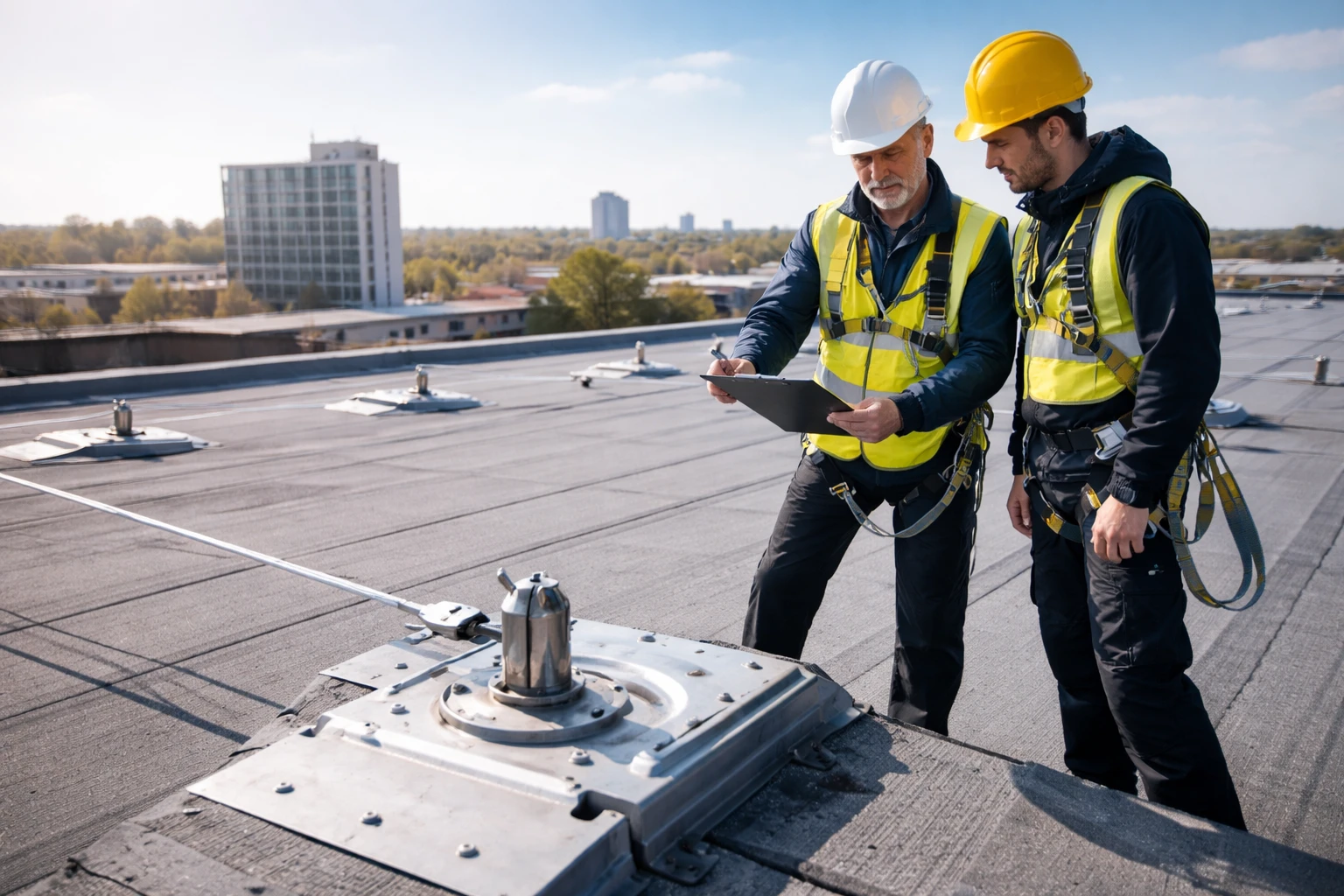
There’s a question that keeps facilities managers up at night and it’s not about leaky pipes or broken lifts. It’s this: if someone fell from our roof tomorrow, would our fall protection actually save them?
It’s an uncomfortable thought. But with falls from height still the leading cause of workplace death in the UK, it’s one that deserves an honest answer. The reality is that many commercial and public buildings across Britain have fall protection systems installed that haven’t been properly inspected in years or worse, were never quite right in the first place.
This article breaks down what UK law actually requires when it comes to fall protection, why regular inspections are non-negotiable, and how working with an independent specialist like Height of Safety can give you peace of mind that your building is genuinely safe.
Falls From Height: The Numbers That Should Worry You
Let’s start with the figures, because they tell a story that’s hard to ignore.
According to the Health and Safety Executive’s most recent annual report, covering April 2024 to March 2025, 35 workers were killed in falls from height across Great Britain. That made it the single most common cause of workplace death, responsible for more than a quarter of all fatalities. The previous year was even worse, with 50 fall-related deaths recorded, the highest figure since 2007/08.
Beyond fatalities, up to 44,000 workers reported being injured in a fall from height during 2024/25, a figure that represents a 19% increase on the year before. Construction accounts for a disproportionate share of these incidents, but the danger exists in every sector where people access rooftops, raised platforms, or elevated work areas. That includes healthcare facilities, schools, offices, retail parks, hotels, transport hubs, and residential care homes.
The takeaway is clear: falls from height aren’t just a construction problem. They’re a building management problem. And if you’re responsible for a property where anyone ever goes onto the roof whether that’s a maintenance contractor, a window cleaner, or a telecoms engineer the law says it’s your problem too.
What the Law Actually Requires
The Work at Height Regulations 2005 remain the cornerstone of UK legislation on this subject, and they apply to every employer, self-employed person, and anyone who controls work at height including facilities managers and building owners who contract others to carry out elevated work.
The regulations are built around a clear hierarchy of control. First, you should avoid work at height wherever it’s reasonably practicable to do so. Where it can’t be avoided, you must use appropriate work equipment and safety measures to prevent falls. And where falls cannot be entirely prevented, you need systems in place to minimise the distance and consequences of any fall that does occur.
Crucially, the regulations don’t set a minimum height threshold. If someone could fall a distance that’s liable to cause personal injury even from a relatively low elevation the regulations apply. This is a risk-based approach, not a height-based one.
For building owners and facilities managers, several practical obligations flow from these regulations. You need to ensure that anyone who works at height on your premises does so safely, using suitable equipment that is regularly inspected and maintained. You need to plan and supervise work at height activities. And you need to make sure that anyone involved in this work including the people you contract to carry it out is competent.
That word “competent” carries real weight. Under the regulations, competent means possessing the skills, knowledge, and experience necessary to do the job safely. It’s not enough to simply hire someone with a ladder and hope for the best.
Why Fall Protection Inspections Matter More Than You Think
Installing fall protection is only half the story. Equipment that isn’t regularly inspected and properly maintained is equipment you can’t rely on. And in the worst-case scenario a fall unreliable equipment isn’t just a compliance failure. It’s a potential death sentence.
Fall protection systems are exposed to some of the harshest conditions imaginable. Rooftop installations face constant UV exposure, wind loading, temperature extremes, and moisture. Metal components corrode. Fixings loosen over time. Rubber seals degrade. Even systems that looked perfectly sound on the day they were installed can deteriorate significantly within a year or two if they’re not properly looked after.
The Work at Height Regulations require that fall protection equipment is inspected at intervals appropriate to the environment and conditions of use. For most rooftop systems, this means at least once every twelve months. Following each inspection, the system should be recertified with documentation confirming that it remains compliant with the relevant British and European standards.
If your building has fall protection installed but you can’t produce a current inspection certificate, you’re potentially in breach of the law. More importantly, you have no assurance that the system will actually perform when someone’s life depends on it.
The Problem With Non-Independent Inspections
Here’s something many facilities managers don’t think about: who inspected your fall protection system, and do they have any conflicts of interest?
It’s common practice for the company that installed a system to also carry out the annual inspection. On the surface, this seems logical they know the system, they know the building, and they have the technical expertise. But there’s an inherent tension in asking a company to objectively assess the quality and condition of their own work. There’s also a potential conflict when the inspector stands to gain financially from recommending repairs or replacements.
This is where the value of an independent inspection specialist becomes clear. Height of Safety is qualified to inspect and certify all forms of fall protection systems installed to current British and European standards, regardless of who originally installed them. Because they have no vested interest in the outcome they didn’t install it, and they’re not trying to sell a replacement their assessment is genuinely impartial.
For facilities managers who need to demonstrate due diligence and compliance to their boards, insurers, and regulators, an independent inspection provides a level of credibility that a self-assessment simply can’t match.
What Does a Professional Fall Protection Inspection Involve?
A thorough fall protection inspection goes far beyond a quick visual check. When Height of Safety carries out an inspection, their qualified engineers and technicians assess every element of the system against the manufacturer’s specifications and the applicable standards.
For anchor points and eyebolts, this typically includes pull testing applying a controlled load to verify that the anchor can withstand the forces it would be subjected to in a real fall. For horizontal safety lines, the inspection covers the cable tension, intermediate brackets, end anchors, energy absorbers, and shuttle mechanisms. Guardrails are checked for structural integrity, secure fixings, and correct dimensions. Rooflight covers are assessed for UV degradation, impact resistance, and secure attachment.
Each component is evaluated not in isolation, but as part of the overall system. A single weak link a corroded bracket, a loosened fixing, a degraded cable can compromise the entire installation.
Following the inspection, Height of Safety provides comprehensive recertification documentation. This typically includes a detailed report outlining the condition of each component, any remedial actions required, and a certificate confirming the system’s compliance status. For facilities managers managing large property portfolios, this documentation is invaluable for demonstrating compliance during audits, insurance renewals, and regulatory inspections.
Beyond Inspection: When Your Building Needs New or Upgraded Protection
Inspections sometimes reveal that existing systems need more than maintenance; they need upgrading or replacing entirely. This can happen for several reasons. Standards evolve over time, and a system installed a decade ago may no longer meet current requirements. Building use may have changed, with new rooftop equipment creating access requirements that the original fall protection wasn’t designed to accommodate. Or the system may simply have reached the end of its serviceable life.
In these situations, Height of Safety’s independence proves particularly valuable. Because they work with products from multiple leading manufacturers, they can design and specify the most appropriate solution for each building’s unique requirements. Whether that’s a guardrail system for a flat-roofed office block, a horizontal lifeline for a pitched industrial roof, rooflight protection for a warehouse, or a combination of systems for a complex multi-level building, their recommendations are driven by what’s right for the building not by what’s sitting in their warehouse.
Their service covers the full project lifecycle: site survey, system design, supply, installation, and ongoing inspection and recertification. For facilities managers, this means dealing with a single specialist partner rather than coordinating between multiple contractors reducing complexity, improving accountability, and ensuring consistency.
The Real Cost of Getting It Wrong
The financial consequences of fall protection failures can be staggering. HSE prosecutions for breaches of the Work at Height Regulations regularly result in six-figure fines, and in cases involving serious injury or death, custodial sentences are a real possibility for those found to have been negligent.
But the costs go well beyond fines and legal fees. A serious fall incident can trigger months of investigation, during which parts of your building may be inaccessible. Insurance premiums invariably rise. Contractual relationships can be damaged. Reputational harm can be lasting, particularly for organisations in the public sector, healthcare, or education where duty of care is paramount.
Then there’s the human cost, the one that no amount of money can address. A worker who falls from a roof may suffer life-changing injuries, permanent disability, or death. Their family’s life is changed forever. And everyone involved the building manager who signed off on the risk assessment, the contractor who sent their employee onto an unsafe roof, the company that failed to maintain the fall protection has to live with the knowledge that it was preventable.
Investing in proper fall protection and regular independent inspections isn’t an expense. It’s the most cost-effective risk management decision a building owner or facilities manager can make.
Who Height of Safety Works With
Height of Safety serves clients across virtually every sector in the UK, from small independent businesses to some of the country’s largest and most recognisable organisations. Their client list includes the NHS, Transport for London, Arriva Plc, The Salvation Army, YMCA, Bupa, London Fire Brigade, Surrey Fire and Rescue Service, Sussex Police, and the Church of England.
They hold accreditations from CHAS, SafeContractor, Constructionline Gold, SSIP, and PQS all of which require ongoing assessment and verification of their competence, health and safety management, and professional standards. For procurement teams and facilities managers who need to satisfy pre-qualification requirements, these accreditations provide immediate reassurance.
Their team includes qualified surveyors, installation technicians, maintenance engineers, and health and safety practitioners, ensuring that every aspect of fall protection — from initial design through to annual recertification is handled by people with the right skills and experience.
Taking the First Step
If you’re a facilities manager, building owner, or property director reading this and realising that your fall protection might not be up to scratch, the good news is that finding out doesn’t have to be complicated or expensive.
Height of Safety offers free, no-obligation site surveys across the UK. One of their qualified surveyors will visit your building, assess the current fall protection provisions, identify any gaps or compliance issues, and provide a clear, costed proposal for bringing everything up to standard.
Whether you need a single inspection, a full system installation, or an ongoing maintenance and recertification programme across a portfolio of properties, they can help.
Contact Height of Safety today on 0208 087 0565, email sales@heightofsafety.co.uk, or visit heightofsafety.co.uk to request your free site survey.
Frequently Asked Questions About Fall Protection Inspections
Most fall protection systems should be inspected at least once every twelve months by a competent person. However, systems in harsh environments or subject to heavy use may require more frequent inspection. Height of Safety can advise on the appropriate inspection interval for your specific installation.
Yes. Height of Safety is qualified to inspect and certify all forms of fall protection systems installed to current British and European standards, regardless of the original installer. This independence is one of their key strengths, as it ensures a completely impartial assessment.
If an inspection identifies issues, Height of Safety will provide a detailed report outlining the problems and recommended remedial actions. Depending on the severity, this could range from minor repairs and component replacements to a full system upgrade. They can carry out remedial work themselves or advise you on the best course of action.
If anyone ever needs to access an elevated area of your building including the roof for any purpose, including maintenance, cleaning, or equipment servicing, the regulations almost certainly apply. The rules cover all work where there’s a risk of falling a distance that could cause injury, regardless of the actual height involved.
Height of Safety holds CHAS, SafeContractor, Constructionline Gold, SSIP, and PQS accreditations. These are independently assessed and demonstrate their commitment to high standards of competence, safety management, and professional reliability.
Yes. Height of Safety provides free, no-obligation site surveys across the UK. There’s no commitment to proceed with any work following the survey it’s simply a way for you to understand your building’s fall protection requirements and any areas where compliance could be improved.