This post contains affiliate links. As an Amazon Associate, I earn from qualifying purchases, at no extra cost to you. See our disclosure policy.
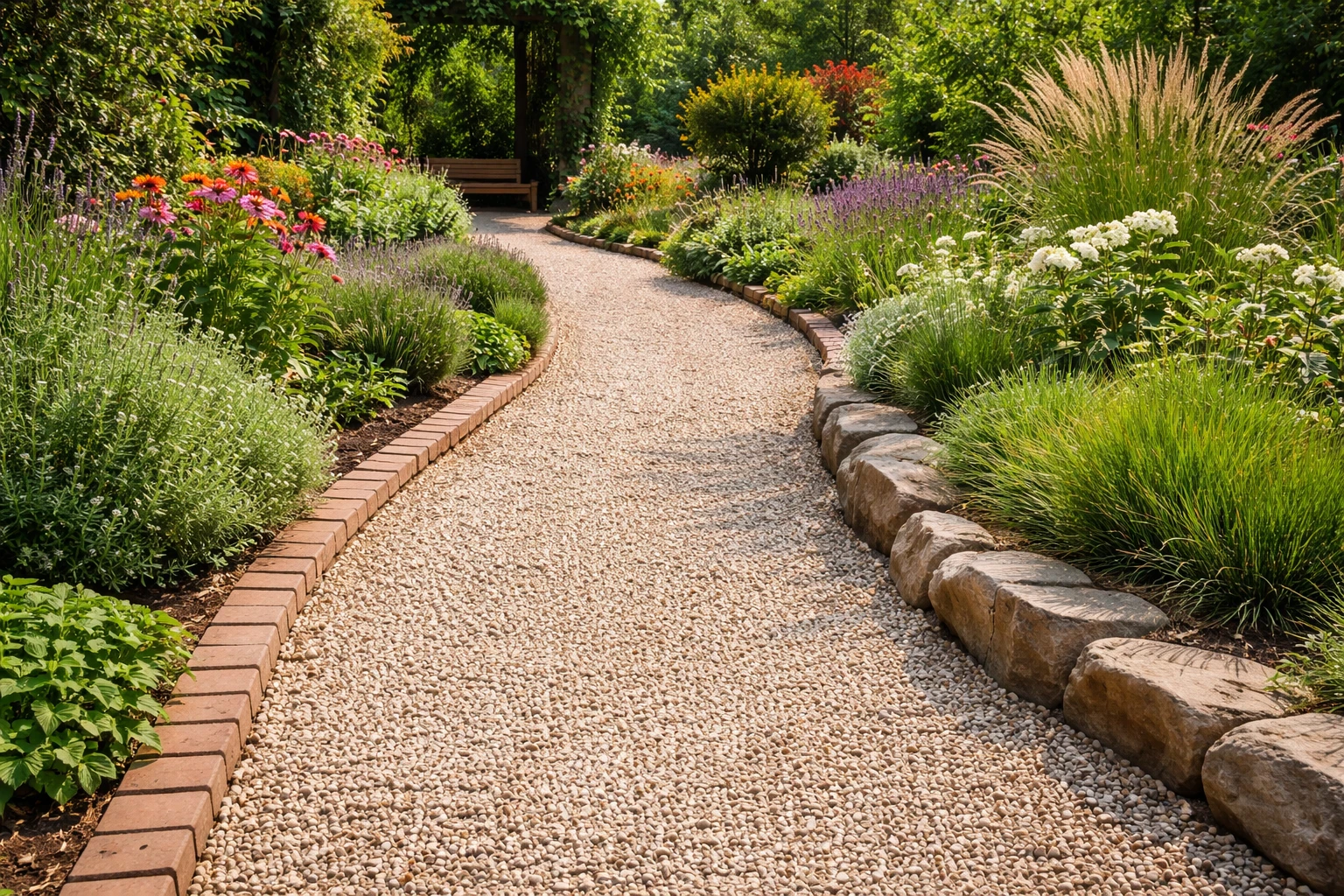
Gravel paths look effortless when they’re done right. They feel relaxed. Natural. Almost timeless. But without proper borders, they can quickly turn into a mess. Stones spill into lawns. Weeds creep in. Edges blur. That’s why gravel path edging ideas matter far more than most people expect.
I’ve seen beautifully installed gravel paths fail within months simply because edging was treated as an afterthought. The truth is simple: edging is not decoration. It’s structure. It defines the path, locks gravel in place, and quietly does the hard work that keeps everything looking intentional.
In this guide, we’ll walk through practical, proven gravel path edging ideas that balance appearance, durability, cost, and maintenance. Some are classic. Others are creative. All of them work.
Let’s get into it.
Why Gravel Path Edging Matters More Than You Think
A gravel path without edging behaves like water. It spreads. Slowly at first. Then all at once.
Edging does three essential things:
- Keeps gravel contained and evenly distributed
- Creates a clean visual boundary
- Reduces long-term maintenance
Without edging, even compacted gravel migrates outward with foot traffic, rain, and seasonal freeze-thaw cycles. You end up constantly raking stones back into place or topping up areas that thin out.
Good edging solves this quietly and permanently.
What to Consider Before Choosing Gravel Path Edging
Before jumping into materials, step back and evaluate the path itself. Edging should serve the path, not fight it.
Key Factors to Think Through
- Path location: Front yard paths often need a more finished look than garden walkways
- Traffic level: Light foot traffic needs less reinforcement than shared access paths
- Gravel size: Pea gravel behaves very differently from crushed stone
- Drainage: Poor drainage destroys even strong edging over time
- Style goals: Natural, modern, formal, or rustic
Edging that looks great but fails structurally is never worth it. Balance appearance with function.
Natural Gravel Path Edging Ideas
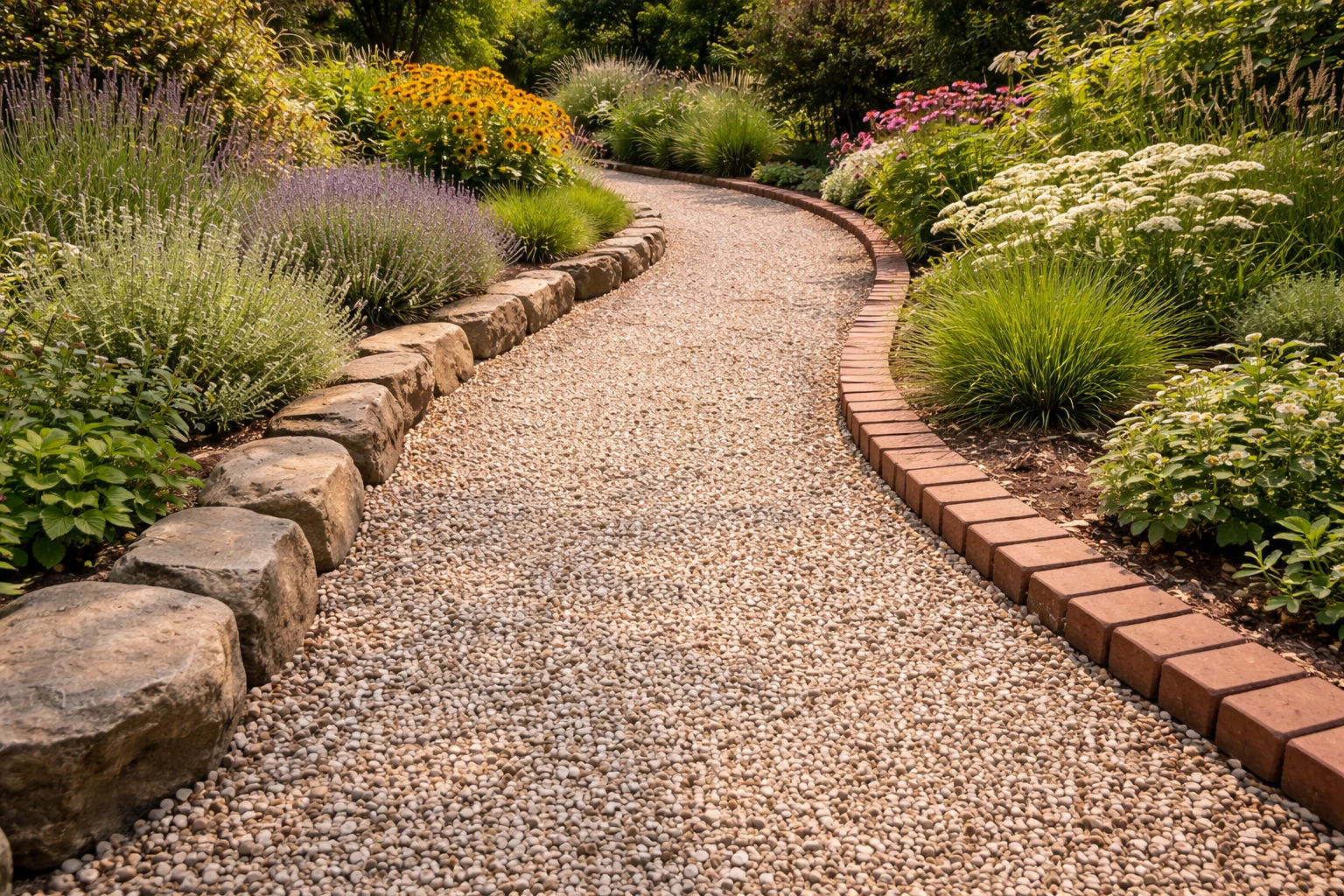
Natural edging blends seamlessly into outdoor spaces. It feels organic and intentional, especially in gardens and informal landscapes.
Stone and Rock Edging
Stone is one of the most durable gravel path edging ideas available.
Popular options include:
- Fieldstone placed vertically for a rugged look
- River rock arranged tightly along edges
- Large accent stones spaced evenly for informal paths
Stone resists movement, handles moisture well, and ages beautifully. The key is setting stones deep enough so only the top third remains visible. Shallow placement leads to shifting.
Brick and Paver Edging
Brick edging creates definition without feeling heavy.
- Reclaimed bricks add warmth and character
- Concrete pavers offer precision and consistency
- Soldier-course layouts keep lines clean
Bricks should be set on a compacted base, not soil. Skipping this step is the most common mistake and leads to sinking within a year.
Wood Edging Options
Wood feels approachable and budget-friendly.
Common choices include:
- Pressure-treated timber
- Landscape logs
- Railroad ties
Wood edging works best in low-traffic areas. Expect maintenance. Even treated wood degrades over time, especially in wet climates. Avoid untreated lumber entirely.
Metal Gravel Path Edging Ideas
Metal edging is the quiet professional’s choice. Minimal. Strong. Nearly invisible when installed correctly.
Steel Edging
Steel edging is one of the most reliable gravel path edging ideas for long-term performance.
- Weathering steel develops a rusted patina
- Galvanized steel resists corrosion
- Excellent for straight lines and gentle curves
Steel holds gravel in place better than most materials because it creates a firm vertical barrier.
Aluminum Edging
Aluminum offers flexibility.
- Lightweight and easy to install
- Resistant to rust
- Ideal for curved, organic paths
It’s not as rigid as steel, but for residential garden paths, it performs well.
Installation Tips for Metal Edging
Metal edging fails when it’s installed too shallow.
Best practices:
- Sink edging at least 2–3 inches below gravel base
- Use stakes every 12–18 inches
- Ensure top edge stays flush with finished gravel
Sharp edges should never be exposed. Always cap or bury.
Concrete and Masonry Edging Ideas
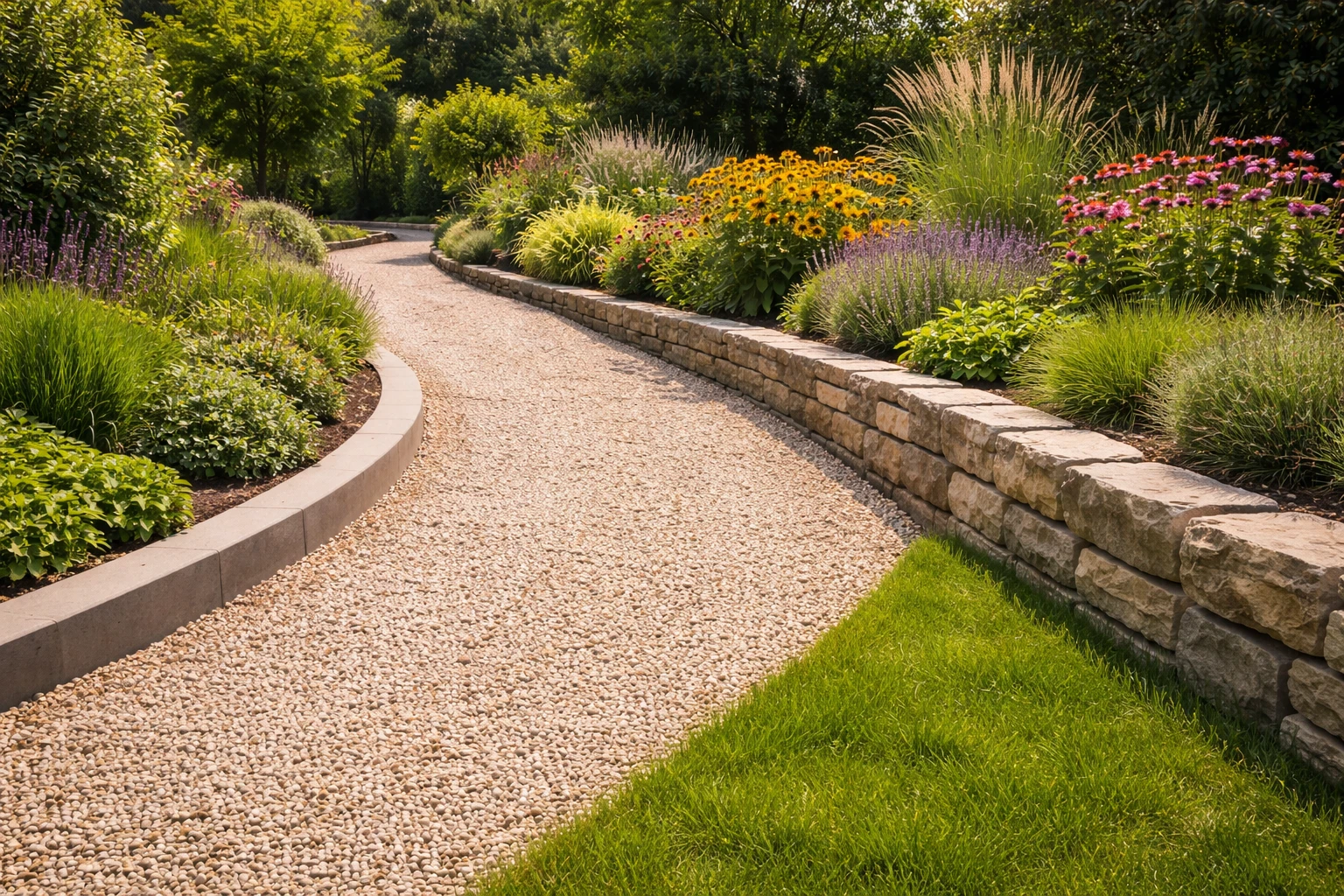
Concrete edging brings permanence. It’s ideal for paths that need to stay exactly where they are.
Poured Concrete Borders
Poured concrete creates clean, uninterrupted lines.
- Works well for modern landscapes
- Handles slopes effectively
- Requires careful forming and curing
Once installed, it’s there for decades.
Precast Concrete Edging
Precast edging simplifies installation.
- Uniform appearance
- Predictable sizing
- Faster than poured concrete
It’s a solid compromise between durability and effort.
Masonry Block Edging
Block edging allows elevation.
- Ideal for raised paths
- Handles erosion well
- Adds architectural interest
Stacked stone edging can double as a retaining edge on sloped sites.
Plastic and Composite Gravel Edging
Plastic edging doesn’t get much respect, but it has a place.
When Plastic Edging Works
- Tight curves
- Temporary paths
- Budget-driven projects
Modern composite options outperform older plastic systems but still lack the rigidity of metal or stone.
Plastic edging should always be buried fully. Visible plastic cheapens the look immediately.
Creative and Decorative Gravel Path Edging Ideas
Edging doesn’t have to be boring.
Mixed Material Borders
Combining materials adds depth.
Examples include:
- Steel edging with stone infill
- Brick paired with groundcover
- Wood sleepers framed by gravel
The key is restraint. Pick one dominant material.
Living Edges
Plants can act as soft edging.
- Low boxwood
- Creeping thyme
- Ornamental grasses
Living edges require maintenance but soften hard lines beautifully.
Gravel Path Edging for Sloped or Uneven Ground
Slopes demand extra planning.
Best Solutions for Slopes
- Raised masonry edging
- Steel edging with deeper anchoring
- Tiered edging systems
Drainage is critical. Always install a compacted base and consider drainage fabric beneath gravel.
Ignoring slope dynamics guarantees failure.
DIY vs Professional Gravel Path Edging
Some gravel path edging ideas are DIY-friendly. Others are not.
DIY Works When:
- Paths are short and straight
- Materials are lightweight
- Soil conditions are stable
Hire a Pro When:
- Slopes are involved
- Concrete or masonry is used
- Long-term durability matters
There’s no shame in outsourcing precision work.
Installation Basics for Gravel Path Edging
No matter the material, the fundamentals remain the same.
Core Installation Steps
- Mark the path clearly
- Excavate to proper depth
- Install compacted base
- Secure edging firmly
- Add and compact gravel
Skipping base preparation is the fastest way to failure.
Maintenance Tips for Gravel Path Edging
Even the best gravel path edging ideas need occasional attention.
Simple Maintenance Practices
- Rake gravel back into place quarterly
- Inspect edging after heavy rain
- Remove weeds early
Small corrections prevent big repairs.
Common Gravel Path Edging Mistakes to Avoid
These mistakes show up again and again.
- Choosing edging that’s too shallow
- Ignoring drainage paths
- Mixing too many materials
- Rushing installation
Edging is not where you cut corners.
Cost Comparison of Gravel Path Edging Materials
Here’s a high-level comparison to help guide decisions:
| Material | Cost Range | Durability | Maintenance |
| Plastic | Low | Low–Medium | Medium |
| Wood | Low–Medium | Medium | High |
| Metal | Medium | High | Low |
| Stone | Medium–High | Very High | Low |
| Concrete | High | Very High | Very Low |
Long-term value matters more than upfront cost.
Final Thoughts on Gravel Path Edging Ideas
The best gravel path edging ideas do their job quietly. They don’t draw attention to themselves. They just work.
When edging is chosen thoughtfully and installed correctly, gravel paths stay crisp, clean, and inviting year after year. No constant raking. No creeping gravel. And no frustration.
Plan the edging first. Build the path second.
That order changes everything.
FAQs
Edging keeps gravel contained, prevents spreading, and helps maintain a clean, defined path over time.
Stone, concrete, and steel edging are the most durable options and require the least long-term maintenance.
Yes, many gravel path edging ideas—such as metal, plastic, or brick—are DIY-friendly with proper base preparation.
Most edging should extend at least 2–3 inches below the gravel base to prevent shifting and migration.
Metal edging is more rigid and long-lasting, while plastic edging works best for light-use or curved paths.
Edging helps limit weed spread along borders, especially when combined with landscape fabric underneath.
Flexible metal or composite edging performs best for smooth, natural curves.
Yes, low-growing plants can create soft edges, but they require more maintenance than hard materials.
Most edging materials only need occasional inspections and minor adjustments once or twice a year.
Plastic edging and pressure-treated wood are typically the most affordable upfront options.