Some living rooms look perfectly fine on paper, yet still feel a little difficult to relax in.
Nothing is technically wrong. The sofa fits. The layout works. The room has all the usual pieces. But something about it still feels slightly stiff, or too arranged, or as though it was designed to be looked at more than lived in.
That disconnect is becoming easier to notice because people use their living rooms differently now.
For many households, this is no longer a room reserved for occasional guests or a carefully preserved “formal” area. It is where people stretch out after work, eat on the couch more often than they probably planned to, watch entire seasons of shows, answer emails, fold laundry, scroll at night, host casually, and sometimes do absolutely nothing at all. The living room has become one of the most used spaces in the home, which naturally changes what people want from it.
A room like that needs more than good proportions. It needs ease.
And sometimes, the easiest way to shift the whole atmosphere of a living room is not by repainting the walls or starting over with the décor. It is by changing the kind of sofa that anchors the space.
The Sofa Does More Than Fill The Room
A sofa is rarely just another piece of furniture.
It often sets the emotional tone of the room before anything else does. It affects how formal the space feels, how people move through it, how long they want to stay there, and whether the room feels calm or slightly overworked.
That is part of why seating style matters more than people sometimes realize.
A heavily structured sofa can make a room feel polished, but it can also make it feel more upright and more rigid. A softer piece tends to do the opposite. It relaxes the whole visual rhythm of the space. Lines feel less severe. The room feels a little less posed. The furniture looks like it belongs to daily life rather than a showroom idea of daily life.
That shift may seem subtle, but in practice it changes a lot.
When the main seating in a room feels easier, the room itself starts to feel easier.
Formal Living Rooms Are Giving Way To Lived-In Ones
There was a stretch of time when many living rooms were arranged around appearance first.
The cushions were fluffed. The sofa was part of a “set.” The room looked finished, but not always especially inviting. It was clean and put together, yet often felt like a space you had to sit in properly.
That approach does not connect as strongly now, partly because people are asking more from their homes. Rooms are expected to be comfortable and attractive at the same time. They need to work harder. They need to feel flexible. They need to support actual habits rather than ideal ones.
That is one reason softer, lower-pressure interiors have become so appealing.
People are drawn to rooms that still look thoughtful, but not overly controlled. Rooms that feel calm without feeling empty. Rooms that look nice, but also seem ready for a nap, a conversation, or a long evening on the couch without requiring everything to stay perfectly in place.
A boneless sofa fits naturally into that shift because it supports the idea of comfort without making comfort feel secondary.
Softer Seating Changes The Mood Immediately
Some changes in a room take a while to register.
Others are immediate.
Swapping a more rigid sofa for a softer one tends to fall into the second category. The room often feels more relaxed right away. Not messy. Not unfinished. Just softer around the edges, both visually and emotionally.
That matters because softness in a living room is not only about comfort in the physical sense. It also affects how welcoming the room feels. Rounded forms, deeper seats, cushioned shapes, and lower profiles tend to create a calmer atmosphere than furniture that feels upright and formal.
There is also a psychological side to it. People tend to settle into a room more quickly when the furniture does not look demanding. A softer sofa sends a different message. It suggests that the room is meant to be used, not protected.
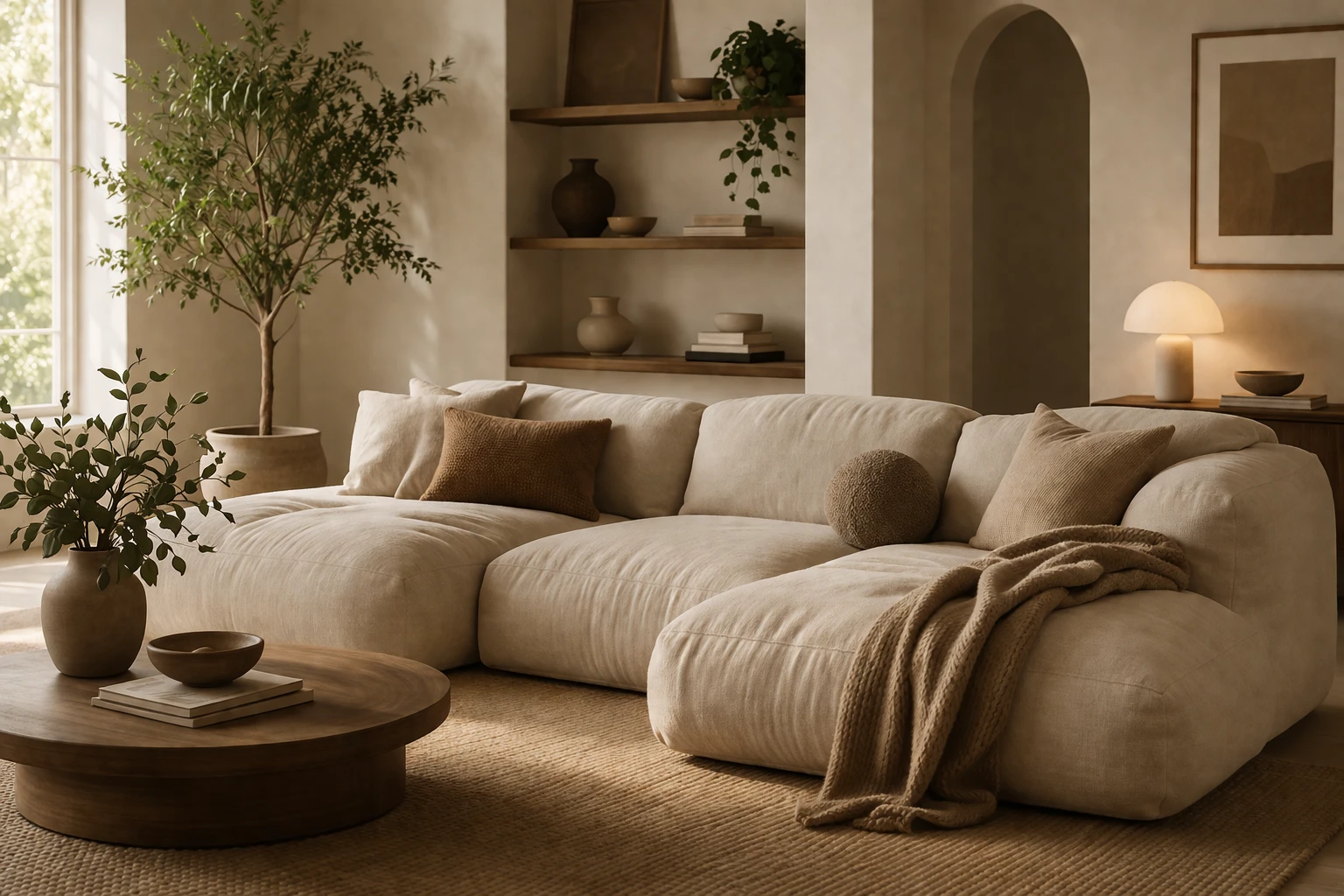
That is part of the appeal of a boneless couch. It brings in that sink-in, less rigid quality that can make a room feel more natural to live in, especially when the goal is comfort without a heavy visual footprint.
It Tends To Work Especially Well In Everyday Spaces
This kind of seating makes sense in rooms that have to handle real life.
That includes family spaces, apartments, open-plan living areas, media rooms, and smaller homes where the living room does several jobs at once. In those spaces, the furniture has less room to hide. If a sofa feels bulky, awkward, or overly formal, the whole room often feels that way too.
Softer seating can help because it removes some of that tension.
In smaller rooms, it often reduces visual heaviness. In more casual homes, it makes the room feel more approachable. In multipurpose spaces, it tends to support the way people actually sit, stretch out, and move through the room instead of forcing a more formal posture onto everyday life.
That does not mean every room needs to become ultra-casual. It simply means the furniture should make sense for the way the room is used. And in most homes, the living room is used a lot more like a lounge than a waiting room.
Small Rooms Benefit From Less Visual Stiffness
One of the easiest ways to make a small living room feel crowded is to fill it with pieces that look heavier than they need to.
Sometimes the issue is not the room size itself. It is the furniture’s visual attitude. Sharp edges, tall backs, rigid silhouettes, and bulky framing can make a space feel more compressed, even when the measurements technically work.
This is where softer seating often helps.
A sofa that feels less severe can create a gentler visual rhythm in the room. It does not compete with the walls as aggressively. It does not make the corners feel boxed in as quickly. It often leaves the room feeling more breathable, which is especially important in apartments and compact living areas where one oversized piece can throw everything off.
That balance matters. Cozy and crowded are not the same thing.
A good living room should feel settled, not stuffed. It should feel comfortable enough to invite people in, but open enough that the room can still function well.
Comfort Has Become Part Of The Design Language
For a long time, comfort and style were treated like separate categories.
A room could be beautiful, or it could be comfortable. A sofa could look elegant, or it could be the piece everyone actually wanted to sit on. The assumption was that one quality often came at the expense of the other.
That feels less true now.
Comfort has become part of what makes a room feel well designed. A living room that looks perfect but feels awkward is no longer especially convincing. People want homes that photograph well, yes, but they also want spaces that support their routines.
That means comfort is no longer hidden. It is visible in the shape of the furniture, the softness of the materials, the looseness of the layout, and the overall mood of the room.
A boneless sofa works within that language because it does not separate comfort from the design. The comfort is part of the look. The softness is part of the style. The relaxed feel is not something added later with throw blankets and pillows. It starts with the main piece in the room.
The Most Inviting Rooms Rarely Feel Overdesigned
Some of the nicest living rooms are not the most polished ones.
They are the ones that feel believable. The ones where the furniture looks chosen for actual life, not just visual effect. The room feels warm, but not cluttered. Styled, but not overworked. Comfortable, but still intentional.
That kind of room usually comes from restraint more than excess.
A softer sofa can help set that tone because it already brings texture and ease into the space. Once that is in place, the rest of the room often does not need much. A simple rug, one good lamp, a low table, a few natural materials, and enough breathing room to let the furniture speak for itself can go a long way.
That is often where rooms feel best anyway. Not when every surface is busy, but when the room has a clear mood and a sense of calm.
For anyone exploring that softer, more relaxed direction across different layouts, The Boneless Couch is one example of how the look is being interpreted across boneless, modular, L-shaped, and U-shaped seating rather than only one strict sofa format.
A Few Practical Ways To Make The Look Work
A softer living room usually comes down to a few simple decisions made well.
Choose seating that matches how the room is actually used.
If the living room is where people genuinely lounge, the furniture should reflect that instead of fighting it.
Pay attention to visual weight, not just dimensions.
A piece can fit on paper and still make the room feel too heavy.
Leave some open space around the main seating.
Rooms usually feel more relaxed when not every edge is filled.
Balance softness with a little structure.
A plush sofa often looks best with a few cleaner surrounding elements so the room still feels grounded.
Do not overstyle it.
One of the easiest ways to lose the calm in a room is to keep adding things after the main mood is already there.
These are small choices, but together they make a room feel more natural and easier to enjoy.
Final Thoughts
A boneless couch does not just change the look of a living room.
It can change the pace of it. The comfort level of it. The way the room receives people at the end of the day.
It makes the space feel less formal, less guarded, and often more human. It supports the reality that most people do not use their living rooms in a carefully upright way. They lounge. They sprawl a little. They stay longer than they meant to. They want a room that lets them do that without feeling sloppy or overdone.
That is what softer seating gets right.
Not because it is dramatic, but because it makes home feel easier.
FAQs
A boneless couch is a soft, unstructured sofa designed for comfort, often without rigid frames or sharp edges, allowing a more relaxed, sink-in feel.
It softens the overall atmosphere, making the space feel more casual, inviting, and easier to relax in.
Yes, its softer shape and lower visual weight can make smaller spaces feel more open and less crowded.
They are designed for lounging, making them ideal for daily activities like watching TV, reading, or relaxing.
Not necessarily—when styled well, they create a relaxed but intentional look rather than appearing untidy.
Yes, it fits well in modern spaces, especially those leaning toward minimalist or relaxed design styles.
Durability depends on materials, but high-quality versions are made to handle regular use while maintaining comfort.
Pair it with simple elements like a clean-lined table, neutral rugs, and minimal décor to balance the softness.
It’s better suited for casual or multipurpose spaces, as it naturally creates a more laid-back vibe.
Think about your space, how you use your living room, and whether you prefer a relaxed feel over a more structured look.