Every winter, snow wreaks havoc on thousands of homes. From leaky roofs to frozen pipes, the dangers a snow storm poses to your property cannot be understated. Very quickly, a winter wonderland can turn into a nightmare when you are hit with a repair bill for thousands of dollars. One of the most potentially expensive dangers to your home are ice dams, and preventing them is of the utmost importance.
What Is an Ice Dam?
An ice dam is a ridge of ice that forms on the edge of a roof. This ridge then prevents melting snow from draining properly. Ice dams are typically caused when the roof of your house is warm, usually due to heat escaping your home due to poor insulation. The heat melts the snow on your roof and it then refreezes when the runoff reaches the colder edges of your roof. It should be noted that this will not happen during every snow fall, but only when snow accumulation is high enough to cause significant runoff.
The Dangers of Ice Dams
Ice dams may seem like a benign issue, but they can actually cause a host of problems. This includes:
- Damage to roof shingles
- Detached gutters
- Water stains on interior ceilings and walls
- Damage to insulation
- Mold and mildew growth
- Wood rot
As you can see, ice dams should not be ignored and can easily cause thousands of dollars in damages.
Preventing Ice Dams
The best way to deal with ice dams is to prevent their formation in the first place. There are a number of techniques you can use to accomplish this. Now, doing all of these may seem like overkill, but ice dam prevention is truly a multifaceted approach. To keep your home safe from ice dams, you should really be taking all of these preventative measures.
Remove Snow Early and Consistently
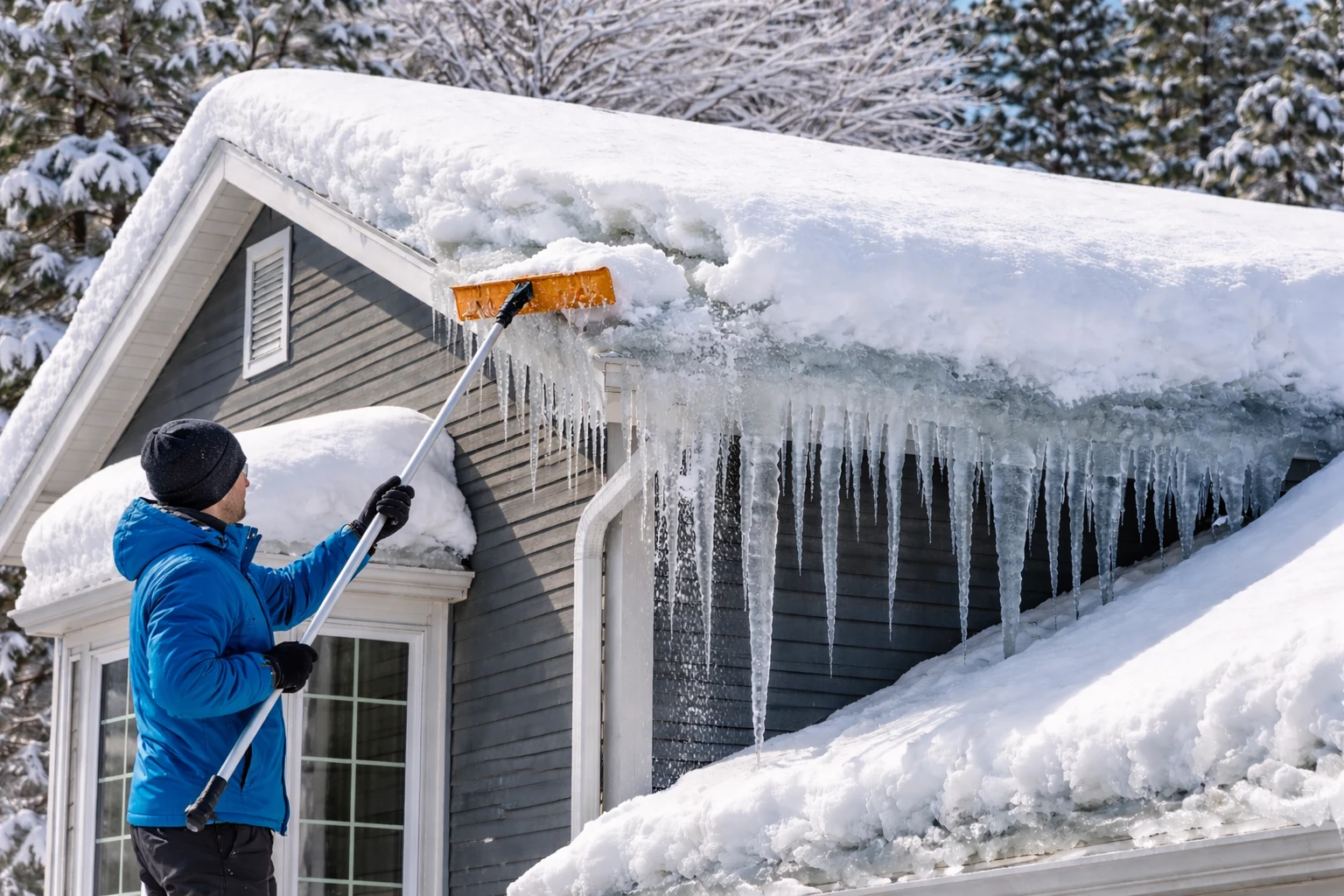
Roof snow is much easier to remove when it is fresh, before it becomes compacted and icy. This should be done using a roof rake or similar tool that allows you to remove the snow while you remain safely on the ground. It is not recommended to get up on your roof to remove snow. The risk of slipping is much too high.
Pay Special Attention to the Edges
Since ice dams only form on the very edge of your roof, this is where your efforts should be focused. You do not need to clear your entire roof of snow. Even just clearing 1-2 feet at the edge of your roof can be enough to prevent an ice dam from forming. It should be noted that this should be done with great care. Many property owners end up breaking windows or knocking down gutters when using a roof rake to clear snow.
Keep Your Gutters Clean
Dirty and clogged gutters trap water and prevent it from draining. This greatly increases the chances of water freezing at the roof’s edge. To avoid this, gutters must be kept clean. Unfortunately, this means that proper ice dam prevention actually starts months before winter even begins. In mid to late autumn, you should ensure your gutters are clear and working properly. You can do this by removing dead leaves and other debris. This may seem like an annoying chore, but you’ll be glad you did it when you don’t have ice dams come winter.
Monitor After Heavy Storms
Back-to-back storms quickly create a heavy load of snow on your roof. When these conditions occur, you should be especially aware of ice dam formation. After every storm, clear the edge of your roof of snow. This will prevent fresh snow from compacting old snow beneath it. If this does occur, the likelihood of an ice dam forming is extremely high.
Properly Insulate Your Attic
As mentioned, poor attic insulation often leads to the melting snow that causes ice dams. Insulation is measured in R-value. According to the National Weather Service, an R-value of 30 is needed to prevent ice dams. Upgrading your attic insulation is the most effective way to prevent ice dams. Now, this can be expensive and must be planned well in advance of winter. However, it’s worth pointing out that upgrading your attic insulation doesn’t just help to prevent ice dams, it also improves your home’s energy efficiency, lowering your heating bills substantially.
Signs You Have an Ice Dam
Even when you take all preventative measures, there is still a chance an ice dam will form. When this happens, it is important that you recognize the problem before it causes substantial damage. Signs that there is an ice dam on your roof include:
- Large icicles along the roof’s edge
- Ice buildup in gutters
- Water stains on ceilings or walls
- Dripping water in cold weather
- Visible ice ridges on the edge of the roof
If you see any of the above, you likely have an ice dam problem. This does not mean you are out of options. However, it does mean that prompt action must be taken if you want to avoid expensive repairs.
Calling in a Professional
Once an ice dam has formed, it is not recommended that you try to remove it yourself. Doing so usually requires the use of a ladder, and often in slippery conditions, making the chances of injury extremely high. Additionally, when laymen try to remove ice dams, they often end up inadvertently damaging the roof, usually by accidentally removing shingles or knocking down gutters. For these reasons, it is instead recommended that you hire a company experienced in professional ice dam removal.
Professionals will use chemicals, such as calcium chloride, to melt the ice dam away. If this is not enough they may go onto your roof and use tools to manually break up the ice dam. Once an ice dam is removed, you should continue taking preventative measures to avoid it forming again.
FAQs
Ice dams form when heat escapes through the roof, melting snow that later refreezes at the colder roof edges.
No. They typically form when significant snow accumulation combines with poor insulation and fluctuating temperatures.
Yes. Clearing just 1–2 feet along the roof edge is often enough to reduce the risk of ice dam formation.
It’s safest to use a roof rake from the ground; climbing onto a snowy roof greatly increases the risk of injury.
Blocked gutters trap water, allowing it to freeze at the roof’s edge and increase ice buildup.
An attic insulation R-value of at least 30 is commonly recommended to reduce heat loss and ice dam risk.
Yes. Large icicles along the roofline often indicate ice buildup and possible water backup.
Absolutely. They can lead to ceiling stains, mold growth, insulation damage, and even wood rot.
No. Attempting removal can damage shingles and gutters and create serious safety hazards.
Professionals typically use calcium chloride to melt the ice safely or carefully break it apart using specialized tools.