This post contains affiliate links. As an Amazon Associate, I earn from qualifying purchases, at no extra cost to you. See our disclosure policy.
This question arises regardless of whether you have just bought a home or you’re renting, or just decided to redecorate or renovate your space. On average, Americans spend around $2,750 each year on home decor, hitting $3,493 in some states per year.
The webpages advise buying more items like rugs, blankets, diffusers, or candles to make one’s place cozy, which is a misconception and just going overboard. Do you really need it all to feel cozy at home? The information on the internet is not making it any easier, but it encourages you to purchase more stuff you very likely don’t need. In this guide, we won’t tell you what to buy to make your home cozier without making it ascetic, but we will break down what makes a space feel good to be in.
Why Home Decor Actually Matters
It may seem like an aesthetic preference that does not carry any meaning. Almost all of us have heard the Danish concept of “hygge” at least once in our lives. This term has been trendy for a decade for a reason. According to the Danish people, we need environments that signal safety and comfort. We don’t need to import Scandinavian furniture to get there. We just need to pay attention to how our home actually feels.
Interior home designer Kate Arends states that we can’t control a lot of things happening in our world, but we can control the kind of environment we live in and how it affects our psyche and our time spent with one another.
Our home environment is linked to:
- Our stress levels
- Our sleep quality
- Our overall mental well-being
We won’t feel welcome in a place that feels cold, chaotic, as if no one is living there. But we can still make it warm and cozy and feel calm to actually feel “at home” in our space.
What Actually Makes Your Space Cozy
The best version of your home is probably already in it, just not quite in the right place. The lamp in a spare room, the blanket that gets folded away and goes from room to room, the armchair pushed to the wall because no one decided where it should actually go. These items are very likely things that haven’t been paid attention to yet. So, how do you change it?
1. Use What You Already Have
Before you buy anything, start with what you already own. Nine times out of ten, the problem isn’t that you need more. If your space lets you move things around, do it. Move things away from the walls. It sounds like a simple solution. It could be easy, but it changes the whole setting.
Rooms with furniture standing where it feels off feel useless and take up space. Pull the seating inward, toward something worth facing. It could be a window, a fireplace, or a rug. You’ll see how the room suddenly has a reason to exist. While you’re at it, look at your surfaces and take everything off and only put back what you’d actually miss. Visual noise is the enemy of coziness. A surface with three deliberate objects feels calmer than a surface crowded with ten.
2. Focus on the Lights
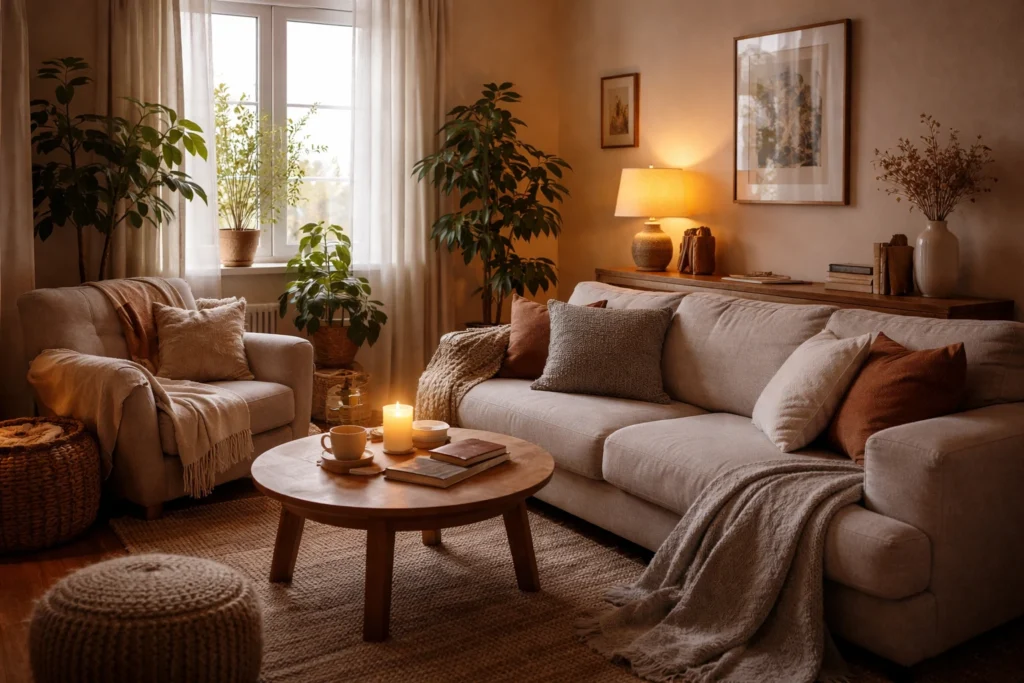
Light is the most important item in creating a cozy setting. Overhead lighting is the enemy of cozy, and most homes rely on it exclusively. It’s flat, it’s harsh, and no matter how nice your furniture is, it will make your living room feel vaguely like a GP waiting room. Layered light is what you should focus on here. Put a simple lamp in the corner, something small and warm on the side table, and it will already make a big difference.
The colour of your lighting impacts the way your space feels, so avoid white colored light bulbs at all costs. When replacing bulbs, look for those labeled 2700K to 3000K with a warm amber tone that makes a room feel like evening rather than an office. This is a $20–$40 decision that will outperform most decorating choices you’ll ever make.
3. Add Softer Textures
Minimalist design has stripped many homes of a key element that makes the space cozy, and that is texture. Just imagine a living room with a thick wool rug, velvet cushions, and wood paneling. You’re very likely to already have it at home.
The blanket you have can be casually draped over the sofa arm, slightly imperfect, like someone just got up. Opt for floor-to-ceiling curtains to make a room feel taller, warmer, and well-designed. It’s one of the oldest tricks in interior design, and it costs nothing if you already own the curtains.
If you have more than two rugs, try layering a couple of them. Put flat-weave rugs underneath a thicker one to create that warmth a single rug can’t replicate, and you don’t have to buy anything.
4. Add Greenery
There’s a reason every interior designer, regardless of style or budget, will tell you to add plants. A single healthy pothos or snake plant adds more life and warmth to a room than most things you could put on a shelf. It enriches your home with both a visual element and natural scent. Scent is one of the most underused tools in home comfort.
Commonly, what people usually add to their houses include:
- A jar of branches brought in from outside
- A bowl of pine cones
- The smell of something real simmering on the stove
- Cinnamon or citrus peel, etc.
5. Create a Micro-Environment
In other words, create a room within a room. A chair angled slightly away from the room, next to a lamp and a small surface for a drink or a book, creates “your space”. You don’t need a dedicated reading room to create that effect. You need one corner and one comfortable seat where you’ll feel you can unwind. Move a chair away from the dining table, pull a lamp close, and put a blanket there, and that’s it. This micro-environment will be the most powerful thing you can do to make a home feel cozier.
What If the Issue Goes Deeper
The tips above might work for some but not for everyone. Moving furniture to its new places and adding texture and other elements of home decor can surely help. However, sometimes the space doesn’t feel cozy for a different reason, and often it’s not connected with how it looks.
It goes far beyond that:
- Old windows that need repair
- Poor insulation and issues with heat retention
- Worn and cold floors
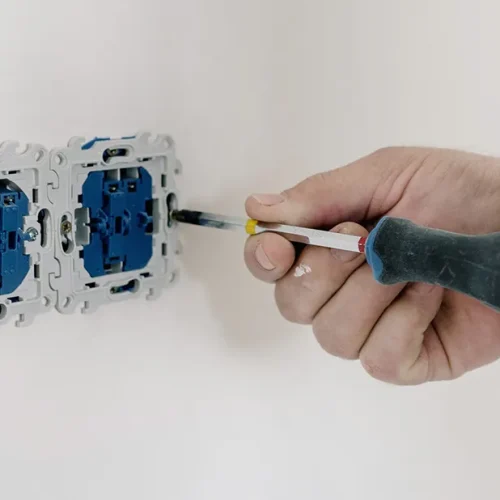
- Lighting that calls for electrical fixing, etc.
No decorative item can change what needs to be repaired. The things on the list add a lot to how you feel at your home and whether you’re comfortable there after all. This is the serious fixing that comes before all decorations, and it calls for action even when you’re on a pretty tight budget.
For homeowners with limited capital, exploring home improvement loan options for borrowers, even with bad credit, may be a practical path toward making important home upgrades. The kind that changes how you feel at home, but also impacts your health and overall well-being.
The Stress Behind Coziness
No home decor article will tell you this, but sometimes the thing standing between you and a comfortable home has nothing to do with how it looks. A boiler that dies in the middle of winter. A washing machine that gives up on a bad week. An emergency repair you weren’t budgeting for. That kind of stress doesn’t stay in the background. It’s hard to feel at ease in a space that’s become a source of financial anxiety.
Getting ahead of that, even slightly, is its own form of home comfort. Knowing your options before something breaks is worth more than any decorating decision you’ll make. For anyone navigating urgent home repairs with limited credit, some same-day lending options are created exactly for that situation, with streamlined approvals that don’t require a perfect credit history. If you want to explore this further, you can learn more about how these options work and whether they apply to your situation.
The Bottom Line
Coziness isn’t something you buy your way into. It’s what happens when you stop ignoring what’s already there and start being intentional with it. It all matters, the light, the layout, and even the blanket that belongs on the sofa arm, not in the closet. Your home doesn’t need to be bigger or better furnished, but it needs to be paid attention to. Start small, and you’ll notice what changes, and that’s usually all it takes.
FAQs
Start by rearranging furniture, decluttering surfaces, and adjusting your lighting to create warmth and intention using what you already own.
Warm, layered lighting (2700K–3000K bulbs) softens a room and makes it feel inviting, unlike harsh overhead lights.
Yes. Reducing visual noise helps your brain relax, which instantly makes a room feel calmer and more comfortable.
It’s a small, intentional setup like a chair, lamp, and side table that creates a cozy nook within a larger room.
No. Rearranging existing furniture, layering rugs, and using soft textures often work better than buying new items.
Your environment influences stress levels, sleep quality, and emotional comfort, making thoughtful design more than just aesthetic.
Soft fabrics, layered rugs, and natural materials add warmth and depth that make a room feel lived-in and inviting.
Yes. Greenery adds life, improves visual warmth, and introduces subtle natural scents that enhance comfort.
The issue may be structural such as poor insulation, outdated windows, or heating problems that require repairs first.
Not necessarily. It’s more about safety, comfort, and intentional living than following any specific design trend.