A thoughtfully designed garden pathway does more than guide you from one place to another. It becomes part of the landscape and brings balance, charm and purpose to outdoor living areas. The placement, width, material and shape of the path all influence the way a garden feels and how easily it can be enjoyed throughout the seasons. Whether a homeowner prefers a formal layout or a relaxed natural style, pathways remain one of the most effective features for tying together different parts of a landscape.
Many households reach out to paving contractors when they begin planning their pathways because creating a strong and visually appealing surface requires specialist skill. The choice of material must be suitable for the climate, the design must support easy movement and the installation must ensure lasting durability. Achieving all these elements together results in a pathway that not only looks beautiful but also stands the test of time.
Why Pathways Matter in Modern Garden Design
Garden pathways have always been valued for practical reasons, but in recent years they have become central to overall outdoor design. A well placed path defines routes, enhances accessibility and encourages visitors to explore different parts of the garden. It also helps organise the space by dividing areas for relaxation, planting and outdoor dining.
Beyond their functional purpose, pathways bring visual harmony. They draw the eye across the garden and highlight focal points such as trees, water features and seating areas. A thoughtfully shaped walkway strengthens the natural character of the landscape, making the outdoor space feel larger and more inviting.
Choosing the Right Materials for Durability and Style
The longevity of any pathway depends heavily on the material used. Each option offers unique advantages in appearance, strength and suitability for certain environments. When selecting materials, homeowners should consider expected foot traffic, exposure to the elements and the overall style of the property.
Common pathway materials include:
- Natural stone for a timeless and elegant look
- Gravel for a softer and more relaxed atmosphere
- Brick for warm color tones and classic patterns
- Concrete for strength and versatility
- Porcelain for a refined and contemporary appearance
Every material brings its own charm, and when chosen carefully, it enhances both the aesthetic and practical qualities of the garden.
The Importance of a Solid Foundation
A beautifully designed pathway will only remain intact if its foundation is strong. Beneath the surface lies a structure that supports weight, resists ground movement and allows water to drain away efficiently. Skipping these essential steps is one of the main reasons pathways become uneven or cracked.
A proper foundation usually includes:
- Removal of loose soil
- Installation of compacted sub base
- Application of a suitable bedding layer
- Careful levelling to support even surface placement
With a secure foundation, the pathway maintains its shape, preventing dips, shifts and pooling water.
Considering Pathway Layout and Flow
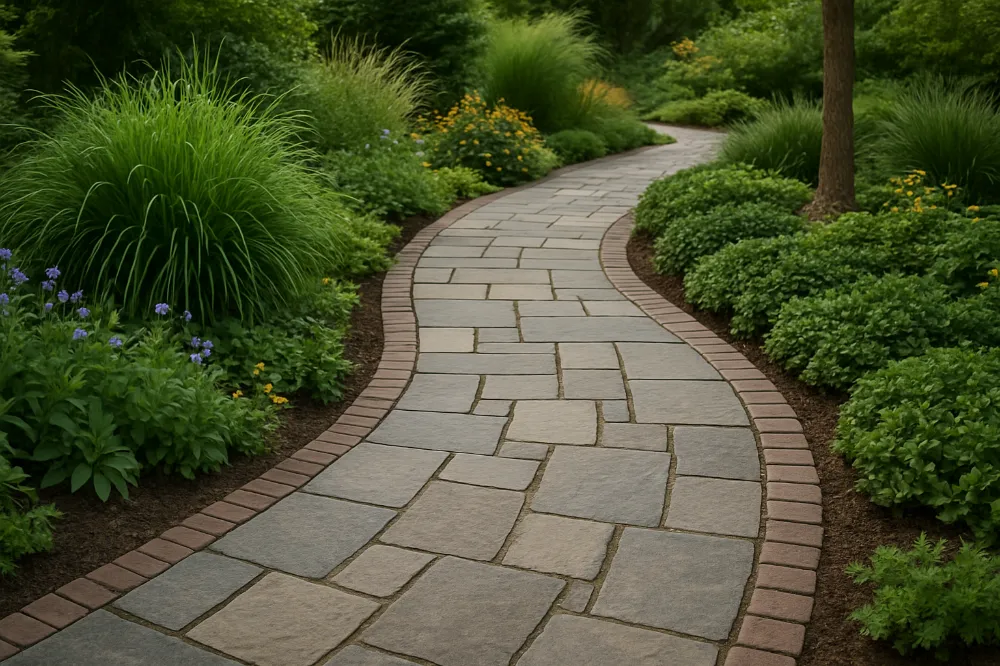
The layout of a garden pathway should feel natural and inviting. Straight paths tend to suit formal gardens or contemporary outdoor designs, while curved paths create a sense of exploration and movement. Whichever style is chosen, the layout should encourage smooth flow and connect the most important destinations in the garden.
Key considerations when planning layout include:
- Width that accommodates comfortable walking
- Smooth transitions between different garden zones
- Consideration of sight lines to highlight features
- Placement that avoids water collection areas
Thoughtful planning ensures the path feels purposeful and complements the way the garden is used day to day.
Blending Pathways with Surrounding Greenery
To achieve a harmonious outdoor space, pathways must integrate with the surrounding planting. The plants chosen should soften edges, frame views and complement the colors and textures of the pathway material. Seasonal interest is also important because it keeps the garden visually appealing throughout the year.
Popular planting options around pathways include:
- Low growing shrubs that create structure
- Flowering perennials to add color and fragrance
- Decorative grasses for movement and softness
- Ground cover plants that fill small gaps
Blending greenery with the pathway enriches the overall design and creates a welcoming atmosphere.
Lighting That Enhances Safety and Ambience
Pathway lighting plays an essential role in both safety and aesthetics. It ensures the walkway remains visible in low light and creates a warm and inviting ambience during evenings. The lighting should be placed carefully to illuminate the route without overpowering the landscape.
Effective options include:
- Low level lights for subtle guidance
- Solar powered fixtures for energy efficient illumination
- Spotlights that highlight planting or architectural features
- Lantern style lights for a classic outdoor charm
Good lighting not only improves the usability of the garden but also enhances the beauty of the pathway itself.
The Role of Texture and Pattern
Introducing texture and pattern into pathway design adds visual interest and character. Materials such as brick or stone can be arranged in patterns that bring depth to the walkway. Even smooth surfaces benefit from subtle variation to prevent them from appearing flat.
Popular patterns include:
- Basket weave for a traditional layout
- Herringbone for strength and detail
- Random stone placement for a natural appearance
- Linear patterns for a clean contemporary finish
Texture also influences safety by improving traction and reducing the risk of slipping during wet conditions.
How to Maintain Pathways for Long Term Beauty
Pathways require regular care to remain attractive and functional. Weather, plant growth and natural wear can all affect the appearance of the surface. Fortunately, maintenance needs are usually simple and manageable.
Some common maintenance tasks include:
- Clearing debris and leaves to prevent staining
- Removing weeds from joints or edges
- Refreshing gravel or sand when necessary
- Resealing certain materials for extra protection
- Checking for movement or settling after colder seasons
Consistent maintenance ensures the pathway preserves its quality for many years.
Combining Pathways with Other Garden Features
A well designed pathway works in harmony with various outdoor features. It can lead to seating areas, guide guests to a patio or frame a garden border. When thoughtfully integrated, the pathway becomes part of a larger composition that enhances the overall outdoor experience.
Complementary features include:
- Water elements such as ponds or fountains
- Raised beds that add height and color
- Arches and trellises that create inviting entrance points
- Garden furniture placed along the route
Combining these elements gives the garden greater depth and personality.
Final Thoughts
Designing a beautiful and long lasting garden pathway is both an art and a practical endeavor. When carefully planned, it defines movement, enhances the landscape and contributes to the overall charm of an outdoor space. The choice of material, the strength of the foundation, the placement of lighting and the surrounding planting all play important roles in achieving a balanced and durable result.
A thoughtfully designed pathway transforms the way a garden is experienced and turns everyday outdoor movement into something enjoyable.
FAQs
Natural stone, brick, concrete and porcelain are durable choices that withstand weather and foot traffic well.
A comfortable width is typically 90–120 cm, allowing one or two people to walk easily without feeling restricted.
Yes. A compacted sub-base and proper bedding layer prevent sinking, cracking and water buildup over time.
Straight paths suit formal gardens, while curved paths create a relaxed, natural flow. Choose based on garden style and purpose.
Use plants, shrubs, grasses and ground cover along the edges to soften lines and create visual harmony.
Low-level LED lights, solar fixtures and subtle spotlights enhance safety and ambience without overpowering the garden.
Patterns like herringbone, basket weave or random stone layouts add texture, depth and unique style.
Yes when installed with a stable base. Gravel is flexible, low-cost and ideal for gardens with a relaxed, rustic feel.
Light maintenance every season such as clearing debris, removing weeds and checking for settling keeps them looking fresh.
Absolutely. They work beautifully with seating areas, raised beds, arches, water features and focal points.