The first time most people try a zero gravity chair, the reaction is usually the same: a brief pause, then a surprised “oh.” Not because it feels theatrical, but because it shifts the body in a way that instantly takes pressure off the lower back and legs. That change is subtle at first. Stay there for ten minutes with a book, a coffee, or nothing at all, and the appeal becomes much easier to understand.
For first-time buyers, though, the category can be oddly confusing. Many chairs look similar online. Prices vary more than expected. Some fold flat, some barely do. Some feel supportive for twenty minutes and disappointing after an hour. A few are built to last through years of sun, pollen, and weekend use. Others are clearly not.
A zero gravity chair is not just a reclining patio seat. The whole point is the position: the legs are elevated and the back is angled to distribute body weight more evenly. It is inspired by the neutral posture used to reduce strain on the spine and joints. In practical terms, that means less compression, less pressure behind the thighs, and a more relaxed posture for reading, resting, or recovering after a long day outside.
What a zero gravity chair actually does
A good zero gravity chair creates a floating sensation without forcing the body into a rigid pose. The frame supports movement. The seat adapts as you recline. Your feet rise above your hips, or close to it, and the chair does the work of balancing your weight.
That is why people often buy one expecting a nice garden chair and end up using it more like an outdoor recovery seat. On a balcony, it becomes the place you choose at sunset. On a deck, it often replaces the dining chair after lunch. Around a pool, it works for sunbathing, but it is just as useful in the shade with a towel behind the neck.
Not every model reaches the same comfort level, though. Two chairs can share the same general silhouette and still feel completely different once you sit down. The details matter more than they seem on a product page.
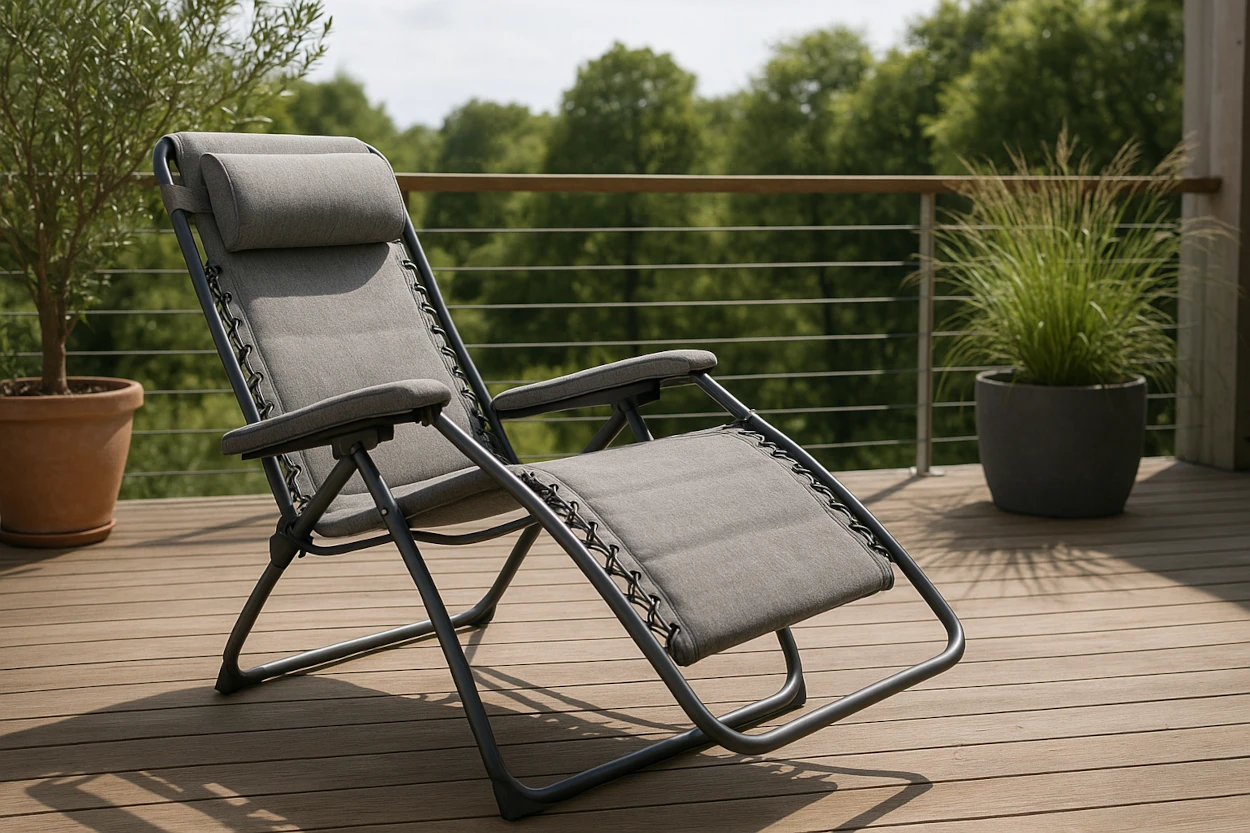
The features that matter more than the color
Color matters, of course, especially if the chair is going to live on a small patio or in a carefully designed outdoor space. But it should not be the first thing you judge. Comfort and durability are what separate a smart purchase from a chair that gets folded up and forgotten in a storage corner by midseason.
Frame quality
Start with the frame. Steel can feel sturdy and reassuring, but it may be heavier to move around. Aluminum is lighter and generally easier to handle, especially if you plan to bring the chair in and out often. Weight capacity is worth checking too. A frame that feels solid when empty can still flex too much under regular use.
Seat fabric
Outdoor fabric should be breathable, supportive, and able to handle weather swings. Technical mesh tends to perform well because it dries faster than padded upholstery and feels cooler in warm weather. Some buyers assume extra cushioning means better comfort, but that is not always true outdoors. Thick padding can trap heat and age faster if it stays damp.
Recline system
This is where many first-time buyers get caught off guard. A chair may look sleek and still have awkward locking controls or a recline motion that feels jerky. Ideally, the shift from upright to reclined should be smooth and intuitive. You should not feel like you are negotiating with the chair every time you lean back.
Headrest and arm support
An adjustable headrest is more useful than it sounds. For taller users especially, it can make the difference between true relaxation and a neck angle that never quite settles. Armrests matter too. They help you push off when getting up, which becomes surprisingly important if you plan to use the chair for long lounging sessions.
Where people get the choice wrong
The most common mistake is buying for a fantasy version of outdoor living instead of actual routine. It happens all the time. Someone imagines long afternoons in the garden, chooses the biggest model available, then realizes their balcony barely has enough room to let it recline fully.
Another frequent misstep is underestimating storage. Foldability sounds like a minor convenience until the weather changes or guests arrive. If your outdoor space is compact, a chair that folds neatly and stores without a struggle is usually the better choice.
There is also the issue of body fit. A chair can be well made and still not be right for your height or proportions. Taller users should pay attention to back height and leg support. Shorter users may prefer a model that does not force the knees into an awkward bend when fully reclined.
- Small balcony: prioritize compact dimensions, smooth foldability, and a lighter frame.
- Family terrace: choose durability and easy-clean fabric over purely visual details.
- Garden lounging: comfort and adjustability matter more because the chair will likely be used longer.
- Poolside use: quick-drying materials and rust resistance should move to the top of the list.
Comfort is not just about softness
People often describe a comfortable chair as soft, but that word can be misleading here. A zero gravity chair works best when it feels supportive rather than plush. You want even pressure distribution, stable positioning, and a fabric tension that does not sag too much in the middle.
One very real detail: if the front edge presses into the back of your calves or thighs, you will notice it after fifteen minutes. Not immediately, maybe. But enough to make you shift around and break the whole point of the chair. That is why ergonomics matter more than first impression.
Long-term comfort also depends on temperature. In hot weather, breathable materials are often more pleasant than thick padded surfaces. In spring or early fall, a simple throw or cushion can add warmth without locking you into a less practical chair year-round.
What durability looks like in real life
Outdoor furniture does not fail all at once. It usually declines in small, annoying ways. The fabric loosens. The frame starts to resist folding. The finish wears unevenly where hands grip the armrests. Screws loosen a little. The chair still works, technically, but it stops feeling reliable.
That is why details like replaceable parts, robust joints, and weather-resistant materials are worth noticing. Durable outdoor seating is rarely about one dramatic feature. It is about consistency: good stitching, well-finished metal, fabric that holds tension, and components that do not feel disposable.
European-made outdoor furniture often has a stronger reputation in this area, particularly when the design includes reparability rather than sealed, throwaway construction. For buyers who want something they will still be using in a few summers, that matters.
Should you spend more on your first one?
Usually, yes, within reason. Not because the most expensive chair is automatically best, but because entry-level models often cut corners in exactly the places you feel most: recline smoothness, frame stability, and fabric tension.
A well-made zero gravity chair tends to earn its place quickly. It gets used after gardening, after work calls, on warm evenings, on lazy Sundays, and sometimes indoors for a few days when someone has a sore back and quietly steals it from the patio. That kind of repeat use changes the value equation.
If your budget is limited, prioritize build quality over decorative extras. Better frame, better fabric, better mechanics. Cup holders and accessory trays are nice, but they should not be the reason you choose one chair over another.
Frequently Asked Questions
A zero gravity chair is a recliner designed to elevate your legs and tilt your back so your weight feels more evenly distributed. The position helps reduce pressure on the spine, lower back, and legs. It does not create literal weightlessness, of course, but it does mimic a more neutral posture that many people find deeply relaxing.
Choose based on how much room you have when the chair is fully reclined, not just when it is folded or upright. For small patios or balconies, compact dimensions and easy storage matter a lot. In larger gardens, you can focus more on extended comfort, wider seating, and heavier frames that stay put once installed.
A zero gravity chair is built around body positioning, while a standard recliner is usually built around simple backward tilt. That means a zero gravity model is more likely to raise the legs in a way that relieves pressure rather than just leaning the body back. The result often feels more supportive, especially during longer use.
Yes, as long as the materials are designed for outdoor conditions. Look for weather-resistant frames, breathable technical fabric, and hardware that can handle humidity and repeated folding. If the chair will stay outside often, quick-drying materials are usually the safer choice.
A well-made zero gravity chair can last for years with normal care.I ts lifespan depends on frame quality, fabric durability, sun exposure, and storage habits. Chairs that are repairable and made with stronger materials generally age better than low-cost models built for short-term use.
Buying your first zero gravity chair is less about chasing a trend and more about understanding how you actually relax outdoors. The best choice is rarely the flashiest one. It is the chair that feels easy to live with: comfortable without fuss, durable without looking heavy, and practical enough to keep using long after the novelty wears off.
That is usually the real test. Not how it looks in a staged photo, but whether you find yourself reaching for it again the next day.