Pressure and volume are not the same thing, even though they’re often lumped together.
Pressure (PSI) is the force behind the water.
Volume (GPM) is how much water is delivered over time.
Think of pressure as a punch and volume as a steady push.
A high-pressure, low-volume stream can cut into materials. A lower-pressure, high-volume flow can rinse, lift, and carry contaminants away. Cleaning success depends on which action you actually need.
Why Pressure Alone Can Be Misleading
High pressure feels effective because it creates immediate visual results. Dirt disappears fast. Stains lighten instantly. The surface looks cleaner within seconds.
But pressure has limits and risks.
Excessive pressure can:
- Etch concrete
- Damage wood fibers
- Strip paint prematurely
- Force water behind siding
- Shorten the lifespan of surfaces
In many cases, pressure is compensating for a lack of volume. Instead of allowing water to flow and flush debris away, pressure is used to blast it loose.
That works until it doesn’t.
How Volume Does the Heavy Lifting
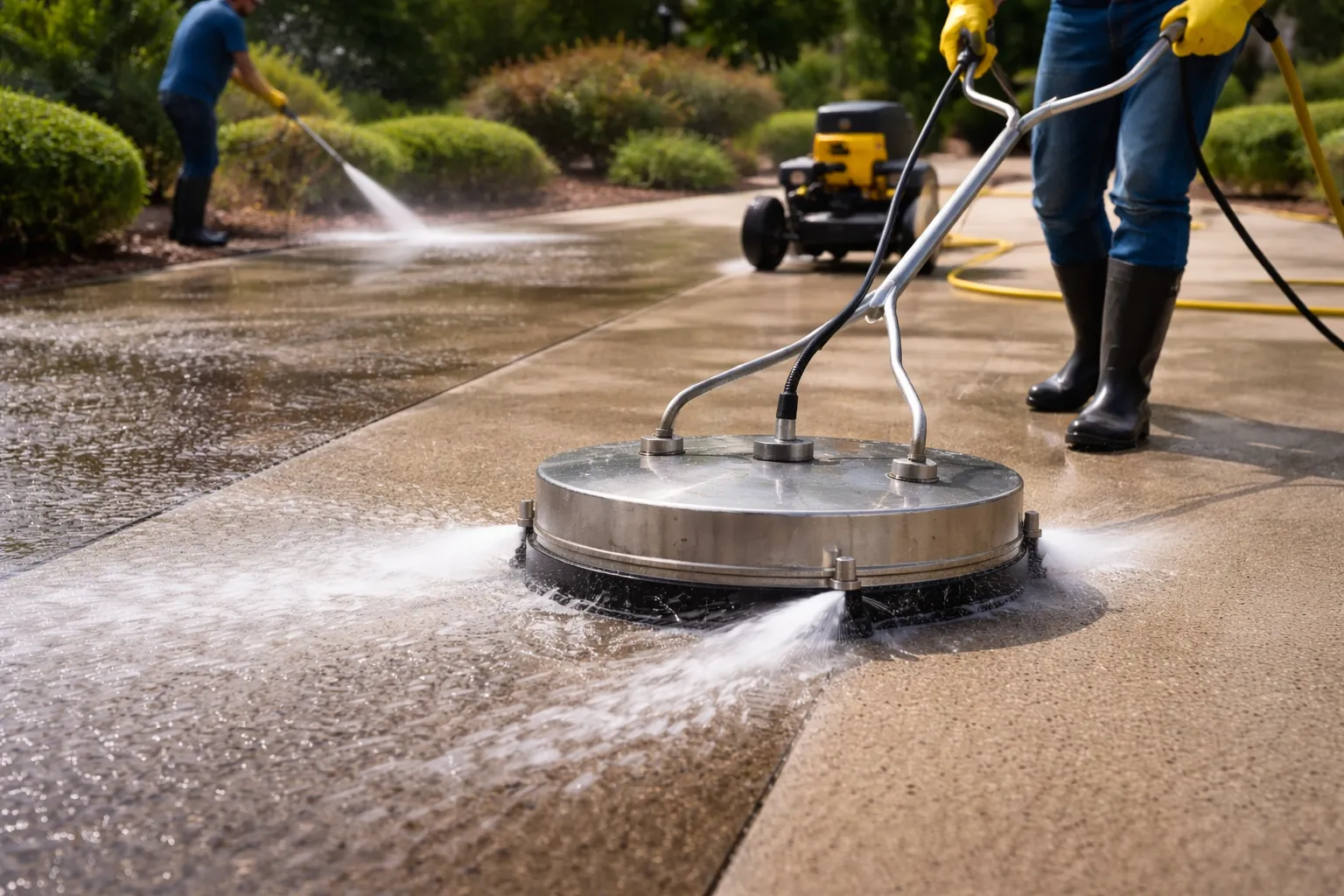
Water volume is what actually removes contaminants from the surface and carries them away.
Here’s why volume matters so much:
- Rinsing power: More water means debris doesn’t just loosen it leaves.
- Even coverage: Higher flow spreads cleaning action across a larger area.
- Reduced surface stress: Lower pressure with higher volume is gentler and safer.
- Better chemical activation: Detergents and cleaners work best when they stay wet long enough to do their job.
Volume keeps dirt moving. Pressure only breaks its grip.
The Science of Dirt Removal
Most dirt isn’t glued to surfaces. It’s held in place by:
- Static charge
- Oils
- Biofilm
- Pores and surface texture
Pressure disrupts the bond. Volume removes the dirt entirely.
Without sufficient flow, loosened grime can redeposit or streak. That’s why some surfaces look clean initially but appear dirty again once dry.
Volume prevents reattachment.
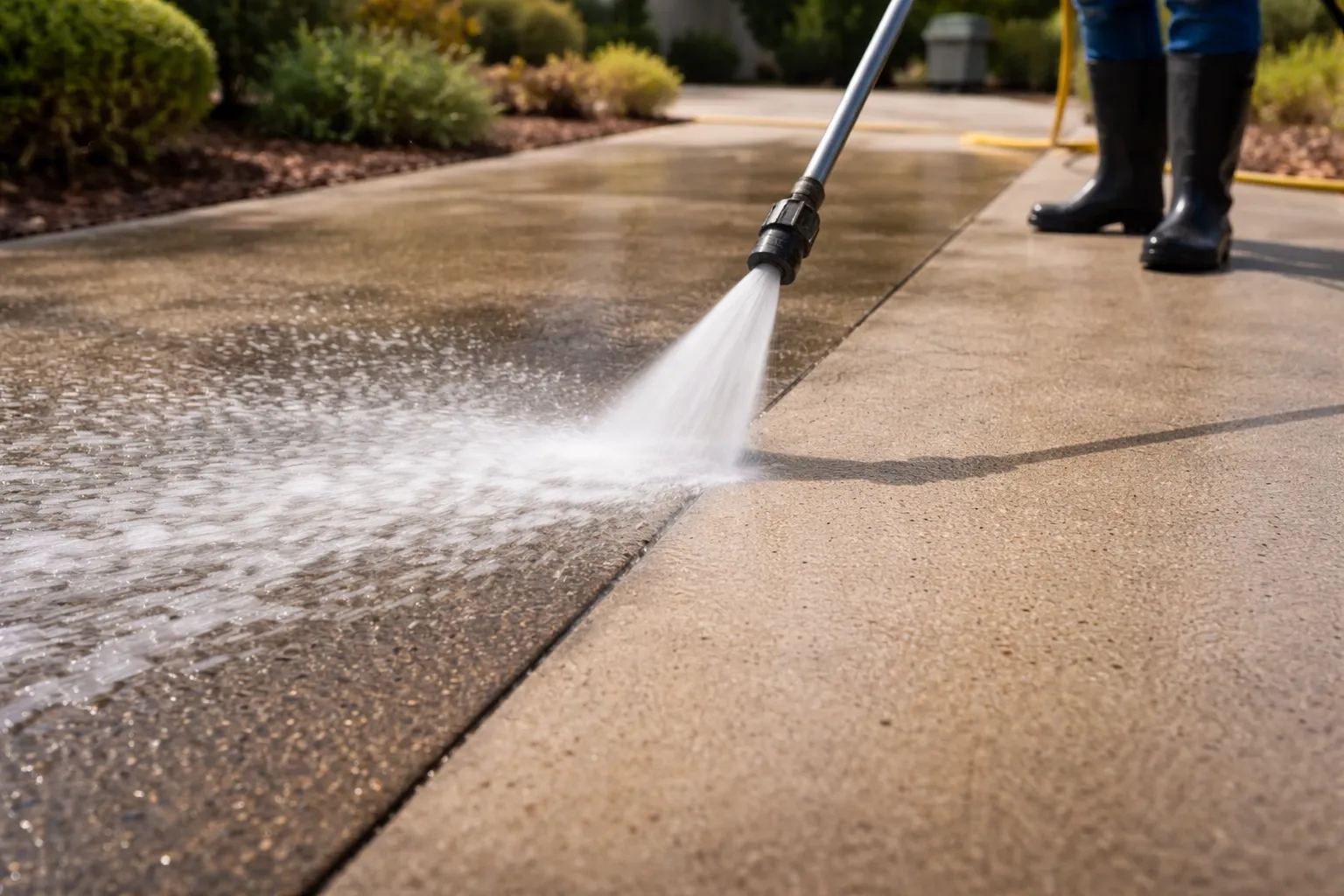
Real-World Example: Driveway Cleaning
Concrete is a perfect case study.
Concrete is porous. Dirt doesn’t just sit on top it settles into tiny voids. Blasting concrete with extremely high pressure can carve out those pores, making the surface rougher and more prone to future staining.
A better approach:
- Moderate pressure to break surface tension
- High volume to flush contaminants from the pores
- Proper rinsing to remove residue completely
The result is cleaner concrete that stays clean longer.
Wood Surfaces: Where Volume Is Essential
Wood decks and fences are especially vulnerable to pressure damage.
High pressure:
- Raises wood grain
- Splinters boards
- Creates fuzzy surfaces
- Weakens structural fibers
Volume allows cleaning without destruction.
Using lower pressure with increased flow:
- Lifts dirt gently
- Preserves wood integrity
- Reduces the need for sanding
- Extends the life of stains and sealers
In wood cleaning, volume isn’t just better it’s essential.
Siding, Stucco, and Painted Surfaces
Siding systems are designed to shed water, not withstand concentrated force.
High pressure can:
- Drive water behind panels
- Damage insulation
- Cause mold growth inside walls
- Void manufacturer warranties
High volume at low pressure allows water to cascade downward, mimicking rainfall while still removing grime, pollen, and organic growth.
This is why professional exterior cleaners emphasize flow control rather than brute force.
Why Commercial Equipment Prioritizes GPM
Professional-grade equipment often focuses more on gallons per minute than raw PSI numbers.
Here’s why:
- Increased efficiency on large surfaces
- Faster rinsing times
- Better compatibility with surface cleaners
- Reduced operator fatigue
- Safer results on mixed materials
A system delivering higher volume allows cleaners to work smarter, not harder.
Surface Cleaners: Volume Over Force
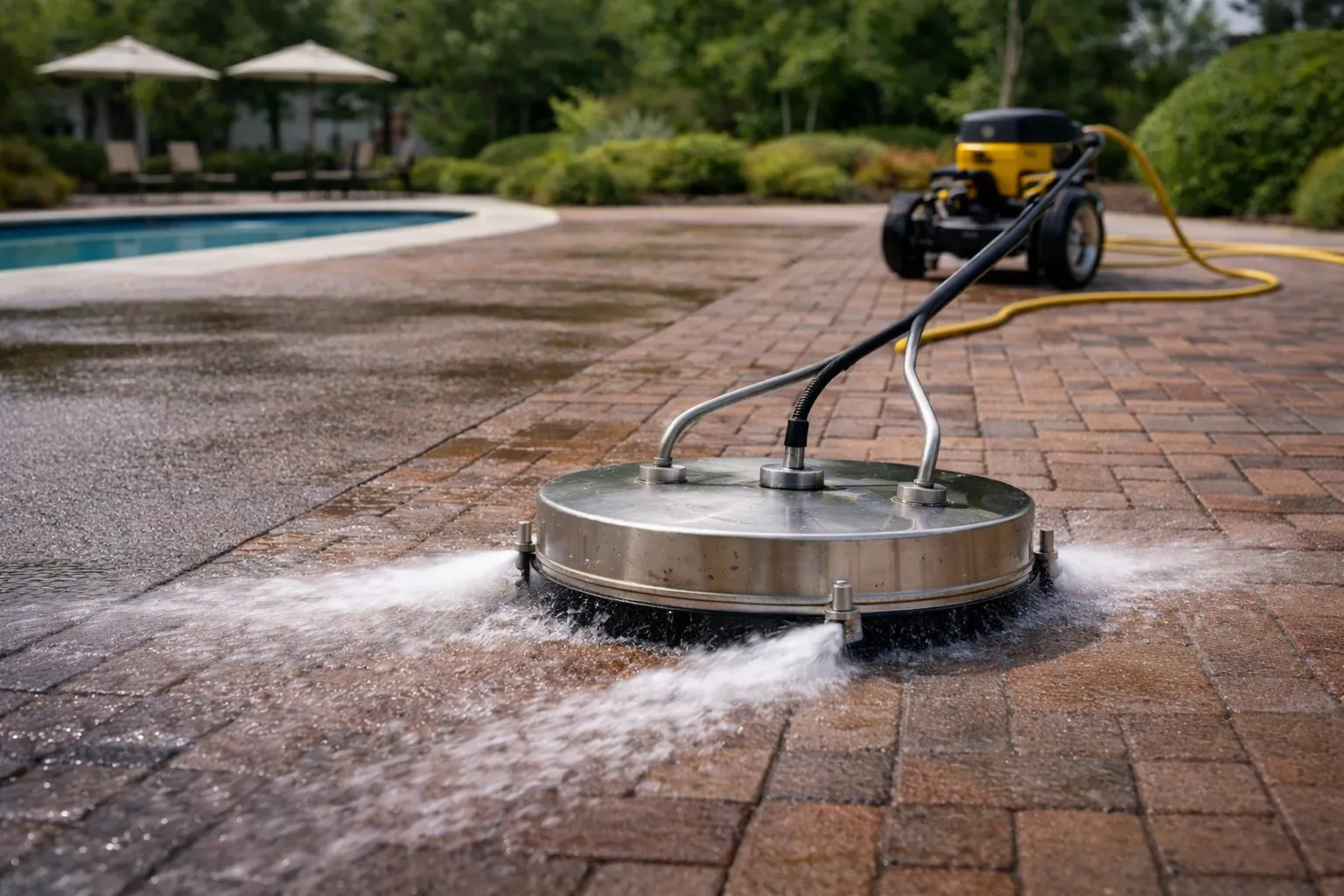
Rotary surface cleaners are a perfect example of volume-driven cleaning.
They rely on:
- Consistent water flow
- Balanced pressure
- Continuous rinsing action
Without enough volume, surface cleaners leave streaks and uneven patterns. With sufficient flow, they clean uniformly and efficiently.
This is why surface cleaners paired with high-volume machines outperform handheld wands on large flat areas.
Chemical Cleaning Depends on Volume
Cleaning agents don’t magically work faster with pressure.
They need:
- Time to dwell
- Even application
- Proper rinsing
High volume ensures chemicals remain active long enough to break down contaminants. It also ensures thorough rinsing afterward, preventing residue buildup that attracts new dirt.
Volume completes the chemical process. Pressure alone cannot.
When Pressure Still Matters
Pressure isn’t useless. It’s just overemphasized.
Pressure is valuable for:
- Spot treatment
- Removing stubborn buildup
- Cutting through compacted debris
- Precision cleaning in controlled areas
But pressure should be adjusted not maximized.
Cleaning works best when pressure and volume are balanced for the surface being cleaned.
Why This Matters for Homeowners
Understanding the difference between pressure and volume helps homeowners make smarter decisions.
It explains:
- Why some DIY jobs cause damage
- Why professional results last longer
- Why gentler cleaning often looks better
- Why equipment specs matter beyond PSI
It also explains why reputable local pressure washing services focus on system design, not just raw force.
Regional Considerations: Climate and Surfaces
Environmental conditions influence how water volume performs.
In places like Cincinnati, Ohio, seasonal weather plays a big role. Pollen in spring, mildew in humid summers, leaf tannins in fall, and road salts in winter all require thorough rinsing.
Volume ensures contaminants don’t linger after cleaning.
In Cincinnati, Ohio, freeze-thaw cycles also mean surfaces are already under stress. Excessive pressure only accelerates wear, while higher volume at controlled pressure protects materials over time.
Efficiency Isn’t About Speed Alone
High pressure may look faster, but volume often finishes the job sooner.
Why?
- Less re-cleaning
- Fewer missed spots
- Reduced need for touch-ups
- Longer-lasting results
True efficiency includes results, not just speed.
The Long-Term Cost Factor
Surface damage costs more than slow cleaning.
Excess pressure can lead to:
- Premature repairs
- Repainting or resealing
- Structural degradation
- Decreased property value
Using volume correctly minimizes wear and extends surface life, saving money over time.
Choosing the Right Approach
The best cleaning approach asks one question first:
What does the surface need—force or flow?
In most cases, the answer is flow.
Pressure should be applied thoughtfully. Volume should be consistent and sufficient.
That combination produces clean surfaces without collateral damage.
Final Thoughts
Pressure may be the headline, but volume is the backbone of effective cleaning. High pressure without volume is aggressive and risky. Volume without excessive pressure is controlled, thorough, and sustainable.
Whether you’re cleaning a driveway, deck, siding, or commercial surface, remember this principle:
Break the bond with pressure. Remove the problem with volume. Once you see the difference, you’ll never think about cleaning the same way again.
FAQs
Pressure (PSI) is force, while volume (GPM) is how much water flows; volume determines how well dirt is carried away.
Higher volume rinses loosened debris completely instead of just breaking it loose.
Yes, excessive pressure can etch concrete, damage wood fibers, and force water behind siding.
Absolutely it reduces surface wear while still delivering effective cleaning.
Yes, better rinsing prevents residue that attracts new dirt, keeping surfaces cleaner longer.
GPM improves efficiency, coverage, and rinsing, which leads to better overall results.
Pressure is useful for targeted, stubborn spots but should be used carefully and selectively.
It keeps cleaners active longer and ensures thorough rinsing after dwell time.
Often yes, because it minimizes streaks, rework, and missed debris.
Moderate pressure paired with sufficient volume delivers effective, safe, and lasting cleaning.