It’s a familiar moment. The curtains are finally up. The fabric is beautiful, the color works, and the rest of the room is thoughtfully styled. And yet, when you step back, something feels wrong. The curtains don’t look bad they just don’t look right. This disconnect is one of the most common frustrations in interior design, and it’s surprisingly widespread. Expensive curtains are especially prone to it, not because they’re poorly made, but because price can’t compensate for a mistake most people don’t realize they’re making.
The Myth That Quality Solves Design Problems
There’s an assumption in home styling that higher quality automatically leads to better results. Better fabric, better stitching, better hardware therefore, a better outcome.
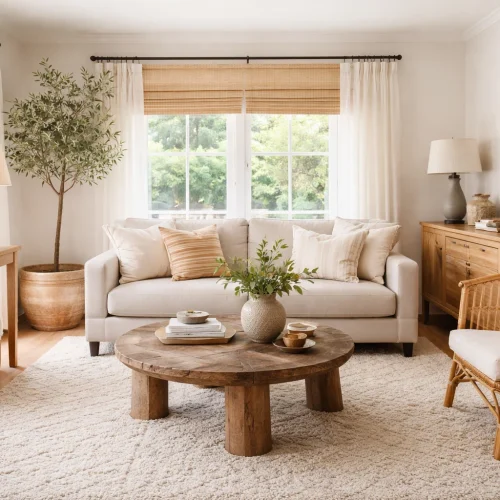
In reality, quality improves how curtains feel and how long they last, but it has little influence over how they sit in a space. Curtains are not decorative accents in the way cushions or throws are. They function as architectural elements, defining vertical lines and framing openings. When those elements are out of proportion, even the finest materials can look awkward.
The Real Issue Isn’t Style It’s Proportion
When curtains look “off,” the problem is rarely the fabric or colour choice. It’s proportion.
The human eye is highly sensitive to vertical and horizontal balance. Curtains that are too narrow flatten a wall. Curtains that are hung too low visually compress a ceiling. Curtains that end at an indecisive length draw attention for the wrong reasons. These issues don’t register as obvious mistakes. Instead, they create a subtle sense that the room isn’t quite finished, even when everything else is.
Mistake #1: Curtains That Don’t Have Enough Width
One of the most common sizing errors is choosing curtains based on window width alone. While it seems logical, curtains don’t work like blinds. They need excess fabric to create softness and depth. When panels are too narrow, they sit flat against the wall and pull tight when closed. The window looks smaller, and the room feels underdressed. This effect is especially noticeable in living areas and bedrooms, where curtains are meant to add visual weight and calm. Fullness isn’t an indulgence it’s what allows curtains to behave like curtains rather than fabric screens.
Mistake #2: Hanging Curtains Too Low
Another quiet design misstep is mounting curtains close to the top of the window rather than the top of the wall. This often happens out of caution. Homeowners worry that taller curtains will overwhelm a space. In practice, the opposite is true. Hanging curtains higher elongates the wall and makes ceilings feel taller, regardless of the actual room height. When curtains are mounted low, the gap above them becomes a visual dead zone, subtly shrinking the space.
Mistake #3: Length That Looks Accidental
Curtain length is one of the clearest indicators of whether a design decision was intentional. Curtains that hover just above the floor often look like a measurement error. Curtains that puddle without purpose feel untidy. Both outcomes draw attention away from the room itself. Well-sized curtains either meet the floor cleanly or extend slightly by design. Anything in between tends to feel unresolved.
Why Store Displays and Inspiration Photos Set Us Up to Fail
Curtains almost always look better in showrooms and styled photography. That’s not because the products are different it’s because the proportions are. Display setups typically use wider panels than strictly necessary, mounted higher than standard recommendations, in rooms with controlled dimensions. Photography also compresses space, hiding scale issues that become obvious in real life. Recreating the look without recreating the math is where many well-intentioned design choices fall apart.
Why Measuring Curtains Is More Complex Than It Appears
Unlike many home furnishings, curtains are affected by multiple overlapping measurements. Rod width, stack-back space, fullness preferences, mounting height, and floor clearance all influence the final result. Measuring only the window ignores how curtains actually function once they’re opened and closed. This is why so many people feel confident during purchase and disappointed after installation. To avoid this, many homeowners choose to sanity-check their plans with a curtain estimator, using it to align width, length, and fullness with the reality of their space before committing to a purchase.
How Designers Avoid This Problem Altogether
Designers rarely select curtains as a final styling step. They plan them early, alongside layout and lighting decisions. Dimensions are established first. Fabric comes later. This approach removes guesswork and ensures that curtains support the room rather than compete with it. The result is rarely attention-grabbing and that’s exactly the point. Well-proportioned curtains disappear into the design, quietly making everything else look better.
When Curtains Work, You Stop Noticing Them
Good curtains don’t announce themselves. They make rooms feel calmer, taller, and more complete without demanding attention. When curtains look wrong, it’s easy to blame taste or trends. In most cases, the issue is far simpler and far more fixable. It comes down to sizing decisions made before the fabric ever enters the room. Curtains reward precision. When proportion is right, even modest materials can look intentional. When it isn’t, no amount of expense can disguise the imbalance.
FAQs
Because cost doesn’t fix proportion issues like incorrect width, height, or length, which have the biggest visual impact.
Choosing panels based only on window width instead of allowing extra fabric for proper fullness.
Curtains should usually be 1.5–2.5 times the window or rod width to create natural folds and softness.
Typically close to the ceiling or crown moulding, not just above the window frame, to make ceilings feel taller.
Curtains look most intentional when they either just touch the floor or extend slightly; hovering usually looks accidental.
Showrooms use ideal proportions, extra-wide panels, higher mounting, and controlled room dimensions.
Yes, poor length can make ceilings feel shorter and draw attention to measurement errors.
Not necessarily custom fabric won’t look right if proportions and measurements are still wrong.
Because curtain dimensions affect layout, light, and balance, not just final decoration.
By calculating rod width, mounting height, fullness, and floor clearance before choosing fabric.